






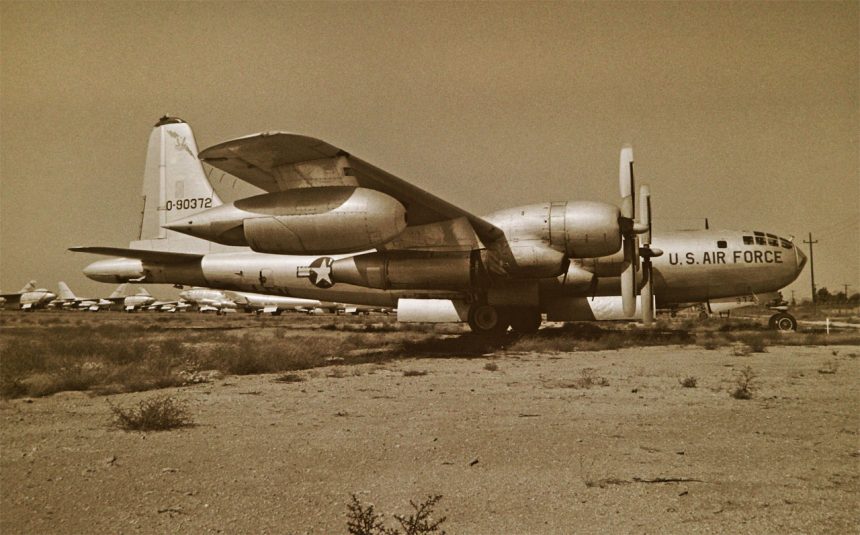

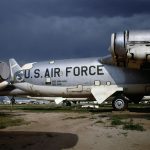
As we continue the Boneyard Files series, which showcases some of the retired aircraft resting at Davis-Monthan Air Force Base in Tucson, Arizona, in the late 1960s, today’s story features the Boeing KB-50J Superfortress through the lens of Neil Aird’s “Monthan Memories” photos. In the 1940s, the US Air Force modified its Boeing B-29 Superfortress with more powerful Pratt & Whitney R-4360 radial engines, a more durable structure, a taller tail fin, and various other upgrades. These changes led to a new name for the aircraft, the Boeing B-50 Superfortress. The first B-50 entered service in 1947, and a total of 370 aircraft were built.
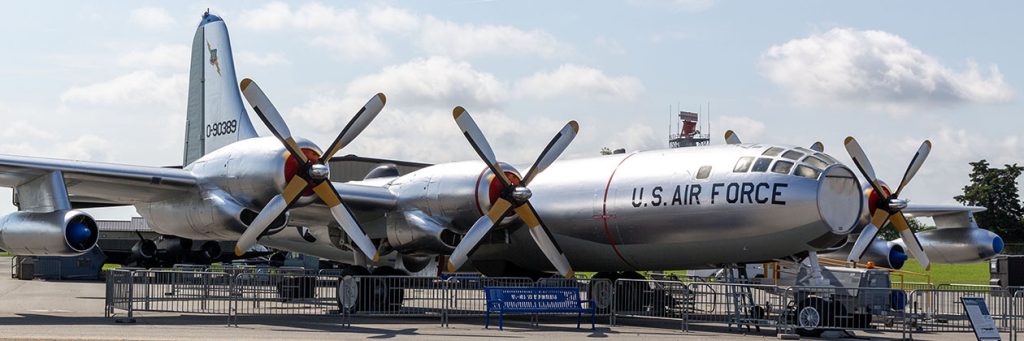
As the B-50s began to be replaced by other bomber types within the Strategic Air Command (SAC), they were converted into KB-50 aerial tankers for the Tactical Air Command (TAC) and WB-50 weather reconnaissance aircraft for the Air Weather Service. The KB-50 was designed to carry fuel instead of bombs and had two large fuel tanks in the bomb bay. It also had hose- and-drogue refuelling pods mounted on the wingtips and one in the tail gunner’s position. In 1957, the engineers added jet engines to help the aircraft refuel faster jets at safer speeds. Those with jet engines were called KB-50Js. With a crew consisting of pilot, co-pilot, navigator, flight engineer, and two refueling operators, the KB-50J could carry 6,066 gallons (39,430 pounds) of transferable fuel. The KB-50J Superfortress was 105.1 feet long, 33.7 feet high, with a wingspan of 141.3 feet. Its loaded weight was 179,500 pounds, and the range was 2,500 miles. The Boeing KB-50J Superfortress was powered by four Pratt & Whitney R-4360-35 radial engines, each producing 3,500 horsepower, and by two General Electric J47-GE-23 turbojets, each producing 5,200 pounds of thrust. The maximum speed of the aircraft was 444 mph, and its service ceiling was around 32,000 feet.
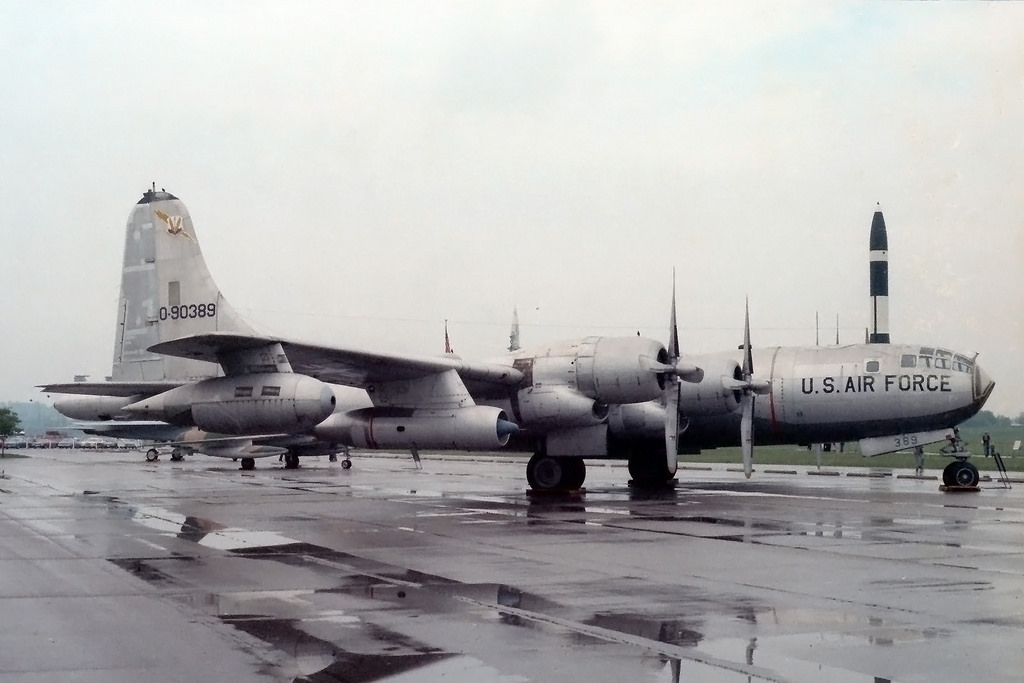
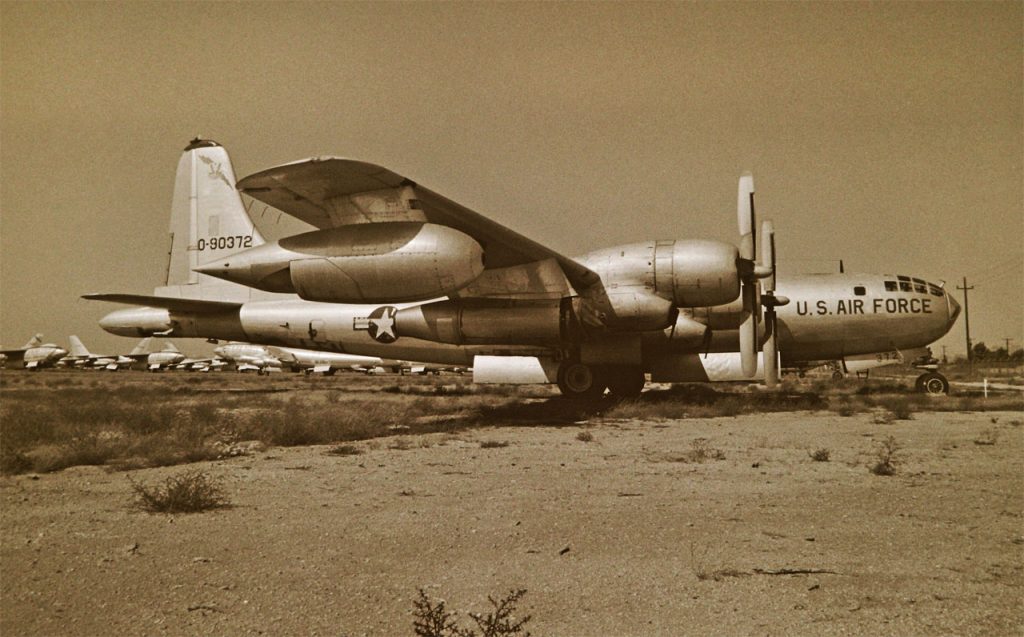
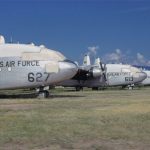
The Boeing KB-50J Superfortress remained in operational service for around eight years. It helped develop the KC-97 model, and both planes operated together until the jet-powered KC-135 Stratotanker replaced them. The last KB-50s were used as emergency refuelers for jet fighters during the Vietnam War. By 1964, only about 20 KB-50s were still operating in the US Pacific Air Forces (PACAF). These planes were scheduled to be retired in 1966 and replaced by the KC-135 Stratotanker. In June 1964, four KB-50s from Detachment 1 of the 421st Air Refueling Squadron flew from Yokota Air Base in Japan to Takhli to support Yankee Team missions over Laos. Another four aircraft made up Detachment 2 at Tan Son Nhut. One KB-50 crashed in Thailand after an engine failure during an air-to-air refueling training mission. The crew was rescued by two HH-43 helicopters based at Takhli. When experts examined the wreckage, they found significant corrosion, which led to the immediate retirement of the entire Boeing KB-50J Superfortress fleet and its replacement by Strategic Air Command’s KC-135 Stratotankers. All B-50 variants were retired by March 1965, after which they were sent to Davis-Monthan Air Force Base, known as “The Boneyard.” Read more Boneyard Files Articles HERE.







Great article. Very well written and informative.
My dad was with SAC and stationed at Eglin AFB.
He didn’t say too much but he did say that his Squadron worked on trying to make the B50 a safer aircraft..
He left the military to work at Lockheed and helped with the C130 project.
Those were good times and Cold War days.
FLY HIGH. SEMPER PRIMOS.
Such a huge and powerful plane! I had no idea they built so many of them. This is amazing information that everyone should know. The talent to design and build this aircraft is beyond my vocabulary! Thank you so much for sharing. I appreciate it. Chet Moody.
I flew the KB50J at RAF Sculthorpe Sep 63 to Mar 64. Helped fly one to DM
The wing mounted refueling pods were never mounted on the wingtips, instead, they were mounted under the wings, close to the wingtips.Only the KB-29M had the pods mounted on the wingtips.