







Rockwell International was a major American aerospace and defense company during the Cold War. It started as the Rockwell Manufacturing Company, founded by Willard Rockwell in 1919. It acquired North American Aviation in 1967, which had developed aircraft such as the P-51 Mustang, B-25 Mitchell, F-86 Sabre, and F-100 Super Sabre. It gave Rockwell a lineage from WWII fighter planes and bombers to America’s early supersonic jets. After merging in 1967, Rockwell expanded its aerospace work to include several important space programs. In 1973, the company changed its name to Rockwell International. In the same year, Rockwell purchased Collins Radio. It added knowledge of aircraft communication and navigation systems, including technology used in military planes and the Apollo Moon landings. Rockwell’s high-frequency radio technology helped the US military in communications. In the 1970s and 1980s, Rockwell’s aerospace division became the main contractor for the Space Shuttle orbiter. Rockwell had a division called Rocketdyne that made rocket engines for the Saturn program, including the H-1, J-2, and F-1, as well as the RS-25 engines used on the Space Shuttle.

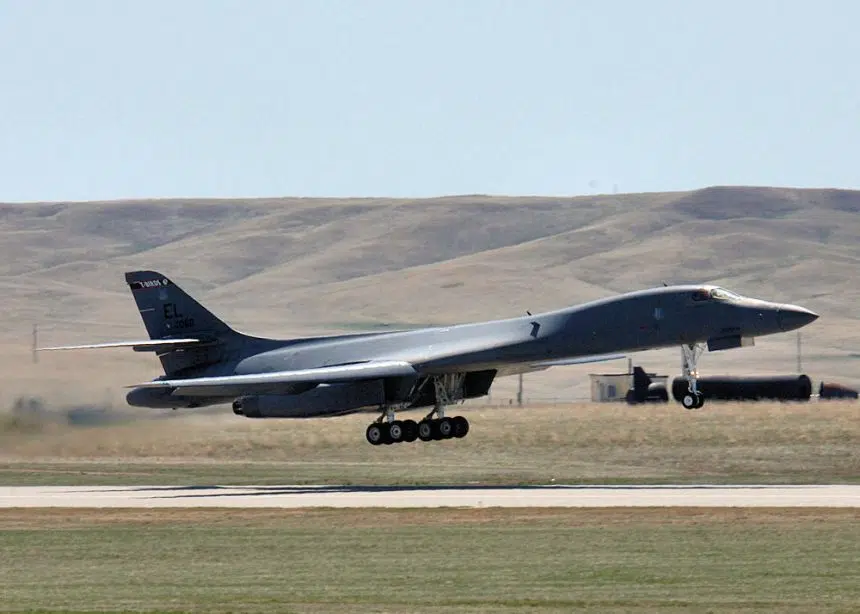
At the same time, the company developed the B-1 Lancer, a supersonic bomber meant to replace the B-52 in the US strategic bomber fleet. Rockwell also worked on advanced electronics, missiles, and guidance systems. Its Rocketdyne division produced the third stage of the Minuteman intercontinental ballistic missile and developed navigation systems for US ballistic-missile submarines. By the 1980s, Rockwell International had become one of the largest contractors for the defense and space in America. Under CEO Bob Anderson, the company expanded into a large aerospace, defense electronics, and space business, with major divisions for Space, Aircraft, and Defense Electronics. At its peak, Rockwell stood 27th on the Fortune 500 list, with sales of $27 billion, assets of over $8 billion, and 115,000 employees. Rockwell also worked on various experimental aircraft. It developed the OV-10 Bronco, the Sabreliner, and several Commander aircraft. The company also explored new technologies in its research programs, such as high-speed aircraft and experimental vehicles, including the X-30, XFV-12, X-31, and HiMAT, a remotely piloted research aircraft. The company also developed the AGM-53 Condor and worked on missile technologies, including the AGM-114 Hellfire.

Rockwell also had a major research facility in California. The center started in 1962 as the North American Science Center and became the Rockwell International Science Center in 1973. The lab conducted government research in advanced materials, infrared imaging, high-speed electronics, and advanced displays, with technology applications in both aerospace and defense. The end of the Cold War changed Rockwell’s position. The completion of the Space Shuttle and B-1 bomber programs led to lower revenues, and decreasing defense spending pushed the company to diversify and sell its government-focused businesses. Between 1988 and 2001, Rockwell gradually dismantled the conglomerate it had built. In December 1996, it sold its major aerospace and defense businesses, such as the former North American Aviation operations, Defense Electronics, and Rocketdyne, to Boeing. The breakup finished in 2001 when the remaining parts of Rockwell International became Rockwell Automation and Rockwell Collins. Rockwell International is no longer in operation, but its influence in aerospace and defense continues through the companies that carry on its work.














Rockwell came in as a ‘white knight’ in the acquisition of North American Aviation. I remember it.
North American was riding high – up until the 1960’s. North American was almost exclusively in the defense business. They never built a commercial airliner that I know of, but they did build a business jet.
In my opinion what really brought about the demise of North American was the cancellation of its F-108 fighter followed by the cancellation of the B-70.
No after-108’s were ever built, and only two XB-70’s were built, the justification being that they could be used for research into an American SST. The second and better/faster XB-70 was lost in a midair collision with an F-104 over Edwards AFB in June 1966 (I was in tech school in the Air Force and saw the TV news) in a photo-op for engine maker GE, and the remaining slower one is at the US Air Force Museum outside Dayton Ohio.
North American lost its shirt on those two programs and never recovered.