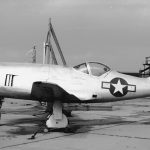
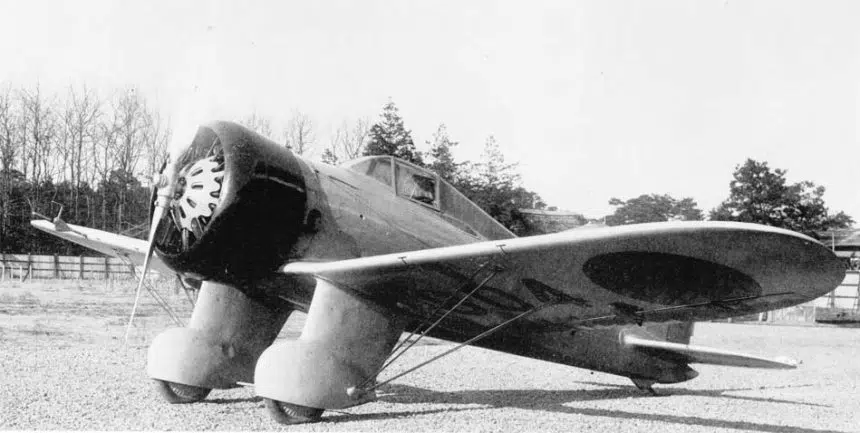

In 1935, the Japanese government sought a single-seat monoplane fighter to meet the needs of both the Imperial Japanese Army Air Force and the Imperial Japanese Navy Air Service. The Nakajima Aircraft Company entered the competition with the Nakajima Ki-11, which it began developing as a private venture in 1934. It was based on the low-wing monoplane design of the Boeing P-26 Peashooter. The fuselage, center section of the wing, and undercarriage were duralumin; the wings and tail were wood and canvas.
Design of Nakajima Ki-11

The Nakajima Ki-11 was powered by a single Nakajima Kotobuki Ha-1-3 radial engine that produced 550 hp. It was planned to arm the aircraft with two 7.7 mm machine guns that fired from between the engine cylinders. The single-seat Nakajima Ki-11 was 22.7 feet long, 10.11 feet high, with a wingspan of 35.8 feet and a wing area of 205.6 square feet. Its empty weight was 2,798 pounds, and the gross weight was 3,440 pounds. The maximum speed was envisioned at 262 mph, with a range of 250 miles and a service ceiling of 33,500 feet. The Ki-11 was tested against the Kawasaki Ki-10 biplane. The Nakajima Ki-11 was faster and more advanced, but the Imperial Japanese Army was divided. Some leaders favored “speed”; others, “maneuverability.”
The Cancellation

The supporters of maneuverability won, so the Ki-10 became the main army fighter until 1937. Nakajima kept improving the Ki-11 design, which later became the Nakajima Ki-27 “Nate.” The company developed only four Ki-11 prototypes. Nakajima sold the fourth prototype, the AN-1 Communications Aircraft, to the Asahi Shimbun newspaper. The newspaper registered it as J-BBHA and used it as a liaison and courier plane, as well as for reconnaissance and news-gathering flights. While the Nakajima Ki-11 itself was not favored, its further development, the Ki-27, became a hit, with over 3,368 built. Read more Grounded Dreams articles HERE.