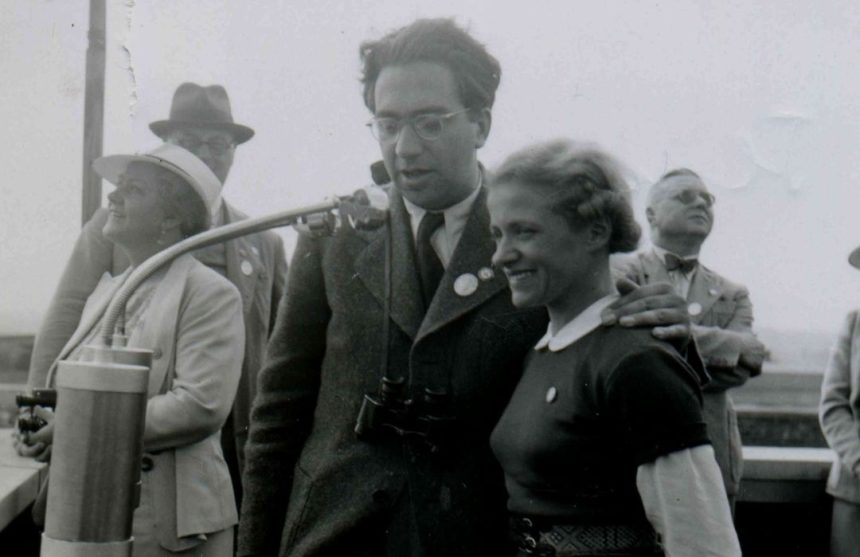

The history of aviation has many engineers and researchers who developed something the world had never seen before. Similarly, the case was for Erich Bachem, who developed the world’s first manned vertical-takeoff interceptor. Born on August 12, 1906, in Germany, Bachem studied engineering at the University of Technology in Stuttgart in 1925. After graduating, Erich Bachem trained to become a master flight engineer in Berlin. In 1933, after publishing two aviation books in two years, he became the head of the development department at the Fieseler aircraft company. Bachem later became the Technical Director at the Fieseler aircraft company. In 1935, he co-designed the well-known Fi-156 Storch light aircraft, which was famous for its short takeoff and landing capabilities. While working at Fieseler, he tried to improve a design by Dr. Wernher von Braun for a vertical-takeoff rocket interceptor. Dr. von Braun had proposed the idea in 1939, but the German Air Ministry (RLM) had rejected it as “unnecessary and unworkable.” Erich Bachem believed the idea had potential. He attempted to gain support for several proposals for a rocket interceptor but was unsuccessful.
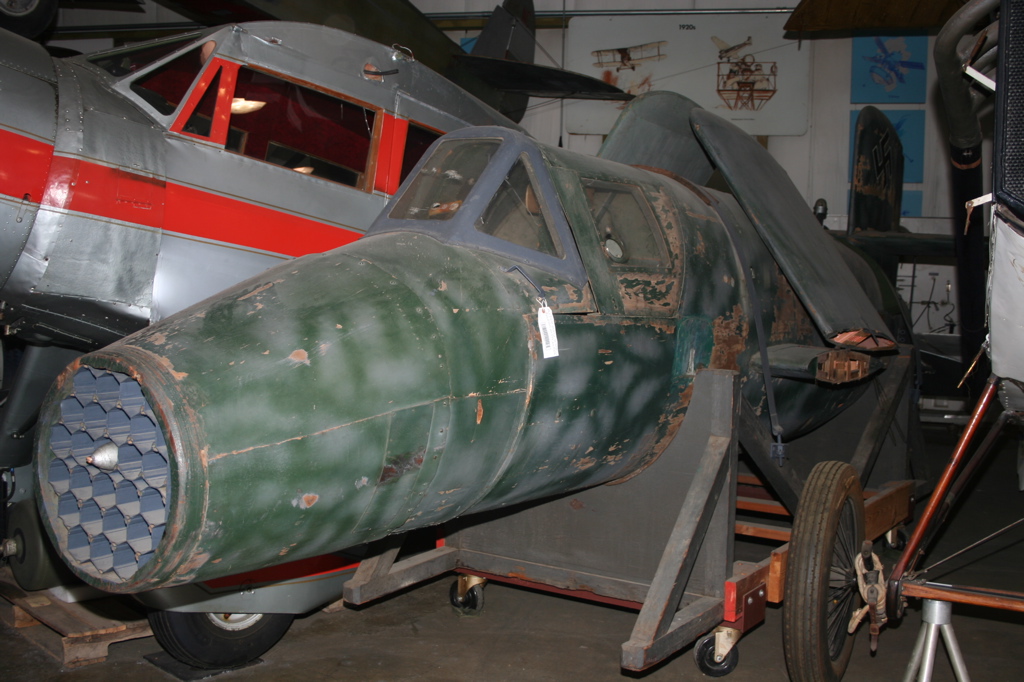
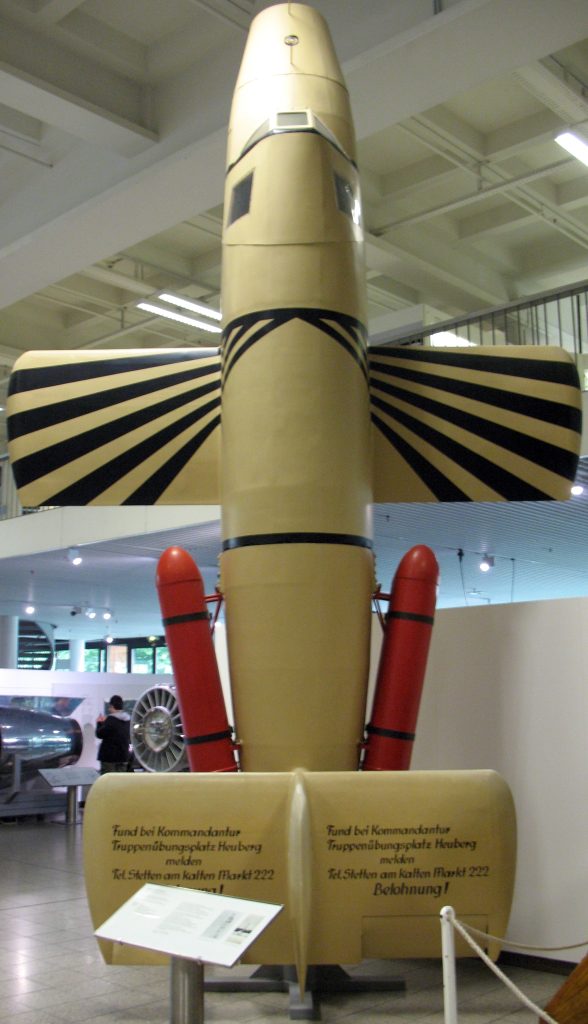
Erich Bachem founded Bachem Werke GmbH on February 10, 1942. The company initially manufactured spare parts for piston-engine aircraft. However, in spring 1944, the Allied bombing began to affect Germany’s military efforts. The Luftwaffe’s standard methods for stopping the bombers were not working, so they began looking for new solutions. The RLM Technical Office issued a request for a cheap fighter made from nonessential materials. Messerschmitt, Junkers, Heinkel, and Erich Bachem submitted designs, but the RLM officials were not impressed with Bachem’s proposal, which later became known as the Bachem Ba 349 Natter. The RLM chose Heinkel’s more traditional design instead. Bachem did not give up and sought help from Heinrich Himmler, the head of the SS (Nazi Party security forces). Himmler liked Erich Bachem’s idea and ordered 150 Natters to be built using SS funds. The SS might develop an aircraft independent of the RLM, so they placed their own order for 50 Natters and officially named it the Bachem Ba 349. Bachem’s design was easy to build, allowing semi-skilled workers to construct one interceptor in about 1,000 man-hours. The wings were simple rectangular wooden slabs and lacked ailerons, flaps, or other control surfaces. The tail had four fins and control surfaces in a cross pattern. Once the Ba 349 was moving fast enough to generate enough airflow, the pilot could set these in various combinations to control the plane’s pitch, yaw, and roll.
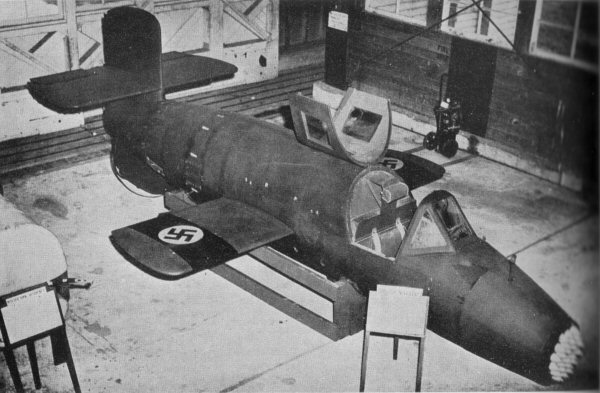
By November 1944, the Natter was ready for trials as a glider without power. A Heinkel He 111 bomber took it to 18,000 feet, released it, and the pilot easily controlled it. On December 22, the aircraft made its first successful launch using only solid-fuel boosters because the Walter engine was not ready. Over the next few months, there were ten more successful launches. Early in 1945, the Walter engine arrived, and on February 25, 1945, the Natter launched successfully with the full propulsion system, carrying a dummy pilot. The launch proved that the complete flight plan worked. Everything went according to plan, including the recovery of the dummy pilot and the Walter rocket engine. Later, the first manned test happened on February 28. Oberleutnant Lothar Siebert got into a Ba 349A, strapped in, and launched from the tower. At about 500 meters (1,600 feet), the Natter lost its canopy and headrest, causing the aircraft to crash, killing Siebert. No cause was found, but the ground crew might not have locked the canopy, which could have hit the pilot. Despite this tragedy, more pilots signed up to fly, and the Erich Bachem team conducted three flights in March. Near the end of the war, the Germans set up ten Natters at Kircheim near Stuttgart. Pilots stood ready day after day, but no US bombers came into range.
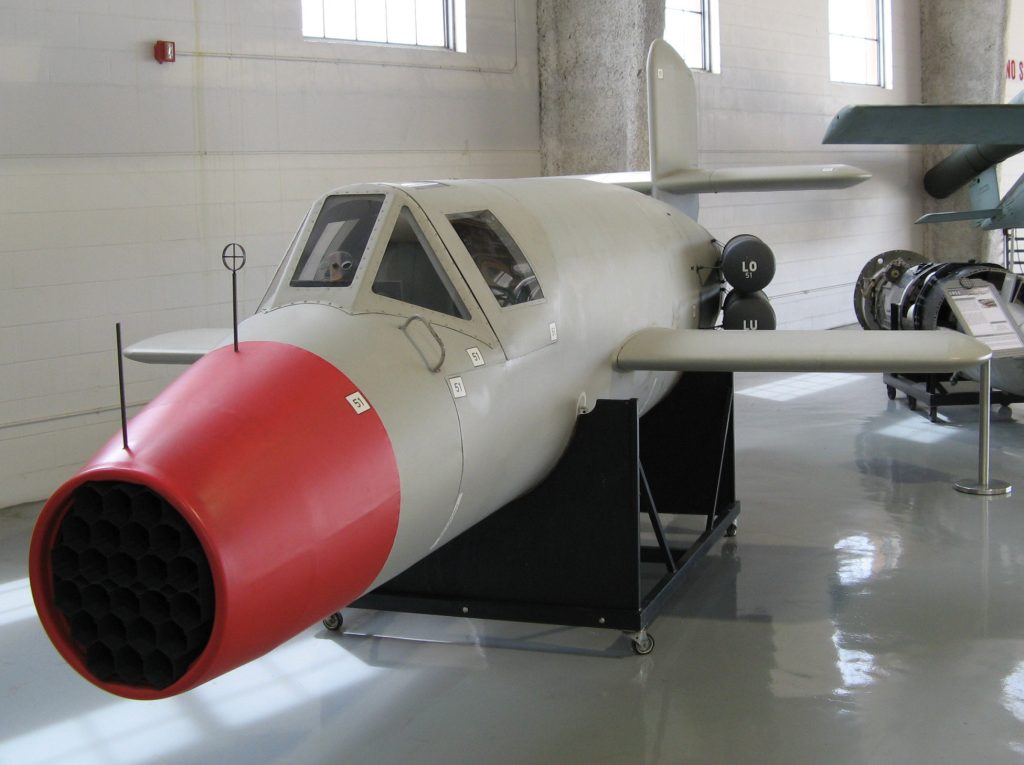
The US Seventh Army captured the site, but the Germans destroyed all ten Natters and their launchers before that happened. Some sources mention that Natter was not a good idea from the start. After the war, Erich Bachem moved to Bad Waldsee. His neighbor was Erwin Hymer, who was creating a new camping caravan for German vacationers. Bachem loved camping and had already built his own designs before the war. He worked with Erwin to develop the Hymer, which became Europe’s most successful camping caravan. When production started in 1958, Erich Bachem took charge of the marketing network, called Eriba (short for ERIch BAchem). Bachem died in 1960, just as the Eriba Hymer began to achieve great success that would last into the next century. As one of the pioneers of aerospace engineering, despite the failure of the Natter, which had many reasons beyond engineering, Erich Bachem was still the developer of the world’s first manned vertical-takeoff interceptor. Read more similar stories HERE.