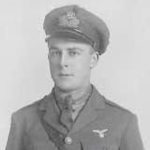
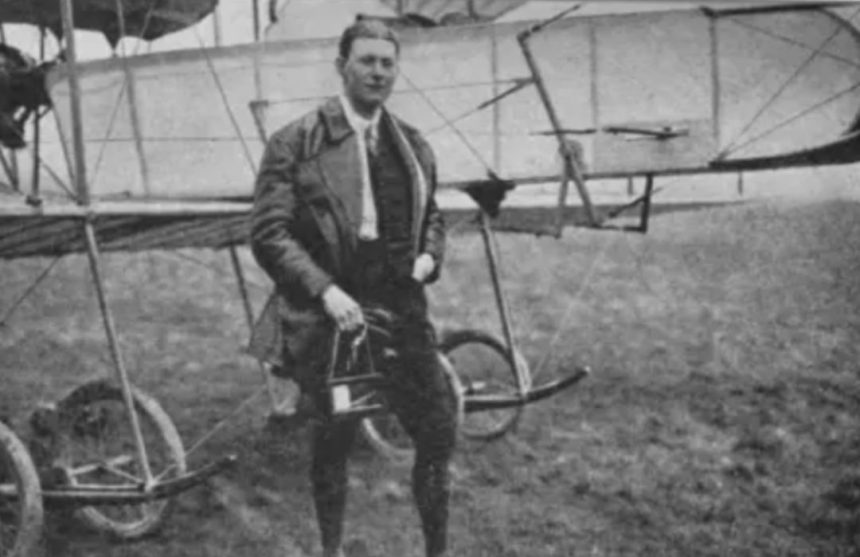

A Canadian, Gerald Gordon Bell, was working as a mechanical engineer before WWI began. Born on June 11, 1890, in Ottawa, he joined the 38th Battalion, Canadian Expeditionary Force on February 8, 1915. The 38th Battalion stayed in Canada until August 14, 1915, when it moved to Bermuda to serve as a garrison. In May 1916, it sailed to England and went to France on August 13, participating in the Battle of the Somme. On January 2, 1917, Gerald Gordon Bell joined the Royal Flying Corps as an observer on probation and was also attached to the Eastern Ontario Regiment. After training in England, he returned to France on February 15 to serve in No. 22 Squadron RFC. He was promoted to captain in the Eastern Ontario Regiment on March 19. Flying a F.E.2b two-seater, Gerald Gordon Bell achieved his first aerial victory on April 8, when he and pilot Lieutenant L. W. Beale helped destroy an Albatros D.II over Regny. On May 3, he and Second Lieutenant E. A. H. Ward destroyed an Albatros D.III. As an observer, his third victory came on July 29.
Ace Journey of Gerald Gordon Bell
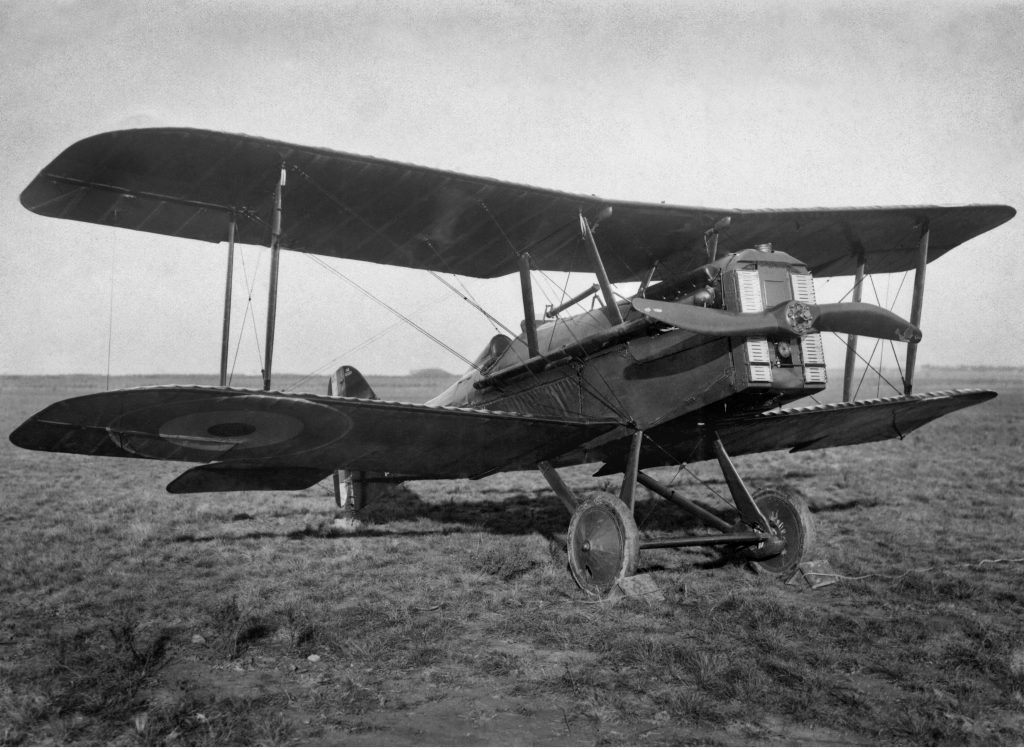
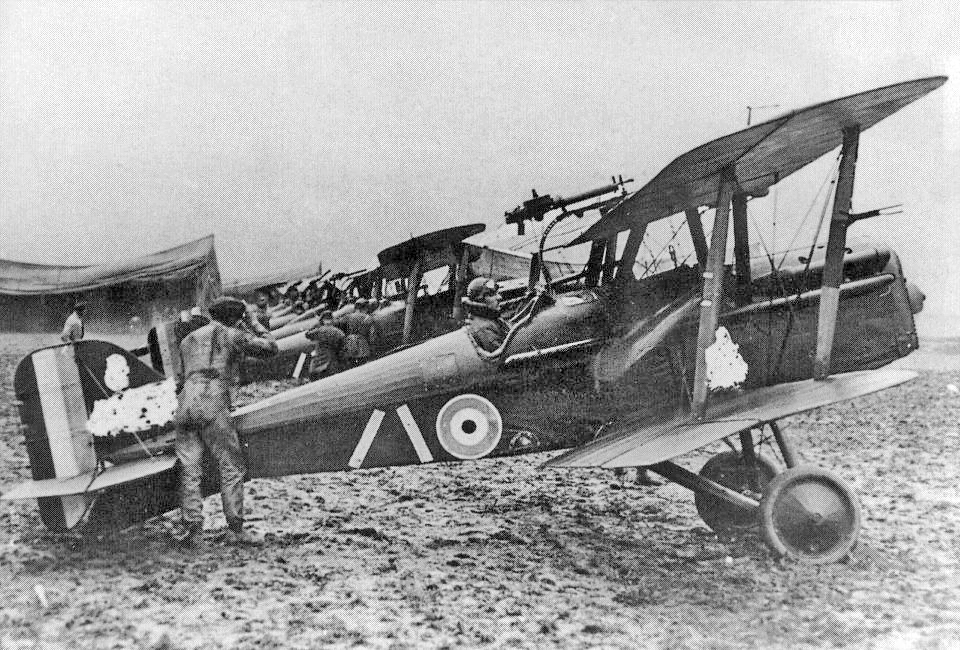
Gerald Gordon Bell returned to England to train as a pilot and qualified as a pilot in January 1918. He went to Salonika to join No. 47 Squadron RFC on the Macedonian front. On April 13, 1918, while flying a S.E.5a single-seat fighter, he shot down an Albatros D.III, after which he was transferred to No. 150 Squadron RAF. He became an ace on May 13 after shooting down another Albatros D.III, followed by a victory on May 15. Gerald Gordon Bell further scored four victories in June, two in July, three in August, and one in September, ending his WWI with a total of 16 victories. Gerald Gordon Bell was awarded the Distinguished Flying Cross (DFC) in November, with a citation, “This officer has had numerous engagements with hostile aircraft, invariably displaying marked gallantry and leadership of a high order, notably on the 1st of June, when he, accompanied by another pilot, attacked a formation of twelve enemy scouts; he shot down one in flames and drove down others out of control, only breaking off the engagement when all his ammunition had been expended.”
Life After WWI
On February 29, 1919, Gerald Gordon Bell attended a Medical Board because he had malaria, which he caught in Salonika in September 1918. He experienced fevers, weakness, and insomnia, and was marked as unfit for further service. On May 6, he ended his secondment to the RAF and gave up his commission. On May 13, he was demobilized from the Canadian Expeditionary Force. On October 10, 1919, he received permission to wear the insignia of a Chevalier of the Legion of Honor, which France awarded him. In 1920, Gerald Gordon Bell married the daughter of Sir Henry Drayton, a prominent Canadian lawyer, politician, and serving Minister of Finance/acting Prime Minister. His later life is not documented well, but in the Aces series, Gerald Gordon Bell was one of the Canadian aces who made his country proud by scoring 16 aerial victories. Read stories about more Aces HERE.