






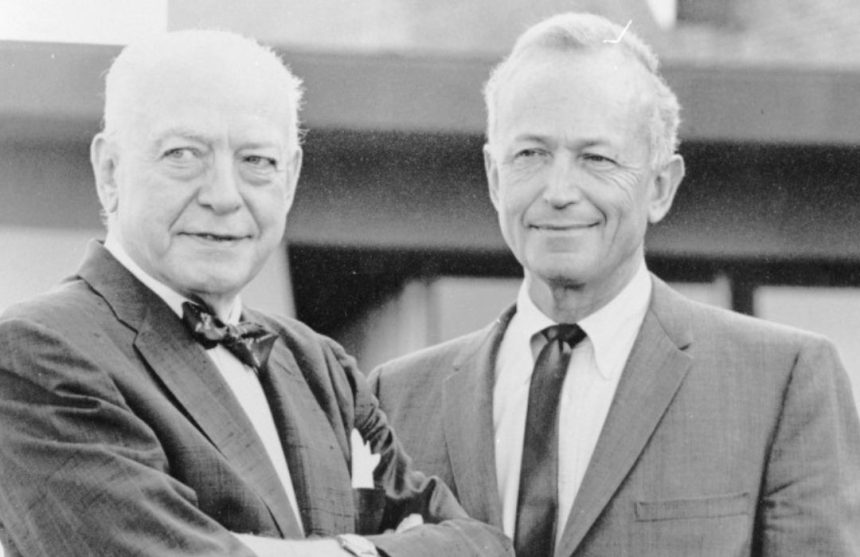

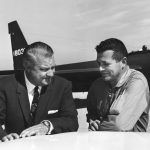
During the years when the US was involved in WWII, the Korean War, and later the Vietnam War and the Cold War, there was one person who quietly worked on the military aircraft the Air Force used. He was John Atwood, born in Kentucky on October 26, 1904. He attended Hardin-Simmons University from 1924 to 1926 and earned a Bachelor of Arts degree. After that, he took engineering courses at the University of Texas and earned a Bachelor of Science degree in 1928. John Atwood was a major force in the country’s aerospace industry for more than 40 years, making many significant contributions to the field, from the beginning of commercial flight to space exploration. He began his career as a junior airplane engineer with the US Army Air Corps in 1928. He then joined the Douglas Aircraft Company, where he was chief of structural design and helped develop the DC-1, DC-2, and DC-3 commercial airplanes. In 1934, John Atwood became the chief engineer and vice president of North American Aviation, and he was eventually elected president and CEO of the company.
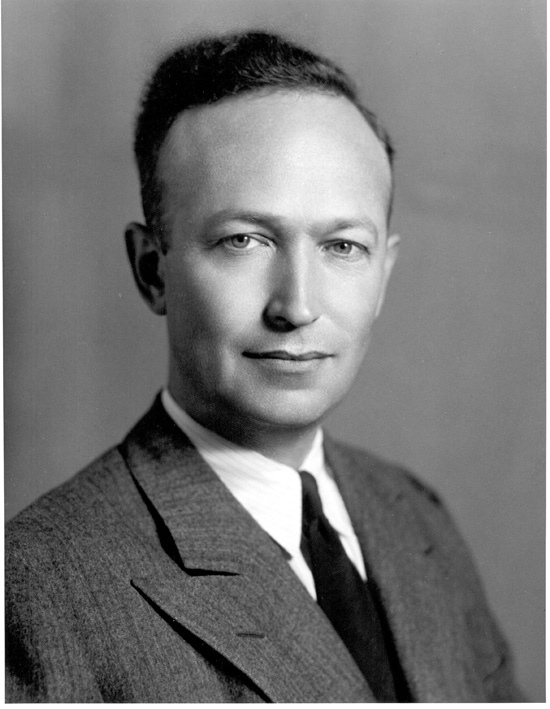
At North American Aviation, John Atwood designed the P-51 Mustang fighter, often called “the most perfect aerodynamic aircraft of WWII.” He also led the design of other important aircraft, including the T-6 Texan Trainer, used by nearly every Allied nation during the war; the B-25 Mitchell bomber, which took part in the famous raid on Tokyo in 1942; the F-100 Super Sabre, the first operational supersonic fighter; the hypersonic X-15, which set world records for altitude and speed; the XB-70 Valkyrie, the most advanced bomber of its size ever built; and the B-1 strategic bomber. Under John Atwood’s leadership, North American Aviation produced over 60,000 military aircraft. In 1967, North American Aviation merged with the Rockwell Standard Corporation. Atwood became the president and CEO of the new company, called North American Rockwell Corporation, which is now known as Rockwell International. Under his leadership, the company developed and built the Apollo command and service modules that helped carry astronauts to the moon nine times. The company also developed and built the S-II second stage of the Saturn V rocket, its F-1 and J-2 engines, and the guidance and flight control systems for the Minuteman missile. John Atwood also played an important role in developing the space shuttle. John Atwood retired in 1970 and served on the board until 1978.
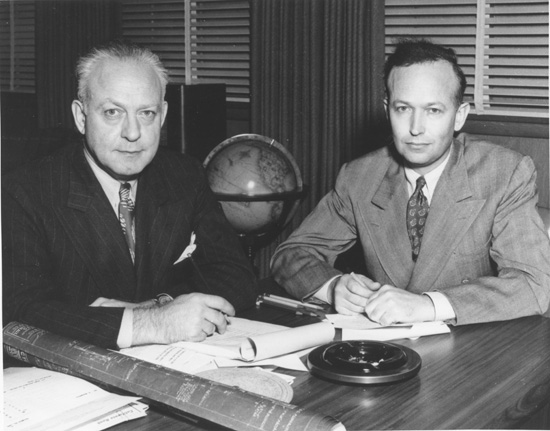
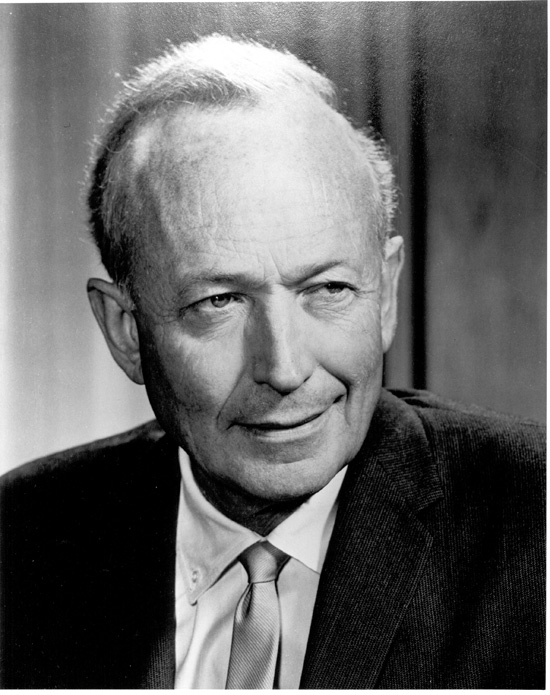
Under John Atwood’s leadership, North American Aviation and its workers won three Collier Trophies for their work on the F-100 Super Sabre fighter, the X-15 space plane, and the B-1 Lancer bomber. Atwood received several individual awards, including a Presidential Citation from Harry S. Truman for his contributions during WWII. John Atwood also won the Air Force Association’s Hap Arnold Trophy and the Wright Brothers Memorial Trophy from the National Aeronautic Association. In 1984, Atwood was elected to the International Air & Space Hall of Fame and received the Howard Hughes Memorial Award in 1994. In the HBO series From the Earth to the Moon, Ronny Cox played the role of Atwood. The Atwood Dorm at Harvey Mudd College in Claremont, California, is named after him. John Atwood was featured on the cover of Newsweek magazine on December 21, 1964, with the title “Apollo and the Moon Men – North America’s Lee Atwood.” John Atwood passed away on March 5, 1999. As one of the pioneers of aeronautical engineering, John Atwood was instrumental in bringing military aviation to where it is today. Read more similar stories HERE.







This is very interesting. A venture to maintain the institution legacy of aviation exploits , and invention which revolutionised the economy mobility of the world. I served in one of growing aviation regulatory body – NCAA, for 35 years and I Co- Established AEROCONSULT AVIATION TRAINING CENTRE , and ATO training in Nigeria with an erudite aviator of our time, Engr. Ade. Obadofin, still the Managing Director of Aeroconsult Ltd. My interest will be to create a library of aviation legacy of Nigeria perfectly institutionalised though gradually pieced., Engr. Ade OBADOFIN C.Engr. FNSE and JACOB IFEANYINCHUKWU IRO-EGBU, and cross-function aviator, whose expertise in ‘ Aviation Technical Documenttation and Ground Operations Safety, Co – Nutured the today, over 50% of NCAA Inspectors under the Director General, Late. Engr. Zak Haruna . We popularised the BATCO training of basic aircraft technicians course in the Southern part of Nigeria since it was domiciled in NCATZ, Zaria, the Northern part of Nigeria ab-initio.. This and lots of aviation legends like Dr. Harold Demuren’s stories should be told , to contribute in the continous sustainable of our ” ELITE ” trade. I can not wait to a part of the wonderful world of aviation explorations.