







By Randy Malmstrom
North American B-25J-15/17-NC Mitchell, s/n 44-28932. This is what I have determined to be at least a part of the history of this particular aircraft. It was built at North American Aviation’s Fairfax Municipal Airport plant in Kansas City, Kansas (hence the “NC” plant designator used for B-25J models) and delivered to the U.S. Army Air Forces on August 3, 1944. (President Roosevelt had established the National Defense Advisory Committee on May 28, 1940. The committee told North American Aviation to expand its facilities, but because plants closer to the American coasts were at higher risk of potential attack, the company was given the choice of either Tulsa, Oklahoma, or Kansas City, Kansas. Fairfax Municipal Airport in Kansas City was chosen due to some political/economic maneuvering, which I won’t elaborate on here. Even so, design features for security included no windows, and the doors were concealed by steel canopies; the plant could operate at night with minimal light shining from it. Although not camouflaged as such, the walls and roof of the building were designed and painted to blend in with the surrounding area. On February 7, 1942, the plant was assigned to produce 200 Boeing B-29s, but in a memo from Maj. General Oliver P. Echols to General “Hap” Arnold, he stated, “Since the B-25 has apparently become a more useful plane than was anticipated, in that it not only seems to be a reasonably good medium bomber, but also, with gunnery modifications, will lend itself to support of ground troops. It is believed that circumstances will require the maximum number of these planes that we can build.” Consequently, the contract to build the B-29 was terminated on July 31, 1942.”
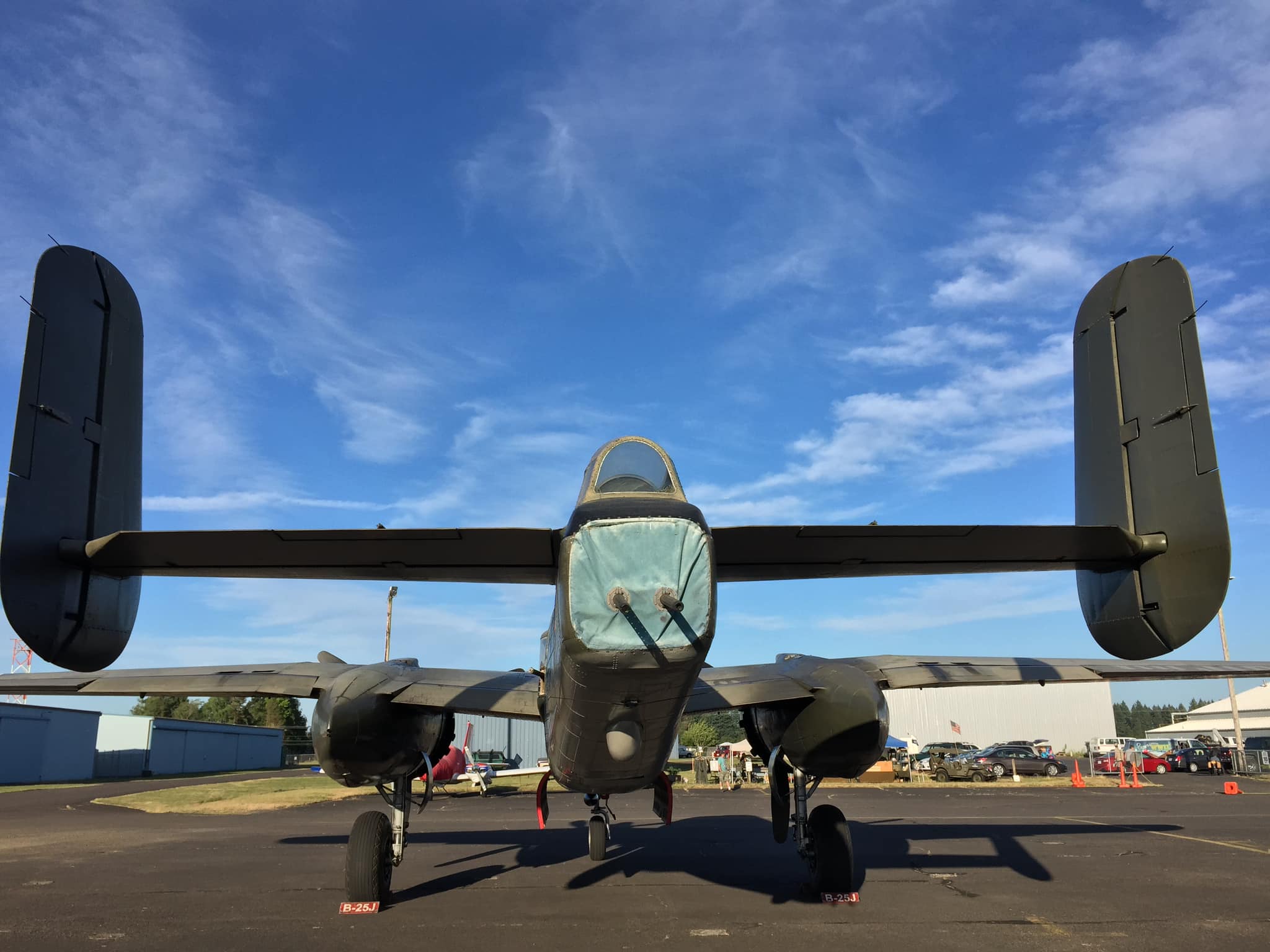
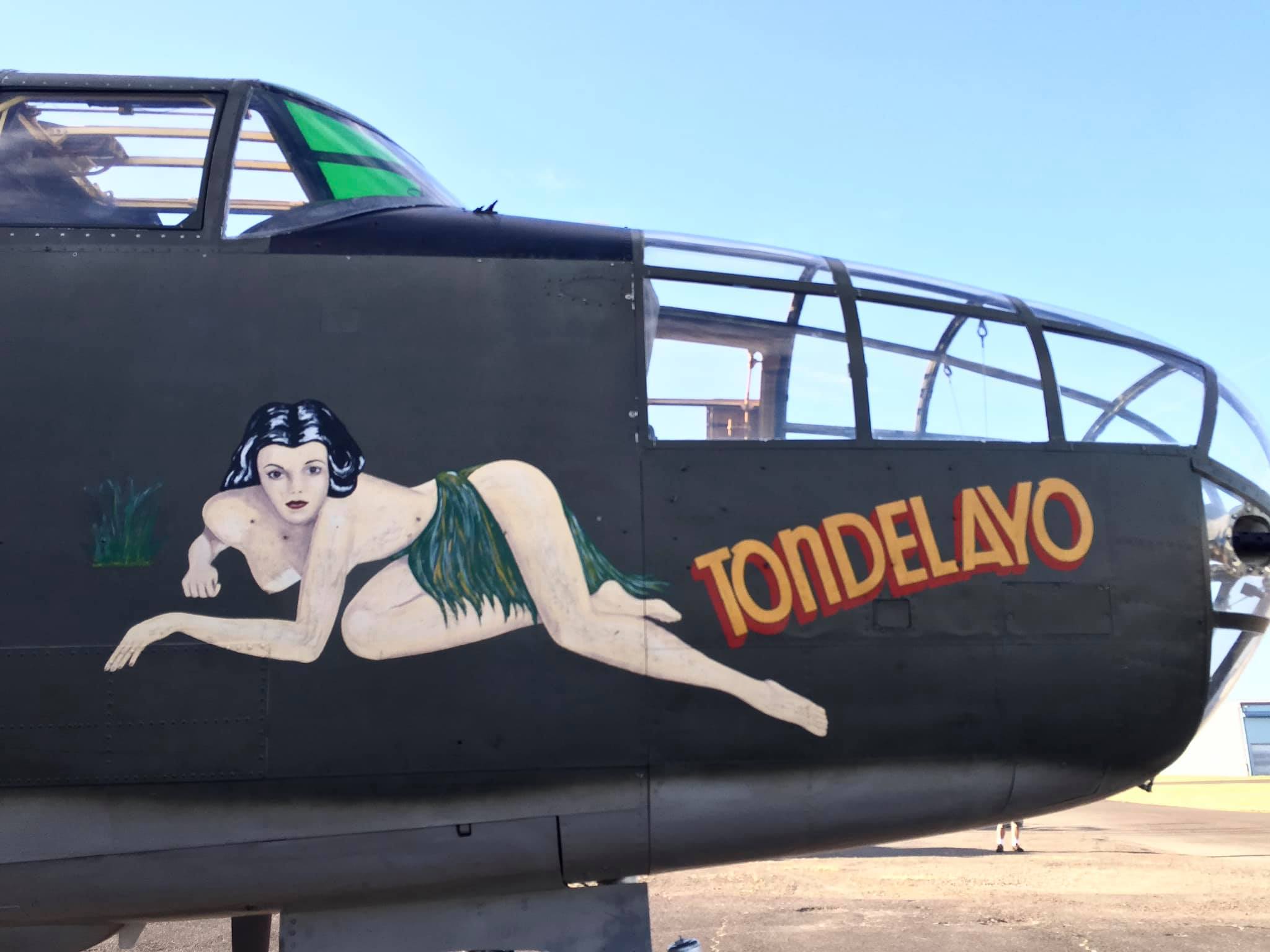
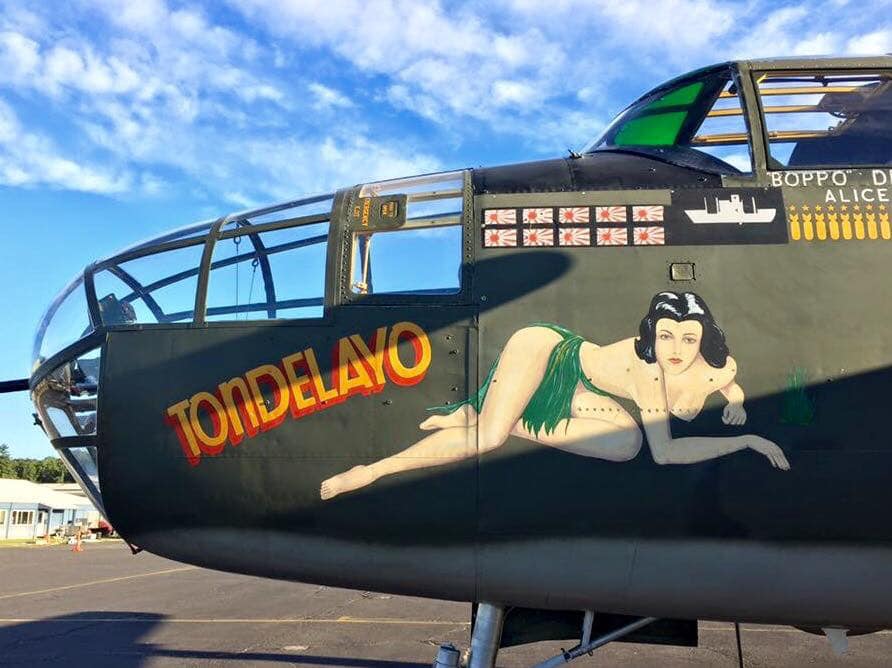
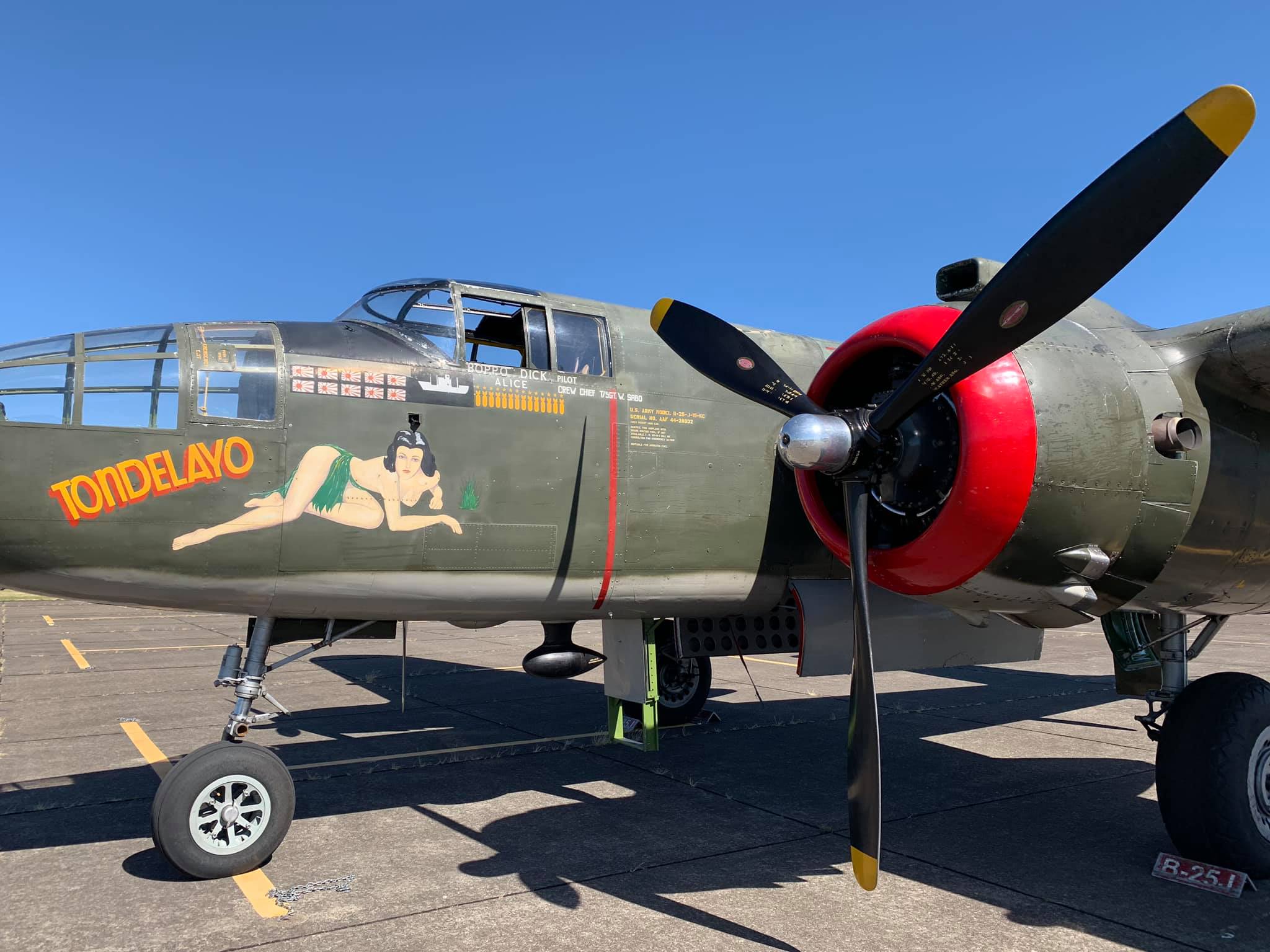
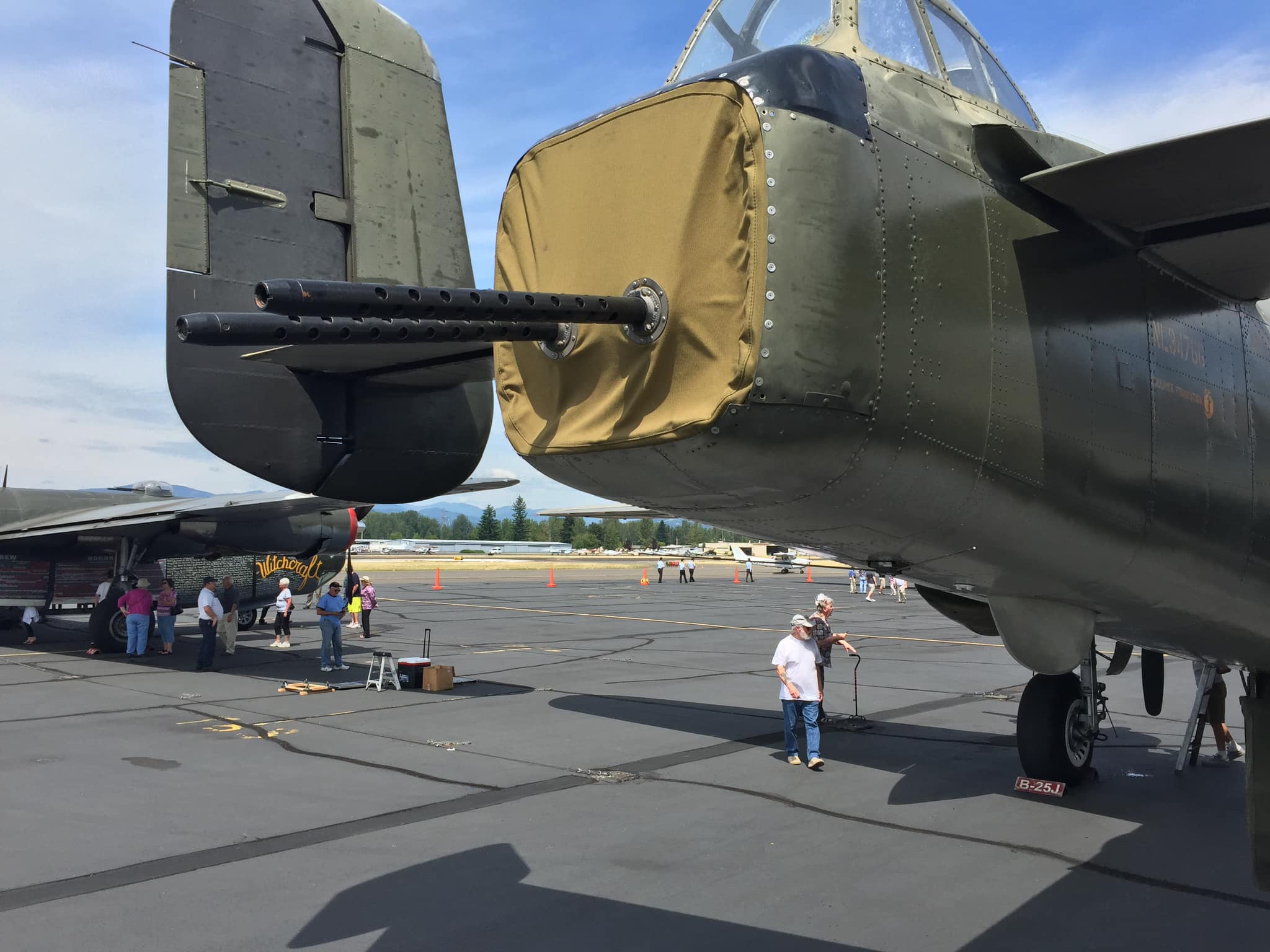
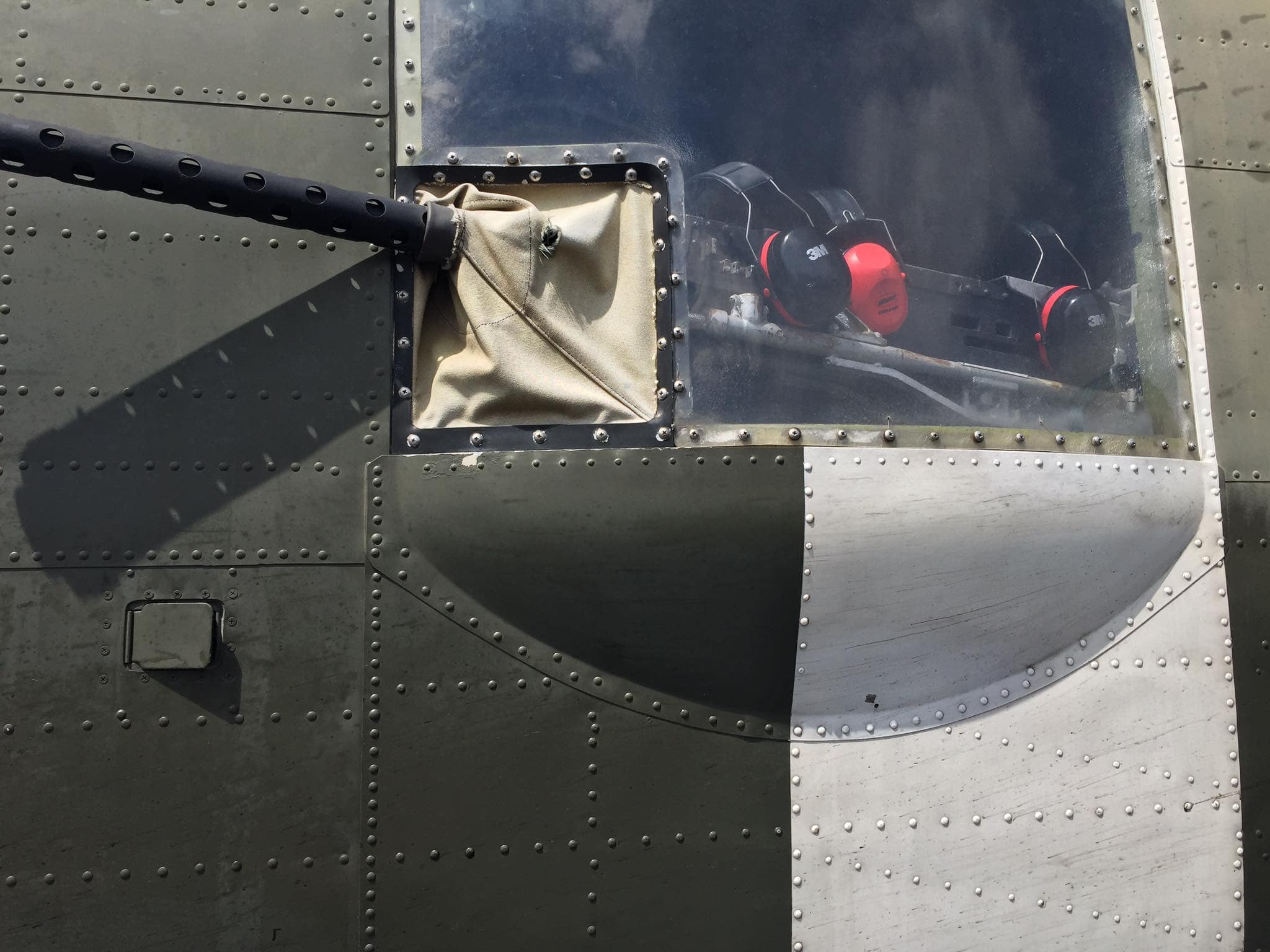
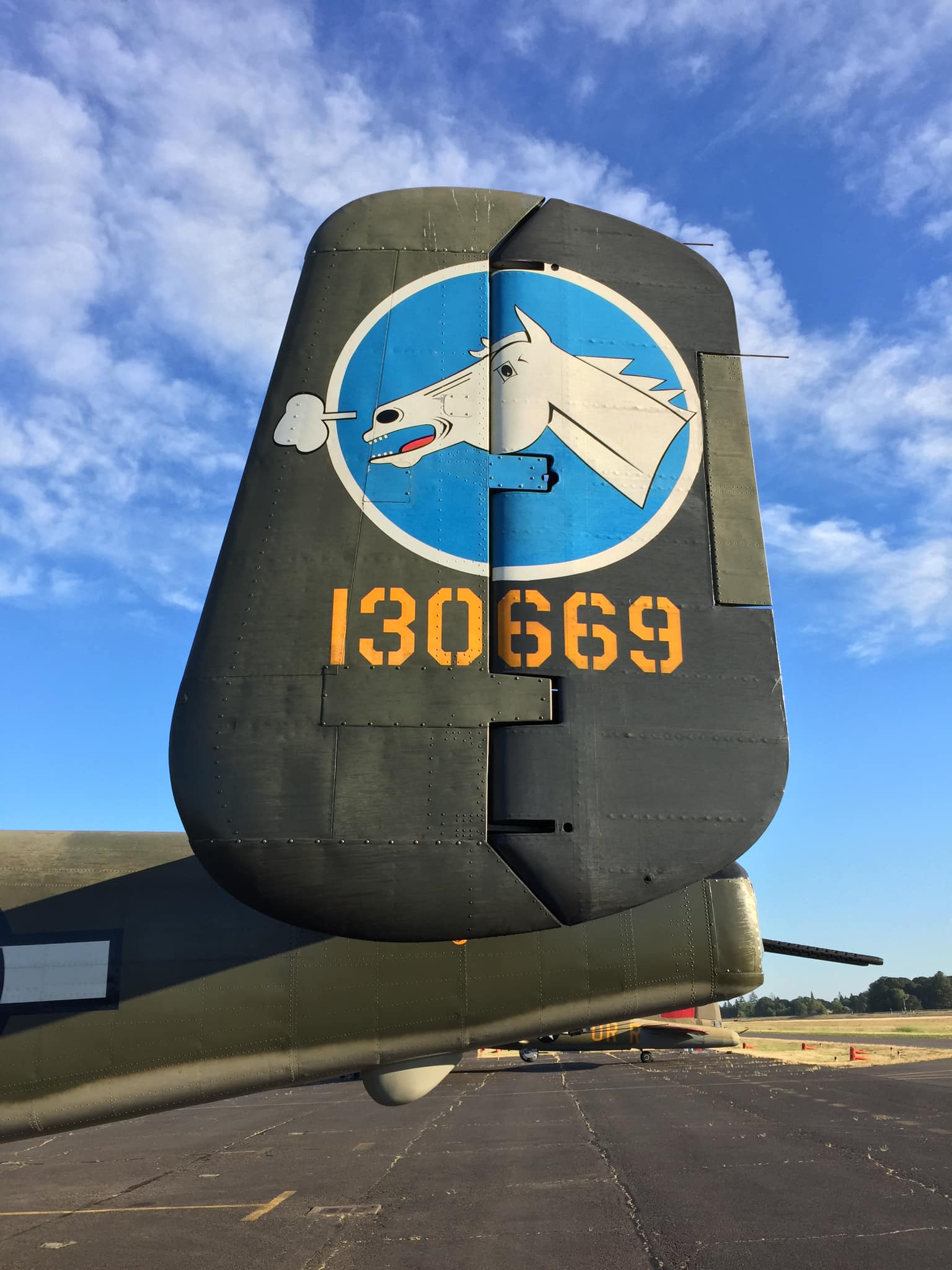
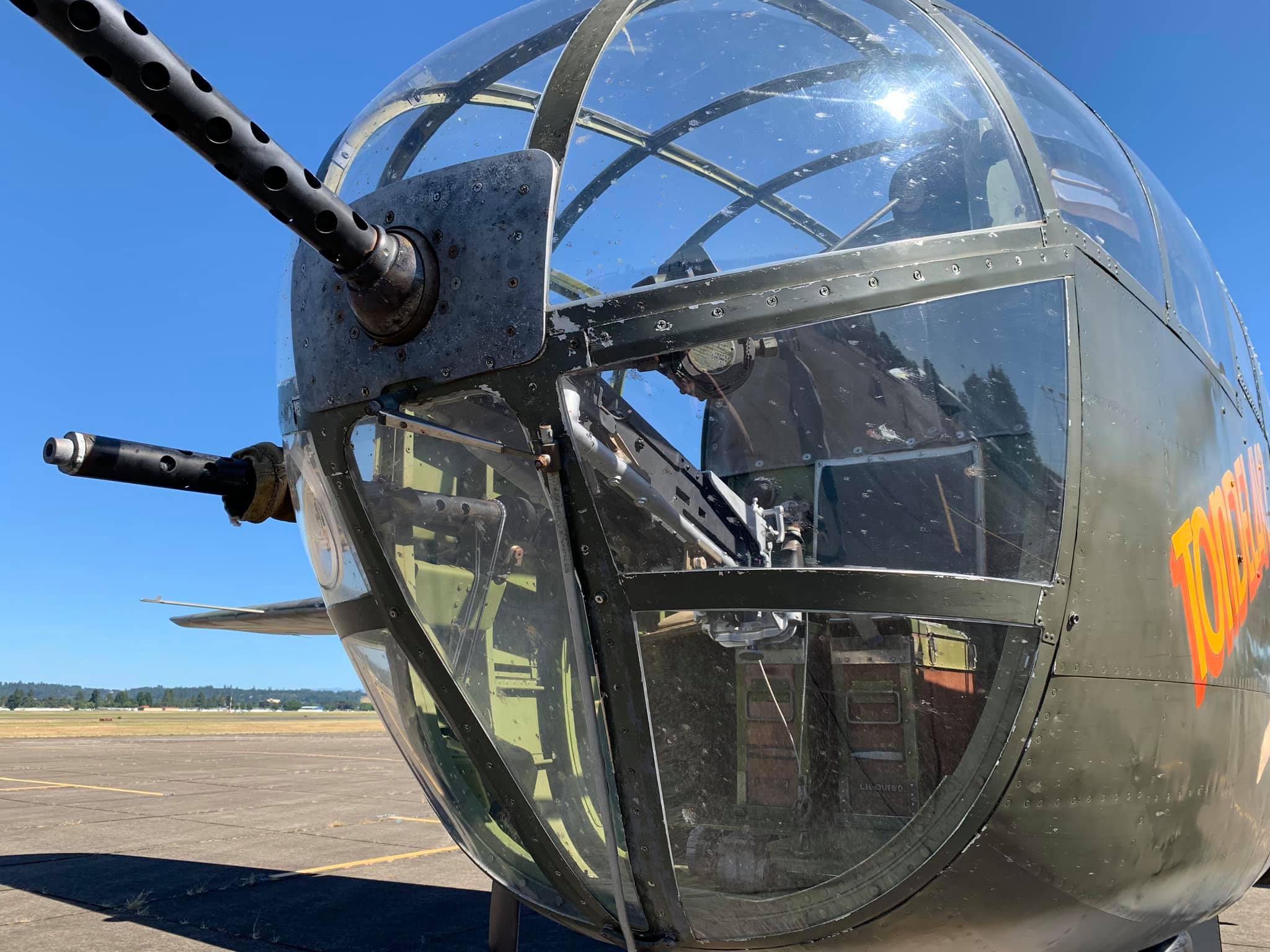
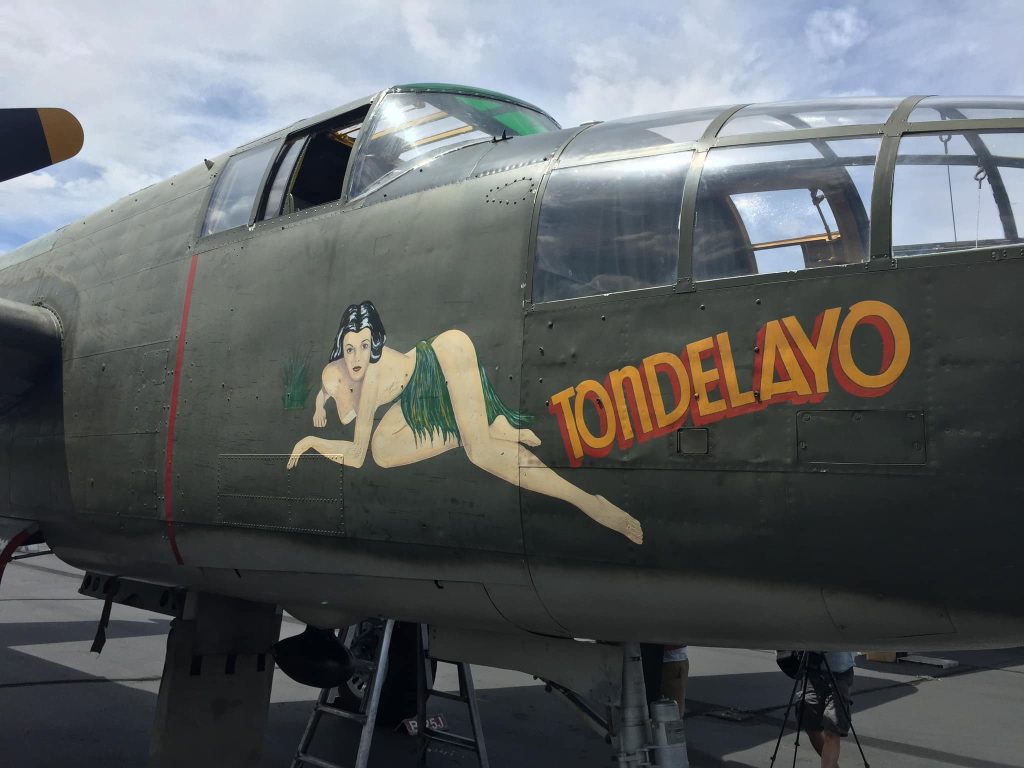
This aircraft went to Moody Field (Valdosta, Georgia) as an advanced multi-engine trainer. In March of 1945, it was sent to Napier Field, Alabama, for proficiency and administrative duties, and then by 1946, it was at Chanute Field in Illinois with the Technical Training Command that had been established there in 1941. Then in 1948 it was assigned to pilot training at Barksdale Air Force Base in Louisiana, and then on to Reese Air Force Base in Lubbock, Texas, in 1950, then reassigned to Pinecastle Air Force Base in 1952. In 1956, it became one of some 380 “J” variants converted by Hayes Aircraft Company (Birmingham, Alabama) to a TB-25N trainer and was assigned to Homestead Air Force Base until December 1958, when it was put into storage.
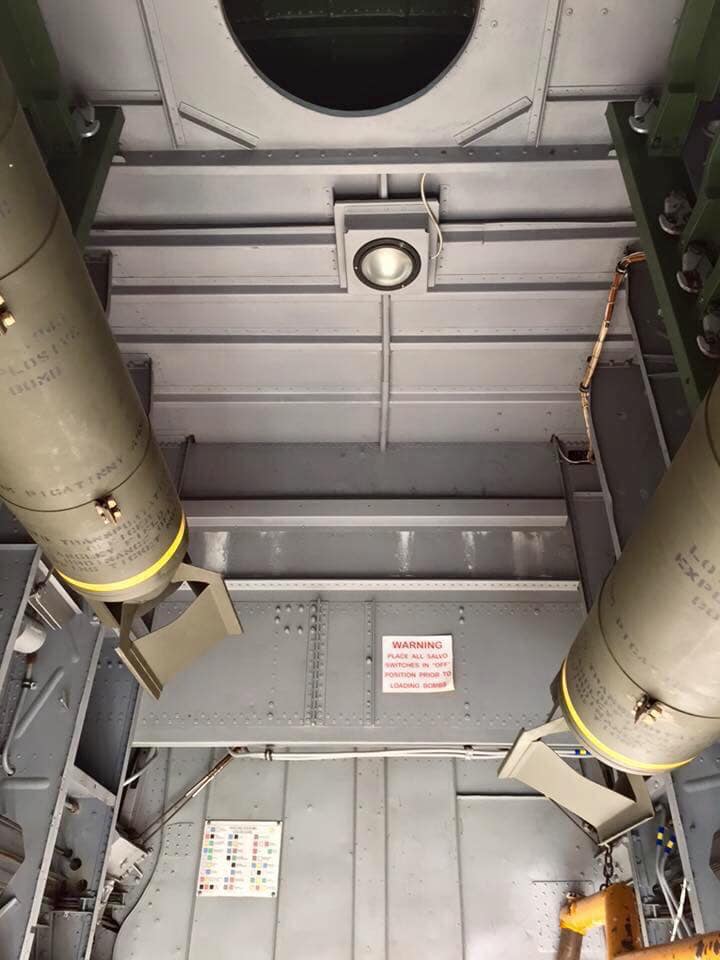
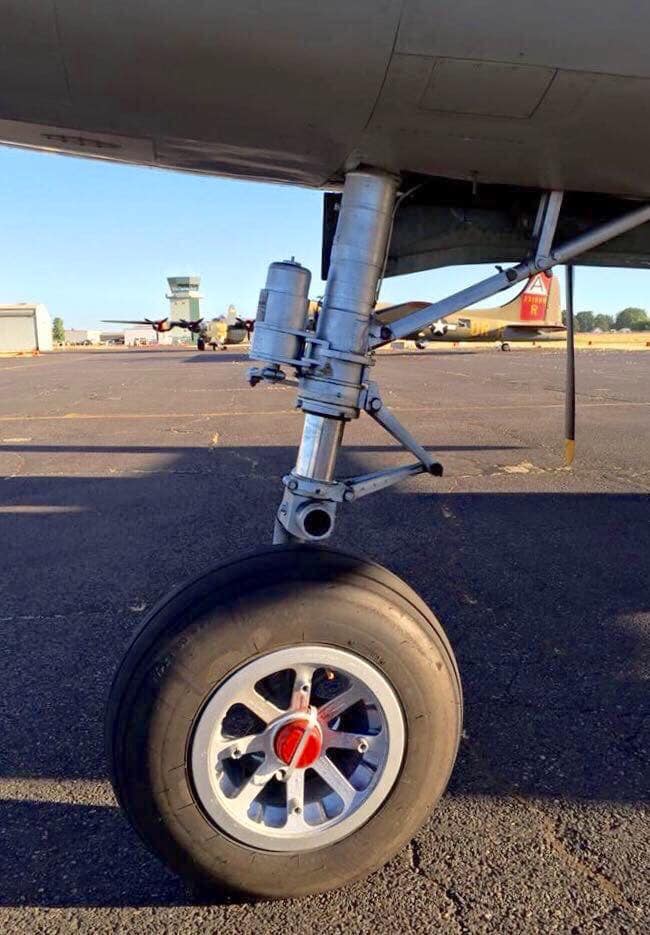
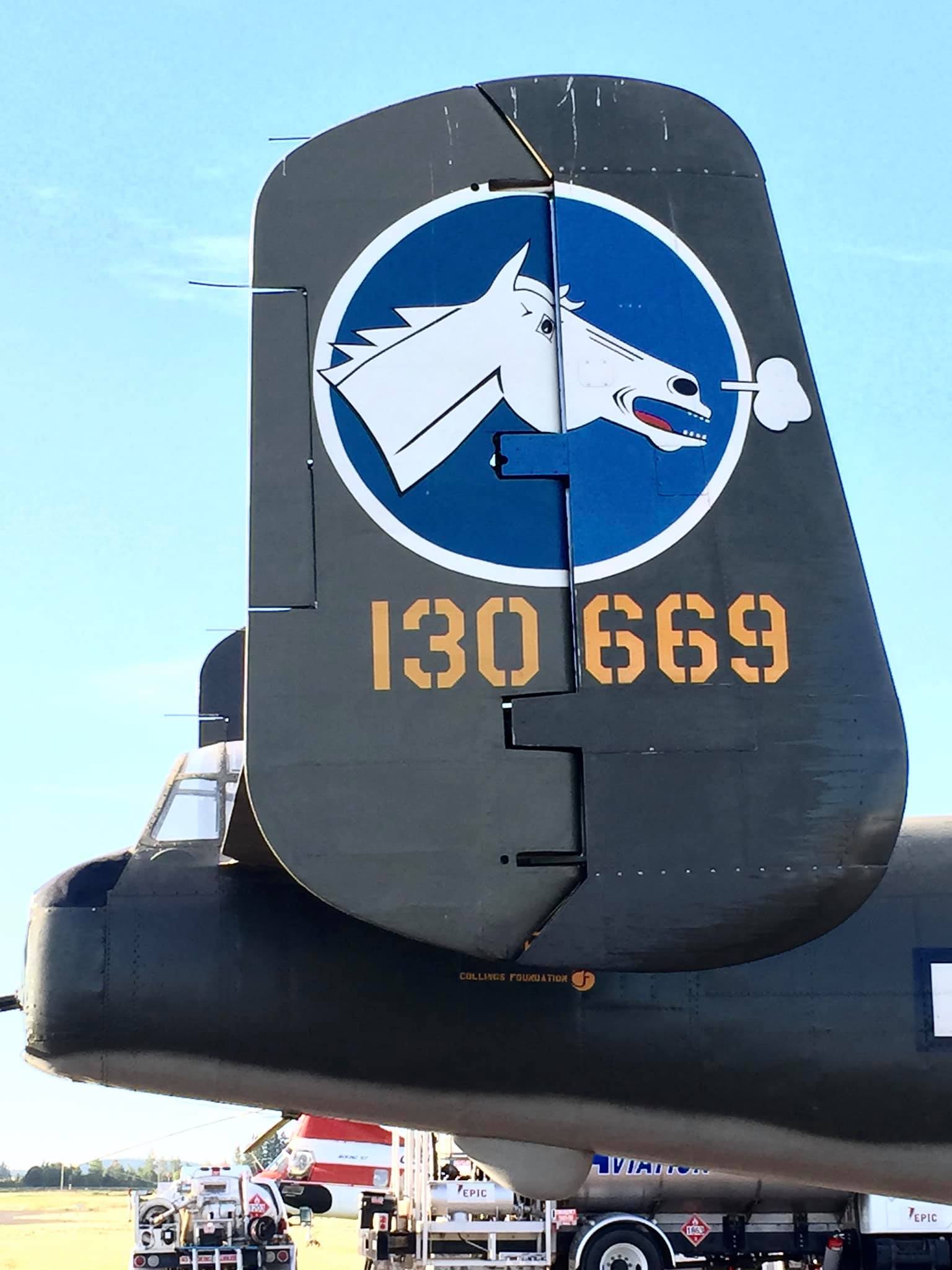
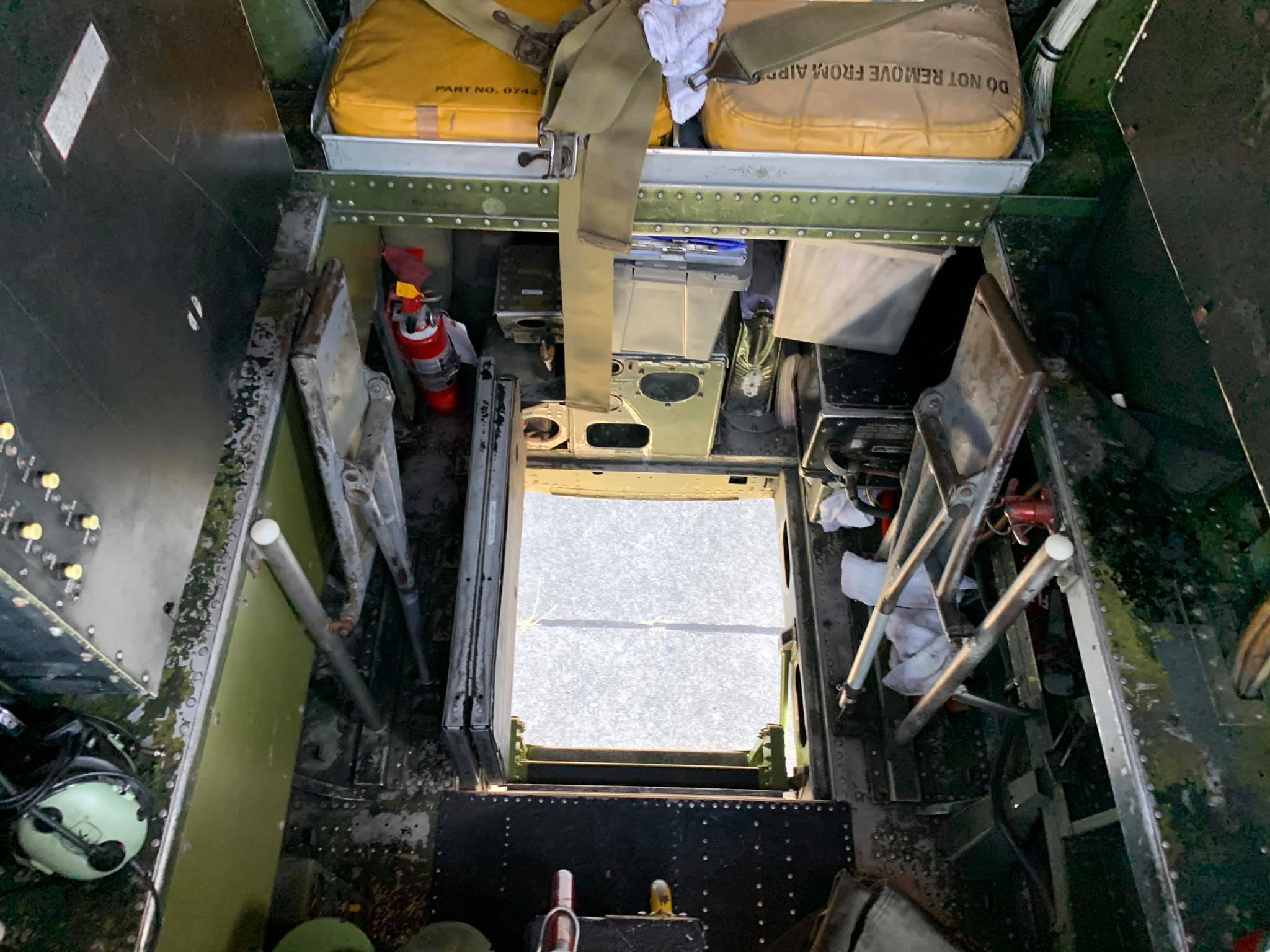
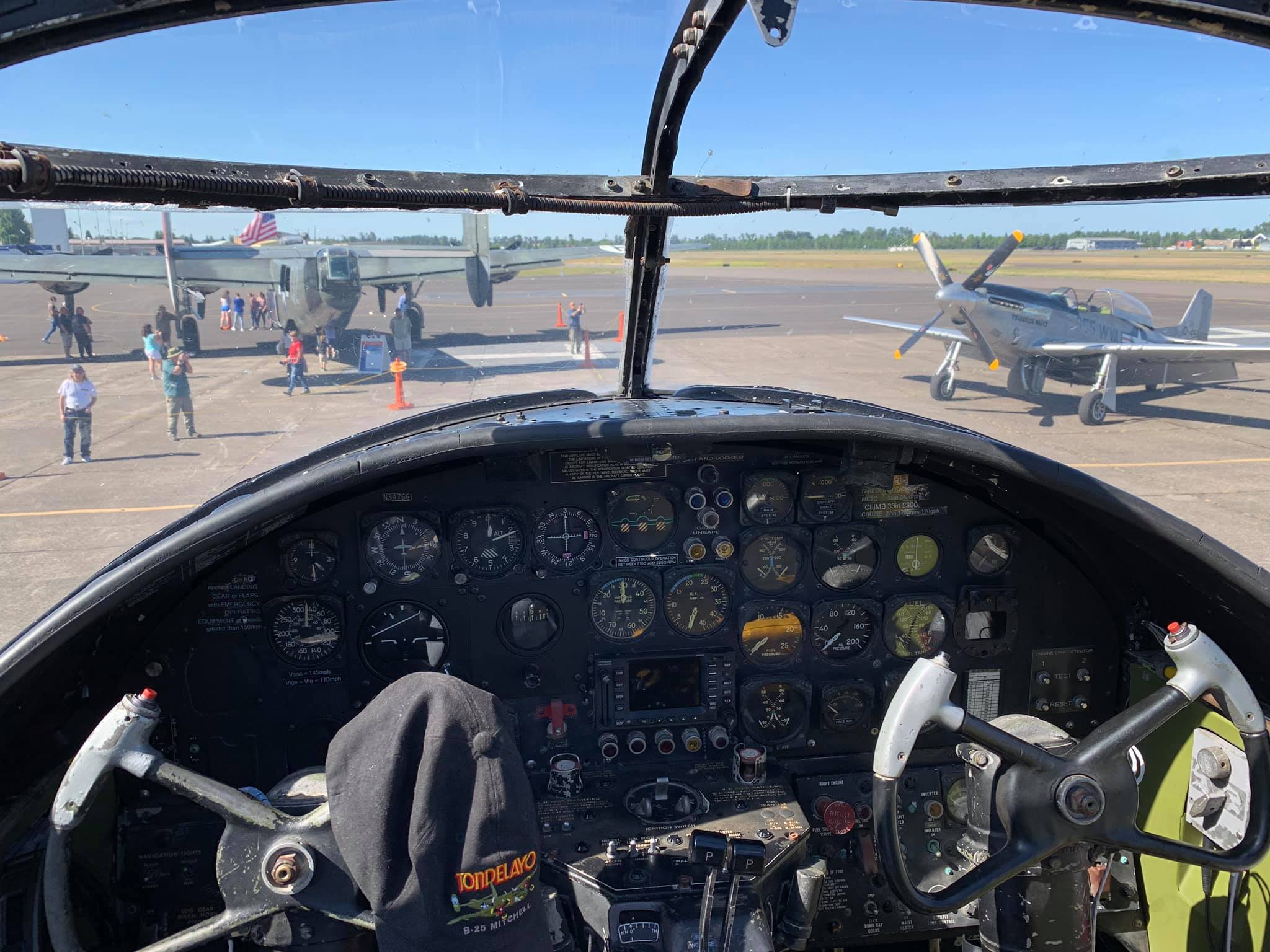
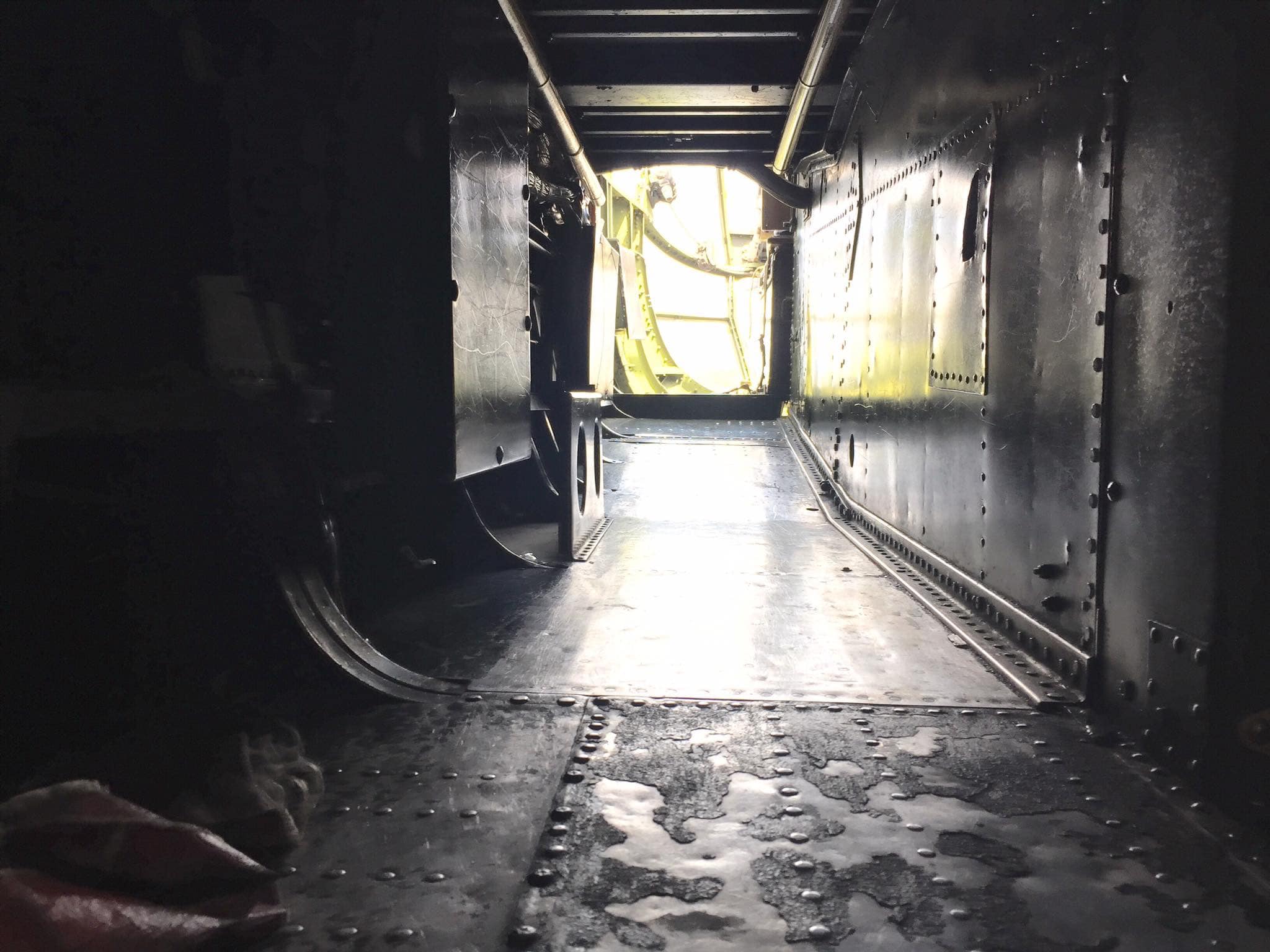
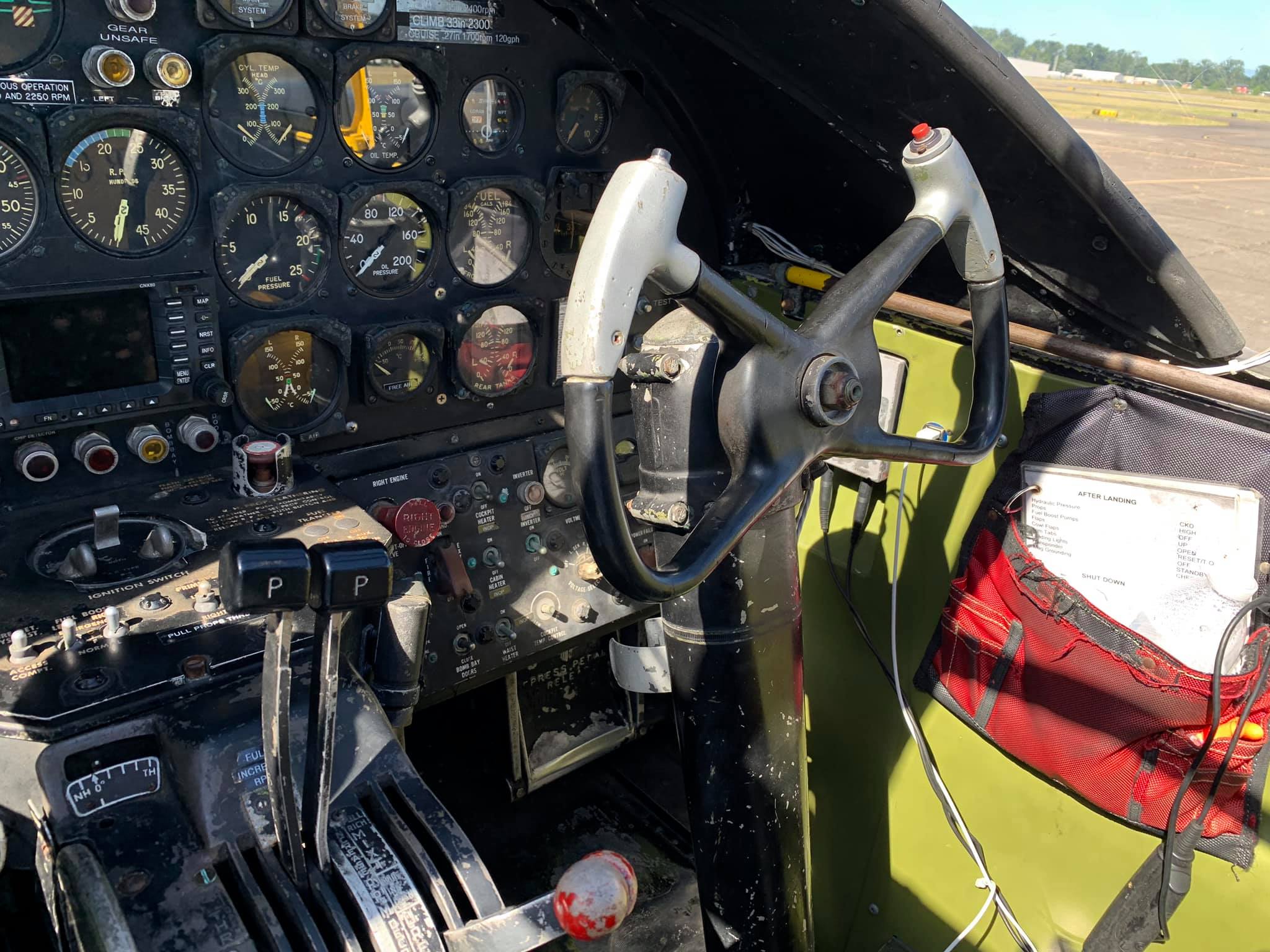
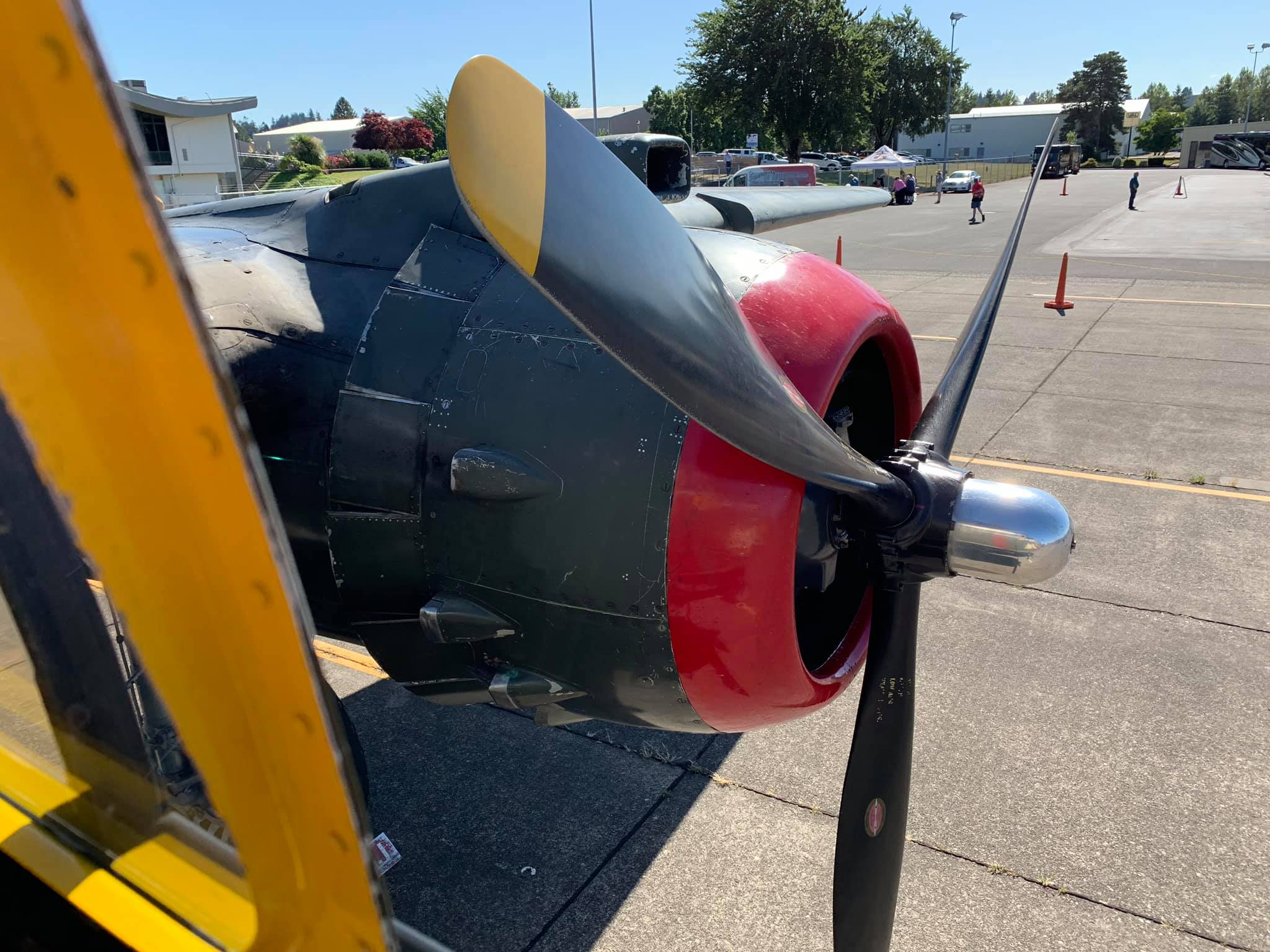
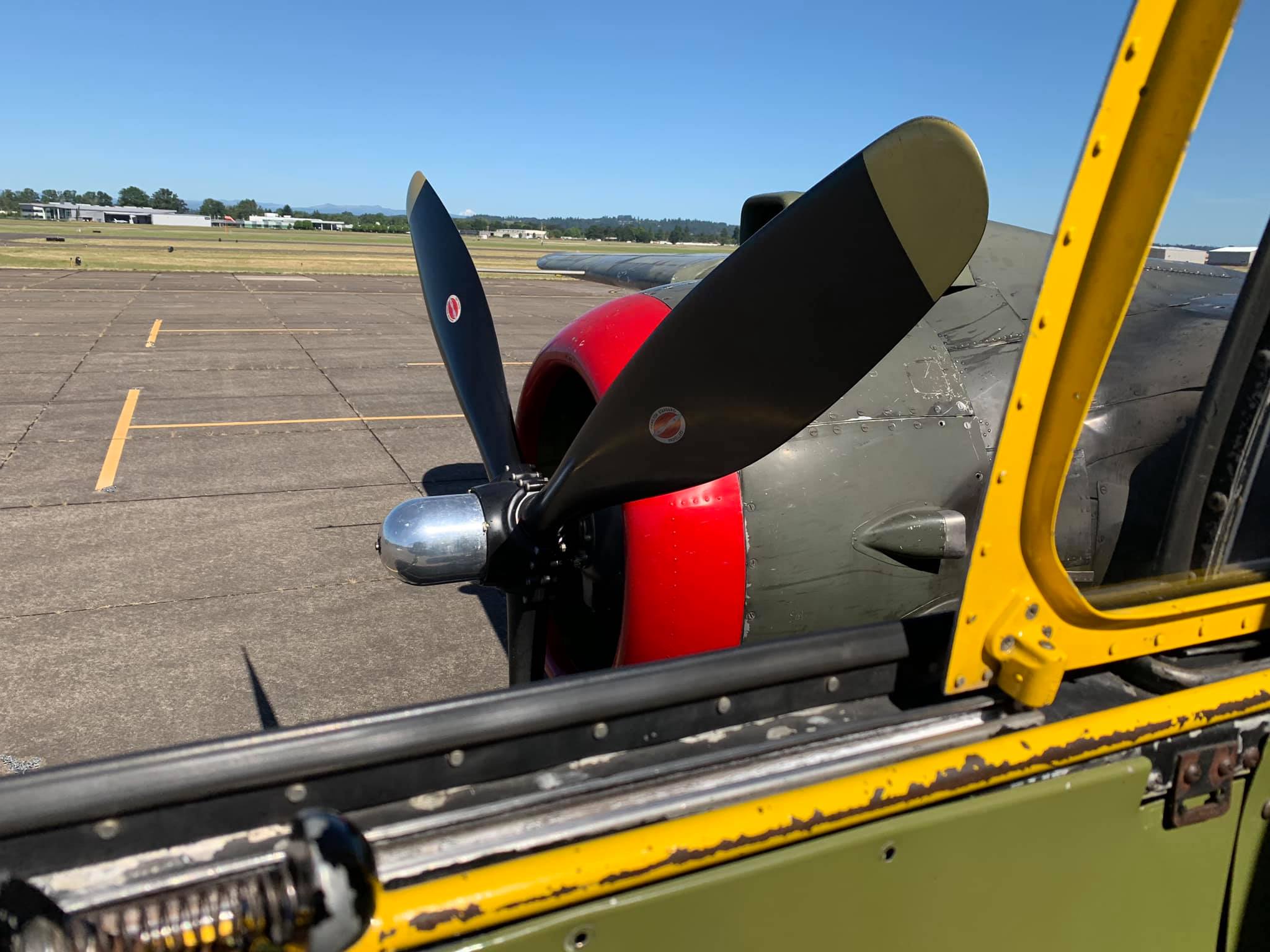
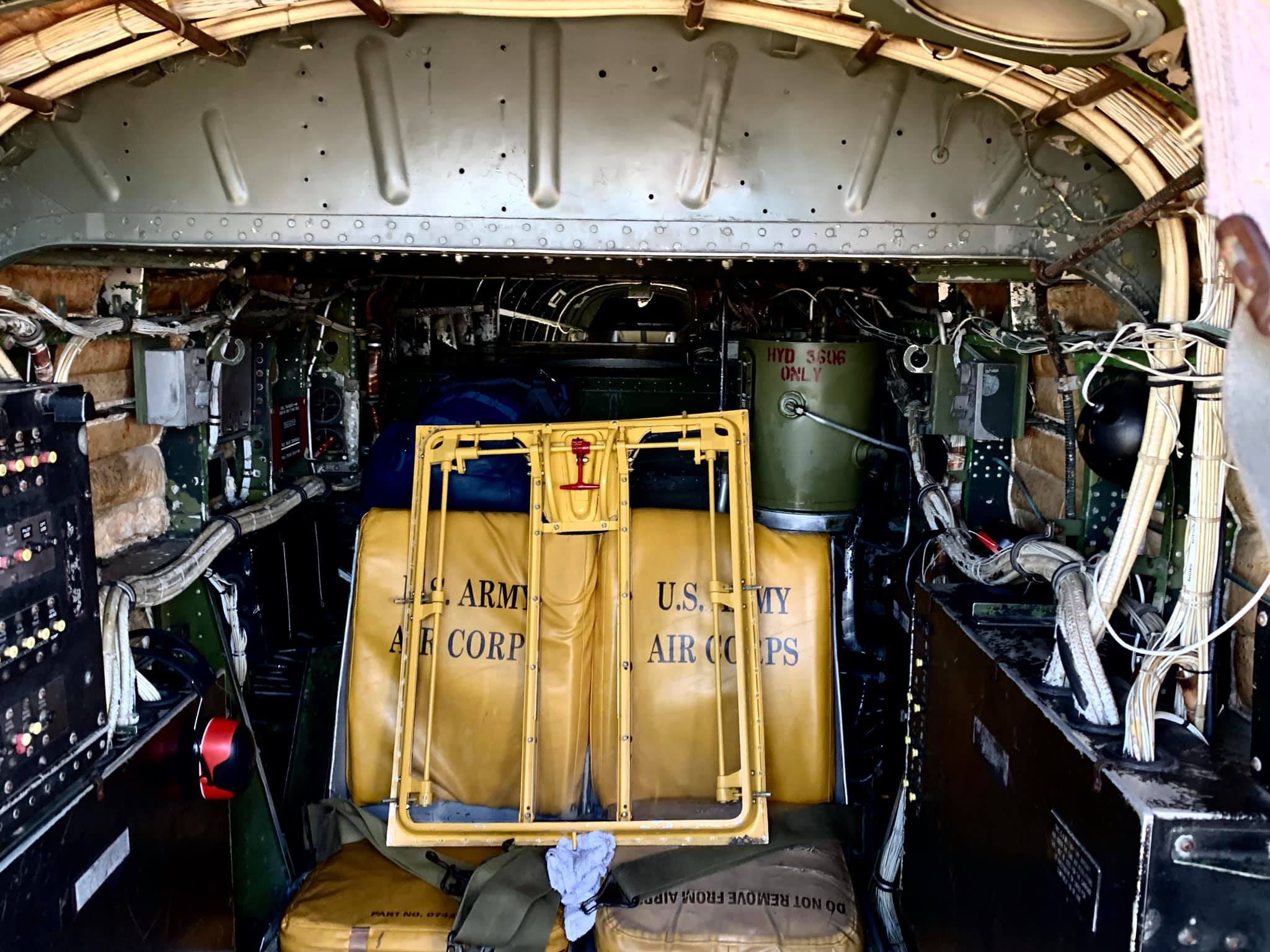
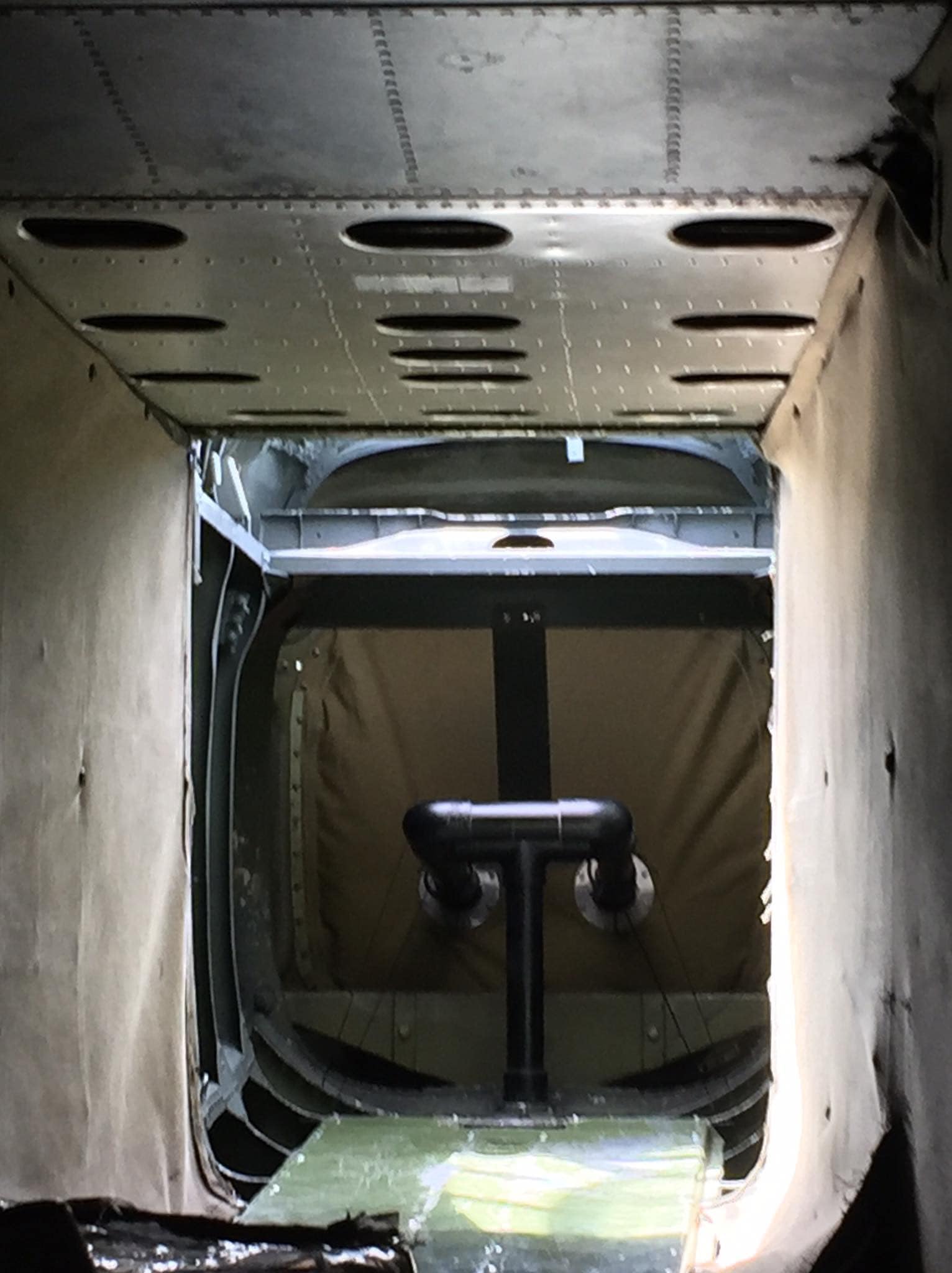
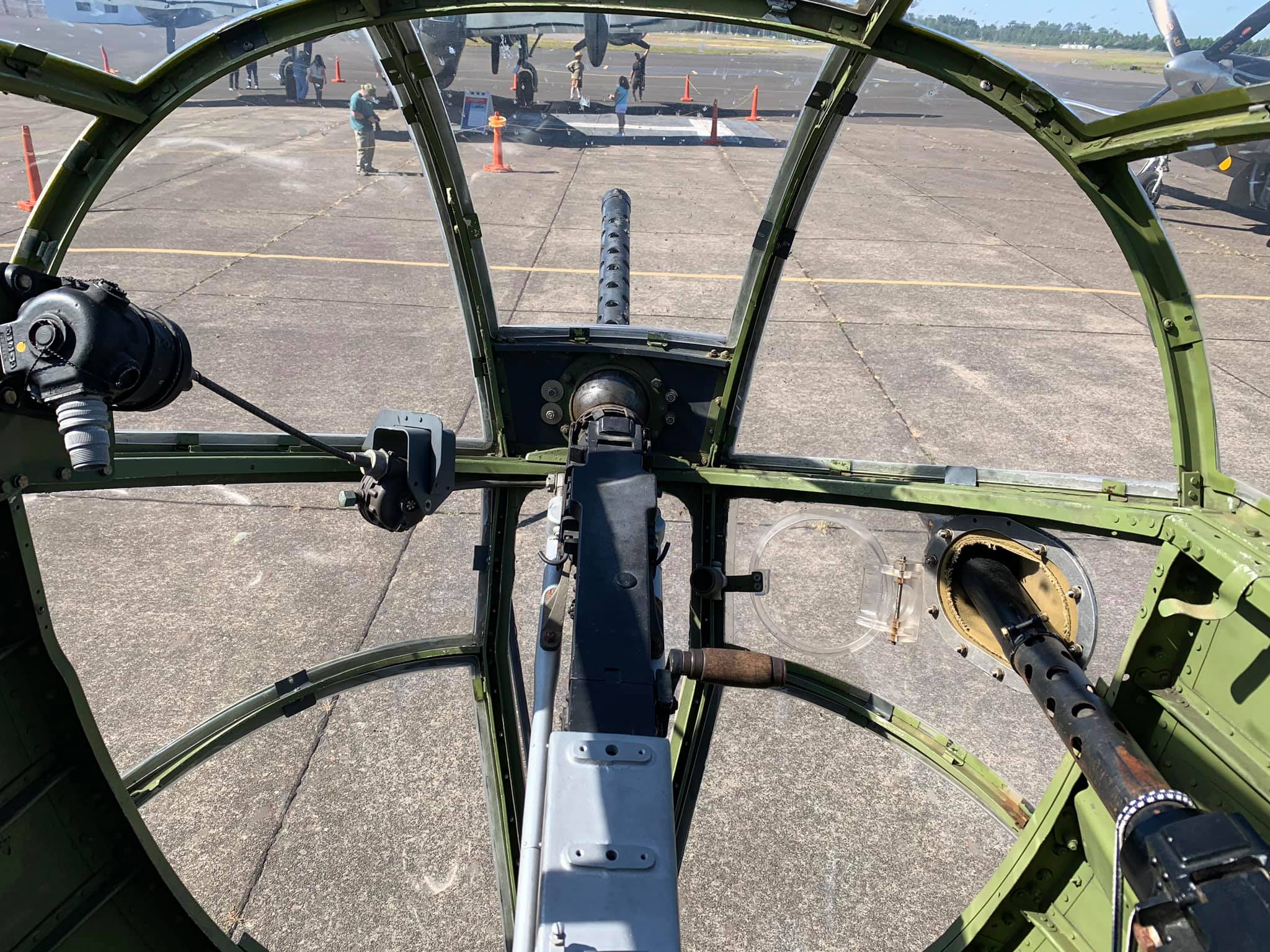
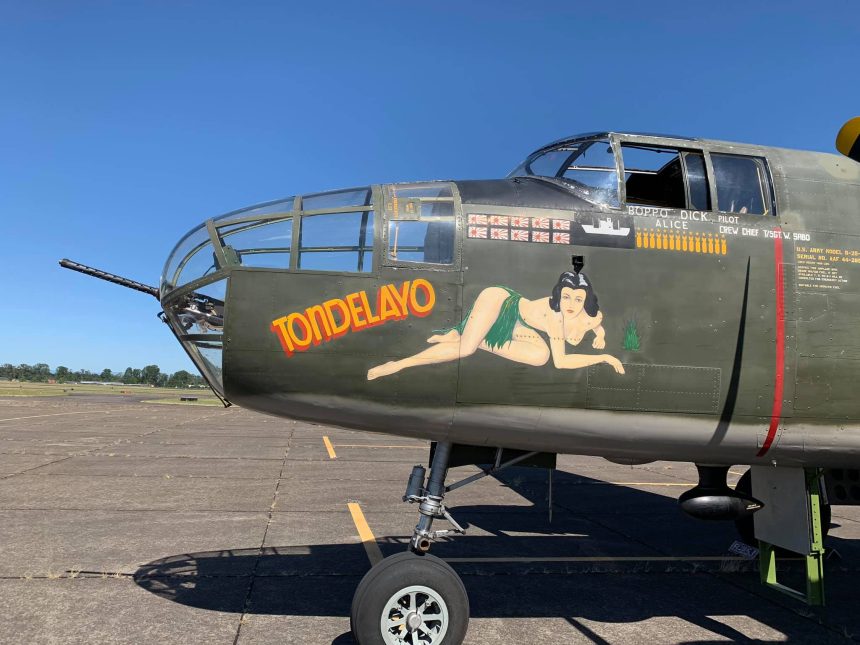
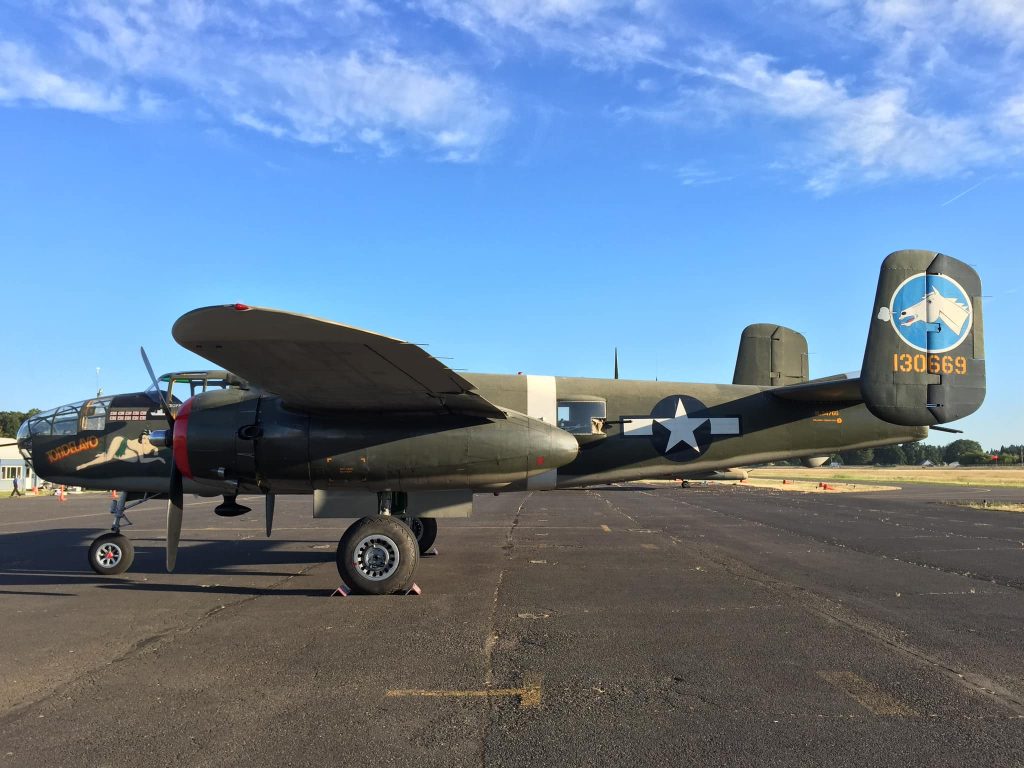
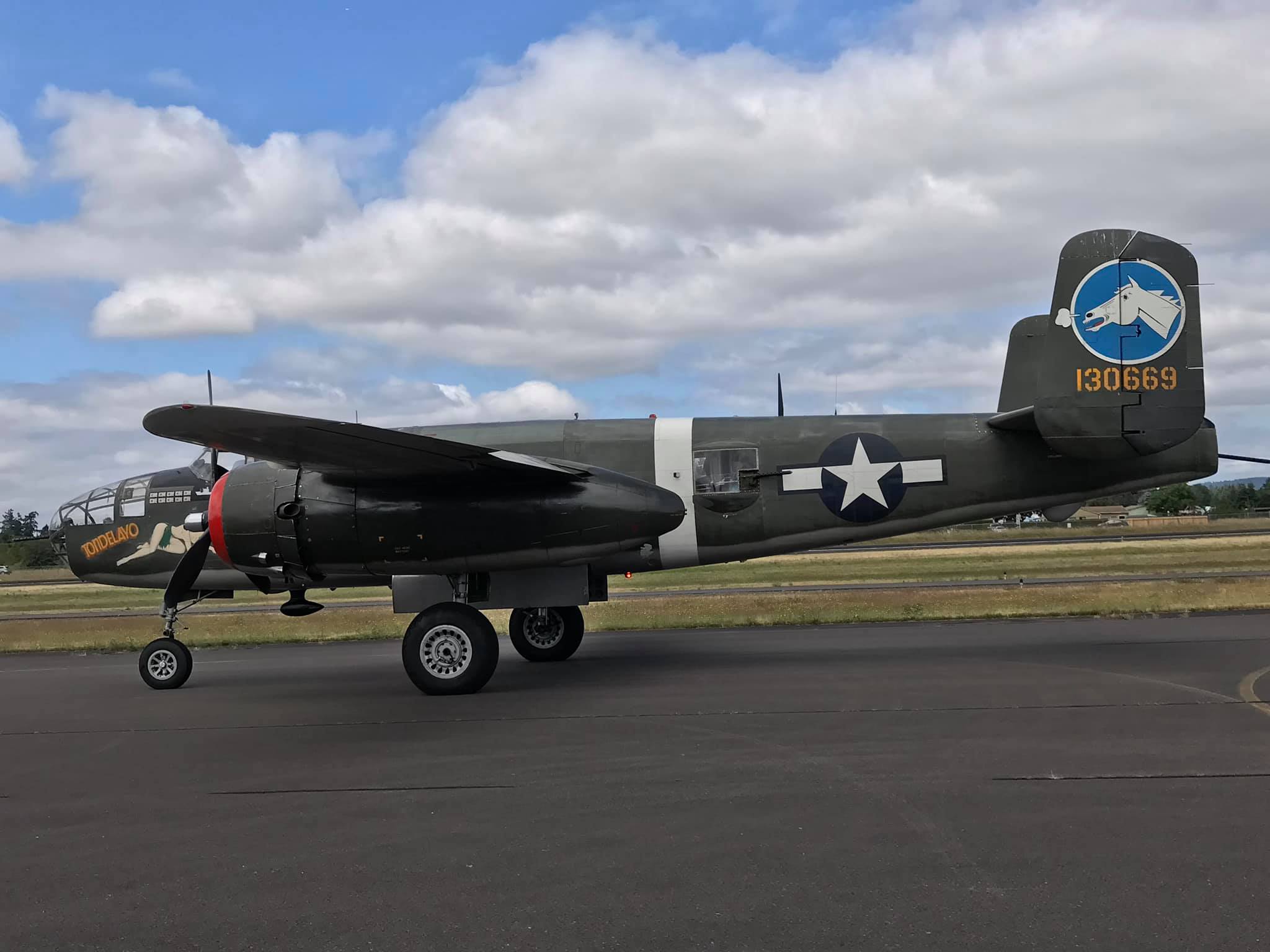
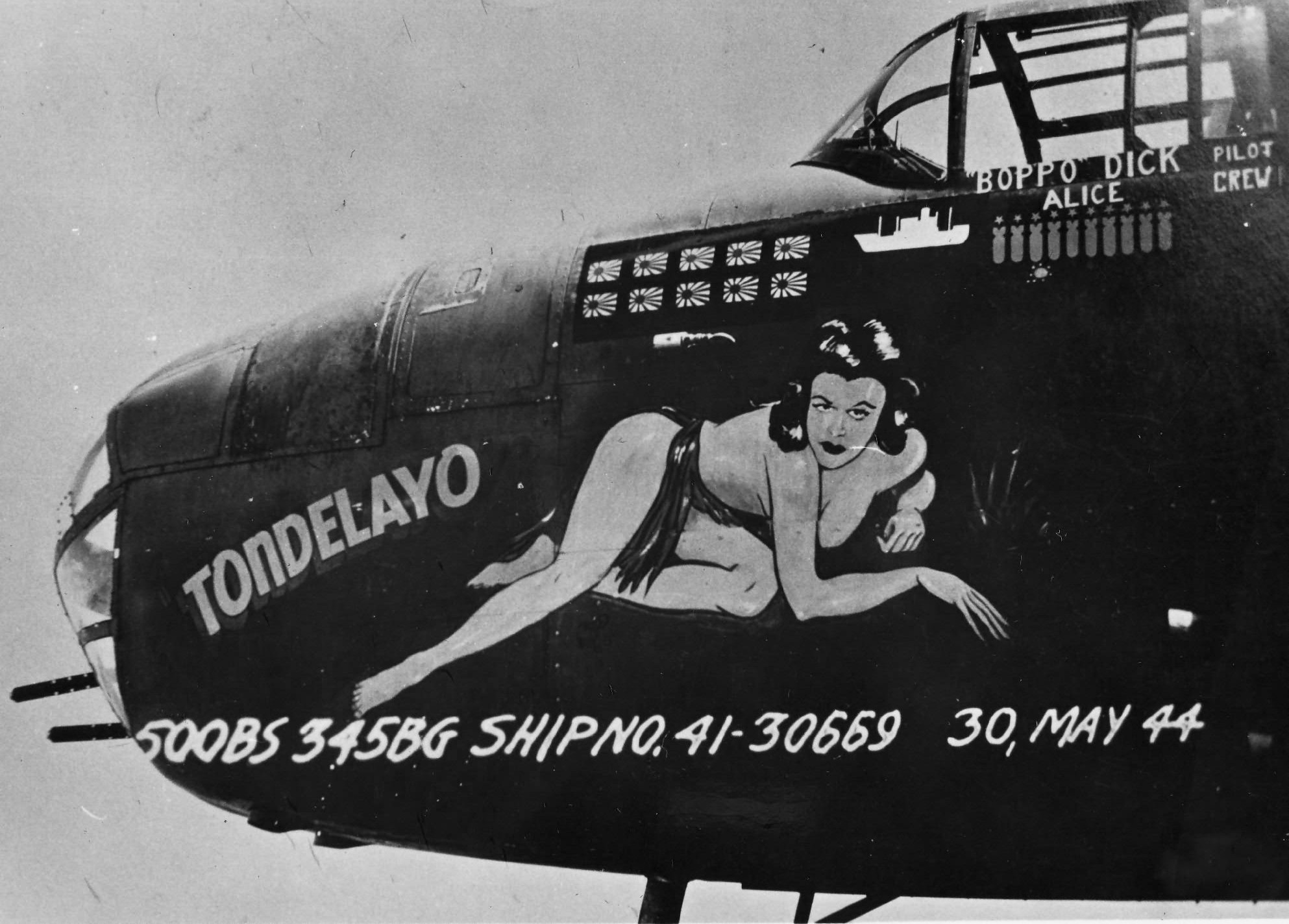
In civilian life it flew as fire bomber in Alaska, then went to Port Orchard, Washington. It was then purchased by the Collings Children’s Trust in 1985 and restored by Tom Reilly, and was flown as “Hoosier Honey”, which was a composite B-25 representing aircraft 7A with the 12th Air Force that saw service in North Africa and Italy in 1944. Following an accident in 1987, it was rebuilt by Carl Scholl of Aero Trader, Inc., and was repainted by AVSource West as the original B-25D-20 (later converted to a B-25D-1 strafer with added machine guns in the nose and cheek packs and with the bottom turret removed with extra fuel tanks installed along with K-21 automatic cameras on the underside of the fuselage) of the “Air Apaches” of the 345th BG, 500th BS of the 5th Air Force which flew extensively in the Pacific Theater with nose art “Tondelayo” given it by the crew of Lt. Ralph Wallace after actress Hedy Lamarr’s character of that name in the 1942 film “White Cargo.” My photos (GoPro photo courtesy of Jim Harley – thanks) and YouTube clips are below.
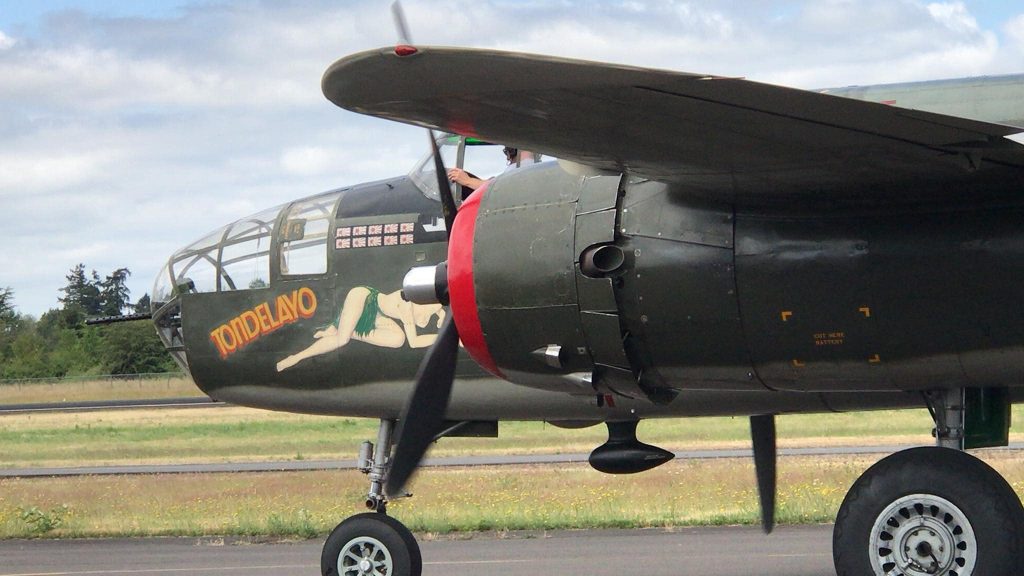
It has been flown regularly with the Collings Foundation’s Wings of Freedom Tour. As of this writing, it is at American Aero Services in New Smyrna Beach, Florida.
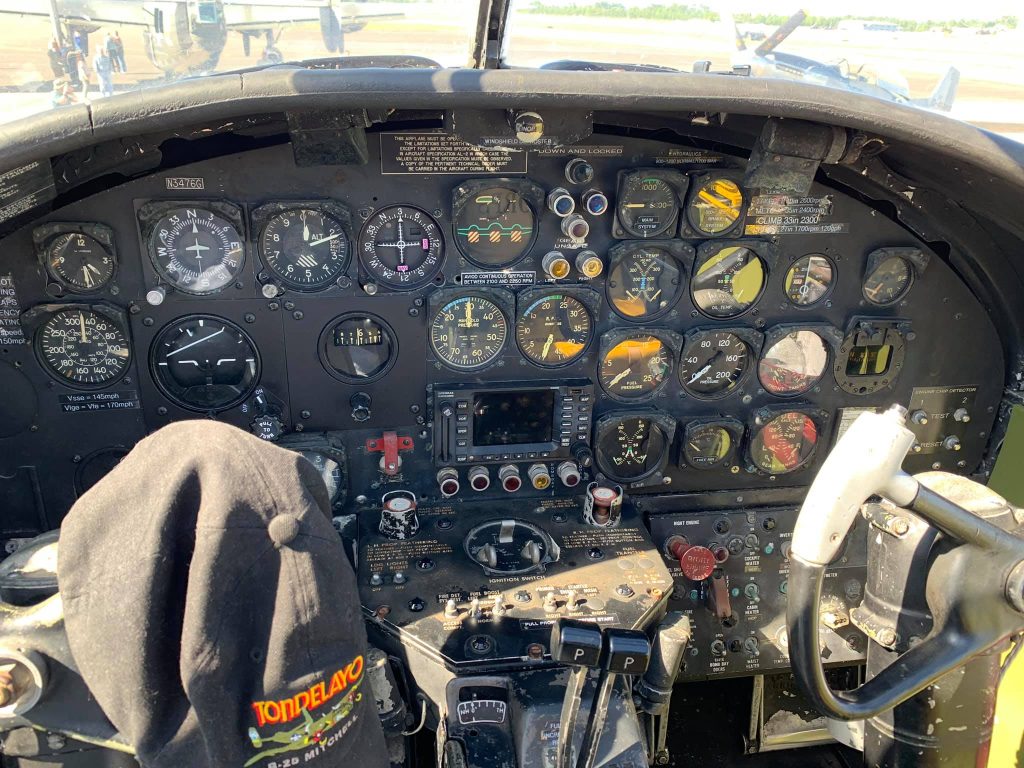
Editor’s notes: B-25J Mitchell N3476G remains painted in the markings of B-25D 41-30669. This aircraft was built by North American Aviation (NAA) as construction number 87-8834 and flown from the continental United States to Hickam Field, Hawaii, then to Australia before being allocated to the 5th Air Force. On August 23, 1943, the aircraft was assigned to the 500th Bombardment Squadron, the “Rough Raiders” of the 345th Bombardment Group (345th BG), nicknamed the “Air Apaches”. The aircraft was converted with extra guns in the nose to strafe Japanese ground and naval targets and was named Tondelayo after a character played by actress Hedy Lamarr in the 1942 movie White Cargo. The aircraft participated in numerous bombing missions during the New Guinea Campaign until late 1944, when the 345th BG received new B-25Js.
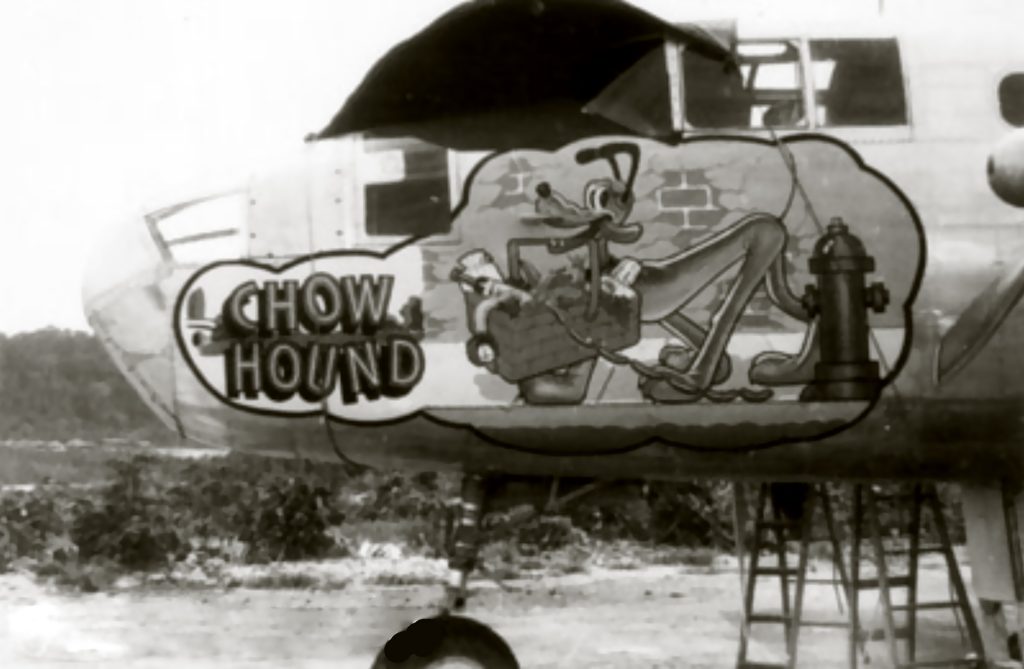
B-25D 41-30669 was then stripped of armament and its olive drab scheme, sporting bare metal. The aircraft was reassigned to the 501st Bombardment Squadron and renamed “Chow Hound”, with new nose art featuring the Disney character Pluto walking past a fire hydrant while holding in his mouth a picnic basket overflowing with food. In this guise, 41-30669 was reassigned to noncombat roles, usually acting as a “fat cat” utility aircraft to bring fresh supplies from Australia bFack to the 345th Bomb Group’s area of operations. On March 30, 1945, while flying from Biak Island (now in Indonesia’s Papua Province) to San Marcelino Airfield in the Philippines, the aircraft got lost in bad weather and flew off course. Running out of fuel, pilot 1st Lt. Robert K. Cavins ditched the airplane off Catanduanes Island, Philippines, but the aircraft skidded onto shore before hitting a small hill. Though all onboard survived, all but one of the occupants sustained injuries during the crash. Cavins and the others onboard (radio operator Sgt Albert J. Mazerolle and two passengers (Captain Edward F. Egan and Sgt Russell E. Peters) were later found by Filipino guerrillas and sheltered by them until they were picked up by the U.S. Navy.
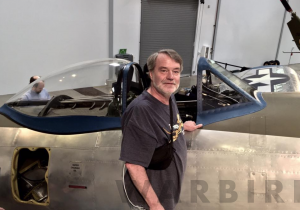 About the author: Randy Malmstrom grew up in a family steeped in aviation culture. His father, Bob, was still a cadet in training with the USAAF at the end of WWII but did serve in Germany during the U.S. occupation in the immediate post-war period, where he had the opportunity to fly in a wide variety of types that flew in WWII. After returning to the States, Bob became a multi-engine aircraft sales manager and, as such, flew a wide variety of aircraft; Randy frequently accompanied him on these flights. Furthermore, Randy’s cousin, Einar Axel Malmstrom, flew P-47 Thunderbolts with the 356th FG from RAF Martlesham Heath. He was commanding this unit at the time he was shot down over France on April 24th, 1944, and spent the rest of the war as a prisoner of war. Following his repatriation at war’s end, Einar continued his military service, attaining the rank of Colonel. He was serving as Deputy Wing Commander of the 407th Strategic Fighter Wing at Great Falls AFB, MT, at the time of his death in a T-33 training accident on August 21, 1954. The base was renamed in his honor in October 1955 and continues to serve in the present USAF as home to the 341st Missile Wing. Randy’s innate interest in history in general, and aviation history in particular, plus his educational background and passion for WWII warbirds, led him down his current path of capturing detailed aircraft walk-around photos and in-depth airframe histories, recording a precise description of a particular aircraft in all aspects.









Hey Randy, the Block-1 B-25D wasn’t the Strfer conversion of the Block-20 B-25D, instead, the strafer B-25Ds were field conversions, the only factory built B-25 Strafers were late production B-25Js, specifically Block-30 through Block-40. The B-25D-1NC series were improved B-25D-NC series airframes. Now, the AAF, and the Navy agreed to let Boeing use the Renton plant for expanded B-29 production, and the Navy agreed to start purchasing B-25s as the PBJ-1, and pss them to the Marines.
My dad was tail gunner on a B25 in the Pacific. You didn’t give any good pics of that area in the story. He was a Marine.