
By Randy Malmstrom
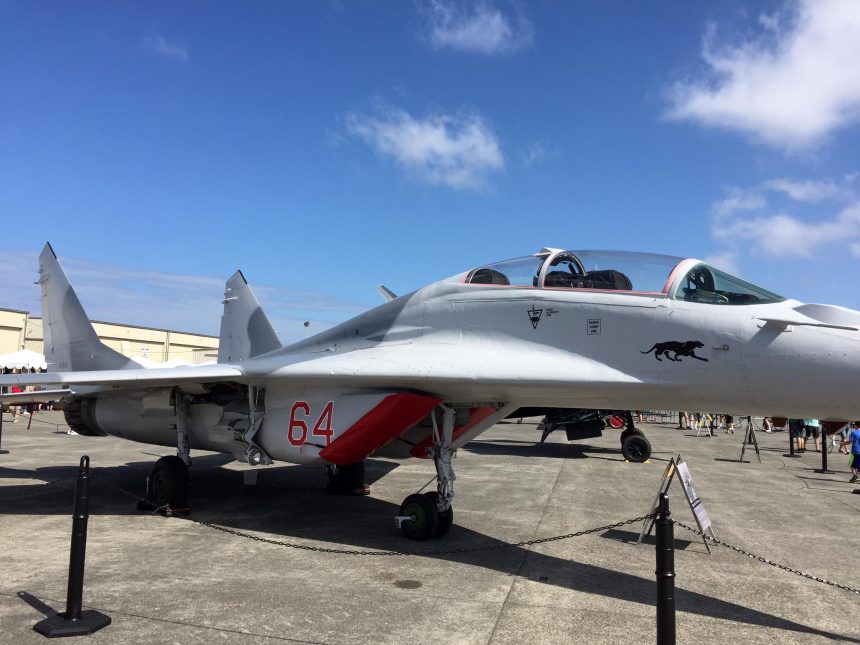
Mikoyan-Gurevich (Микоян и Гуревич) Design Bureau MiG-29UB, s/n 50903014896, N29UB, NATO reporting name “Fulcrum.” This particular aircraft is one of the MiG-29UB tandem-seat trainers that first appeared in 1981 and has a rear-hinged cockpit with the student in the front seat and instructor in the back seat. It was delivered to the Ukrainian Air Force and saw service with the 642nd Fighter Regiment, and it racked up a total of 510 flight hours (Ukraine had acquired 220 MiG-29’s). This aircraft was then acquired by Historic Flight Foundation located on Paine Field in Everett/Mukilteo, Washington.
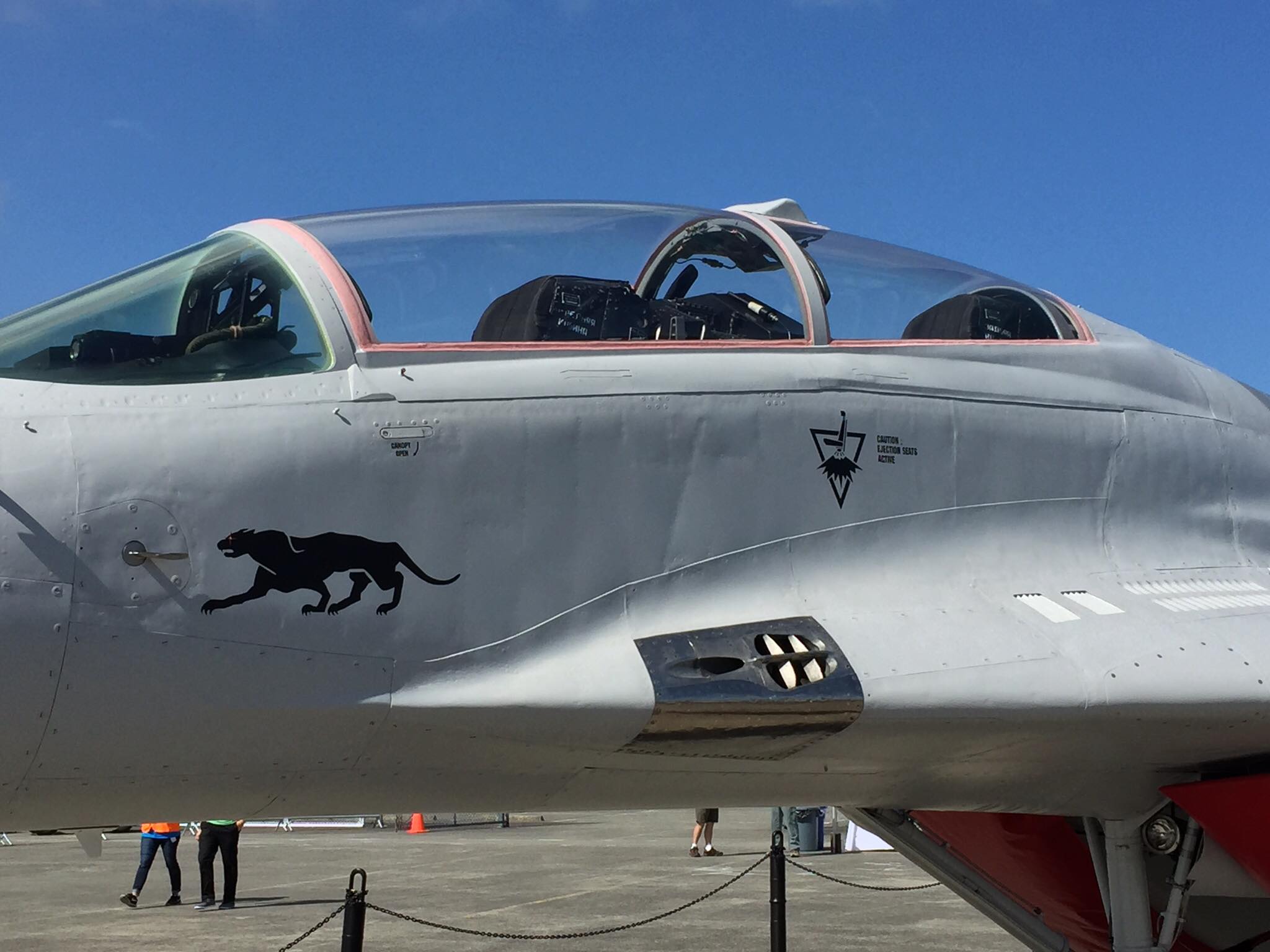
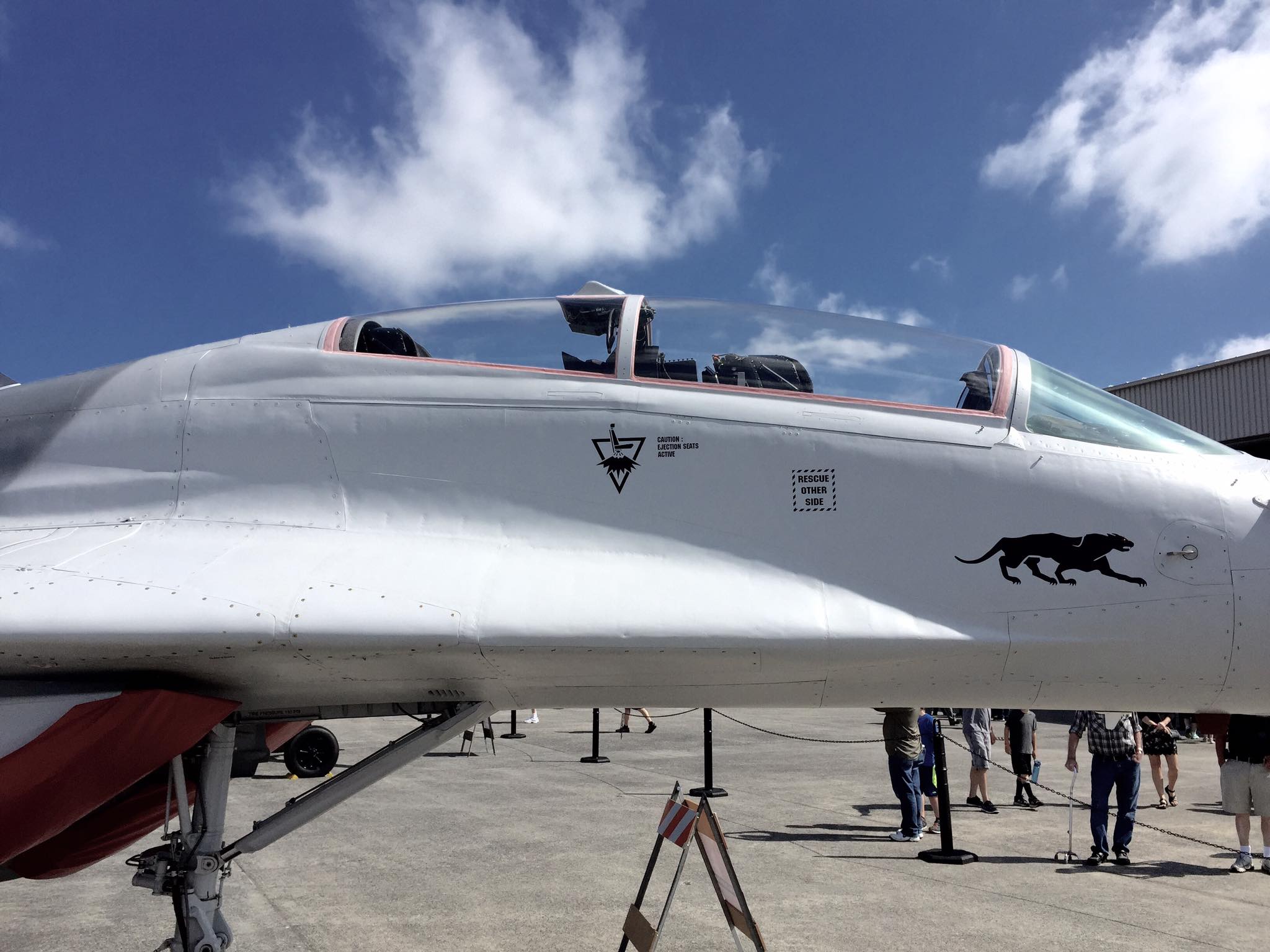
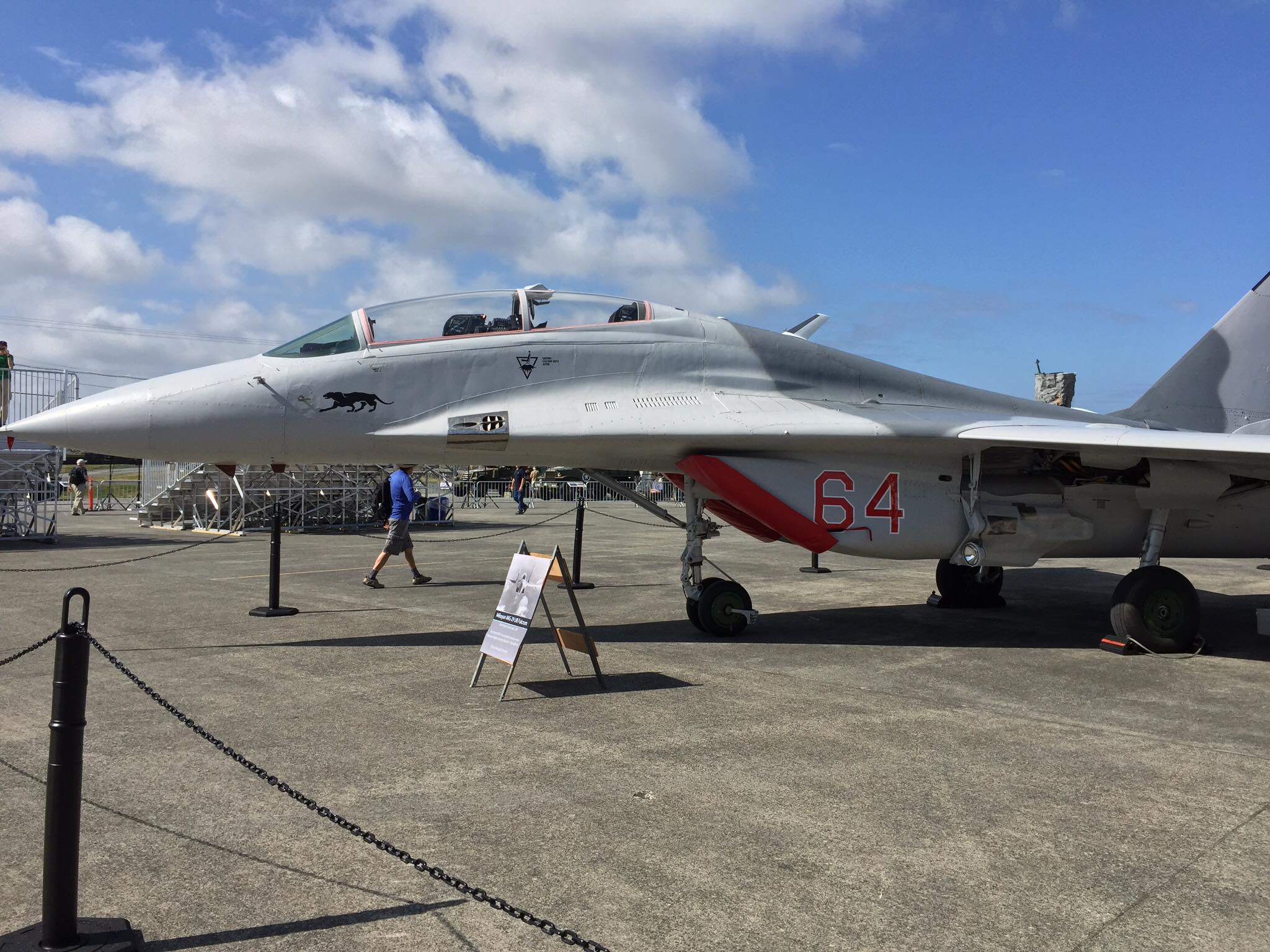
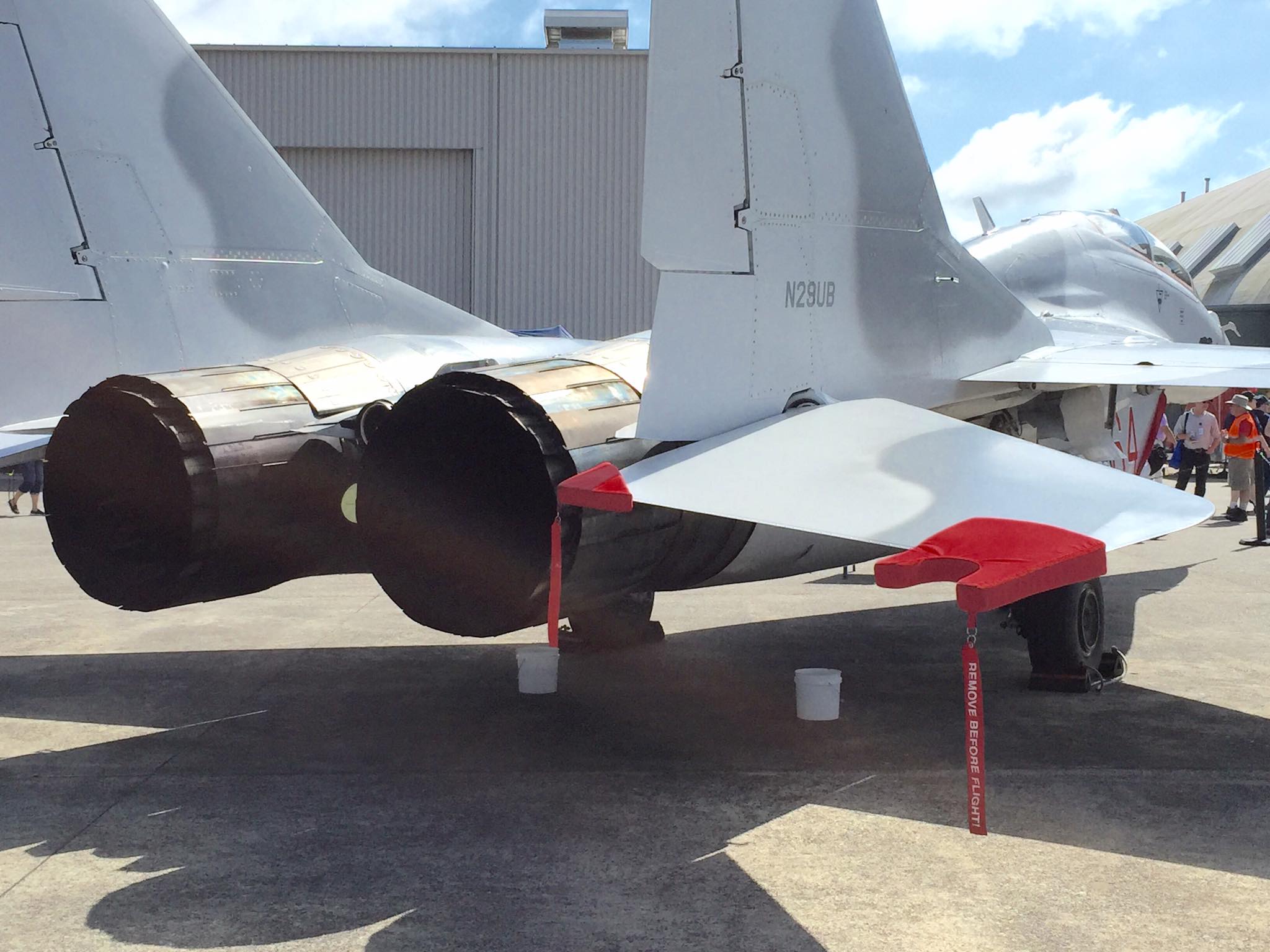
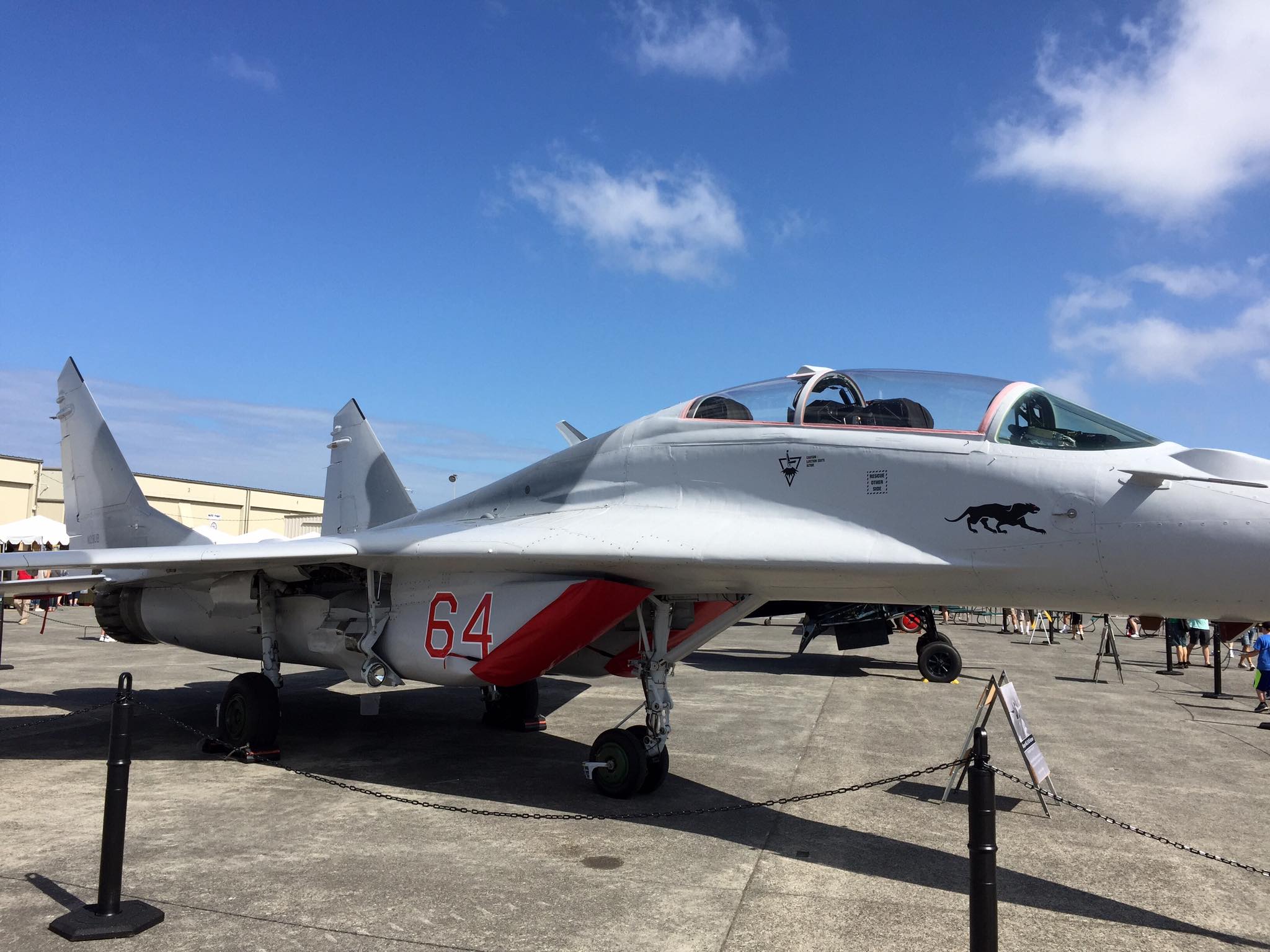
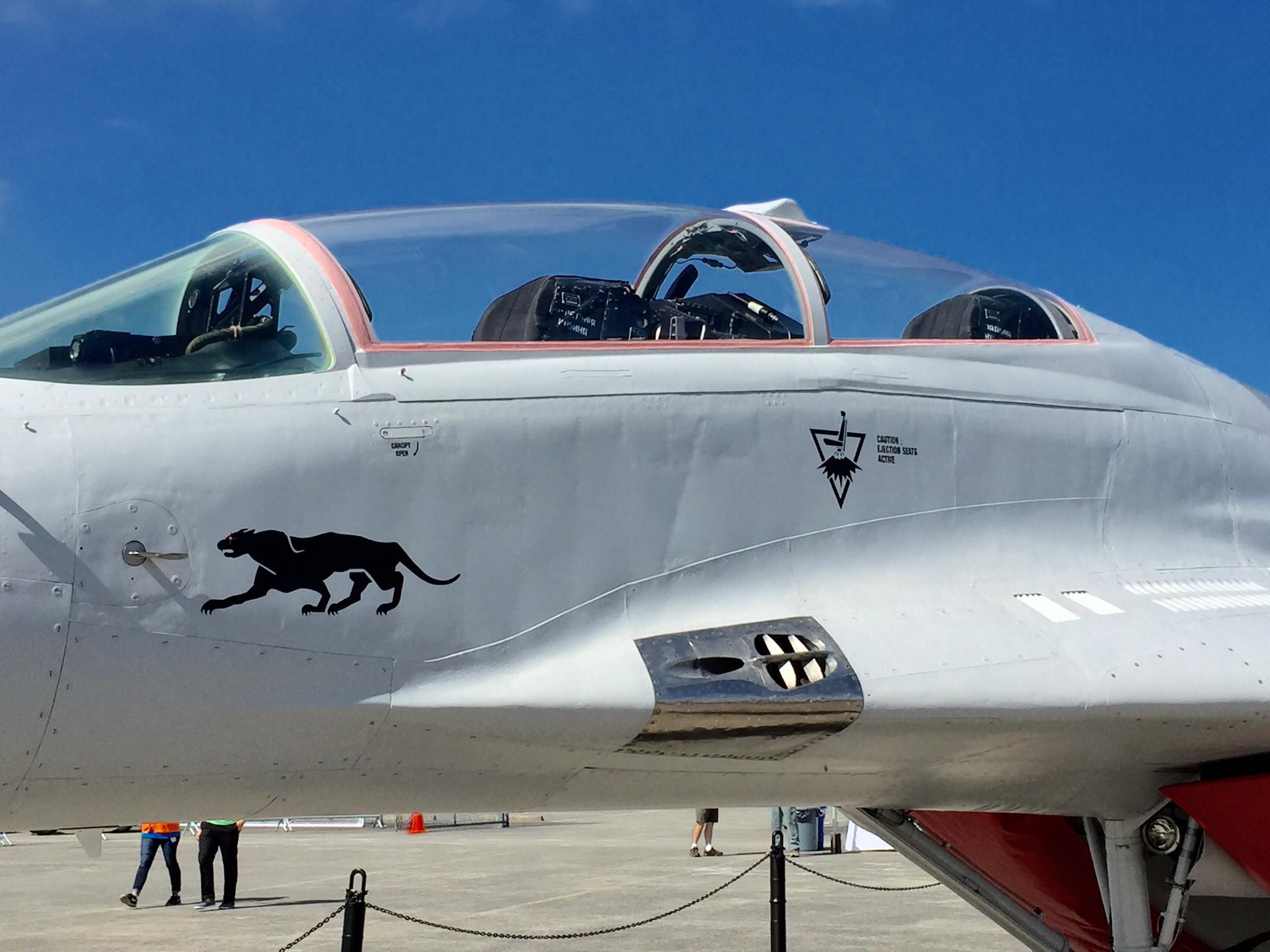
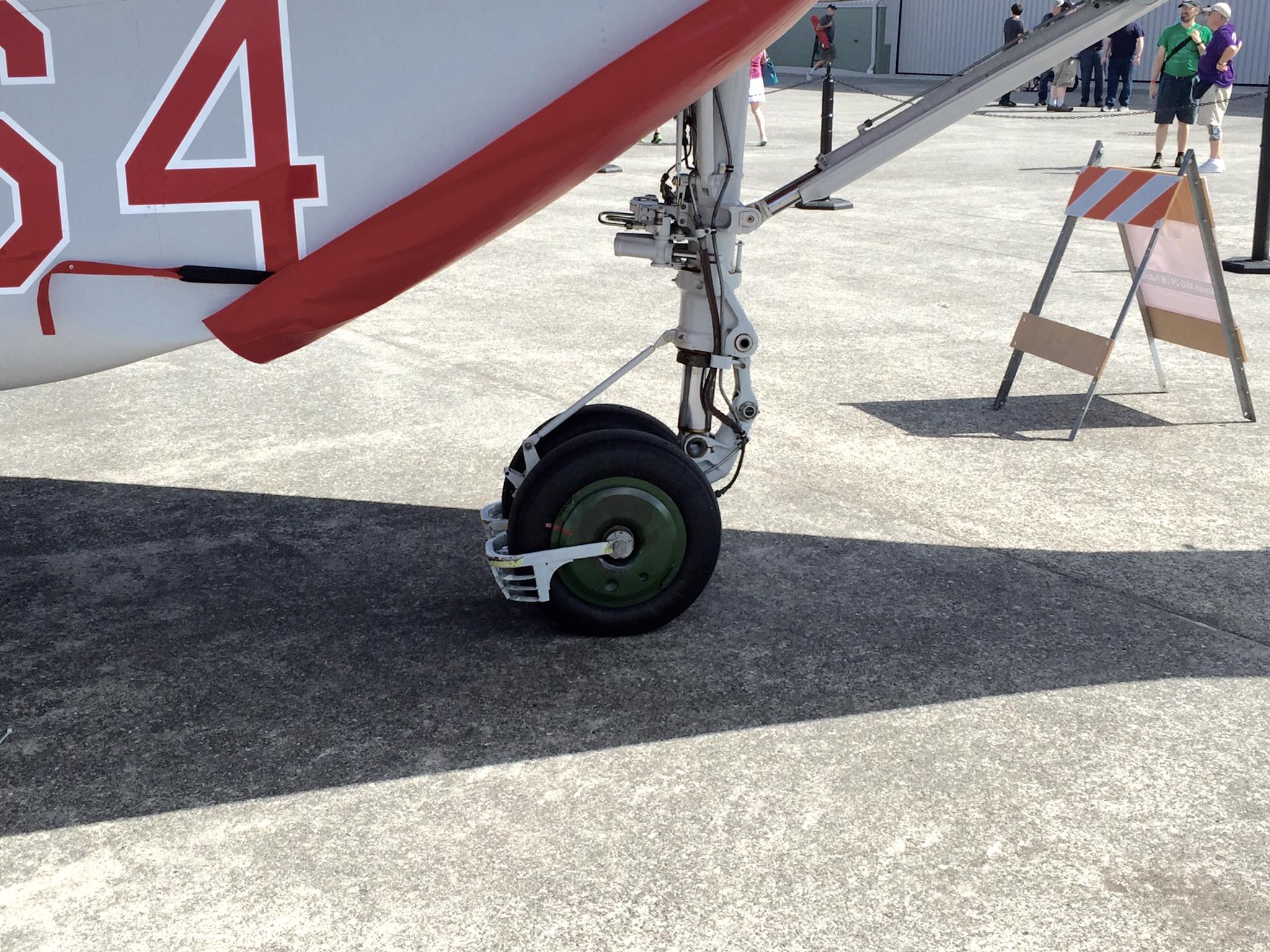
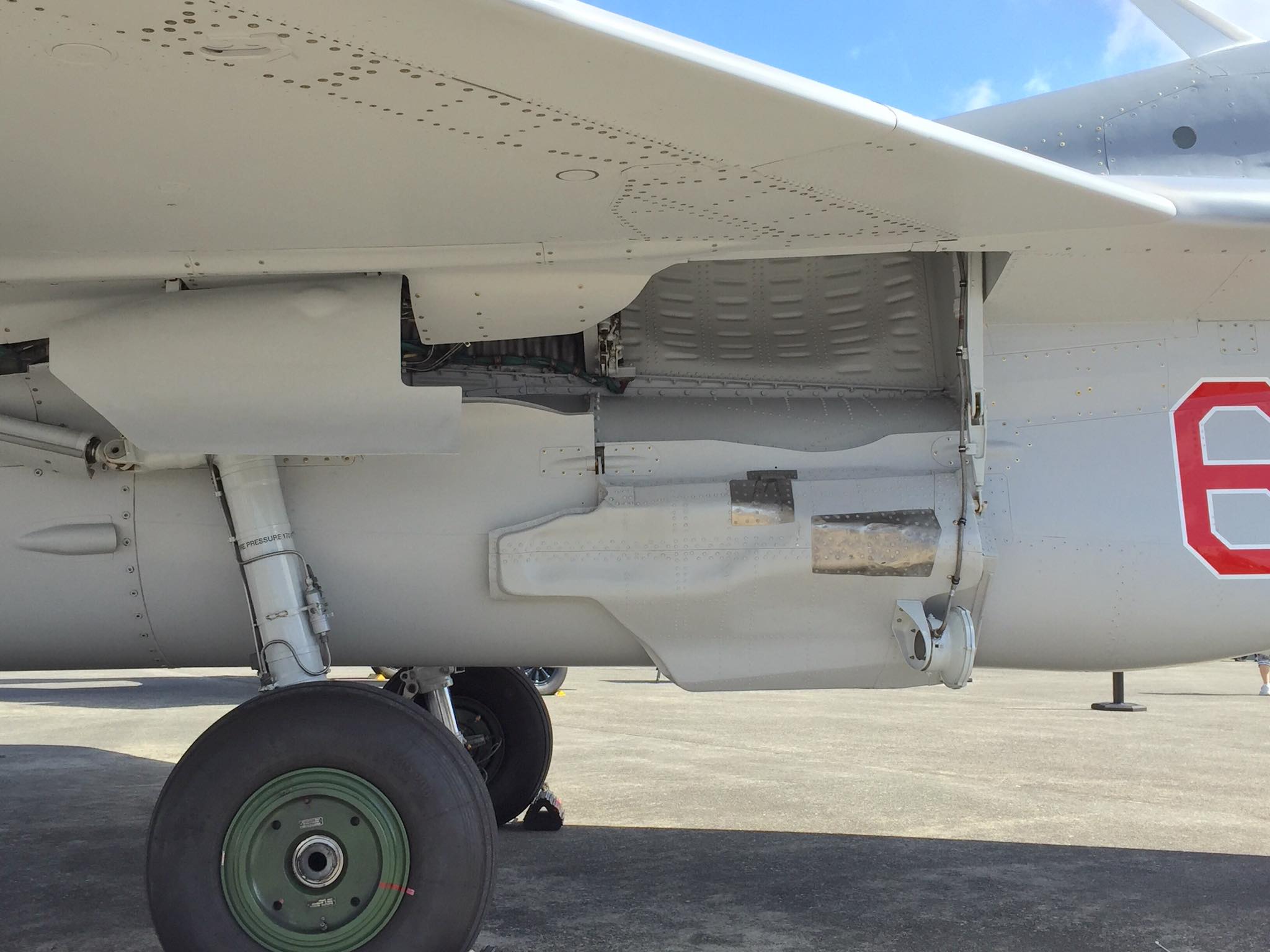
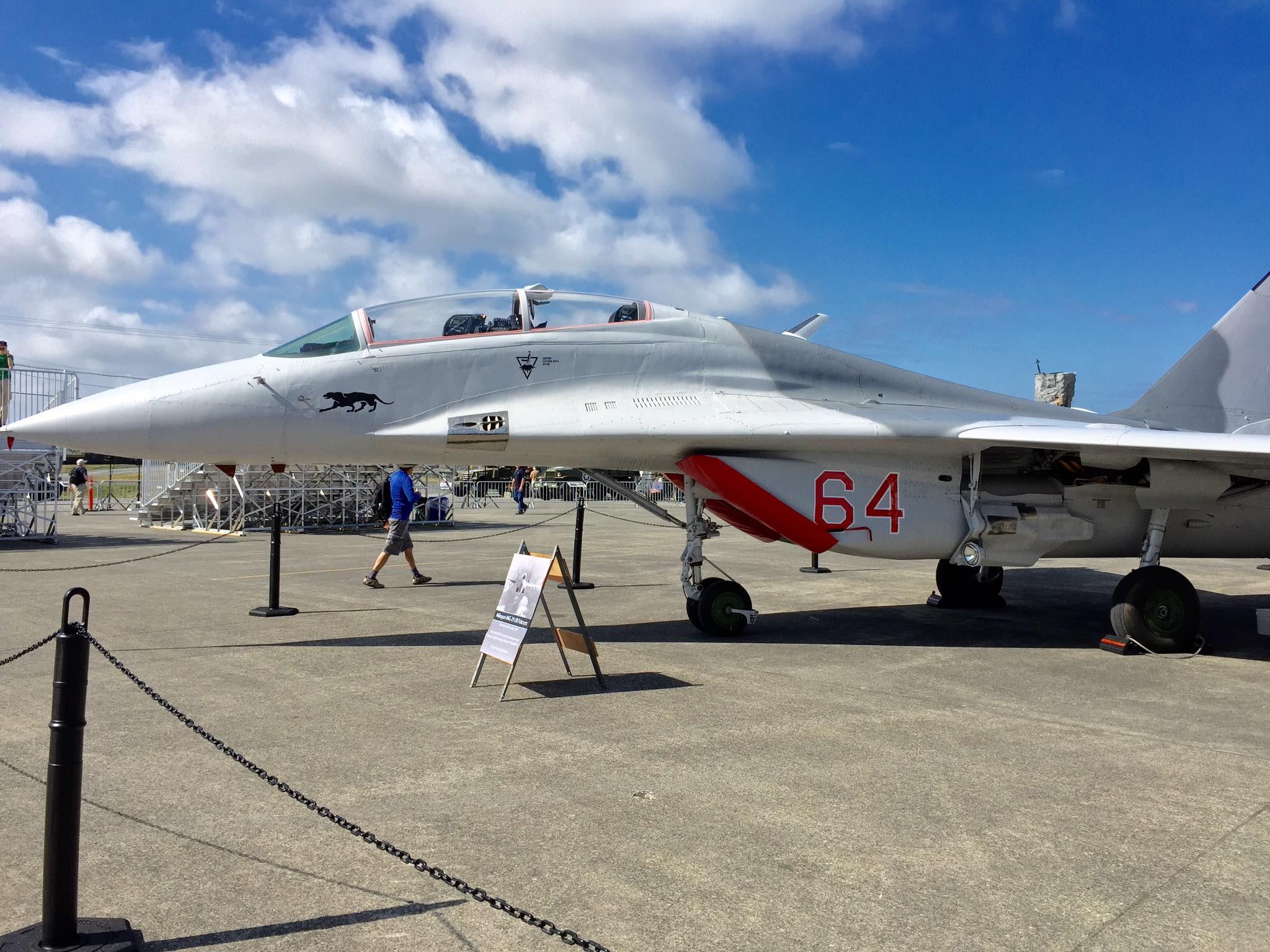
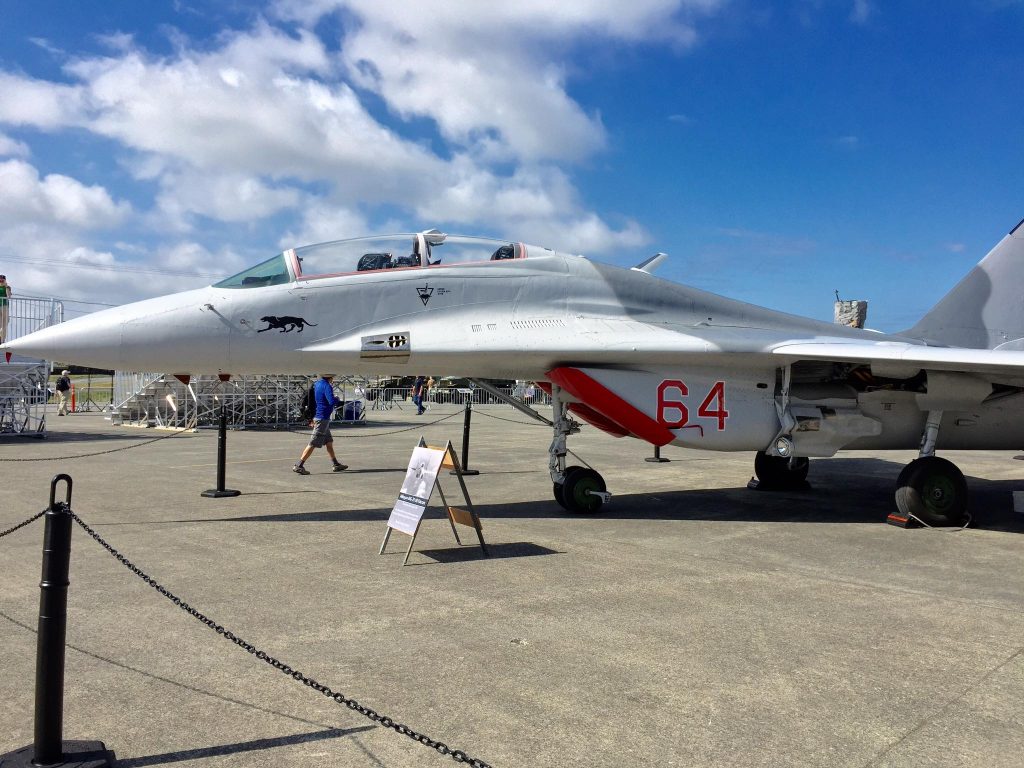
Being a front-line military fighter, the shipping company hired to transport the aircraft to the United States split it into two shipments to deter hijackers: the wing and engine crates were shipped across the Atlantic, and the fuselage was shipped via the Pacific. However, when the fuselage was offloaded to change ships at Hong Kong, the shipper had neglected to obtain a local import license, and so on April 4, 2006, it was seized as military contraband. After two years and many trips to Hong Kong by John Sessions of Historic Flight Foundation, a Chinese judge ruled that the aircraft had been properly demilitarized before arriving in Hong Kong and should be returned to Historic Flight Foundation. With the assistance of experienced MiG-29 mechanics from Slovakia, it was restored to airworthiness by 2011 by Morgan Aircraft Restoration at Arlington Municipal Airport in Arlington, Washington. It flew out of Flying Heritage & Combat Armor Museum on Paine Field in Everett, Washington, but as of November 2019, it is registered to JDI Holdings LLC out of Allentown, Pennsylvania. As far as I know, there are two airworthy MiG-29s in private collections. My photos (unfortunately, the cockpit is off-limits). A borrowed YouTube clip:
The MiG-29 was designed by the Mikoyan Design Bureau and first appeared in 1977 for air-to-air combat, but modifications provided for ground attack capabilities and the ability to carry tactical nuclear weapons. In all, approximately 1,600 MiG-29’s have gone into service. There have been quite a few variants (including specific versions for export) and have included the carrier-based MiG-29K; a two-seat MiG-29M2; the MiG29SMT with increased range and payload and digital fly-by-wire control systems, upgraded avionics, improved radars, KOLS-29 (I have not determined the KOLS acronym) Infrared Search and Track (IRST) and an in-flight refueling probe; the radar being the Phazotron Zhuk-ME which is capable of tracking ten targets to a maximum range of 245 km; the MiG-29M OVT with 3D thrust-vectoring engine nozzles with three hydraulic actuators mounted around the engine to deflect the thrust (being labeled the MiG-35). Powerplant: two Klimov RD-33 afterburning turbofan engines with dual-mode air intakes (while in flight, the open-air intakes feed air to the engines; on the ground, the air intakes are closed, and air is fed through the louvres on the upper surface of the wing root to prevent foreign objects from entering). The engines provide 11,100 lbs. of thrust (dry) and 18,300 lbs. of thrust (in afterburners), with a top speed of Mach 2.2 and a ceiling of nearly 60,000 ft. (maximum speed is 2,400 km/hr. and cruising speed is 1,500 km/hr.).
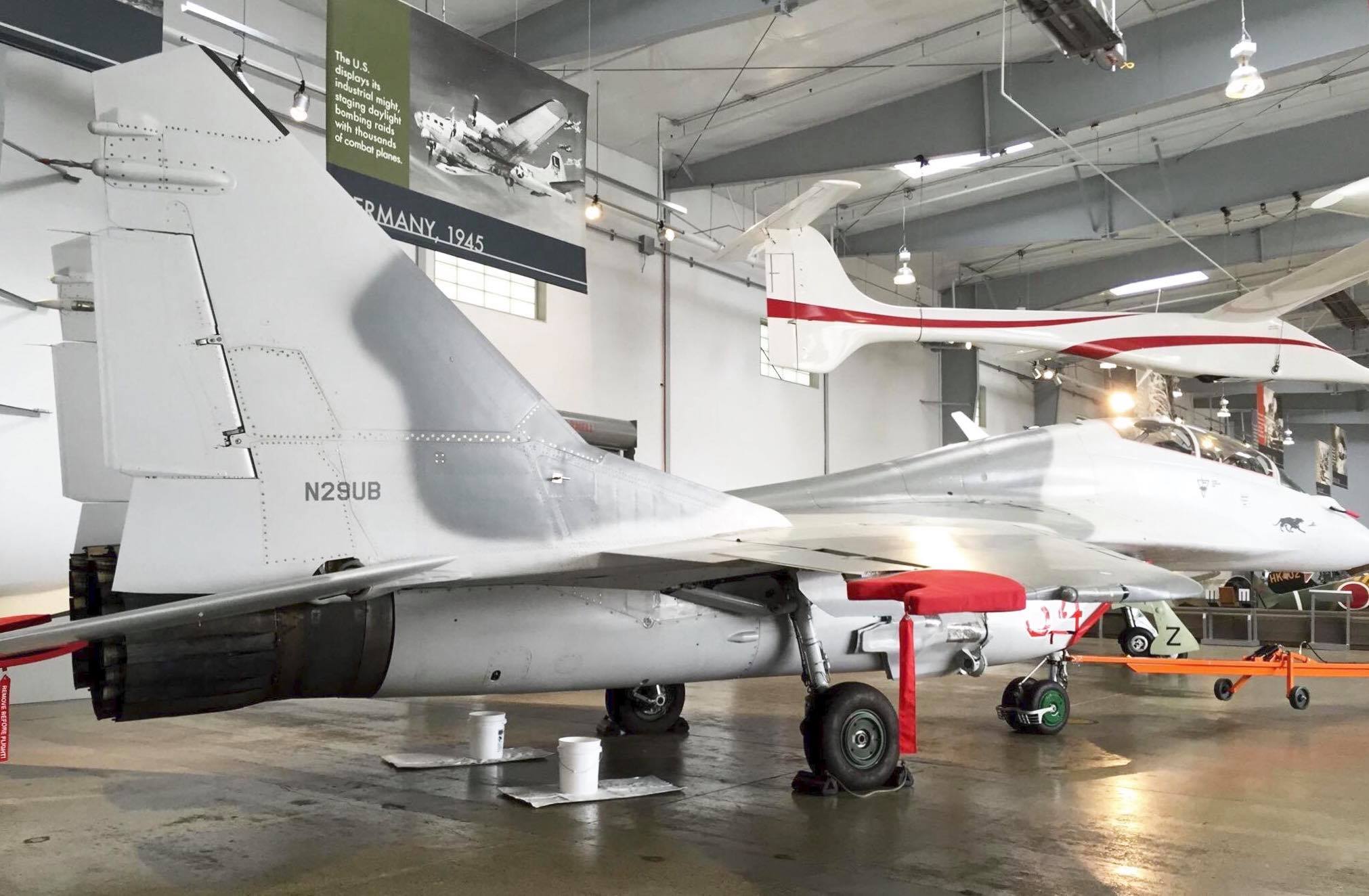
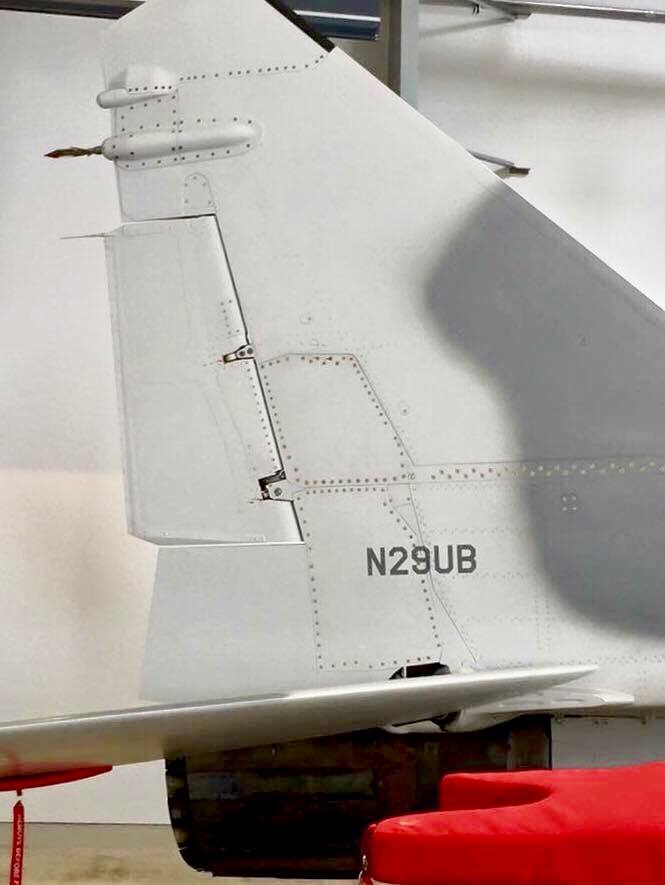
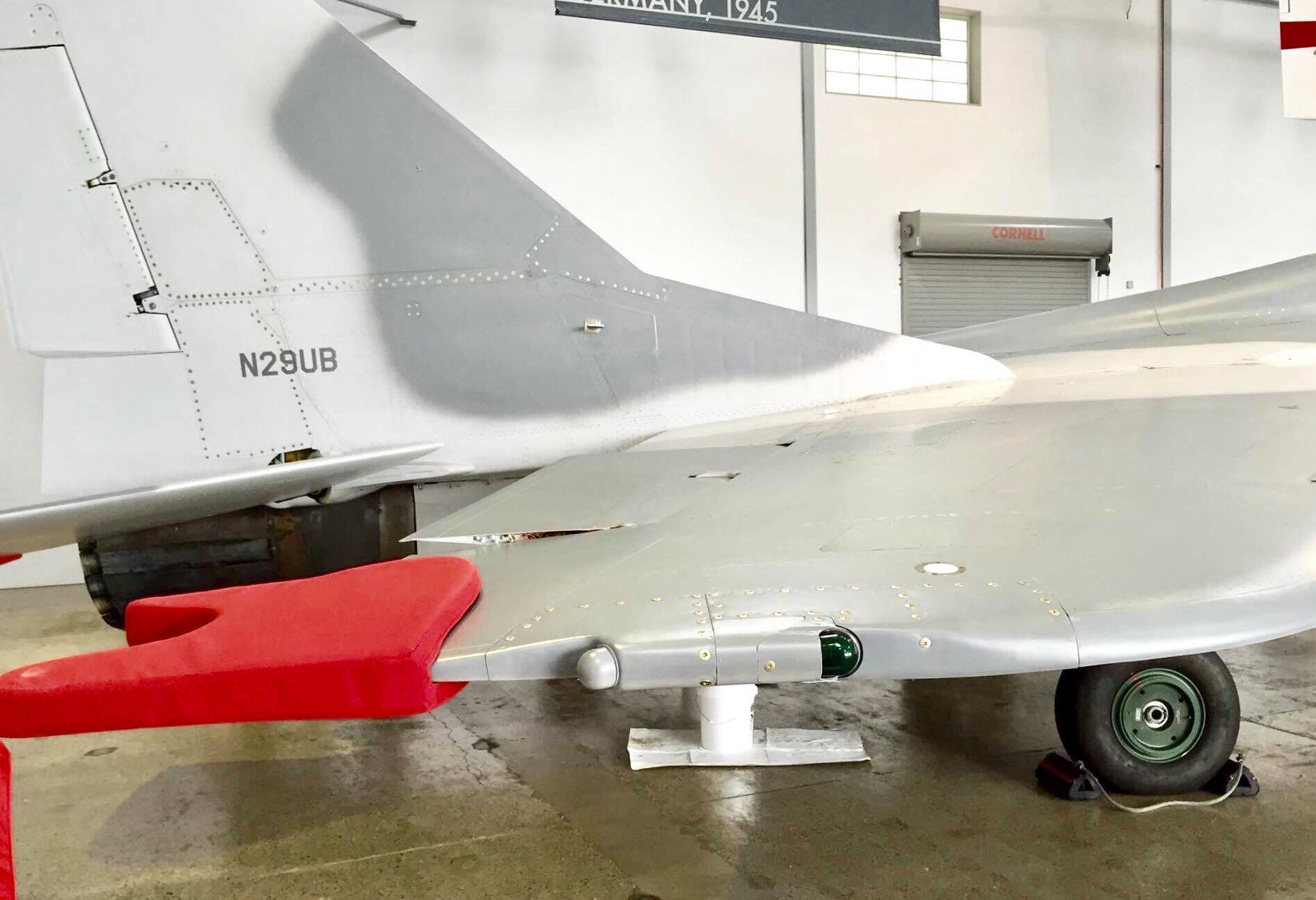
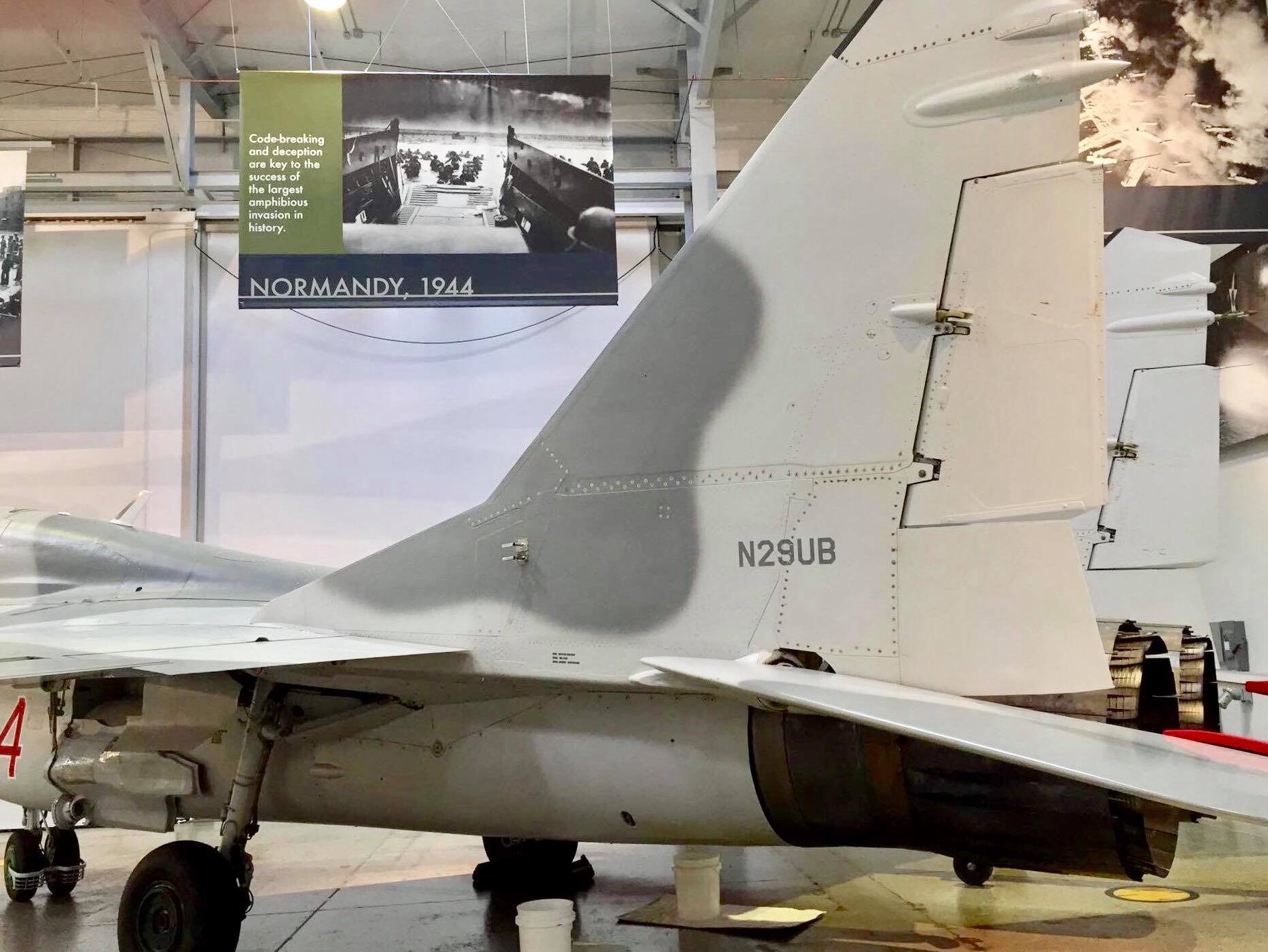
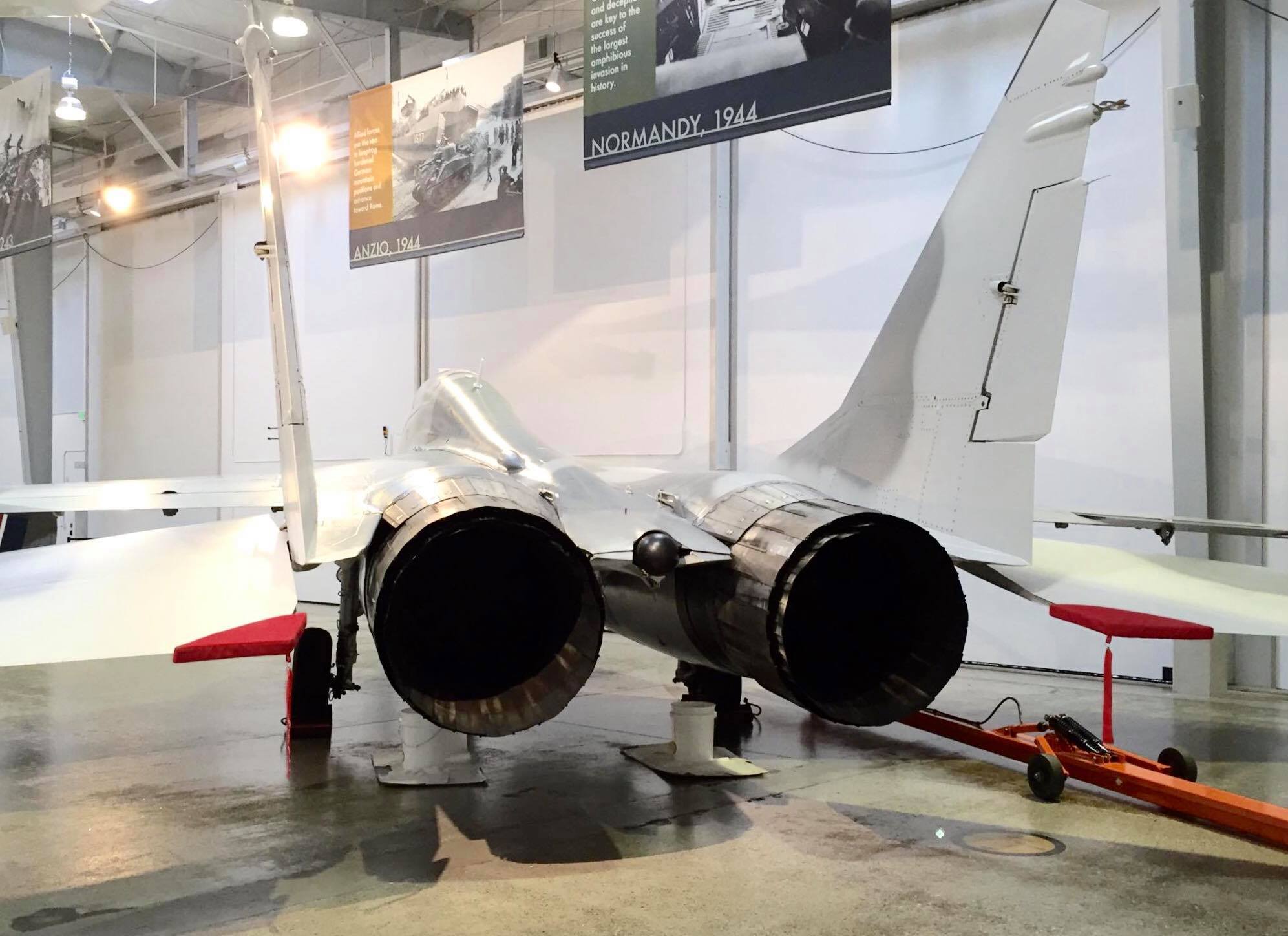
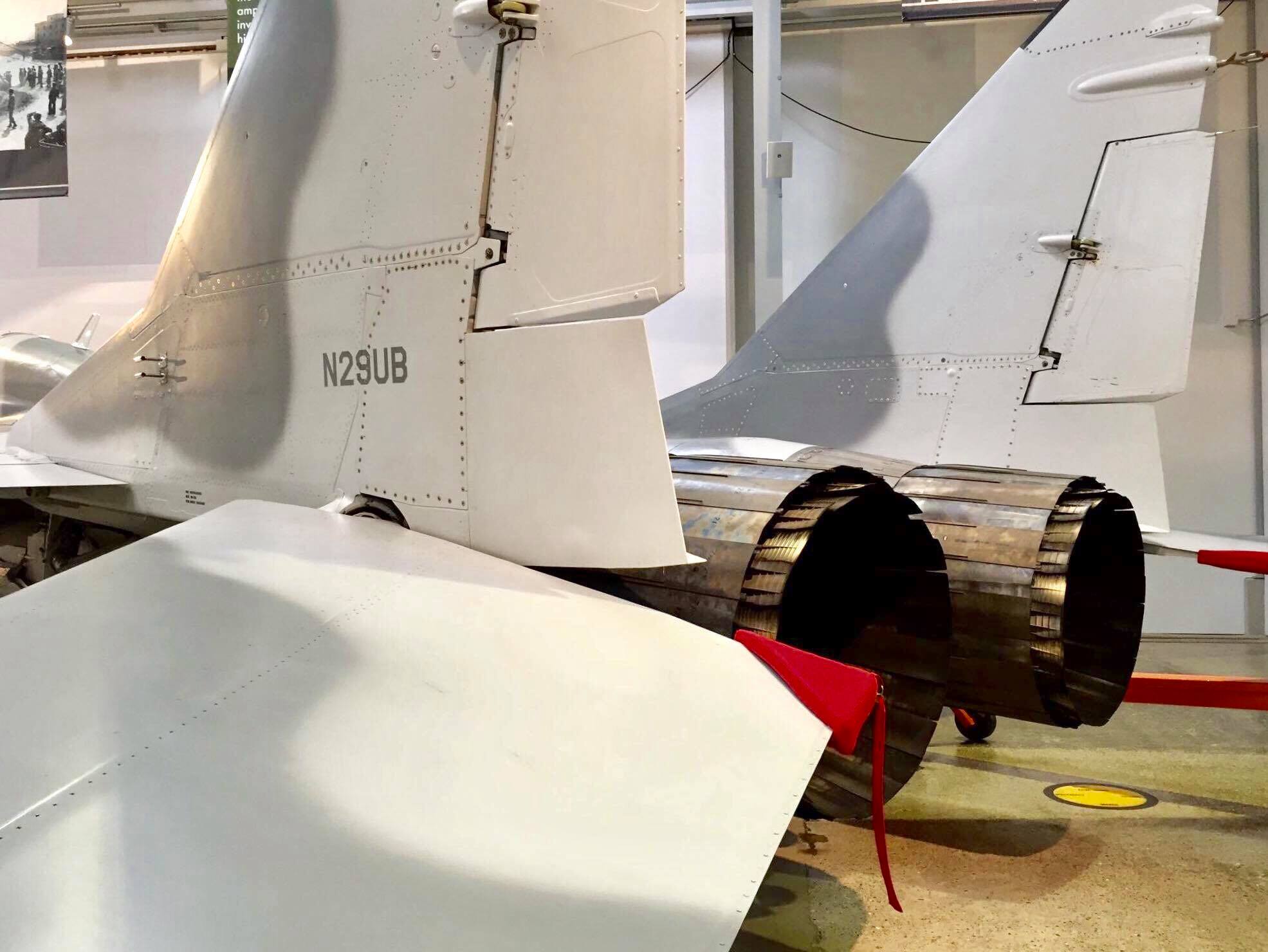
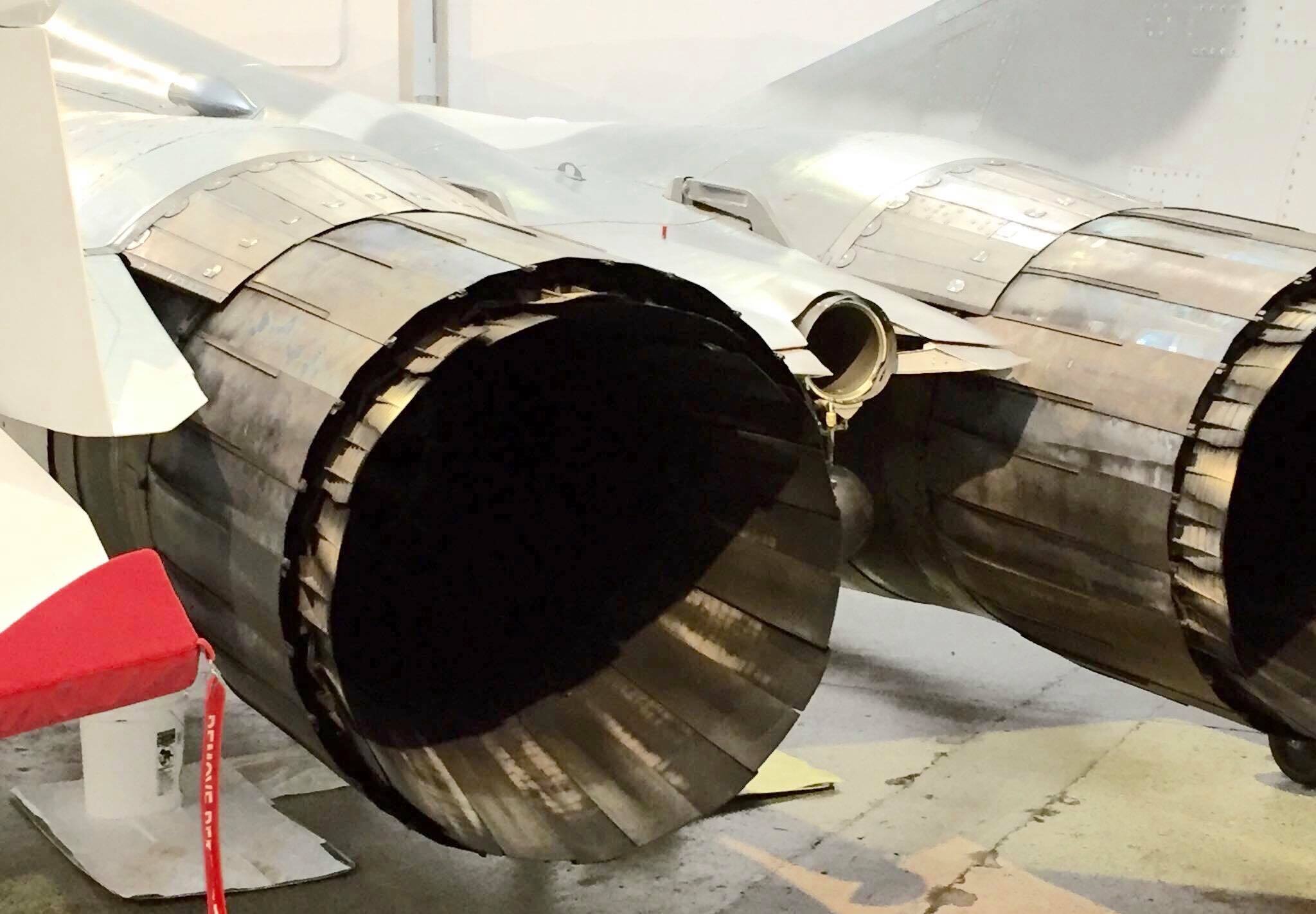
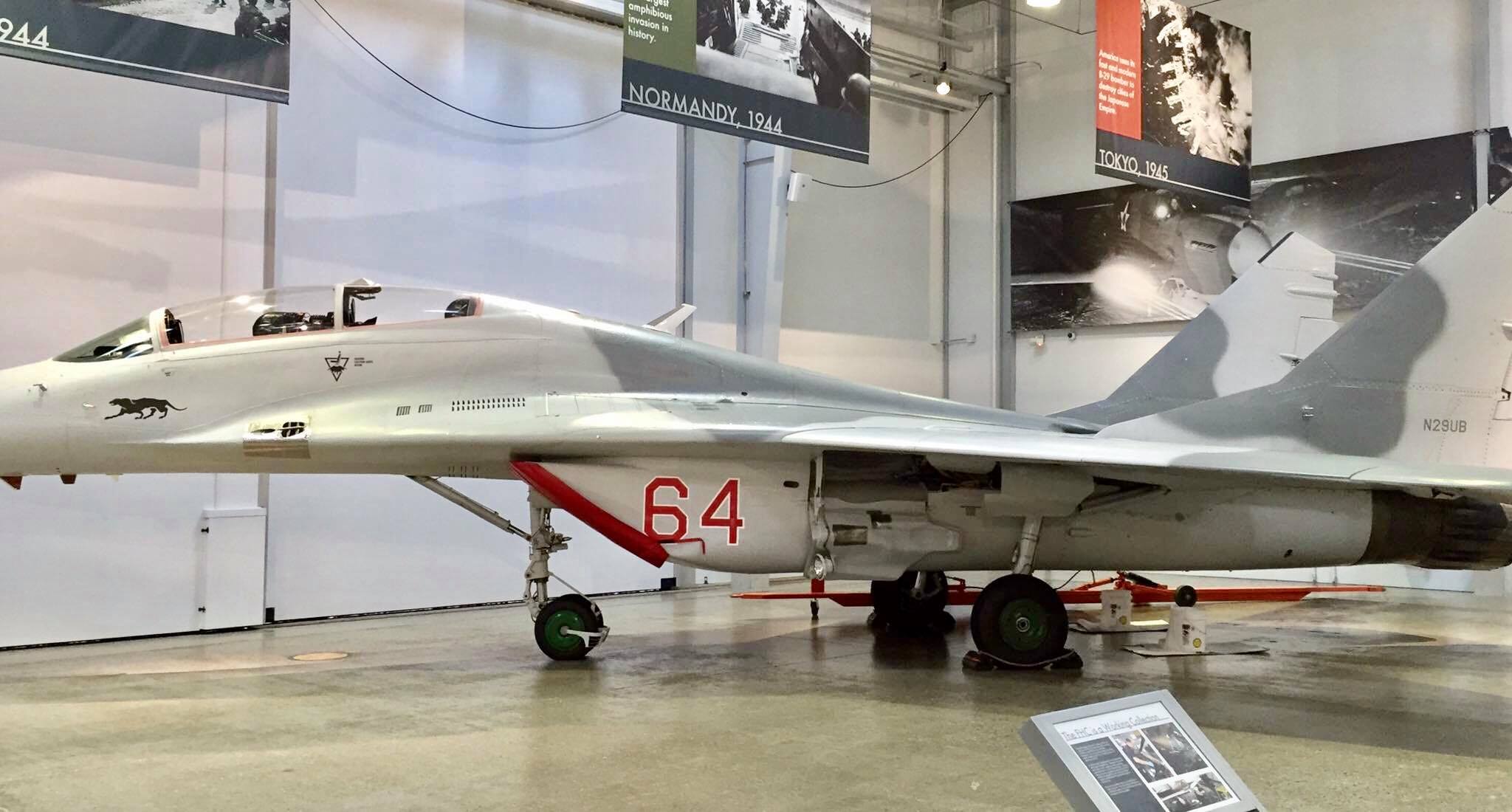
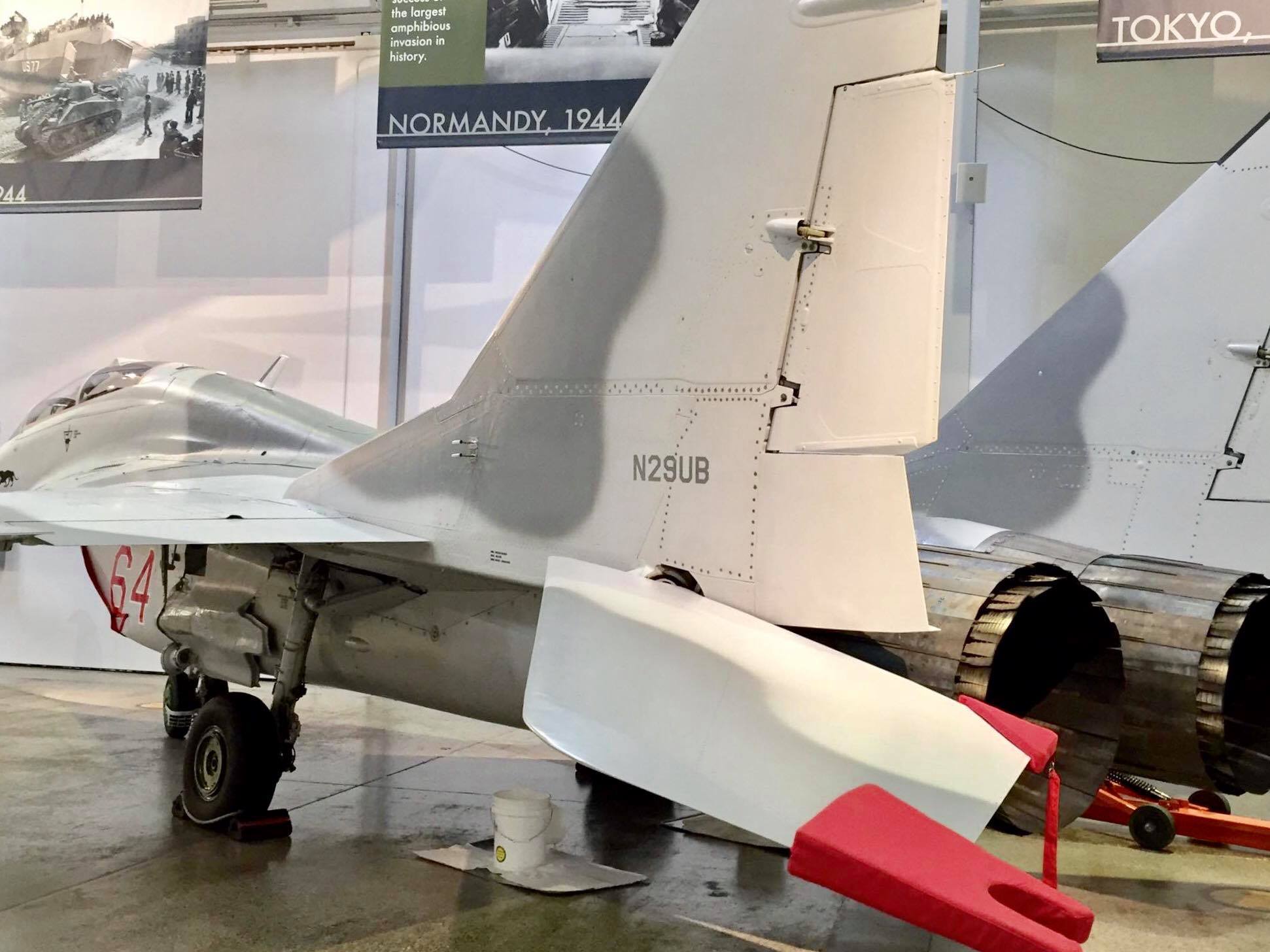
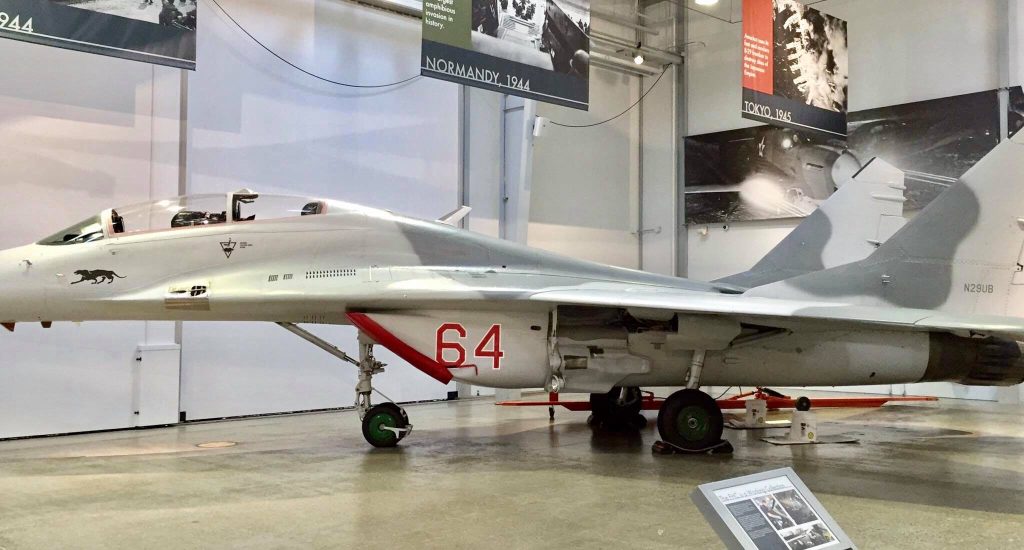
Armament includes one Gryazev-Shipunov GSh-30-1 .30 mm built-in aircraft gun with 150 rounds of ammunition. It has six under-wing pylons and one under-fuselage centerline hardpoint for up to 7,720 lbs. of ordnance comprising air-to-air missiles, rockets and bombs including R-27 air-to-air medium-range missiles (supplied by the Vympel State Engineering Design Bureau based in Moscow); R-73 and R-60 air-to-air short-range missiles; four pods of S-5, S-8, S-24 unguided rockets; air bombs. The aircraft is equipped with an N-019 radar; an infrared search and track sensor; a laser rangefinder; and a helmet-mounted target designator. For longer-range air combat, the MiG-29 uses radar guidance for the R-27 missiles. I have not personally verified these numbers, but it is reported that approximately 600 MiG-29 aircraft have served with the Russian Air Force and have also reportedly served with the following countries in these estimated numbers: Algeria (35), Bangladesh (8), Belarus (41), Bulgaria (18), Cuba (four), Eritrea (7), Germany (23), Hungary (21), India (69), Iran (25), Kazakhstan (40), Malaysia (16), Myanmar (10), North Korea (40), Peru (19), Poland (36), Romania (15), Slovakia (23), Serbia (3), Syria (19), Sudan (12), Turkmenistan (24), Ukraine (229), Uzbekistan (60) and Yemen (19).
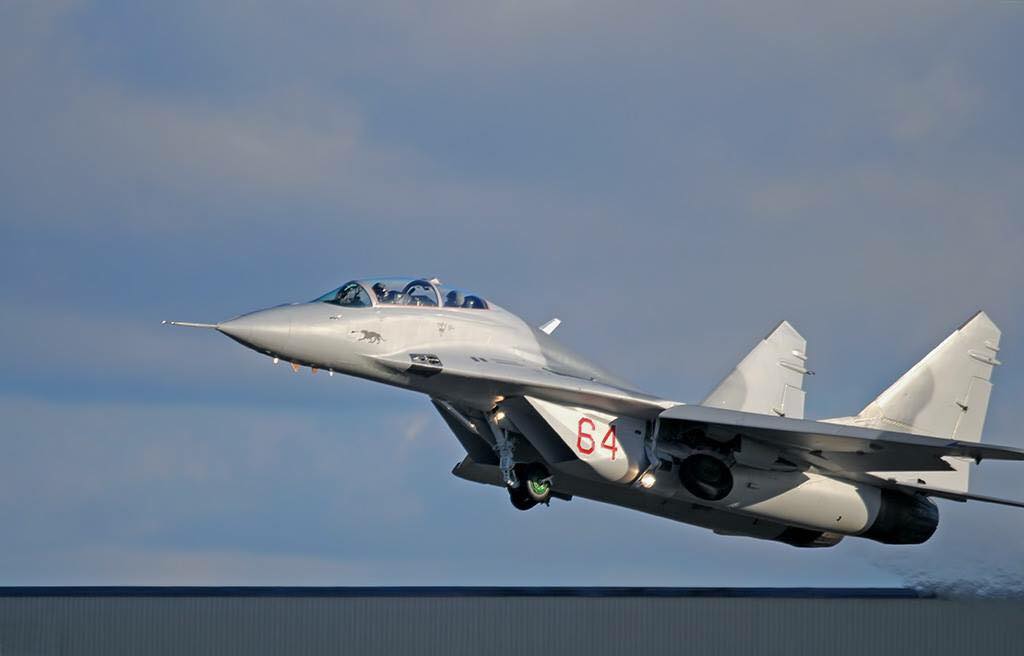
Editor’s notes: As of today, MiG-29UB N29UB is currently owned by billionaire and commercial astronaut Jared Isaacman, who is currently the administrator of NASA, as well as the founder of Draken International and the organizer of the Polaris spaceflight program. In addition to contract work with Polaris, Isaacman has flown the aircraft at several public events, including the annual EAA AirVenture airshow held in Oshkosh, Wisconsin. For more information, see this article HERE.

About the author:  Randy Malmstrom grew up in a family steeped in aviation culture. His father, Bob, was still a cadet in training with the USAAF at the end of WWII but did serve in Germany during the U.S. occupation in the immediate post-war period, where he had the opportunity to fly in a wide variety of types that flew in WWII. After returning to the States, Bob became a multi-engine aircraft sales manager and, as such, flew a wide variety of aircraft; Randy frequently accompanied him on these flights. Furthermore, Randy’s cousin, Einar Axel Malmstrom, flew P-47 Thunderbolts with the 356th FG from RAF Martlesham Heath. He was commanding this unit at the time he was shot down over France on April 24th, 1944, and spent the rest of the war as a prisoner of war. Following his repatriation at war’s end, Einar continued his military service, attaining the rank of Colonel. He was serving as Deputy Wing Commander of the 407th Strategic Fighter Wing at Great Falls AFB, MT, at the time of his death in a T-33 training accident on August 21, 1954. The base was renamed in his honor in October 1955 and continues to serve in the present USAF as home to the 341st Missile Wing. Randy’s innate interest in history in general, and aviation history in particular, plus his educational background and passion for WWII warbirds, led him down his current path of capturing detailed aircraft walk-around photos and in-depth airframe histories, recording a precise description of a particular aircraft in all aspects.