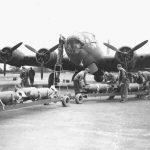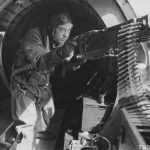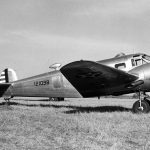


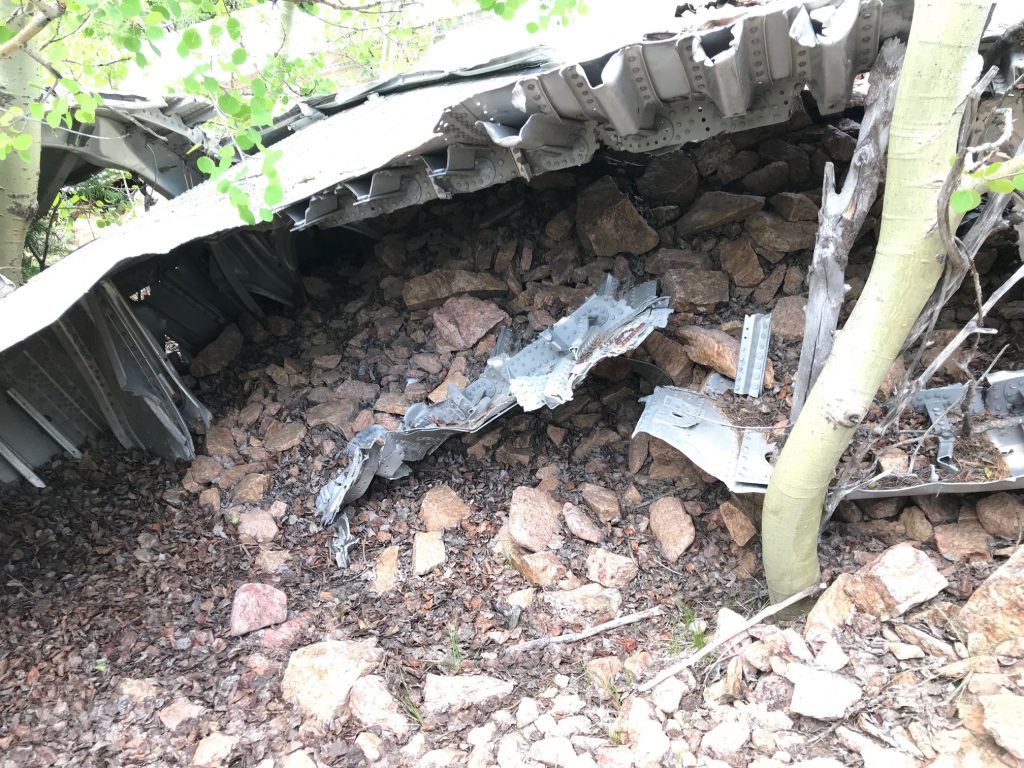
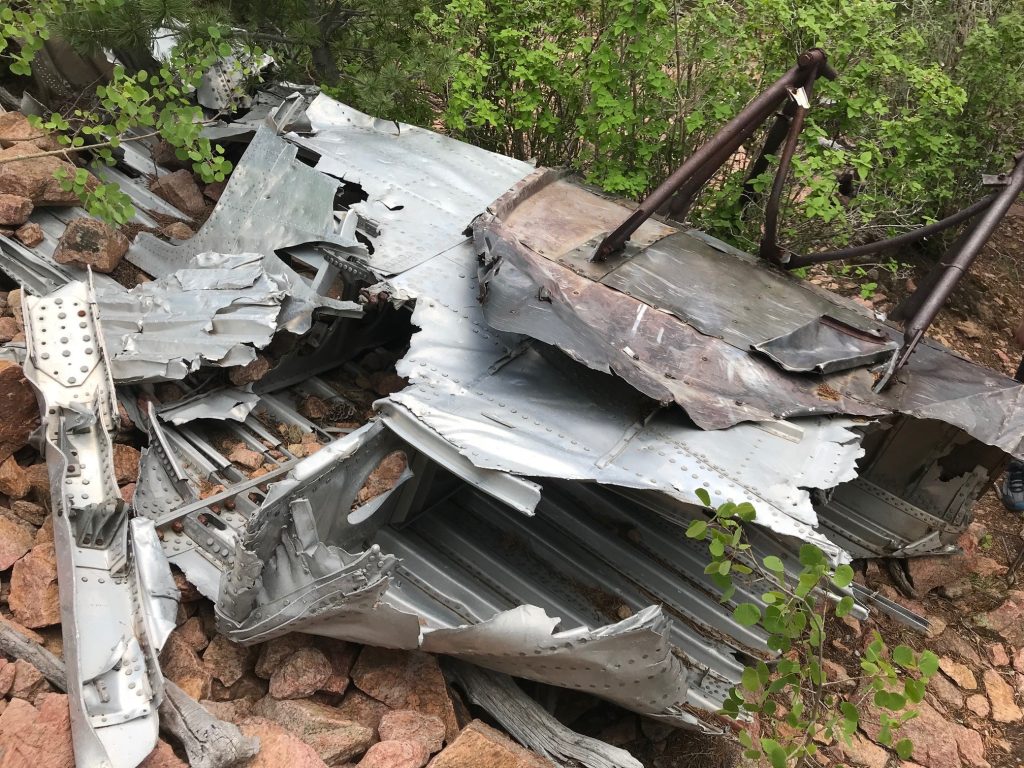
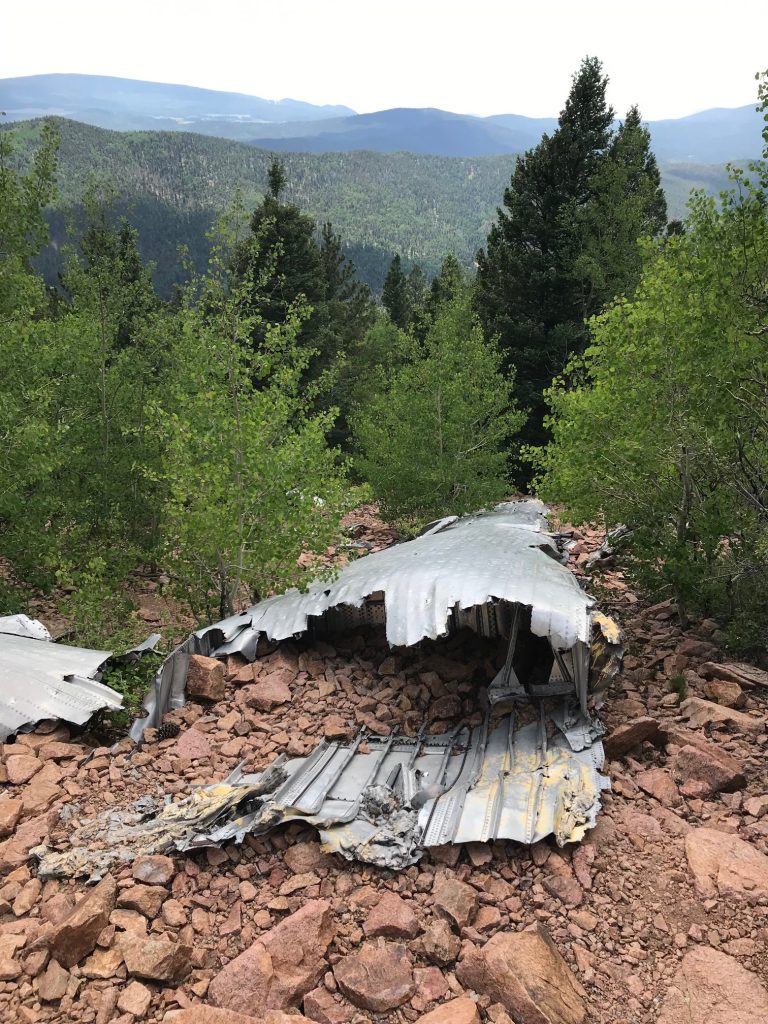
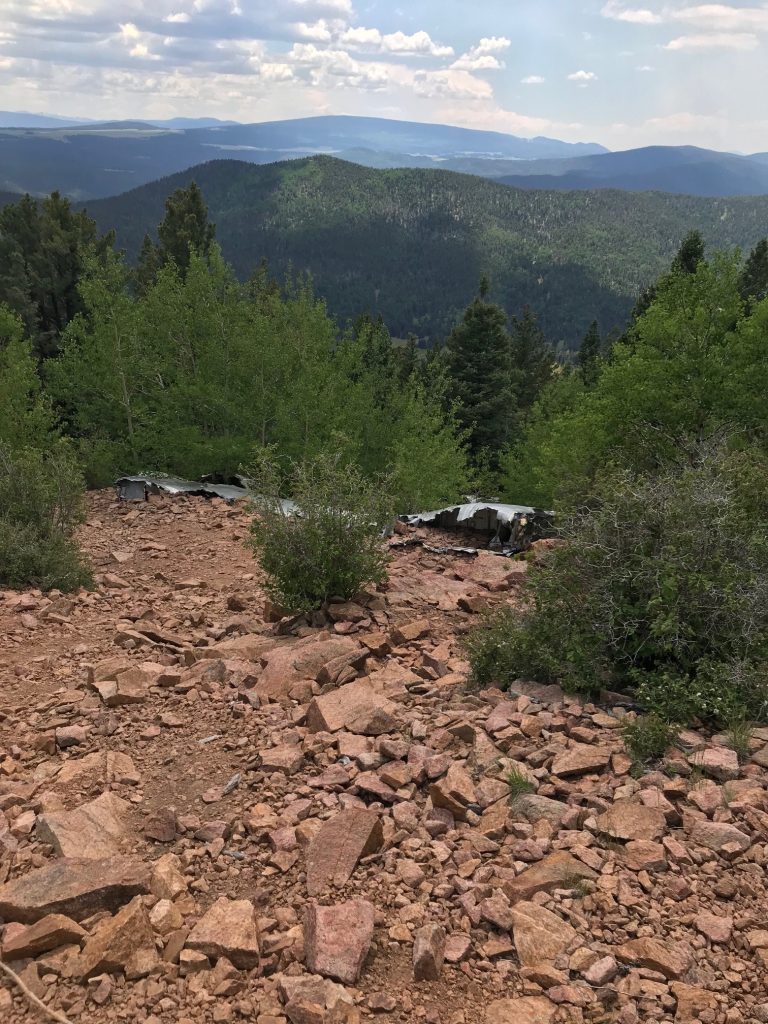
When most people think of military aircraft crashes during WWII, they think of those lost over foreign battlefields. What most don’t consider is the more than 500 aircraft losses involving B24 Liberators alone within the continental U.S. One is known as the most visited crash site in the world. It is the B-24 Liberator 41-1133, which crashed on a navigational training mission on the evening of April 22, 1942, at what is known today by countless Boy Scouts and their adult leaders as Philmont Scout Ranch in Cimarron, New Mexico. This crash site, which is located at approximately the 10,242-foot level of Trail Peak, the 9th highest peak within Philmont.
The Mission
This Liberator was one of seven assigned to the Combat Crew Training School (CCTS) at Kirtland Field (now Kirtland Air Force Base) in Albuquerque, N.M. The CCTS was unique in that it was not staffed by the Army Air Corps Training Command (ACTC). Instead, the instructors and ground staff were employees of Transcontinental & Western Air, Inc., which would eventually become Trans World Airlines (TWA). The school would come to be when, by 1941, the number of aircraft lost due to pilot error while being ferried to Britain became unacceptably high. This training started after the president of TWA, Jack Frye, met with Gen. Hap Arnold to discuss how the company was ferrying planes (primarily Liberators and Lockheed Hudsons) under contract with the Royal Canadian Air Force. Soon, it was agreed that TWA would pull their best pilots and instructors to join the staff of the new school. Otis Bryan, TWA’s chief pilot, would become the superintendent of “Eagle Nest Flight Center.”
Liberator 41-1133 was a newly manufactured aircraft, having arrived from its San Diego factory with less than 120 hours in flight prior to its final flight. Almost all of the eight-man crew were recent graduates of the CCTS. The crew of 41-1133 were: Cpt Robert O. Redding, a TWA pilot, was in command. He was a 27-year-old rancher from Montana and an AAF reservist. He was scheduled to report for duty in July 1942. Serving as copilot was a civilian, Jonas G. Ruff, a TWA pilot who at 32 was one of the older first officers on the staff. Ruff was an experienced pilot with thousands of hours of flight time, an instrument rating, and a commercial license. He had also recently completed a B-24 transition course. Redding and Ruff were good friends and had worked together since the mid-1930s. Harold F. Blackman, 41, flew as the copilot on the outward leg of the flight. He served as the school superintendent of CCTS and was monitoring Redding’s work. He did not return to Albuquerque with the remainder of the crew. Another civilian TWA employee was George E. Van Hoozer, 29, the flight engineer. Van Hoozer had graduated at the head of his mechanics class at Glenview Naval Air Station in the early 1930s. He had recently been offered an engineering instructor’s job and a commission in the AAF.

Another pilot, 2nd Lt Roland L. Jeffries, 21, received his primary flight training at Thunderbird Field, near Phoenix, Arizona. Coincidentally, for a crash that happened at Philmont Scout Ranch, Jeffries was an Eagle Scout, as well as a member of the “Sky Scouts” sponsored by TWA.
If there was a golden boy among the crew, it would have been 2nd Lt Charles O. Reynard, Jr., 23, a pilot. Reynard graduated from Harvard in June 1941. He was also a Star Scout. He was a gifted athlete and completed flight school in Bakersfield, California, in the following September. Reynard and Jeffries had been with different bomb groups, and both impressed their instructors to become first pilots. Cpl Philip E. Macomber, 24, an automotive mechanic prior to enlisting from south-central Maine, described as “happy go lucky,” was the flight engineer. Cpl Duane M. Peterson, 22, from Worthington, Minnesota, was the radio operator. The flight took off from Kirtland early that morning. The weather was clear but was expected to deteriorate. There was a 7,000-foot ceiling with winds from the east at seven knots. The flight to Kansas City was uneventful.
(Image credit: Harold White)
It was a glorious day in Kansas City when they arrived in mid-morning. It was a homecoming for half of the crew, but it was special for Jeffries. His fiancée met him at the airport, along with his mother and other members of his family. For two hours afterward, they set their wedding date for after he graduated from CCTS. The remainder of the crew took the afternoon off. Redding had been one of the youngest airmail pilots in the country, so he had ties in Kansas City. Van Hoozer would hang around the airport all day, visiting old mechanic friends and contacting family members.
(Image credit: Harold White)
The Return Leg
At mid-afternoon, the aircraft had taken off for the return to Albuquerque. Fifty minutes after takeoff, Peterson radioed a position report as being 25 miles northwest of Newton, Kansas. At 7:35 p.m., Redding contacted Las Vegas radio, and indicated 1133 was 25 miles east of the station, and requested instrument clearance. At the time, Las Vegas reported a 300-foot ceiling, heavy rain, and a 27-knot wind from the southwest. Redding almost certainly got weather reports from other areas, but they were the same or worse. The next communication from 1133, which was garbled due to lightning, indicated they were on instruments at 14,000 feet and about 70 miles north-northwest of Las Vegas. There were no further communications from 1133, but one can assume Redding saw his best chances in flying north then west where ceilings were higher. There, he could end up north of Santa Fe, then down to Albuquerque. Air temperatures at 8 p.m. were reported as freezing at 12-13,000 feet. Unfortunately, B24s were built to carry a commendable bomb load, but were grossly intolerant of icing.
(Image credit: Harold White)
The 1133 is Missing
At 8:45 p.m., 45 minutes past 1133’s ETA, the aircraft was declared overdue. At midnight, its status was changed to “missing.” Weather on the following day prohibited any search aircraft from being dispatched until later in the day. On May 1, the aircraft commander of one of the search B-24s noticed a swath cut into the trees on top of Trail Peak. The commander, Harold Kincheloe, a former Navy Catalina pilot, lowered his aircraft and confirmed wreckage. A search party was organized and dispatched pre-dawn on May 2. The group’s guide was Elliott “Chope” Phillips, son of Philmont’s donor. They were not the first to arrive at the crash site. Bruce Bull, another area rancher, headed up the peak after he saw several B-24s circling the location the day prior. The cold weather had served to help preserve the bodies of the crew. Redding, Jeffries, and Macomber had all been thrown through the flight deck canopy, their bodies coming to rest at the front of the wings. The bodies of Ruff, Peterson, and Van Hoozer were found around the wing’s trailing edges. Reynard was found still strapped into the aft compartment. All crew members were wearing their parachutes and external bladder oxygen masks. This would have made flying a cumbersome experience, especially in an airplane that isn’t known for lightness of controls. Turbulence would have made it difficult to tolerate straps digging into shoulders and laps. Anything that wasn’t secured would have been flying.
(Image credit: Harold White)
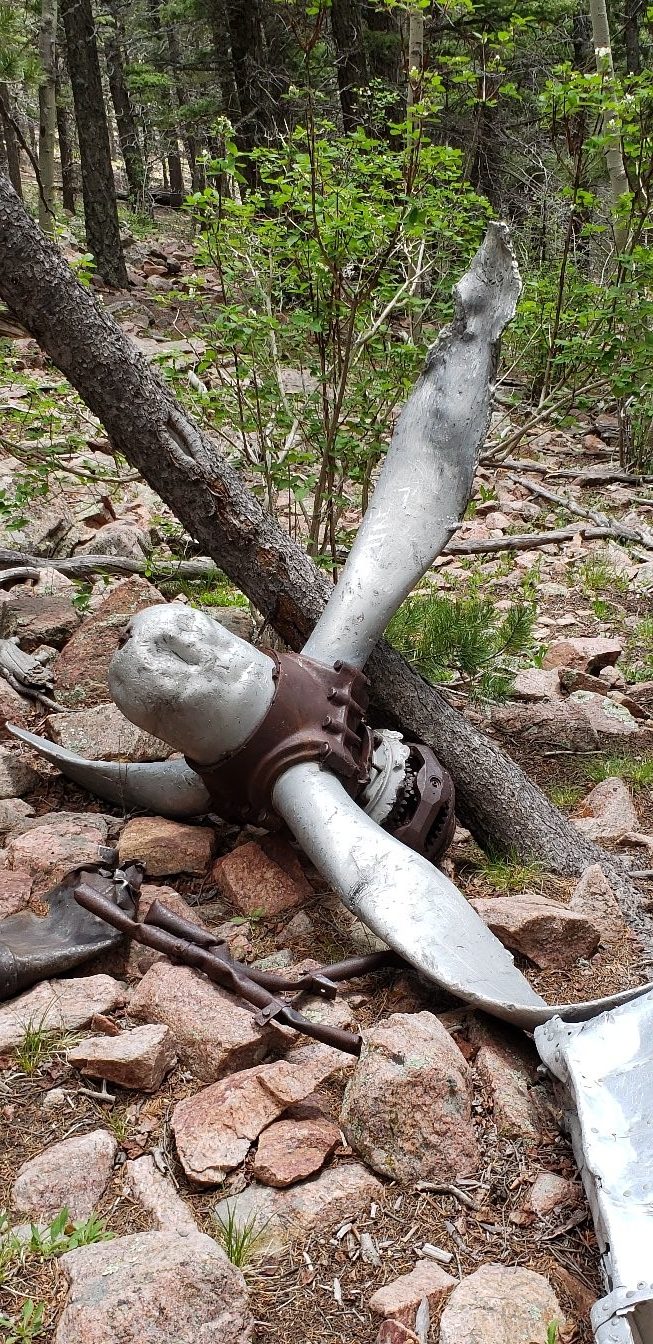
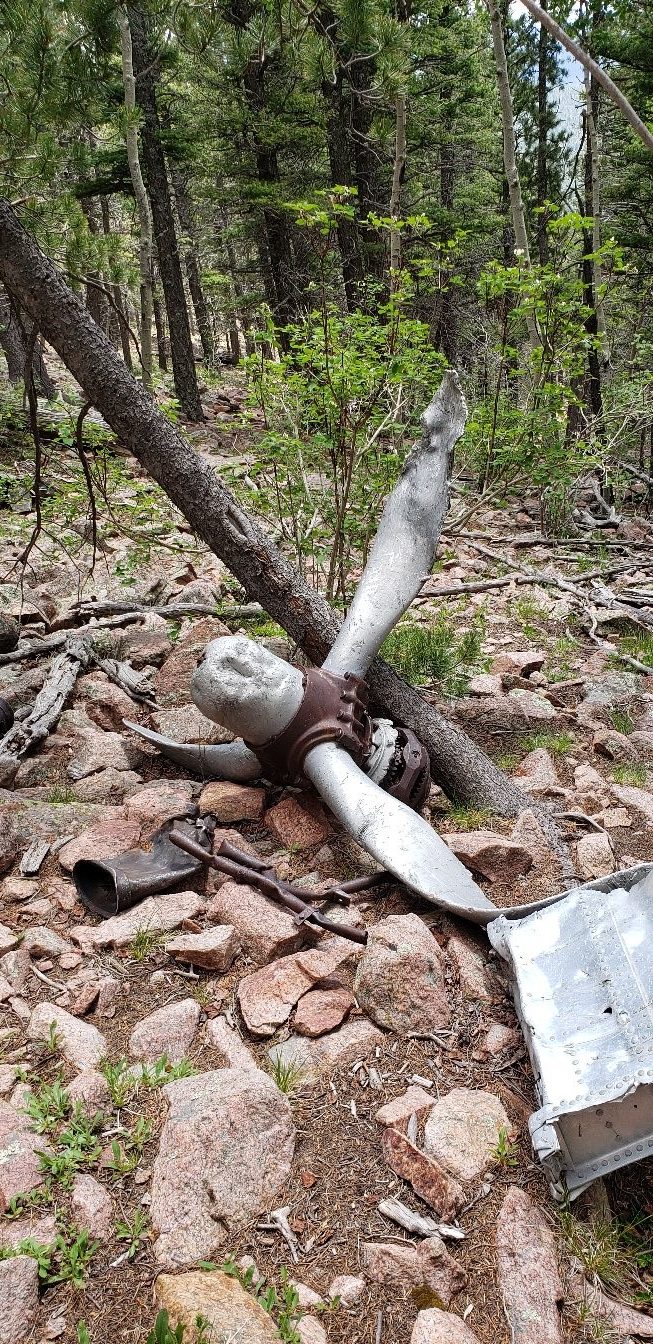
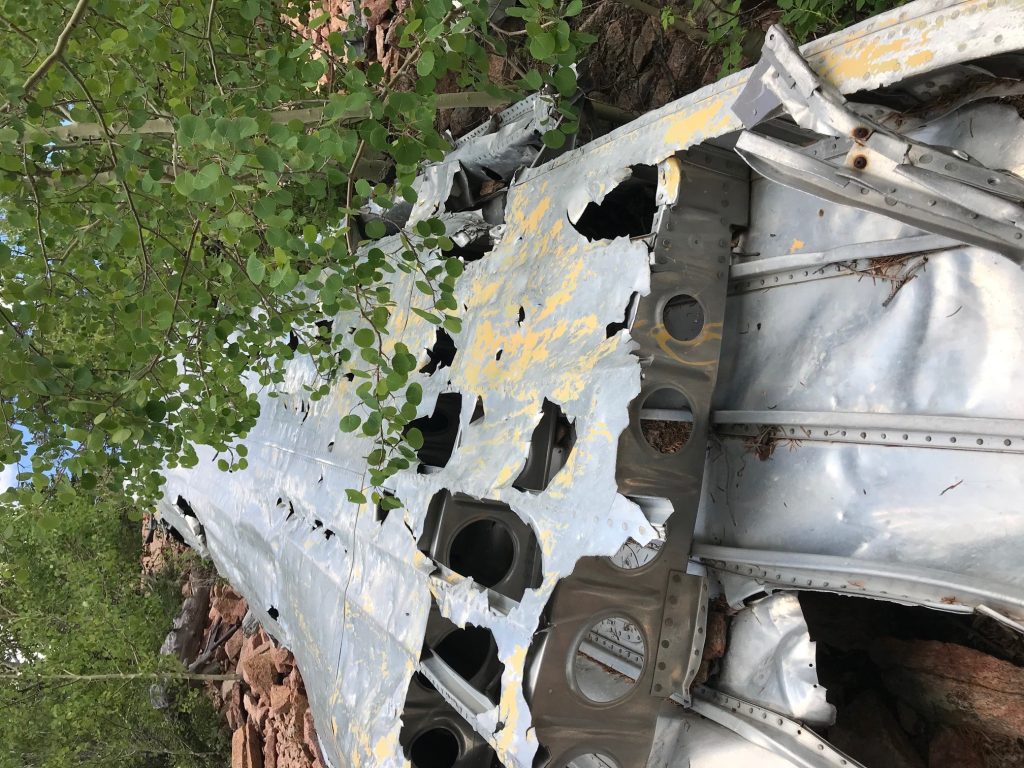
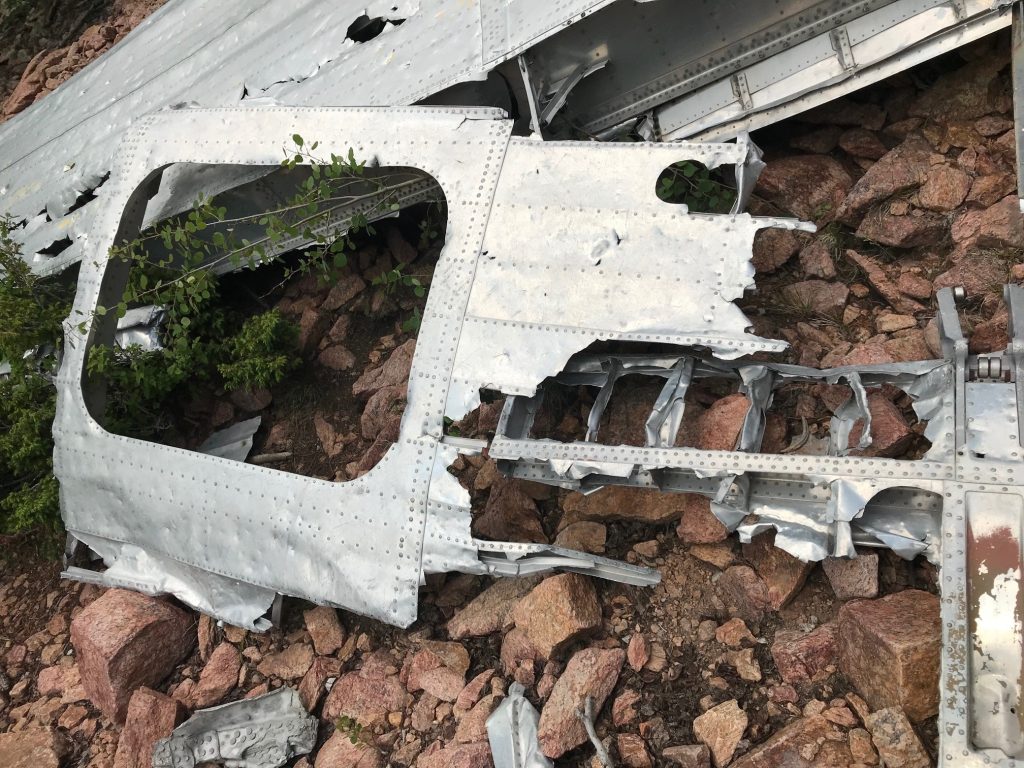
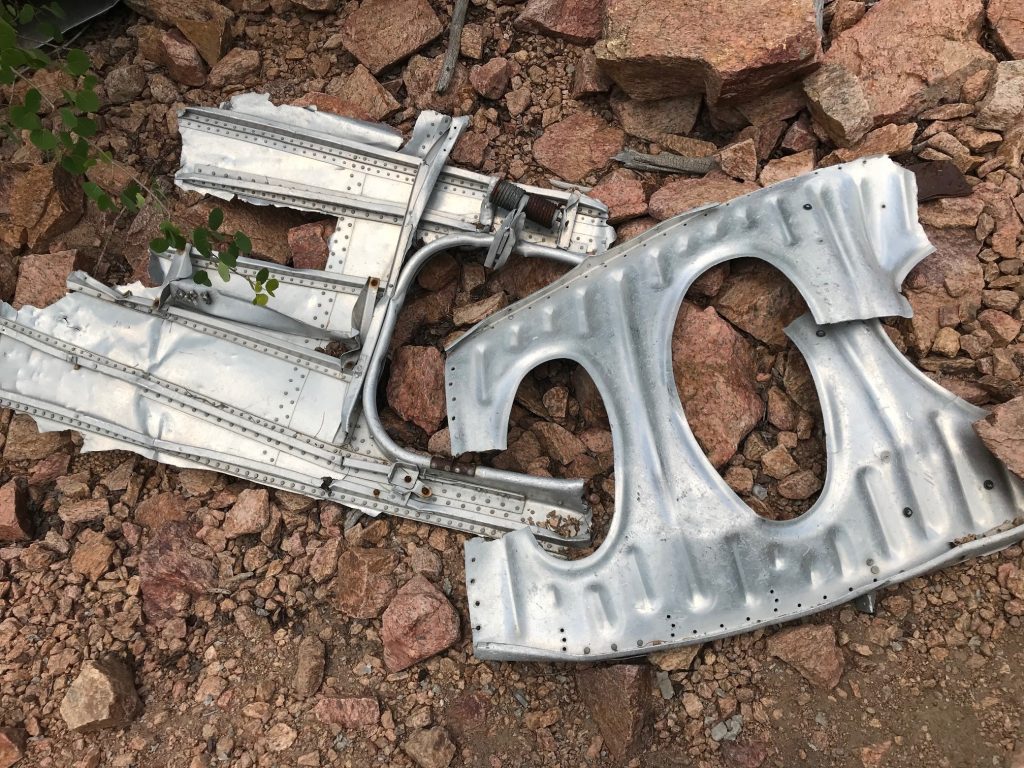
Wristwatches were evaluated, and it was deduced that the crash had happened about 8:20 p.m. The altimeter was found with pointers tight and indicated an altitude of 10,050 feet. Marks on the propellers, destruction patterns in the trees, and the extent of damage to the airplane overall indicated that the plane hit with level flight and while doing approximately 250 MPH. The propeller of the fourth engine indicated that it had been shut down prior to the impact. There was no fire. Practically the entire fuselage was demolished. The wings were intact but were separated from the fuselage. The heading of the aircraft on impact was east-northeast, which suggests Redding changed his mind to skirt north of the storm. Instead, he made a180 and was heading for the safety of the east. Chope Phillips commented that a storm on the night of April 22 was much more severe than the typical spring storms for which the Southern Rockies are well known.
(Image credit: Harold White)
The Final Verdict
Investigators of the accident concluded the cause was pilot error, but in the years since, an atmospheric phenomenon known as downburst-microburst was the most likely cause. A microburst is a downward rushing column of cool air. These cause a significant loss of altitude and airspeed. Recovery from a microburst in these circumstances would have been virtually impossible.
(Image credit: Harold White)