

(Image credit: VAN)
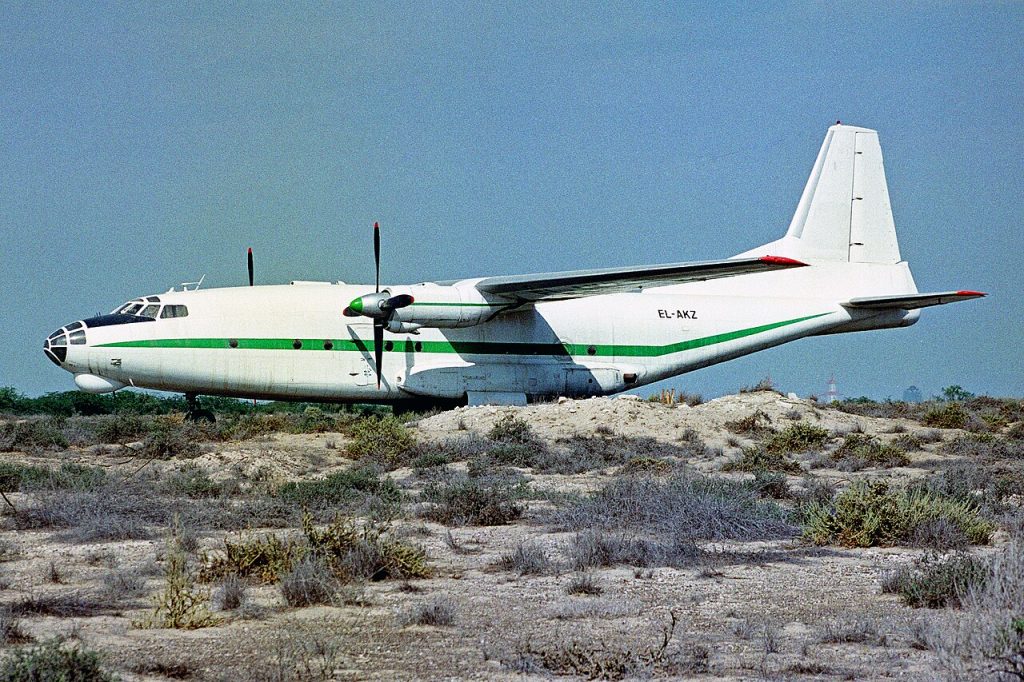
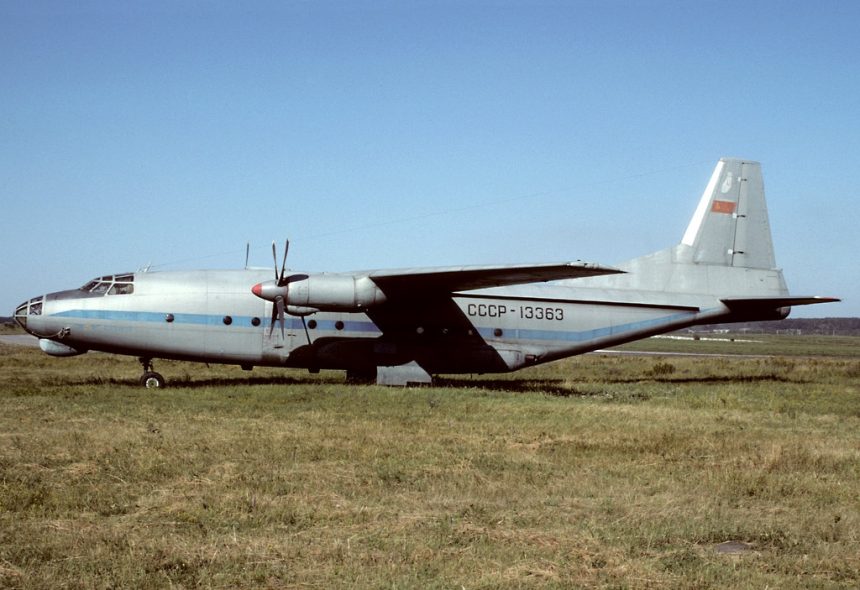
On this day in aviation history, 70 years ago (February 11, 1956), the Antonov An-8 took flight for the first time. Named the Camp by NATO, the An-8 was a Soviet twin-turboprop military transport aircraft. Conceptualization of the An-8 began in December 1951, when OKB-153 began the design of a twin-engined assault transport aircraft. The designation of this assault transport was DT-5/8 (Desantno-Trahansportnyy, or assault transport). On December 11, 1953, the Soviet Council of Ministers assigned Antonov OKB Directive No. 2922-1251, calling for the manufacturing of the proposed twin-turboprop transport aircraft, derived from the DT-5/8 design. Antonov’s in-house name for the DT-5/8 design was Izdeliye P. Their design resulted in a high-wing aircraft powered by twin-turboprop engines. The fuselage was rectangular in cross-section, and capable of carrying 60 troops, 40 passengers, or a wide array of vehicles (such as ASU-57 assault guns, BTR-40/BTR-152 armoured personnel carriers, or artillery pieces). The An-8’s first flight took place from Sviatoshyn Airfield, Kyiv. Flight testing revealed deficiencies in the aircraft’s controllability. Antonov bolstered the horizontal and vertical stabilizers, added anti-spin strakes on the upper rear fuselage sides, and replaced the engines. After making these modifications, the An-8 was ordered into production at the GAZ-34 factory in Tashkent.
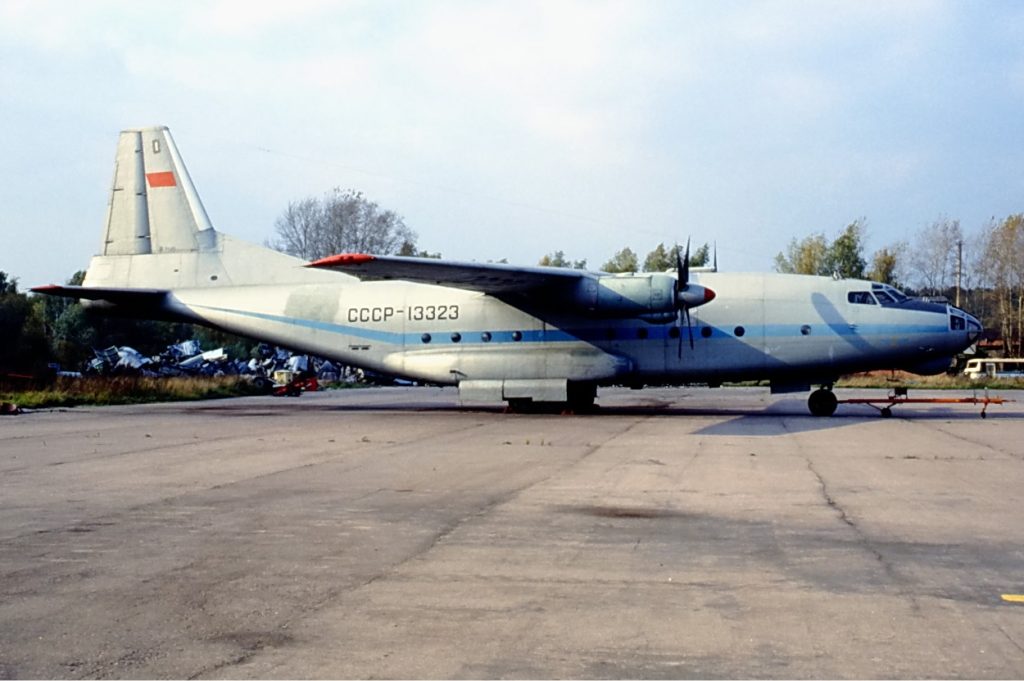
A majority of the An-8’s service life was spent primarily with the Soviet Air Force. In 1968, the aircraft was used to land special forces at Plzeň airport during the Invasion of Czechoslovakia. Some variants of the An-8 were used as electronic reconnaissance aircraft, and one aircraft was used for air sampling after the Chinese nuclear testing of 1966. An-8s would continue to serve in the Soviet Union until the 1970s, at which point many were transferred to Aeroflot for use as freighters. A rash of accidents in the 1990s caused the withdrawal of the An-8’s use in Russia. A few aircraft remained flying in the Middle East and Africa up until 2010. The Antonov An-8 was powered by two Ivchenko AI-20D turboprop engines, each providing 5,180 shaft horsepower. The An-8 would cruise at 300 mph, but could attain a maximum airspeed of 380 mph. The Camp had a range of 1,500 nautical miles and a service ceiling of 31,500 feet. Soviet Air Forces An-8s were armed with a 23 millimeter cannon in the tail turret.