






(Image credit: VAN)
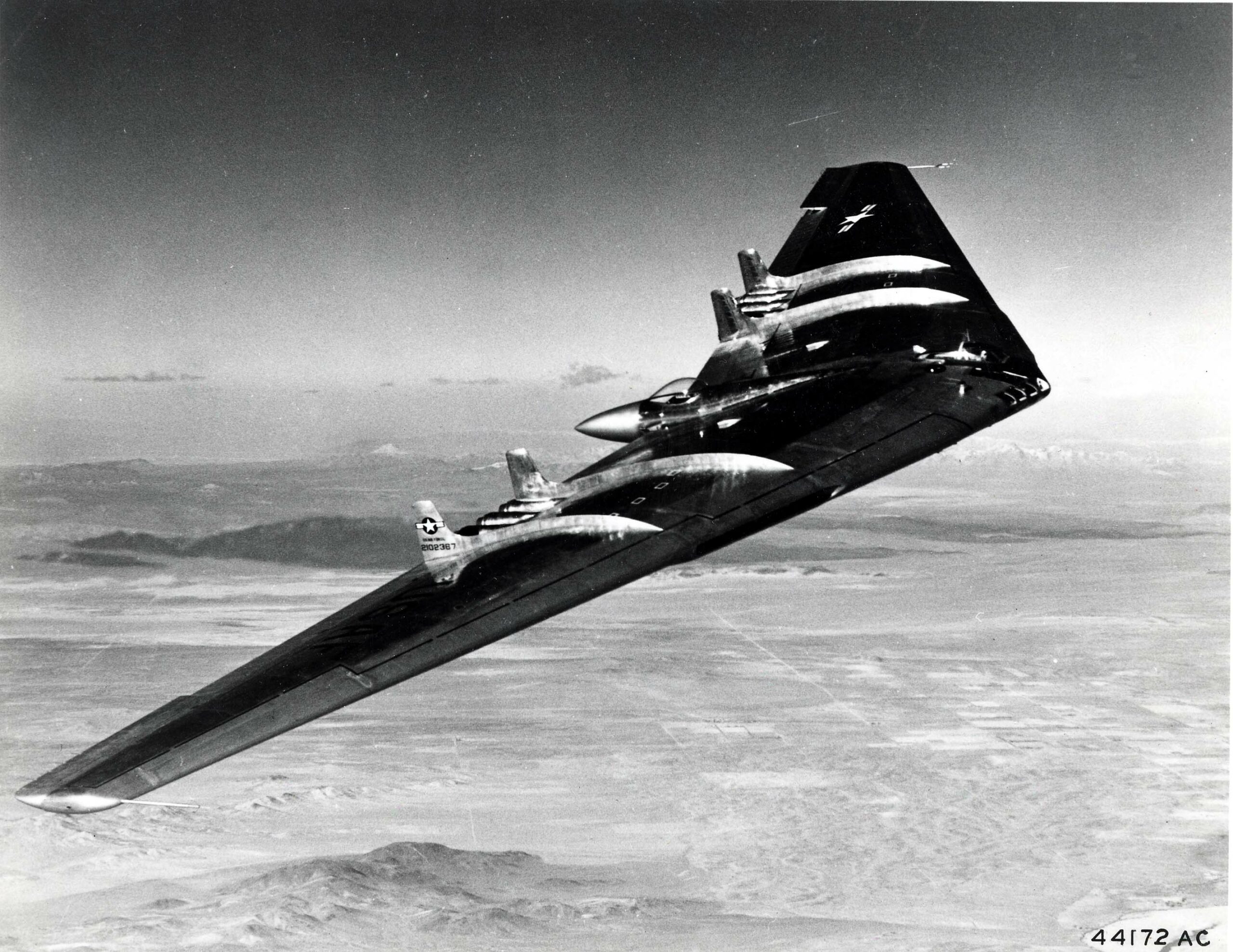
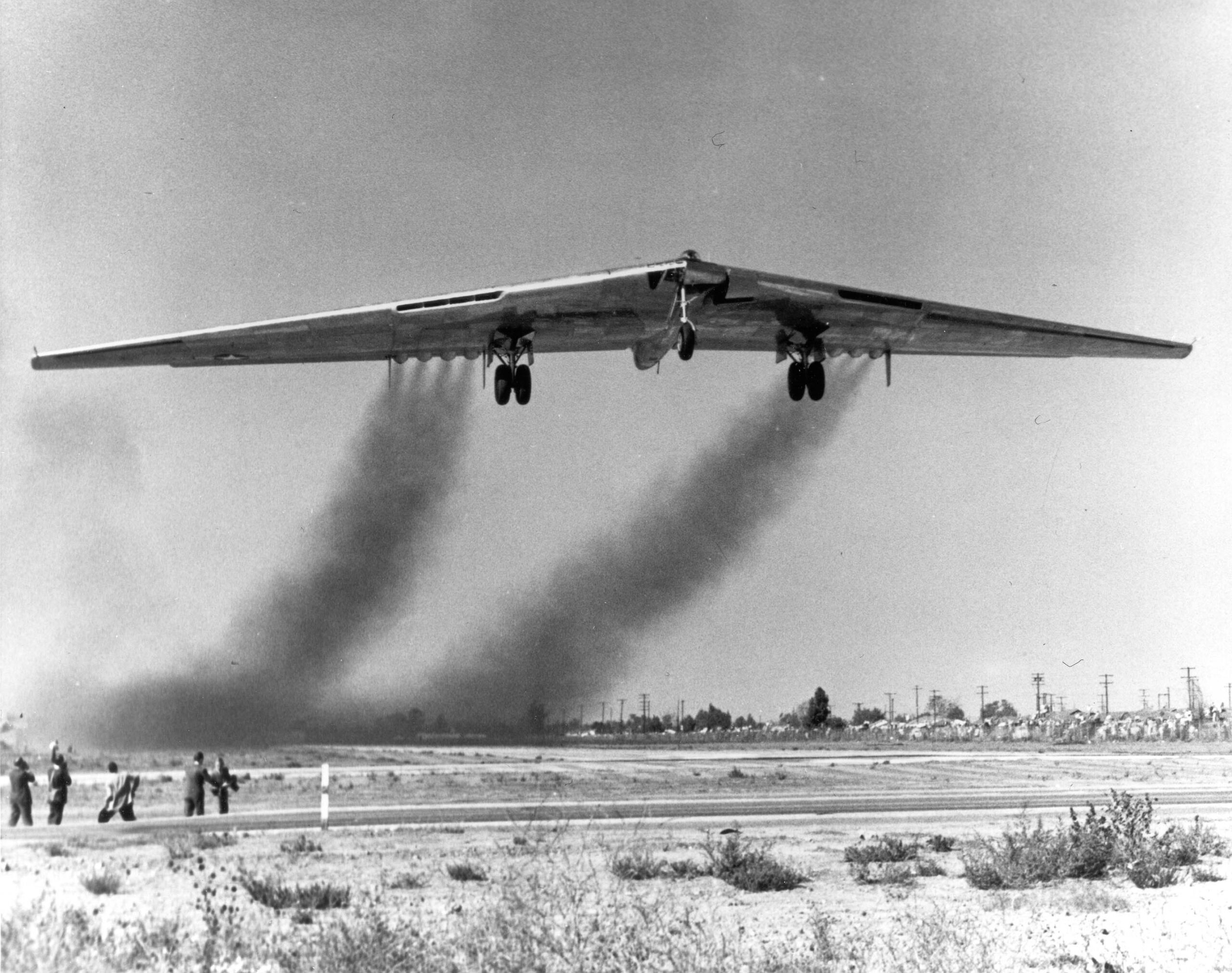
On this day in aviation history, 78 years ago (October 21, 1947), the Northrop YB-49 Flying Wing made its first flight. Designed and built by the American aerospace company Northrop, the YB-49 was a jet-powered heavy bomber prototype developed shortly after the end of World War II. It featured an advanced flying-wing configuration that evolved from Northrop’s earlier piston-powered XB-35 and YB-35 prototypes. The YB-49 was intended for service with the United States Air Force.
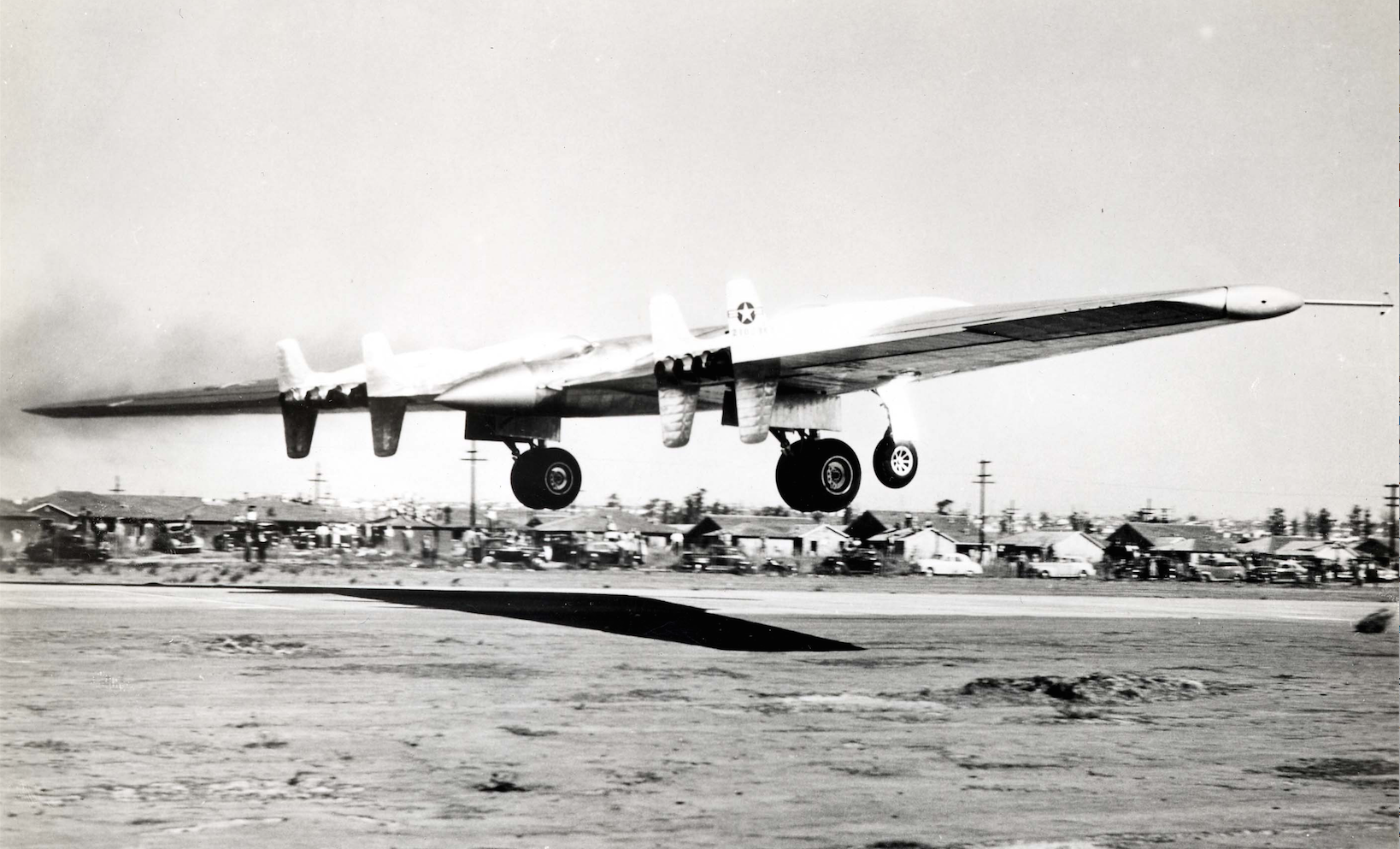
The first flight of the YB-49—serial number 42-102367—took place at Northrop Field in Hawthorne, California. This airframe had originally been a YB-35 pre-production test aircraft converted to jet power. Northrop’s Chief Test Pilot, Max Stanley, was at the controls for the maiden flight, which took the futuristic bomber to Muroc Air Force Base for further testing. Nearly 4,000 spectators gathered to witness the event. Alongside Stanley were co-pilot Fred Bretcher and flight test engineer Orva Douglas. The flight lasted a total of 34 minutes. The Northrop YB-49 was powered by eight Allison J35-A-15 turbojet engines, each producing 4,000 pounds of thrust. These engines propelled the flying-wing bomber to a maximum speed of 493 miles per hour, with a cruise speed of 365 mph. The YB-49 had a service ceiling of 45,700 feet and a combat range of 2,800 to 3,500 nautical miles while carrying a 10,000-pound bomb load—equating to a combat endurance of 8 hours and 27 minutes. For defense, the YB-49 was to be equipped with four .50-caliber machine guns mounted in a flexible tail “stinger,” and it could carry up to 16,000 pounds of ordnance.
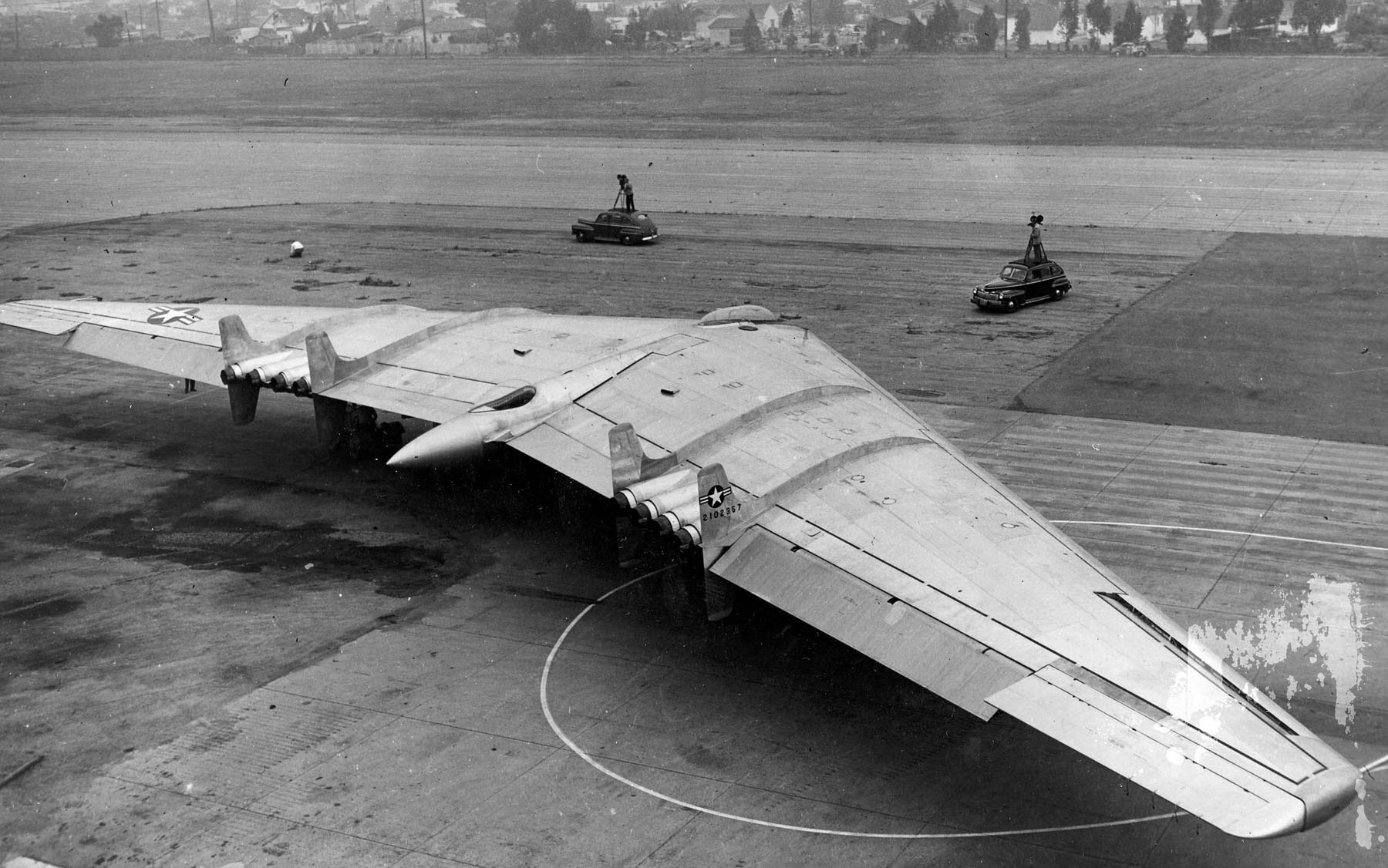
Ultimately, the YB-49 did not meet expectations during testing. While the flying-wing design offered benefits such as reduced parasitic drag and, notably, a smaller radar cross-section, it also suffered from a lack of static stability, making the aircraft difficult to control. In turbulent air, the bomber exhibited a tendency to “hunt” (oscillatory yaw motion), leading to inaccurate bombing runs. Pilots reported that it required constant attention and physical effort to maintain steady flight. Additionally, the airframe had been originally designed for piston engines, and the conversion to jet power was a compromise that introduced structural and aerodynamic challenges. All three YB-49 prototypes were eventually lost in accidents or damaged beyond repair. However, the aircraft’s legacy endures. The design knowledge gained from the YB-49 program profoundly influenced Northrop’s later work—most notably, the development of the B-2 Spirit stealth bomber, which still serves proudly with the U.S. Air Force today.












For a heavy bomber, it had a small bomb load, when compared to the B-29, which has a max bomb load of 20,000 pounds, and the massive 86,000 lbs for the B-36.