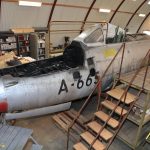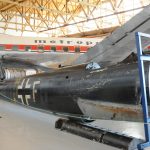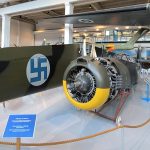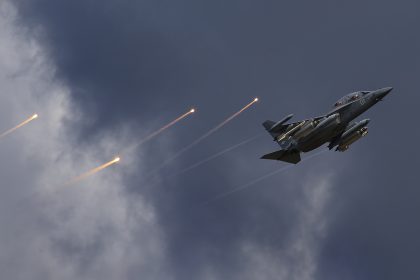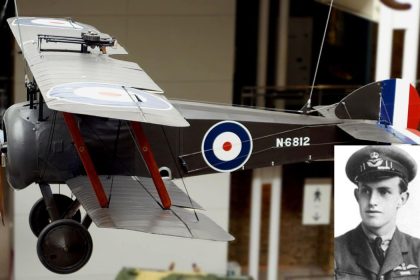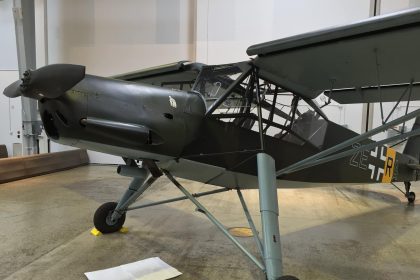

Prague is one of the most unique and intriguing cities in the world: the crossroads between Western and Eastern Europe, the Czech Republic’s main city exudes culture and a unique identity, with landmarks such as Prague Castle and Charles Bridge being the pillars of this tale. But escaping from its buzzing tourist area, Prague also offers other interesting attractions, catering to the most diverse tastes, including those for whom the skies are a true passion. Located in the northeastern suburbs of Prague, the Aviation Museum Kbely (Letecké Muzeum Kbely) is a particularly worthwhile destination for aviation enthusiasts and anyone curious about the history of flight. With its remarkable range of aircraft and historical exhibits, the museum offers visitors a chance to explore not only the technology of aviation, but also the important role aircraft have played in the history of the Czech Republic.

Witness of History
Kbely holds a special place in Czech aviation history: according to the country’s air force registry, the site was selected to serve as the first operational base of the fledgling Czech air force, one of several national air units formed after the collapse of the Austro-Hungarian Empire at the end of WWI. To catapult this development, Kbely would effectively become the first military and civil airport in the entire Czech Republic, serving over the following decades as one of the country’s main gateways.

The German occupation during WWII and the Czech Republic’s subsequent incorporation into the Soviet bloc at the end of the conflict brought further changes to the site, which definitively adopted a purely military character. However, each new change merely added another chapter to the site’s already extensive and significant history, which would gain official recognition in the mid-1960s, when the Czech aviation community (comprising a multitude of small flying clubs and enthusiasts) began pressuring local authorities to place greater value on and ensure the protection of Czech aeronautical heritage.

To answer this call, the Aviation Historical Society (Letecká historická společnost) was formed in 1965, with the aim of systematically collecting, processing, and renovating aviation monuments. Another important goal of the institution was to find a suitable place to exhibit these artifacts to the public, and thanks to a broad effort that also involved the Czech Military Museum and the country’s Air Force Command, a section of the Kbely airfield was ceded for the purpose of installing the future expo.

The first improvised aircraft exhibition at the site was opened in September 1967, while plans for a definitive expo were aimed at the next year. Despite logistical difficulties, political crises, and even the Soviet invasion of the country in August 1968, the institution pressed ahead with its plans; and defying all odds, the Aviation Museum Kbely opened its doors to the public on October 11, 1968, with a single hangar and just a handful of machines. Almost six decades later, the institution now boasts an astonishing collection of machines spread through six hangars, a hall for occasional exhibitions, and extensive outdoor exhibition spaces, becoming a global benchmark in aircraft conservation and preservation techniques.

A Unique Collection
Currently, a total of 128 aircraft, almost 50 engines, and dozens of other original aircraft parts are exhibited in individual hangars and outdoor areas. However, amidst this immense quantity of MiGs, Ilyushins, and Yaks, which for obvious reasons dominate the collection, it is possible to highlight certain pieces of great historical importance that can only be seen at Kbely.

For example, an WW1 veteran Spad S.VIIC.1, which later in its operational life served with the Czech Air Force’s 2nd and 6th Aviation Companies. Also impressive in the collection is the reproduction of the Aero Ab-11.17 (L-BUCD), used by Vilém Stanovský and František Šimek in 1926 during a 15,070 km aerial raid that spanned twenty-three countries in Europe, Africa and Asia. With unique petroleum-blue clothing and using components of the original L-BUCD, the machine is a must-see in the collection.

Another machine that deserves due respect in the static expo is the Ilyushin Il-2m3 no. 12,438. Operated by the 1st Czechoslovak Mixed Air Division (1. čs. smíšená divize) on the Eastern Front during WWII, the machine crashed after an engine seizure while providing support for the Moravia–Ostrava offensive. Scavenged from the battlefield, the plane was restored to flying condition and operated with the Czech Air Force until 1948.

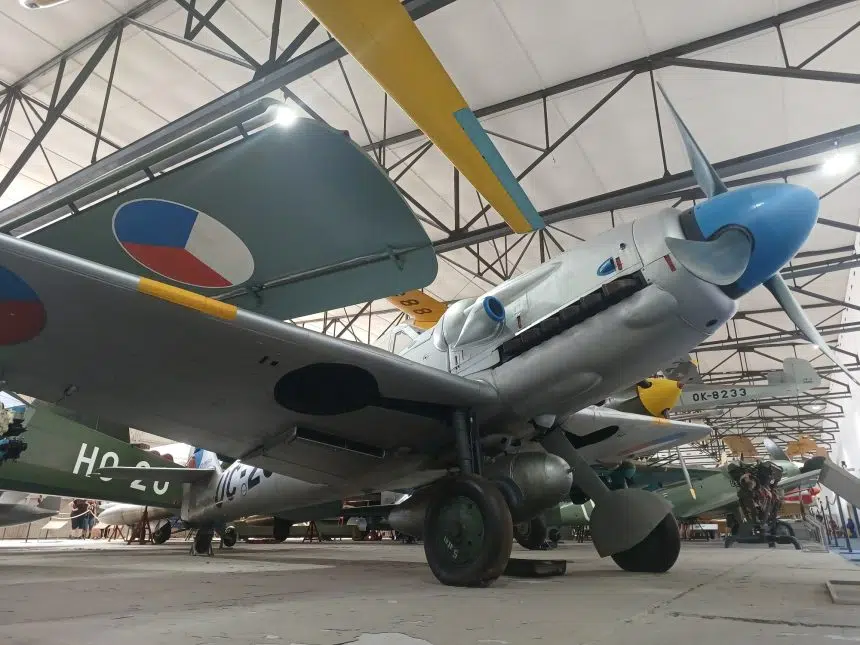
However, it is indisputable that the collection’s true highlights are the post-war AVIAs, which truly elevate it to a special status; it begins with the pair of S-199s, the Czech-produced copy of the famous Bf 109. Based on incomplete G and K airframes abandoned by German forces retreating from the country in 1945, these structures were repurposed by the Czech air force for the development of its first post-war indigenous fighter. Powered not by a Daimler-Benz, but by a Jumo 211, more than 500 of these Czech-made Messerschmitts saw active service with the Czech and Israeli air forces. Kbely is now home to two of these extraordinary planes, a single-seater S-199 and a two-seater trainer CS-199.

Other unique post-war AVIA birds in the collection are two S-92s, the Czech variant of the revolutionary Me262. As was the case with the S-199s, these aircraft were assembled from parts of German models left in the country at the end of WWII, and, by making good use of these valuable assets, the Czech Air Force managed to reassemble 11 aircraft of this type: nine dedicated single-seat fighters (S-92) and two multi-purpose two-seaters (CS-92). With the first machine flying in 1946, this made the Czech Air Force one of the first operators of jet fighters in mainland Europe.
Exploring Aero’s Legacy
However, most people don’t know that the complex also offers another interesting attraction – and, for me, one of the highlights of the whole collection. 900 meters away from the main installations of Kbely, it is located in the Stará Aerovka area at Letňany airport, the site of the first factory (and headquarters) of the world-renowned aircraft manufacturer Aero Vodochody. With historical buildings and hangars, the site also houses another part of the collection of the Aviation Museum Kbely.

Hangar No. V was built as part of the construction of new premises for the Aero company in 1940–1941. After the reconstruction, it houses an exhibition of bomber and fighter aircraft from the period from WWII to the late Cold War era. A multi-purpose Aero C-3A (Siebel Si-204) aircraft is located here alongside the fuselage of the C-3B bomber, as well as the front section of the Soviet Petlyakov Pe-2 aircraft and full models, such as a Sukhoi Su-7 and Su-22.

Hangar No. VI is historically the first hangar of the Aero company for assembling and flying aircraft. It was originally built in 1920 on the southeastern edge of the Kbelské airport, before being moved to the current site in the early 30s. Now the building is home to an exhibition dedicated to the history of the Aero company, composed of an A-18 (reproduction, based on the nº5 specimen), a L-29 Delfín (prototype XL-29-2), a L-39 Albatros (prototype L-39X-02) and a L-159 Alca (prototype serial no. 5831).

Final Tips and Info
The museum is easily accessible by public transport, with my recommendation being to use the metro + bus combo to get to the location, on a commute that will take you somewhere between 30 and 40 minutes. Take Prague’s C (red) underground line all the way to the Letňany station, the line’s final stop. After that, it is time for the bus, with lines no. 185, 259, 280, 302, 375, 376 dropping you off at the gates of the museum, keep an eye out for the stop called “Letecké Muzeum.” A MiG-21F-13 resting on a pedestal will sign you in at the entrance.

To go to the Stará Aerovka section, you will need to walk, as there are no shuttles or buses connecting it with Kbely’s main expo. Go left after exiting Kbely, walk a few minutes, and then turn right onto a street called Hůlkova. Keep going straight until the end, and on your right, you will be able to see the Aero’s hangars. At one point, you will probably think you are lost or on the wrong path, because there are just a few plaques indicating the site, but trust your cellphone map app. The museum is open from May to October, every day (except Mondays) from 10.00 AM to 6 PM. Admission is free of charge. For more information, click HERE.