






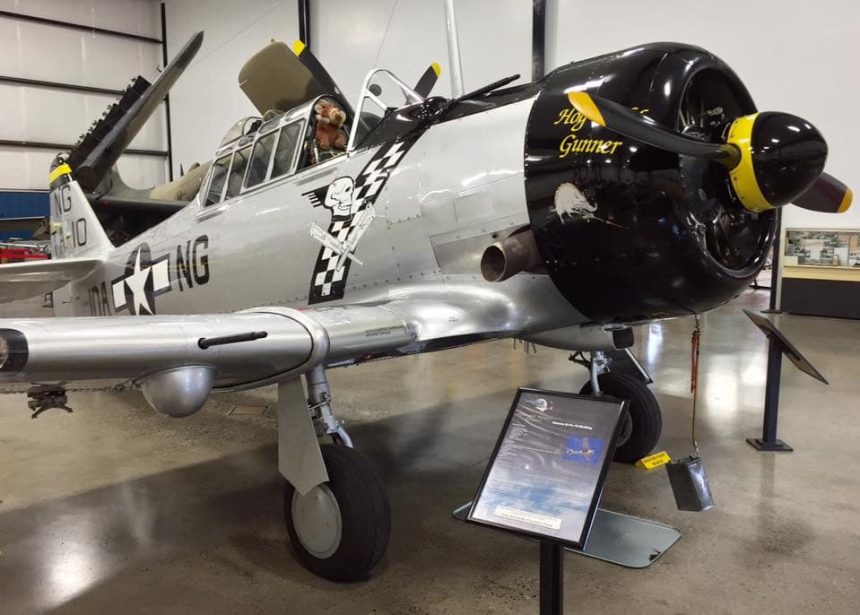

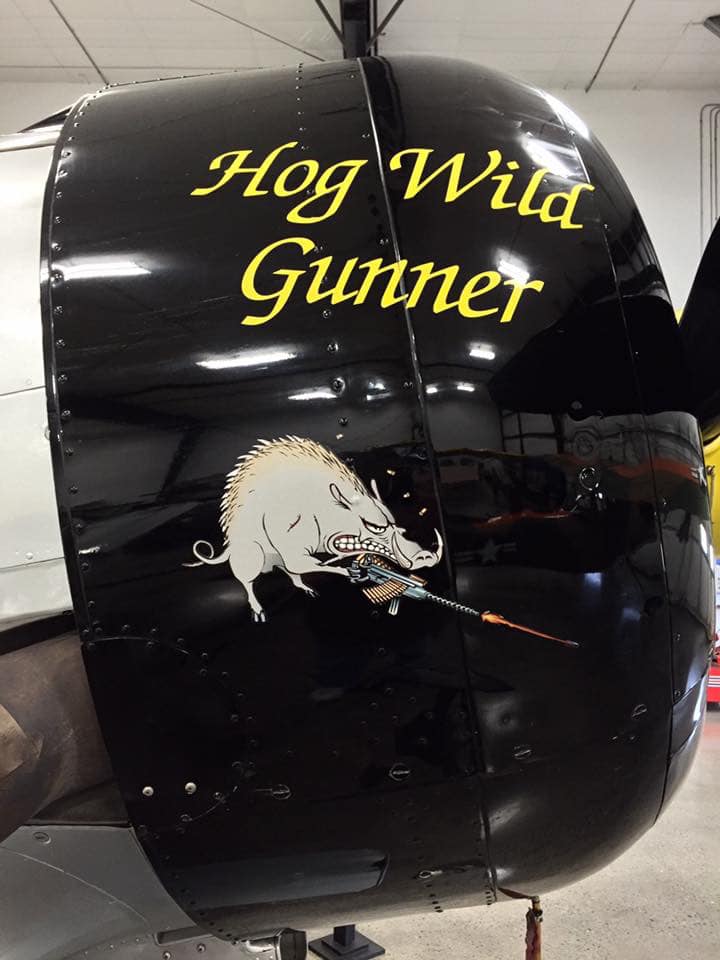
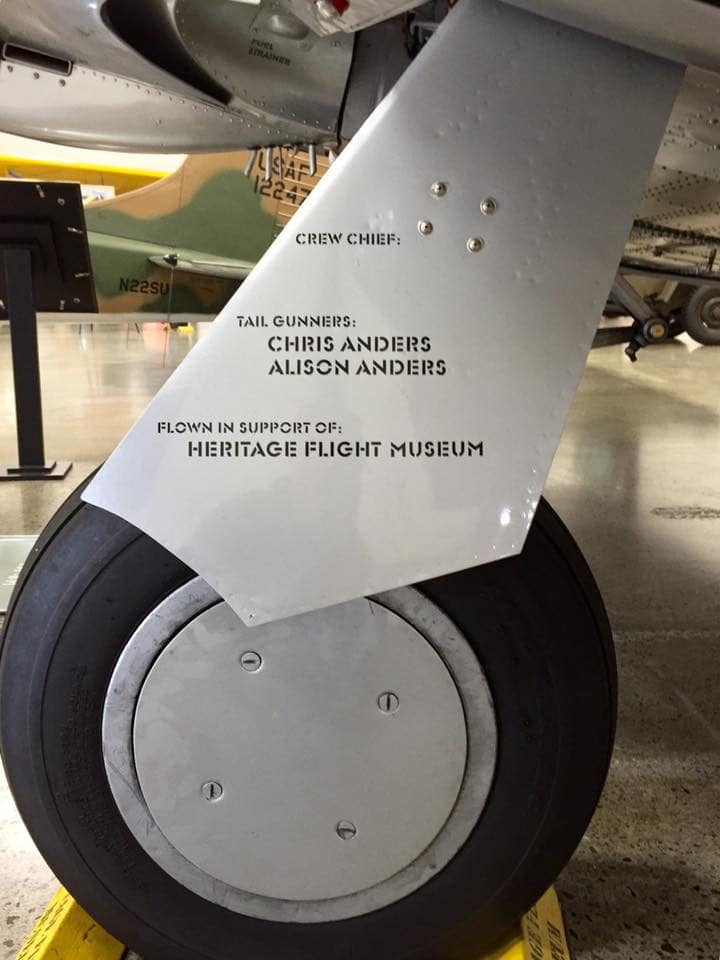
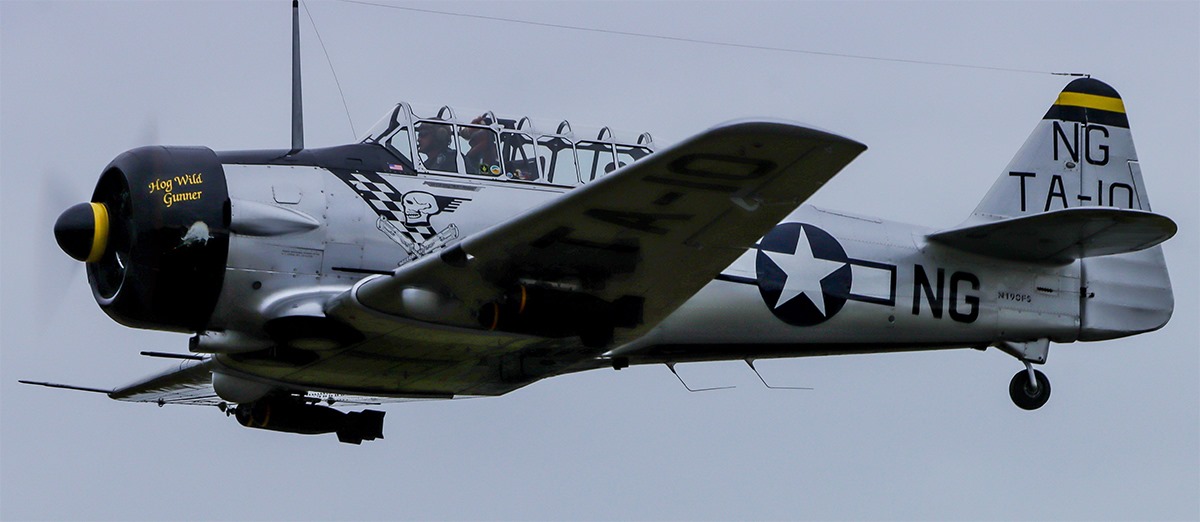
Since his childhood, Randy Malmstrom has had a passion for aviation history and historic military aircraft in particular. He has a particular penchant for documenting specific airframes with a highly detailed series of walk-around images and an in-depth exploration of their history, which have proved to be popular with many of those who have seen them, and we thought our readers would be equally fascinated too. This installment of Randy’s Warbird Profiles takes a look at North American AT-6D “Hog Wild Gunner” s/n 42-44709, maintained in airworthy condition by the Heritage Flight Museum of Burlington, Washington.
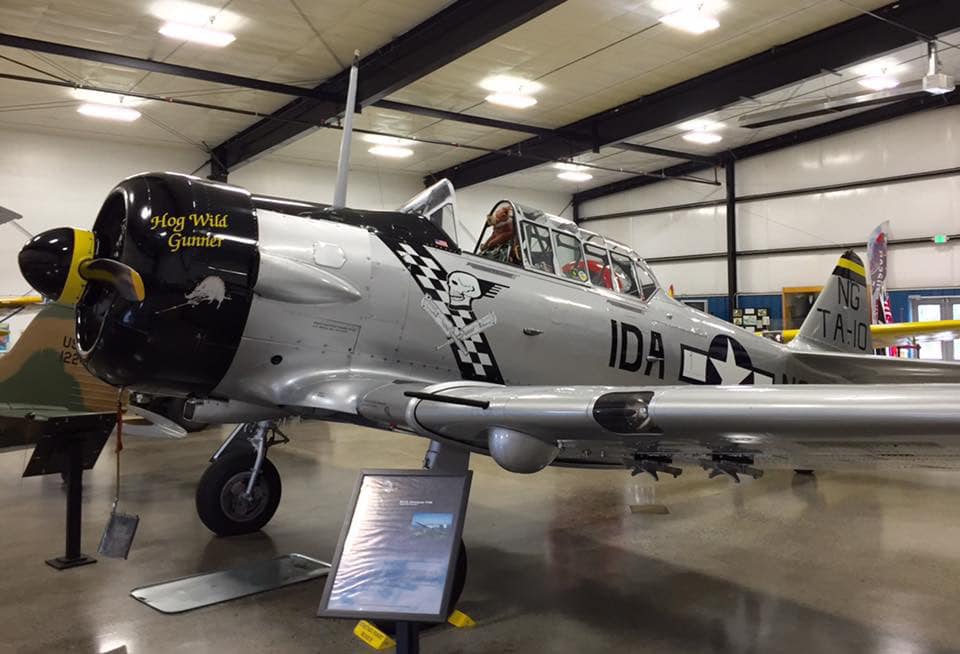
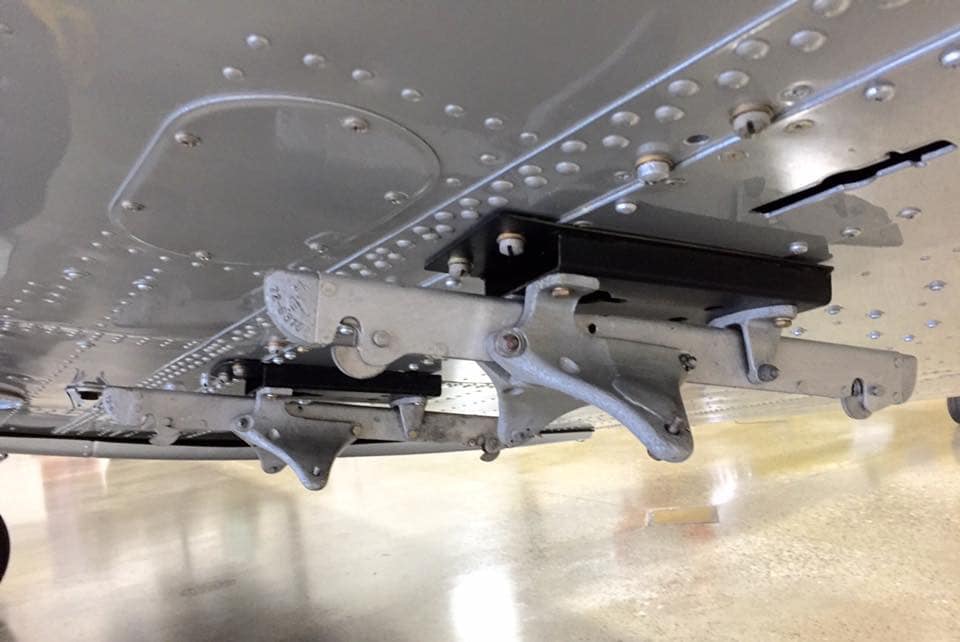
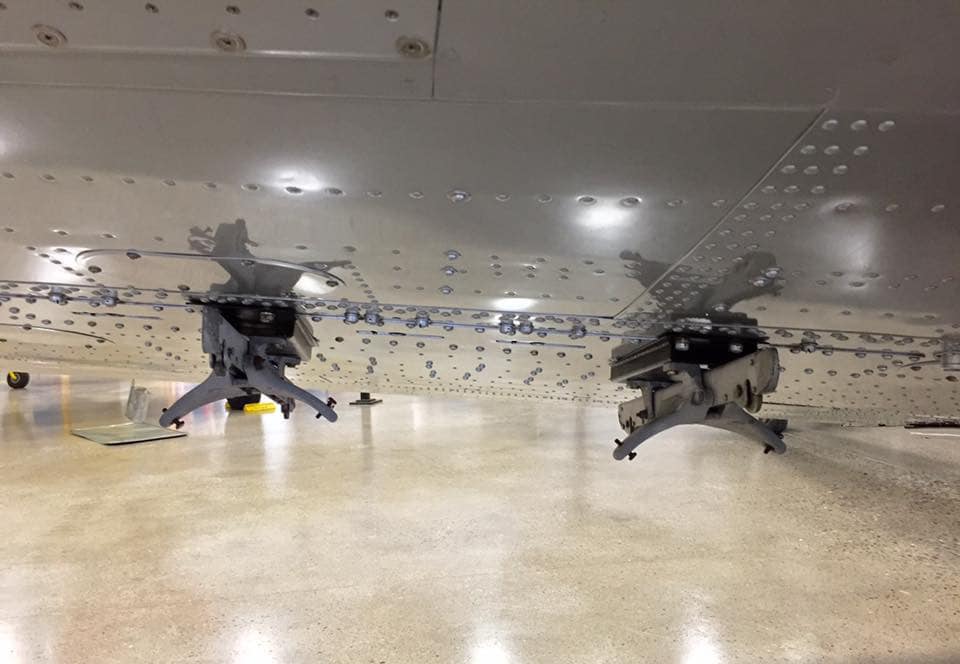
This particular aircraft was built by North American in 1942 and delivered to the U.S. Army Air Forces at Laughlin Army Air Field, Texas. I have found records that it was involved in a landing accident in March 1945. During the 1950s, Spain began receiving U.S. aircraft, and this plane was sold to the Spanish Air Force in December 1954 as a trainer and attack aircraft. The Spanish Air Force installed 7.7 mm Breda-SAFAT machine guns in the leading edges of each wing and carried 200 kg bombs or unguided rockets under the wings for use in both gunnery training and ground attack. The Spanish Air Force flew the T-6 as a counterinsurgency aircraft during the 1957-58 Ifni War. Spain finally discontinued the T-6 in 1989.
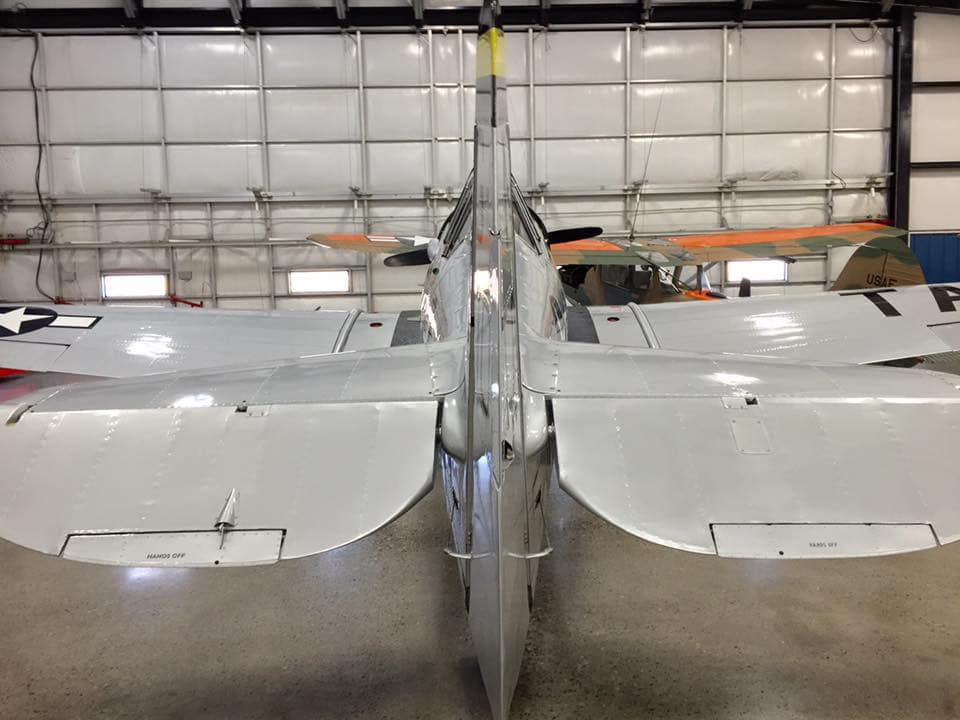
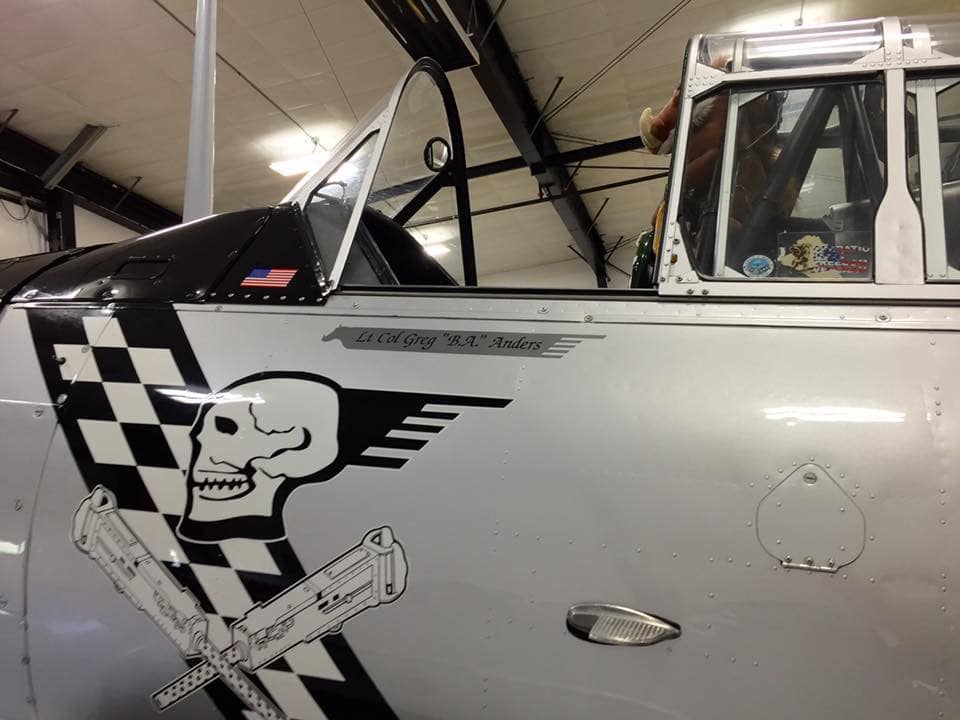
Remaining with the Spanish Air Force, this aircraft was not re-purchased after World War II by the U.S. Air Force for T-6G conversion (upgraded powerplant, improved cockpit visibility, a locked tail wheel was replaced by a positional tail wheel, for example). Rather, following Spain’s retirement of the T-6s, it was sent back to the U.S. in 1991 and returned to airworthiness in 1992 by Doug Goss under the name “The Spanish Fly” and painted in Spanish Air Force markings. In 1999, Heritage Flight Museum (HFM) Senior Vice President and Executive Director Lt. Col. Greg Anders acquired the AT-6D, and it has flown regularly since that time – he flew an A-10/OA-10C Thunderbolt II “Warthog” for the 190th Fighter Squadron, Idaho Air National Guard, the “Skull Bangers.”
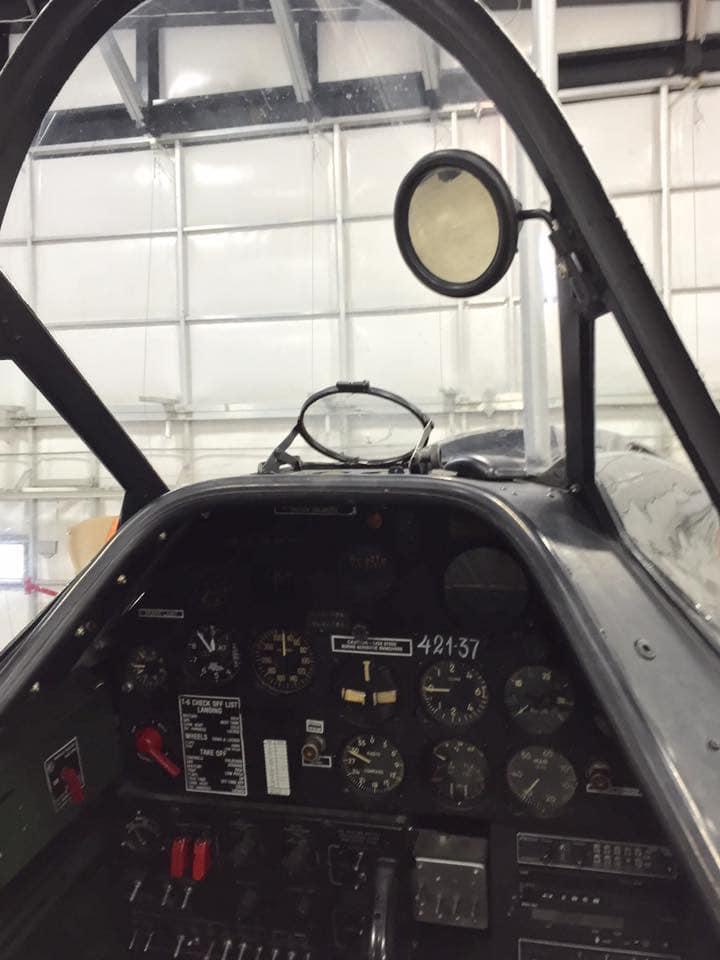
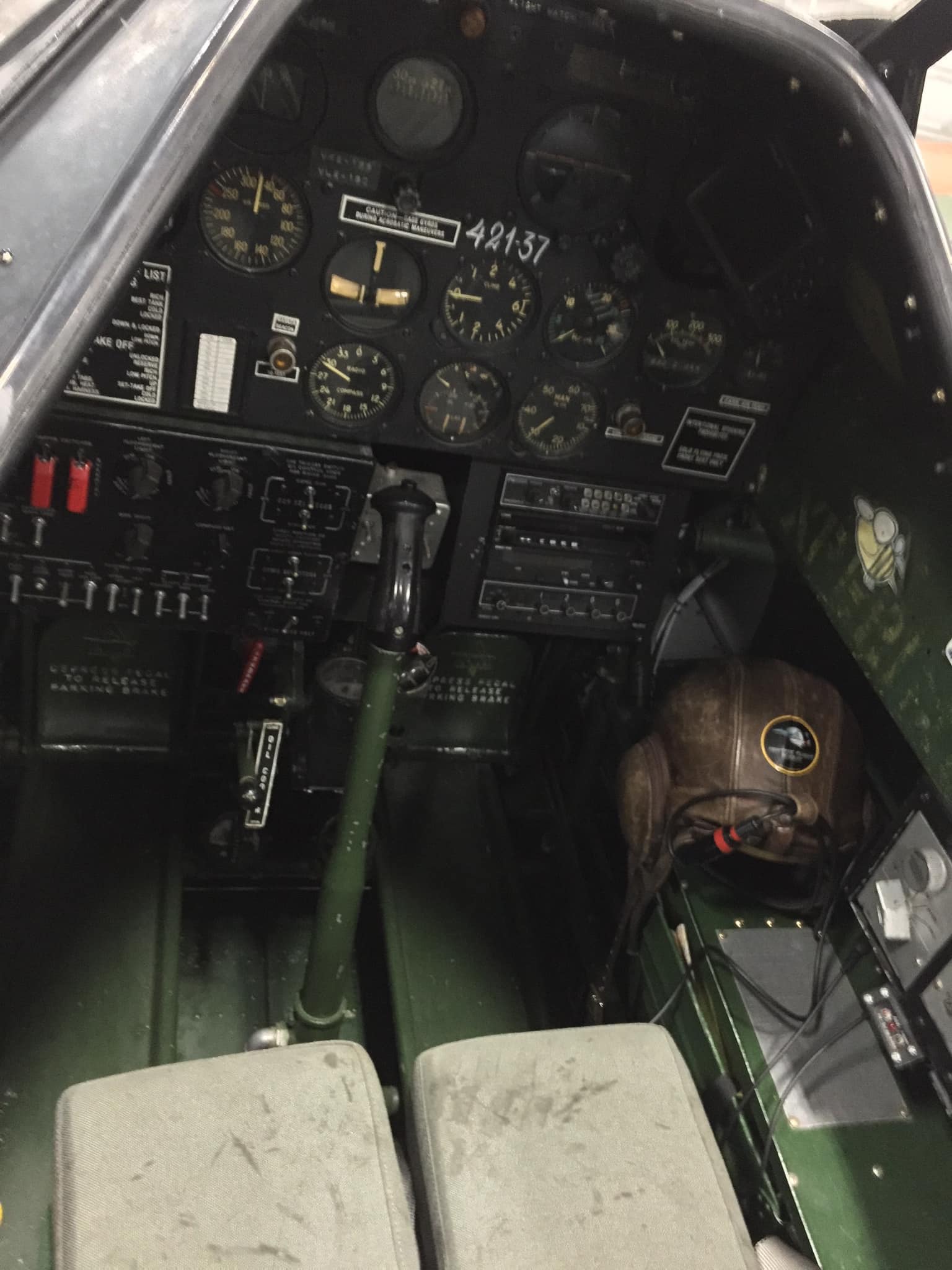
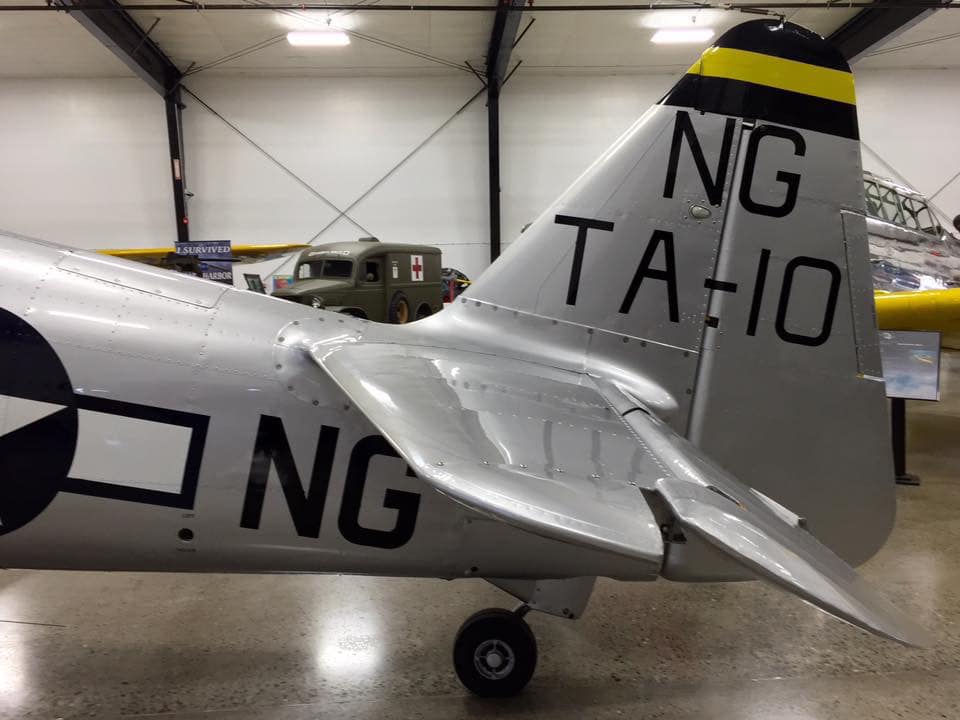
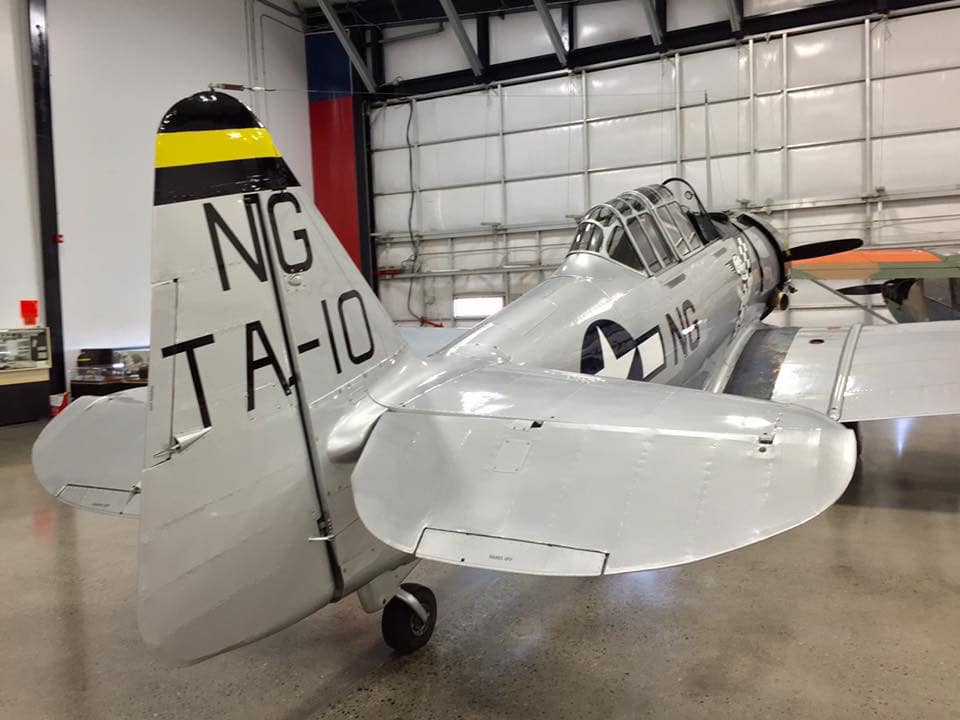
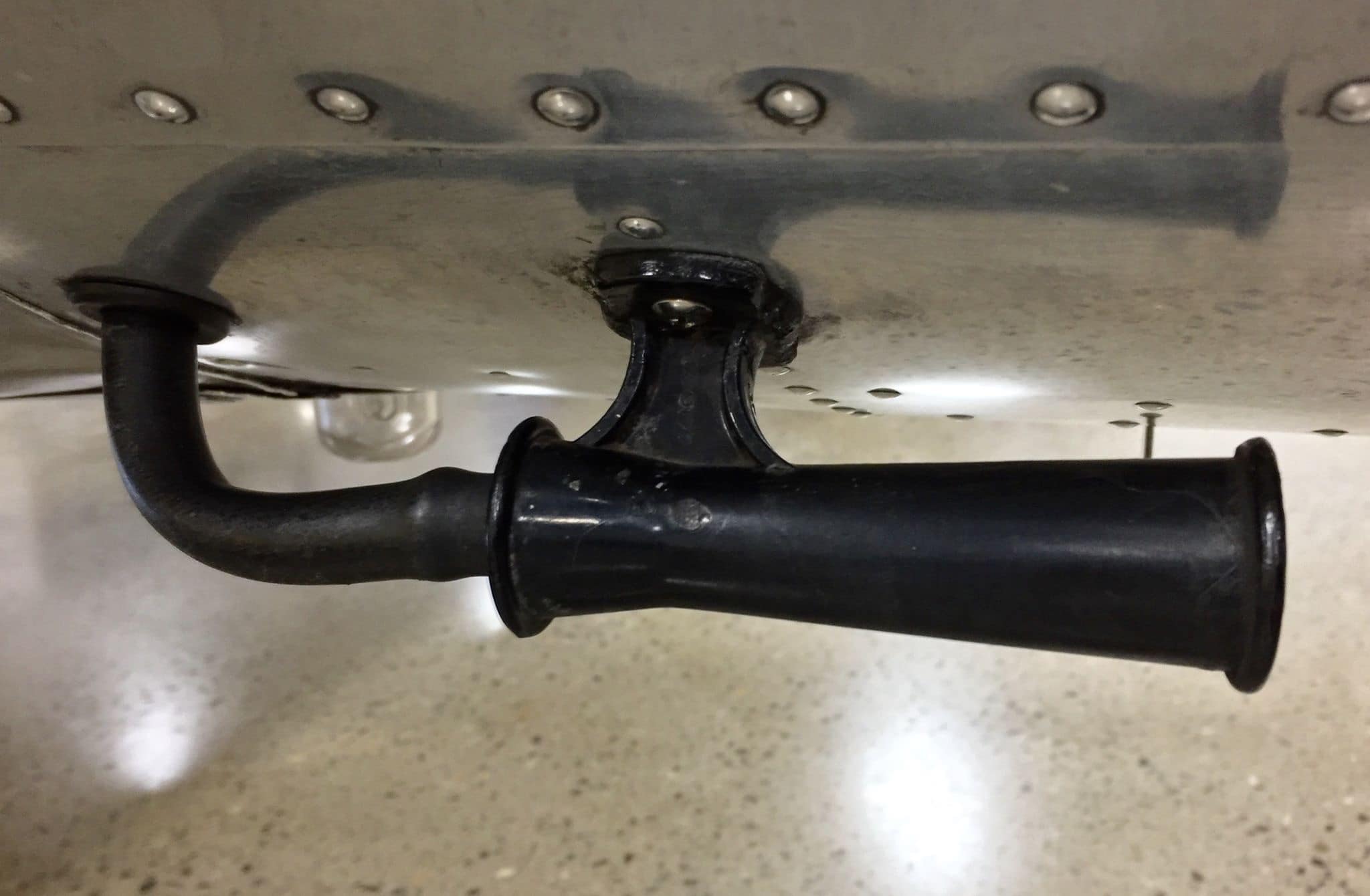
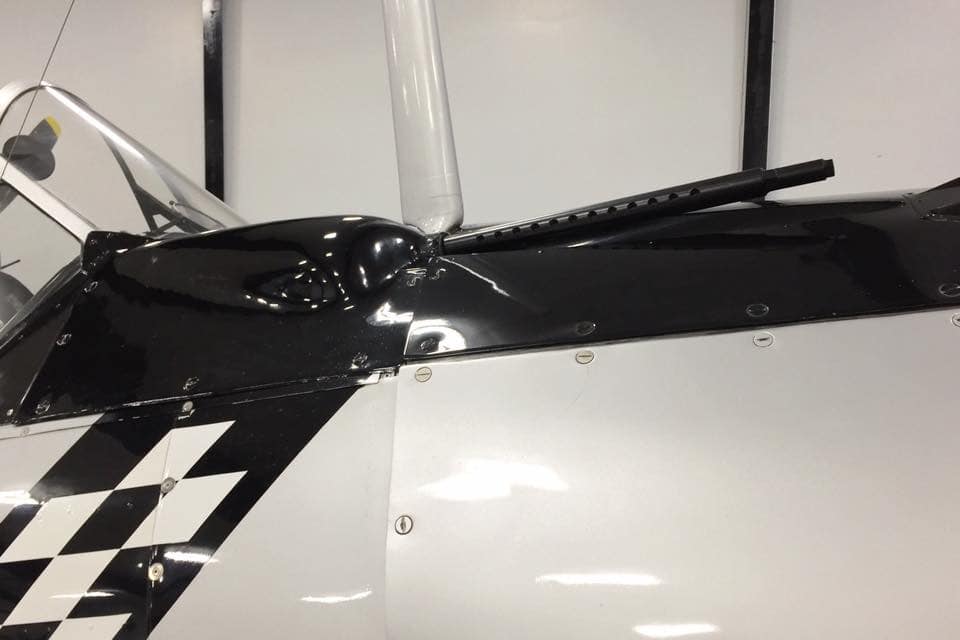
The restoration included mock .30 cal. machine guns. The .30 cal. machine guns were used on some T-6s for gunnery training or by some militaries in a combat role – one in each wing, one atop the cowling, and one rear-facing mount, which was deployed from the roll-forward rear canopy (the rear seat rotates to face backward). It also has a pilot relief tube drain that is visible aft and to the port side of the cockpit. It is painted with buzz number “TA-10” (the buzz number assigned to T-6s) of the Idaho Air National Guard – the “Skull Bangers” – (hence the insignia on the fuselage) – which flew them as trainers during their initial days when the P-51D Mustang was their first combat aircraft (1947). “Buzz Numbers” were applied to U.S. Air Force aircraft after World War II and into the 1960s and were designed to be a deterrent to 8th Air Force pilots performing unauthorized low-level flying over post-war Europe. The aircraft is based at HFM, founded by Apollo 8 astronaut Maj. General William “Bill” Anders. My photos and video clips.
(https://youtu.be/-tG7XP5hyQg https://youtu.be/r5yT38oOdFc https://youtu.be/-MDRZIrJ_Bw)
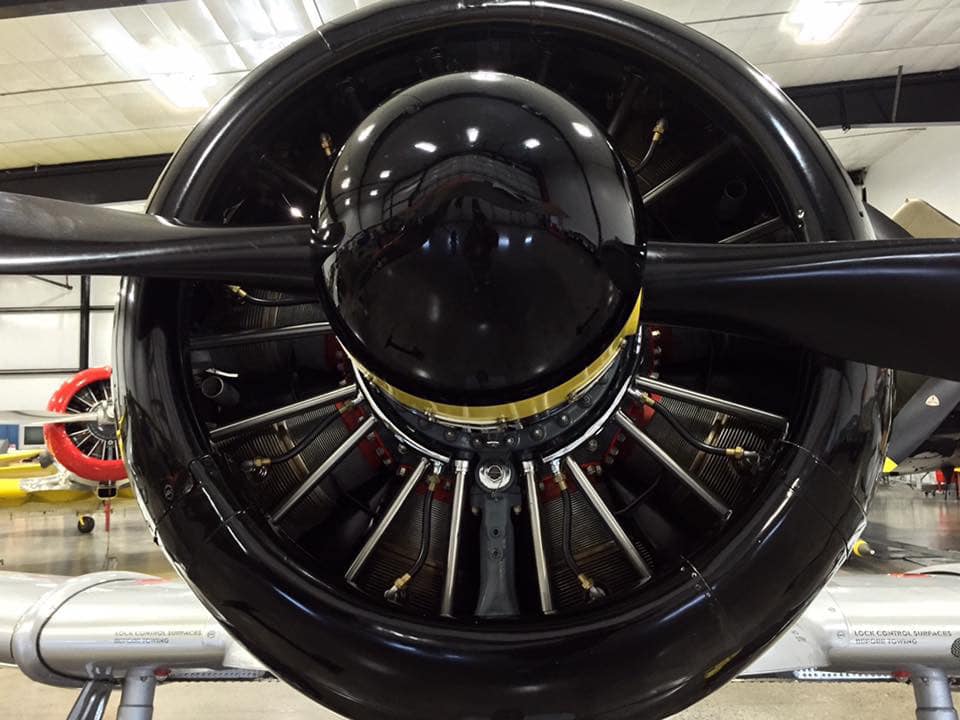
The T-6 “Texan” (U.S. Army Air Corps), SN-J (U.S. Navy), and “Harvard” & “Yale” (British Commonwealth, South African Air Force) were flown by as many as 59 military units worldwide and employed in many ways. Also known as “Pilot Maker” and “Old Growler” and “Window Breaker” and “J-Bird” (U.S. Navy SNJ), it was built with a Pratt & Whitney R-1340 Wasp engine. For gunnery practice – or use in combat by some militaries – it could be armed with up to four .30 cal. machine guns: one atop the cowl firing through the propeller arc, one in each wing, and one on a flexible rear-facing mount.
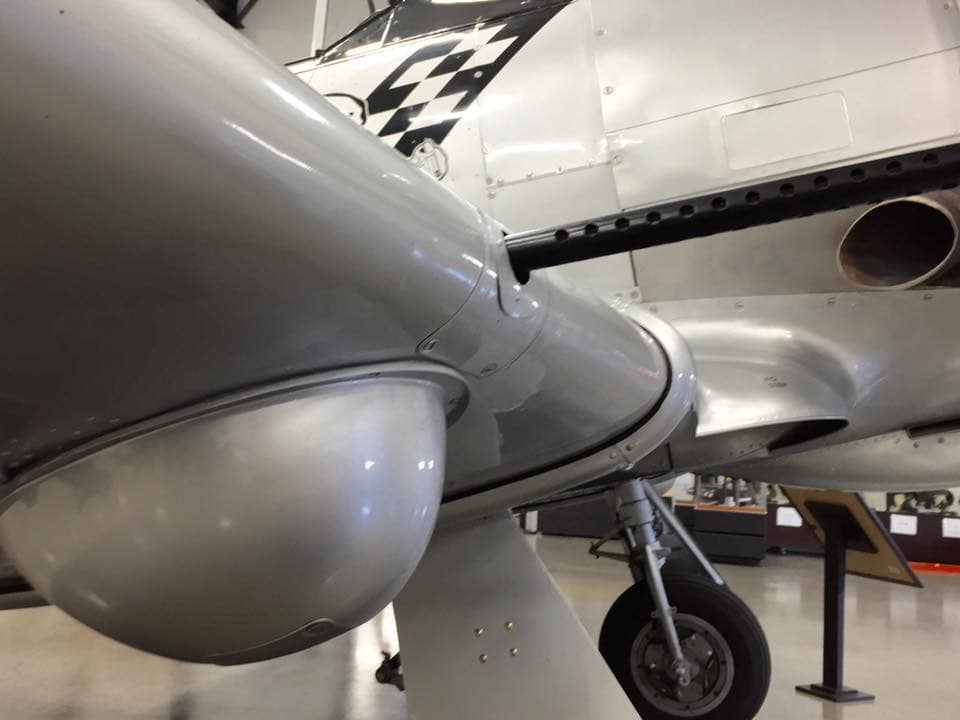
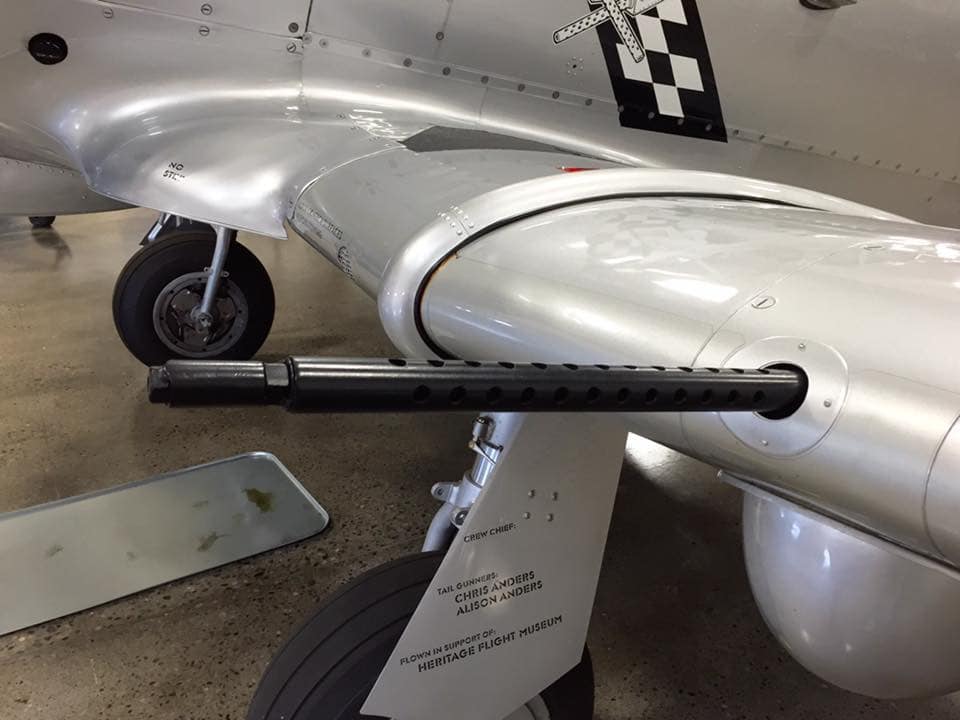
While designed as a trainer, versions of the aircraft were flown by a number of militaries in combat roles and armed with machine guns, bombs, and rockets. It was flown in the Korean War and somewhat in the Vietnam War as a forward air control aircraft under the designation LT-6G Mosquito. Among other post-World War II uses, the British Royal Air Force flew them in the 1950s in Kenya against the Mau Mau, and France flew them with the Escadrilles d’Aviation Légère d’Appui (EALA) in the Algerian War of the early 1950s. It has a hand-operated emergency starter and a footstep for the ground crew on the port side of the cowling. There are plexiglass windows atop each wing above the landing gear for the red-marked mechanical landing gear indicators for the pilot.
(https://steamcdn-a.akamaihd.net/steam/apps/491493/manuals/Virtavia_T-6_Manual.pdf?t=1537344350)
Editor’s note: According to the late aviation chronicler Joe Baugher, this AT-6 Texan (construction number 88-15143) was attached to the 2514th Base Unit at Laughlin Field near Del Rio, Texas, where it was damaged during a landing on March 6, 1945. Baugher notes the aircraft suffered a second accident on January 27, 1951, at Des Moines Municipal Airport. Shipped to Spain by the US Navy, the aircraft arrived in the northern Spanish port of Santander and was towed to nearby Parayas Airport (now Seve Ballesteros–Santander Airport) before being flown on a ferry flight to Matacán Airbase (Salamanca Airport), some 200 miles southwest. From 1954 to 1965, the aircraft was flown as serial number E.16-45 before it was modified for counterinsurgency (COIN) operations and issued a new serial number: C.6-45. It remained with the Spanish Air Force (the Ejército del Aire) until being stricken from the charge on July 1, 1981, and was returned to the United States to be auctioned off to private owners.
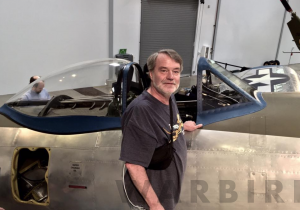 About the author: Randy Malmstrom grew up in a family steeped in aviation culture. His father, Bob, was still a cadet in training with the USAAF at the end of WWII, but did serve in Germany during the U.S. occupation in the immediate post-war period, where he had the opportunity to fly in a wide variety of types that flew in WWII. After returning to the States, Bob became a multi-engine aircraft sales manager and, as such, flew a wide variety of aircraft; Randy frequently accompanied him on these flights. Furthermore, Randy’s cousin, Einar Axel Malmstrom, flew P-47 Thunderbolts with the 356th FG from RAF Martlesham Heath. He was commanding this unit at the time he was shot down over France on April 24th, 1944, and spent the rest of the war as a prisoner of war. Following his repatriation at war’s end, Einar continued his military service, attaining the rank of Colonel. He was serving as Deputy Wing Commander of the 407th Strategic Fighter Wing at Great Falls AFB, MT at the time of his death in a T-33 training accident on August 21, 1954. The base was renamed in his honor in October 1955 and continues to serve in the present USAF as home to the 341st Missile Wing. Randy’s innate interest in history in general, and aviation history in particular, plus his educational background and passion for WWII warbirds, led him down his current path of capturing detailed aircraft walk-around photos and in-depth airframe histories, recording a precise description of a particular aircraft in all aspects.





The correct designation for the T-6 FAC aircraft that flew in the Korean War is LT-6G, not T-6 Mosquito. Mosquito was the Callsign of the LT-6 unit in the Korean War.