
(Image credit: VAN)
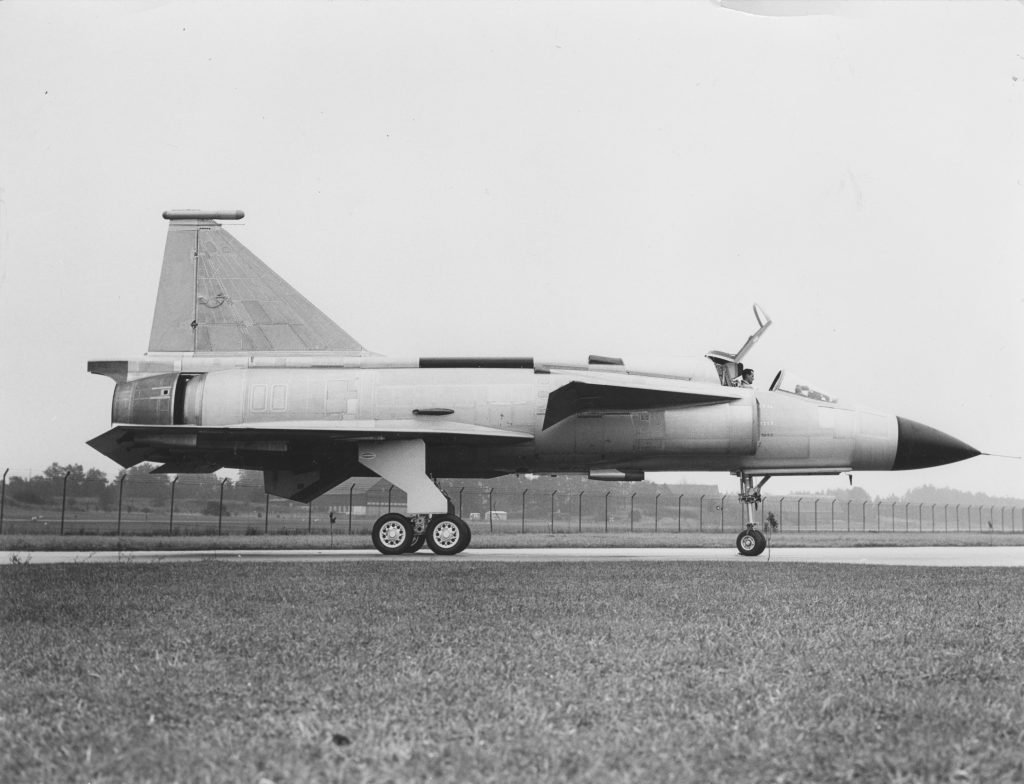
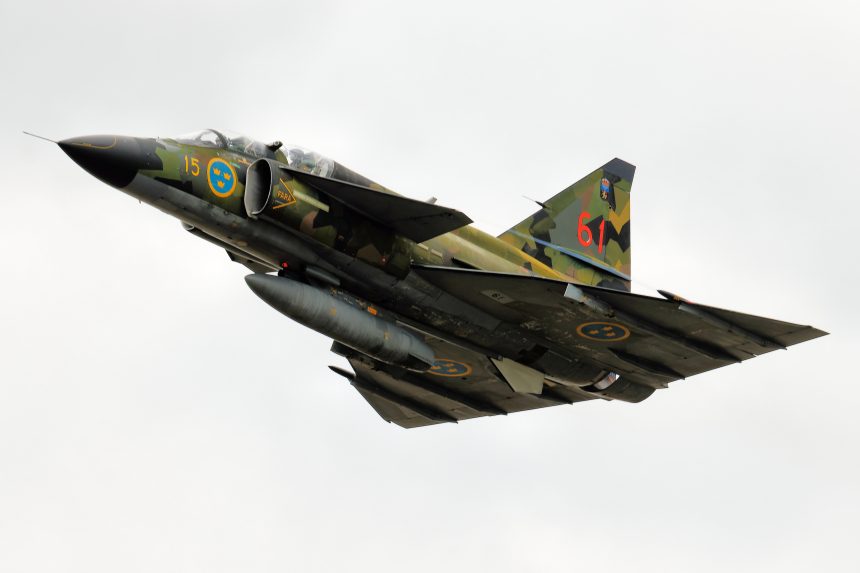
On this day in aviation history, 59 years ago (February 8, 1967), the Saab 37 Viggen flew for the first time. The Saab 37 is a Swedish multirole combat aircraft, whose name “Viggen” translates to “Tufted Duck” and “Thunderbolt“. The Viggen was the first canard-equipped aircraft to be built in volume, and also the first to have an airborne digital central computer with integrated circuits for its avionics. This feature made the Saab 37 one of the most advanced combat aircraft in Europe during its premier. The Viggen’s central computer would not be surpassed in capability until the emergence of the Panavia Tornado in operational service in 1981.

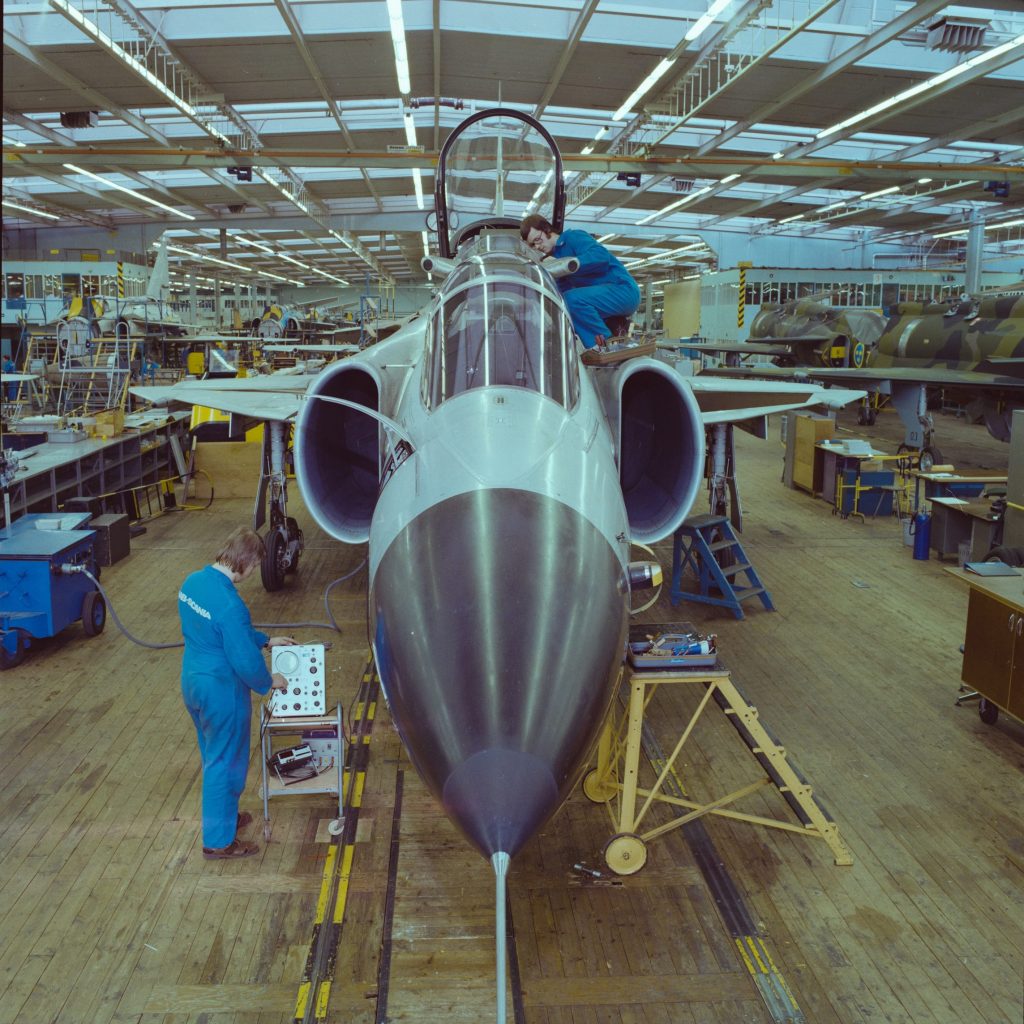
Development of the Saab 37 began during the early 1950s. The plan was to develop a successor to the Saab 32 Lansen (attack role) as well as for the Saab 35 Draken (fighter). The resulting design featured a cutting-edge delta-wing configuration, and an integrated weapon system that worked in step with Sweden’s STRIL-60 national electronic air defense system. The Viggen was designed to be flown from runways as short as 500 meters. The aircraft’s development was assisted by Annex 37, a means through which Sweden could access advanced United States aeronautical technology, thus accelerating design and production.
(Nordic Museum)
The Saab JA 37 Viggen was powered by a Volvo RM8B turbofan engine, which produced 16,200 pounds of thrust dry and 28,000 pounds with afterburner engaged. The aircraft could attain a maximum airspeed of Mach 2.1, or 1,386 mph. Saab’s JA 37 had a ferry range of 1,130 nautical miles, a service ceiling of 59,000 feet, and a 40,000 foot per minute rate of climb. Armament for the Viggen consisted of a 30 millimeter Oerlikon KCA cannon and nine hardpoints for various configurations of up to 15,000 pounds in missiles, bombs, or rocket pods. Saab built a total of 329 Model 37s between 1970 and 1990. The aircraft was officially retired from military service on June 26, 2007. Many Viggens survive today, and two of them remain airworthy. AJS 37 Viggen s/n 37098 and SK 37 Viggen s/n 37809 (a two-seat trainer variant) have both been restored to fly and are currently operating in Sweden.