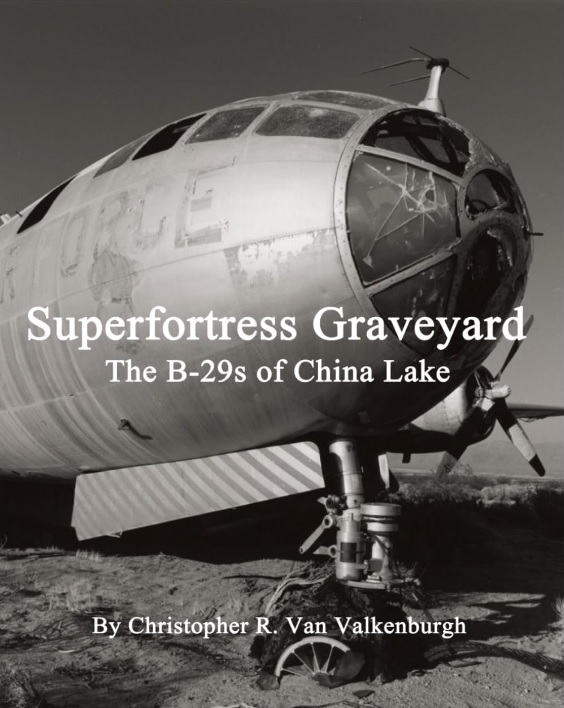

Last summer, Vintage Aviation News covered an in-depth look at the now-famous book Superfortress Graveyard – The B-29s of China Lake. Author and historian Christopher R. Van Valkenburgh uncovered the remarkable postwar fate of more than sixty Boeing B-29s that ended up as weapons test targets in the Mojave Desert. In the previous article, Van Valkenburgh covered Doc, FIFI, The Big Time Operator, and T-Square 54. Let’s look at another interesting B-29 that ended up at China Lake Naval Weapons Station: Miss Liberty Belle.
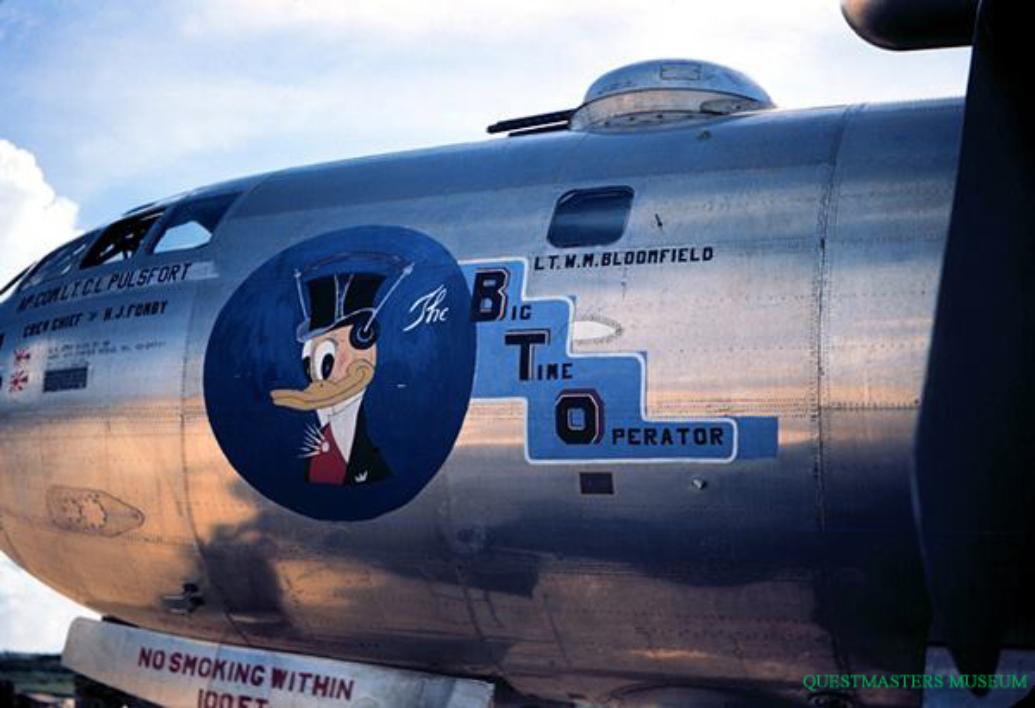
“Donald Duck” is wearing radio headphones. Photo via Quest Masters
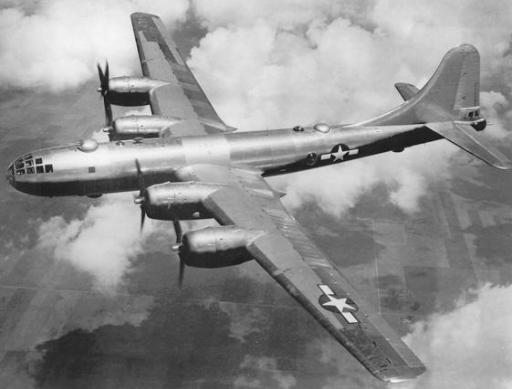
B-29A-65-BN 44-62208 was delivered to the United States Army Air Forces on September 4, 1945, at Boeing’s Renton, Washington facility at a cost of $582,925.00. This information alone may not seem very exciting—until you consider what was happening historically at that moment. B-29A 44-62208 was accepted on Friday, August 31, 1945, departed the Renton factory on Monday, September 3, 1945, and was officially delivered to the Army Air Forces on Tuesday, September 4, 1945. Block 65 production consisted of 100 aircraft, serial numbers 44-62110 through 44-62209. On Sunday, September 2, 1945, the Empire of Japan formally surrendered, bringing World War II to an end. On Monday, September 3, 1945, eight B-29A Superfortress aircraft departed the Boeing Renton factory. These were B-29A-65-BN 44-62195, 44-62197, and 44-62202 through 44-62208. B-29A-65-BN 44-62209, the final aircraft in this production block, was not delivered until September 20, 1945. Serial numbers were not always produced or delivered sequentially.
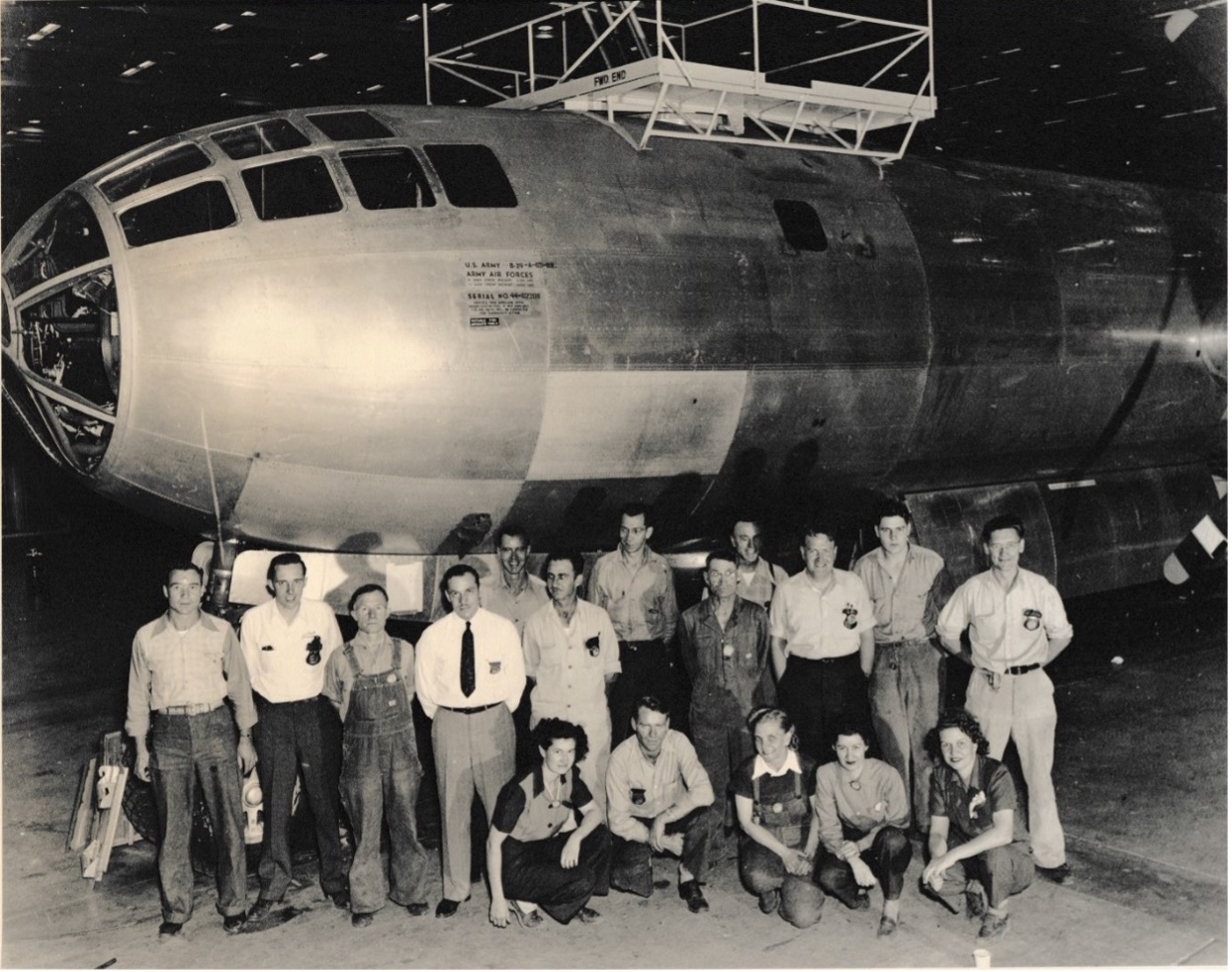
B-29A-65-BN 44-62208, the 999th B-29A, was the final B-29 completed at the Boeing Renton factory by September 2, 1945, marking the end of World War II. The aircraft would go on to serve after the war, being assigned to the 92nd Bomb Group VH (Very Heavy, later Medium) at Spokane Army Air Field, Washington. The aircraft and crew deployed with the Far East Air Force, 326th Bomb Squadron, 92nd Bomb Wing (Medium), at Yokota Air Base, Japan, on July 12, 1950, for service during the Korean Conflict. B-29A-65-BN 44-62208 was named Miss Liberty Belle. The aircraft transferred to Kadena Air Force Base, Okinawa, Japan, on July 22, 1950, and then returned to Yokota on September 14, 1950. It returned to Spokane on October 31, 1950, followed by reassignment to Fairchild Air Force Base, Washington, on June 20, 1951.
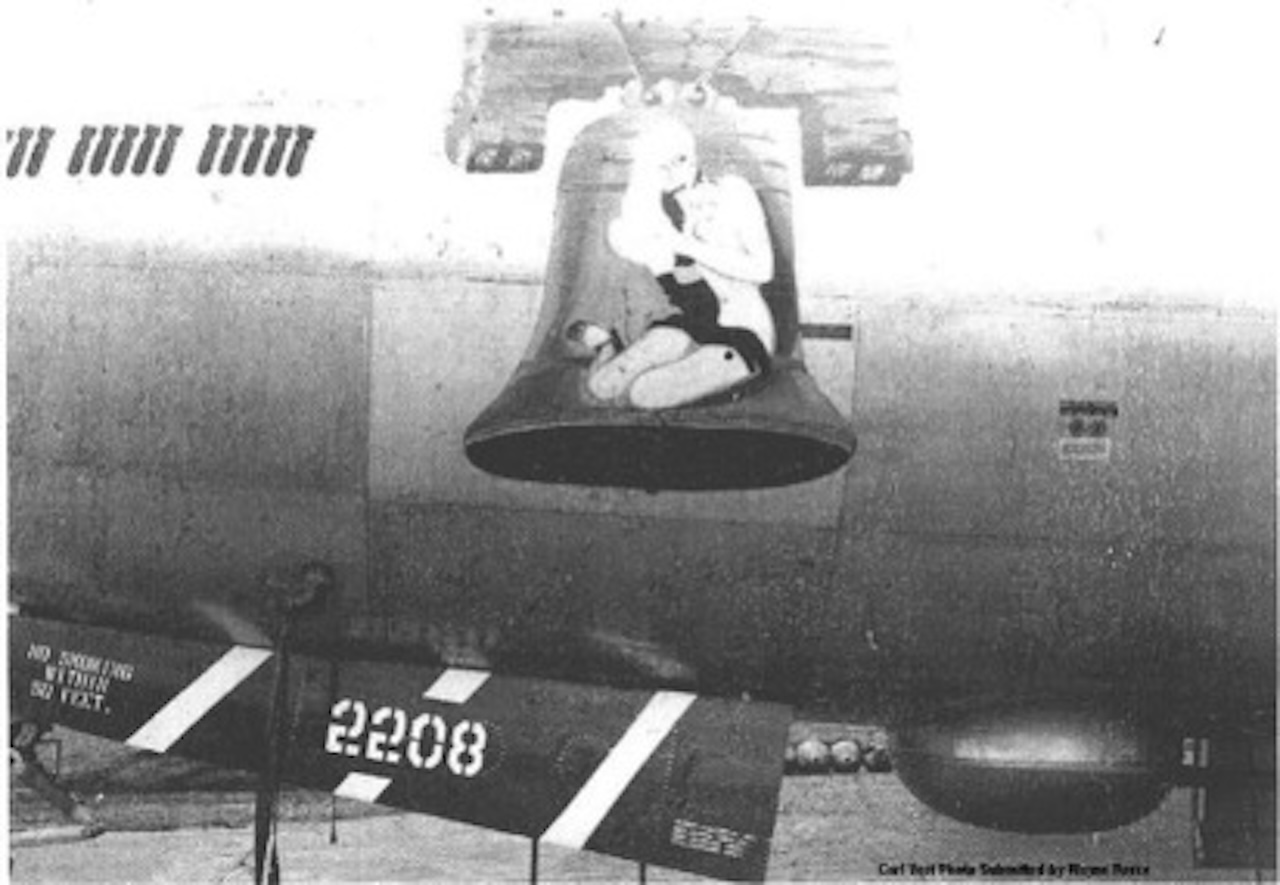
On November 4, 1952, the aircraft was assigned to Tucson, Arizona, where it remained until transferring to March Air Force Base, California, on July 24, 1952. B-29A-65-BN 44-62208 was then assigned to McClellan Air Force Base, California, on March 16, 1953, before reassignment to the Far East Air Force, 307th Bomb Wing (Medium), at Kadena Air Force Base, Okinawa, Japan, on February 9, 1953. B-29A-65-BN 44-62208 was later assigned to Davis-Monthan Air Force Base in Tucson, Arizona, and was authorized for reclamation in October 1954, after which it was dropped from inventory. The aircraft was transferred from the United States Air Force to the United States Naval Air Weapons Station (NAWS), China Lake, California, for use as a ground target during weapons testing.
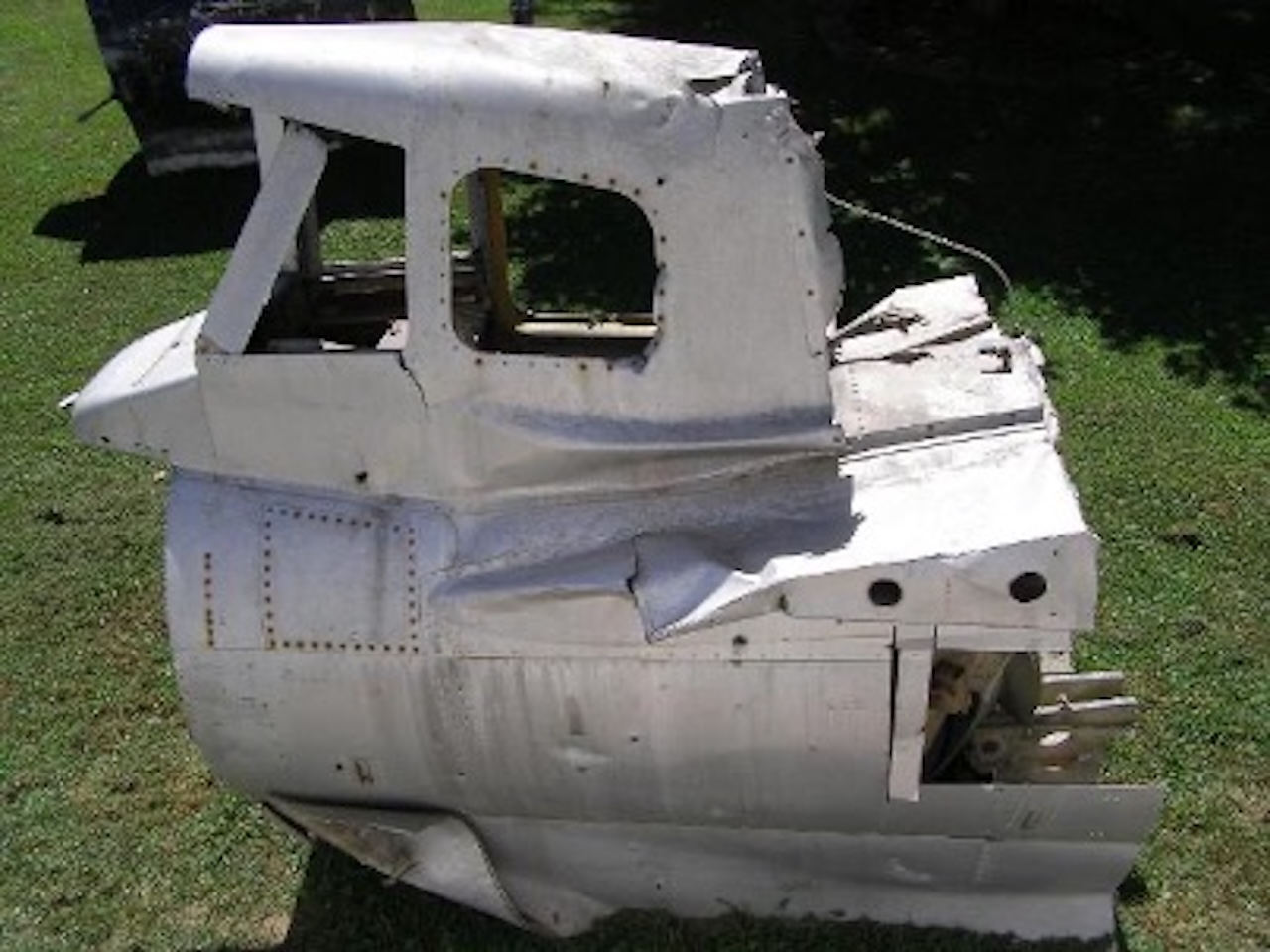
The Individual Aircraft Record Card (IARC) does not detail the aircraft’s conversion to TB-29A, the tow-target tug/trainer variant of the B-29A, but B-29A-65-BN 44-62208 did feature the modified TB-29A tail gunner enclosure. The aircraft was completely destroyed during weapons testing, and the tail gunner compartment—ASSY 3-14335-13, Unit 998—was recovered for scrapping. The tail was later acquired by QuestMasters Museum from Nick Veronico in 2010.
About the Author
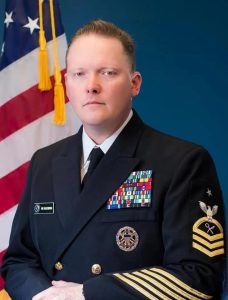 Christopher R. Van Valkenburgh—known as “Van”—has been a WWII collector, historian, and archivist for 40 years. A retired U.S. Navy Senior Chief Petty Officer with 26 years of service and operational deployments to Kosovo, Afghanistan, and Iraq, he is also the founder of QuestMasters Museum. The museum is dedicated to recovering and preserving WWII aircraft, vehicles, artillery, and artifacts. This book was inspired by his acquisition of The Big Time Operator, a China Lake survivor. It is his fourth publication and features many never-before-seen color photos from China Lake. The book is available on Amazon.