
(Image credit: VAN)
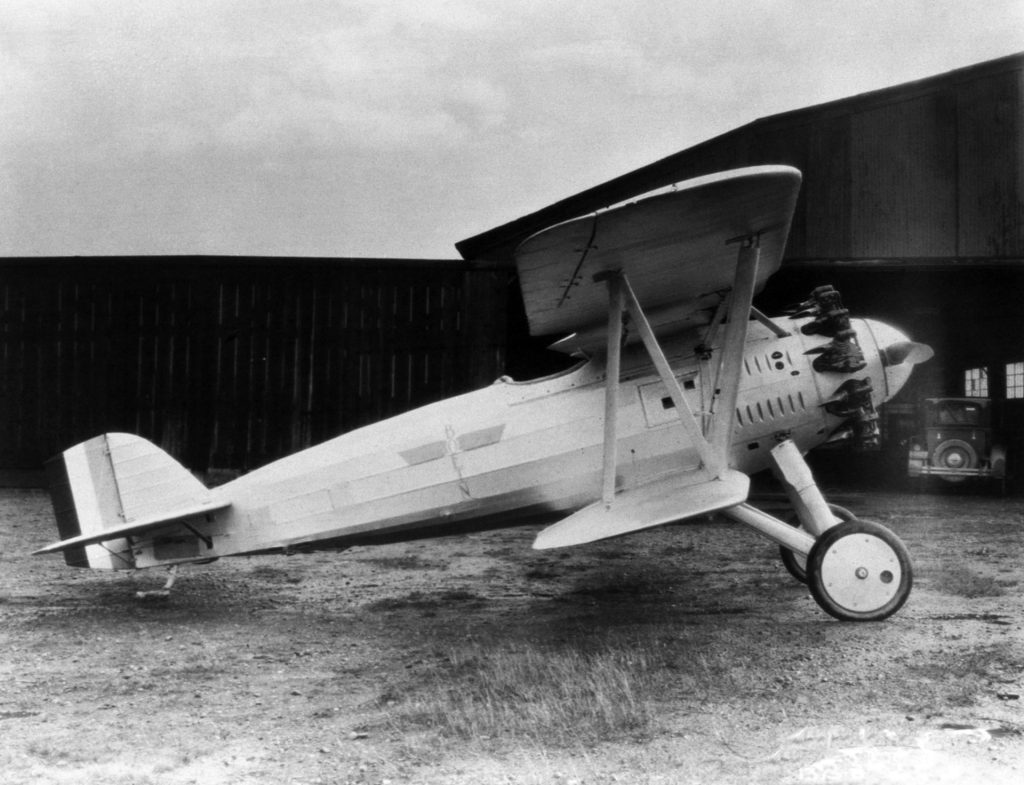
On this day in aviation history, 98 years ago (January 20, 1928), the Boeing F2B was introduced into military service. The F2B was an American fighter plane that was utilized by the United States Navy during the inter-war period, primarily in the late 1920s. The aircraft began life as the Boeing Model 69, and was developed as a result of Boeing testing the Pratt & Whitney R-1340B Wasp radial engine on their FB-6 fighter. This engine and biplane combination showed promise as a platform for a carrier-based fighter aircraft. Boeing used the same welded-tubing fuselage and wooden-frame wings on the F2B as they had with the FB-6. A large spinner was added up front to reduce drag around the radial engine, although this feature was dropped during the aircraft’s production. A balanced rudder was also added to the production variant to prevent control flutter and overall stability. The first flight of the XF2B-1 prototype occurred on November 3, 1926, while the first deliveries of the production F2B to the US Navy began on January 20, 1928.
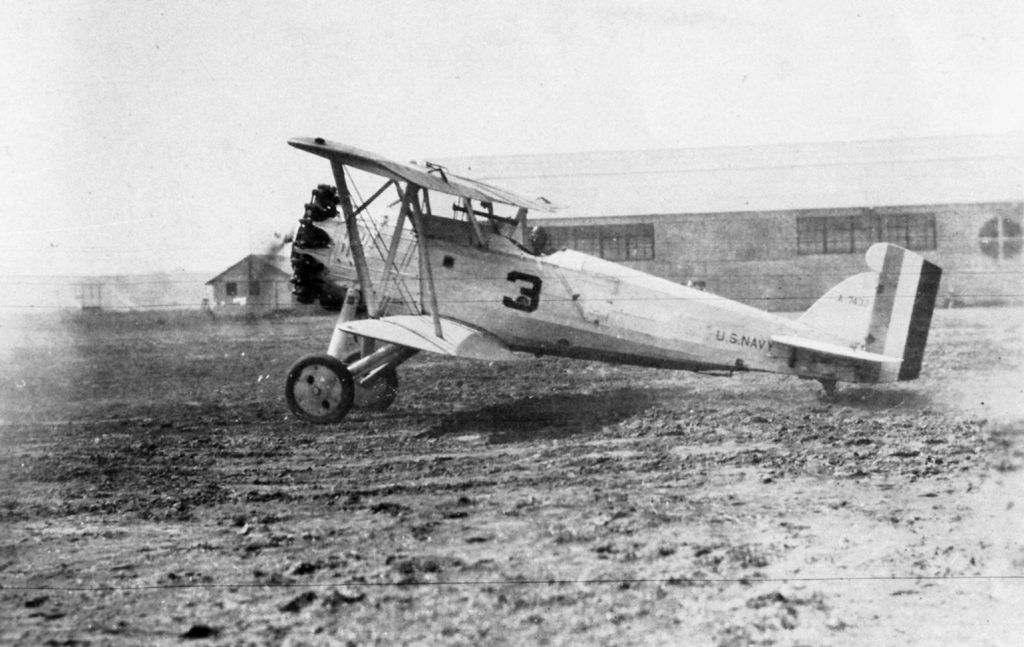
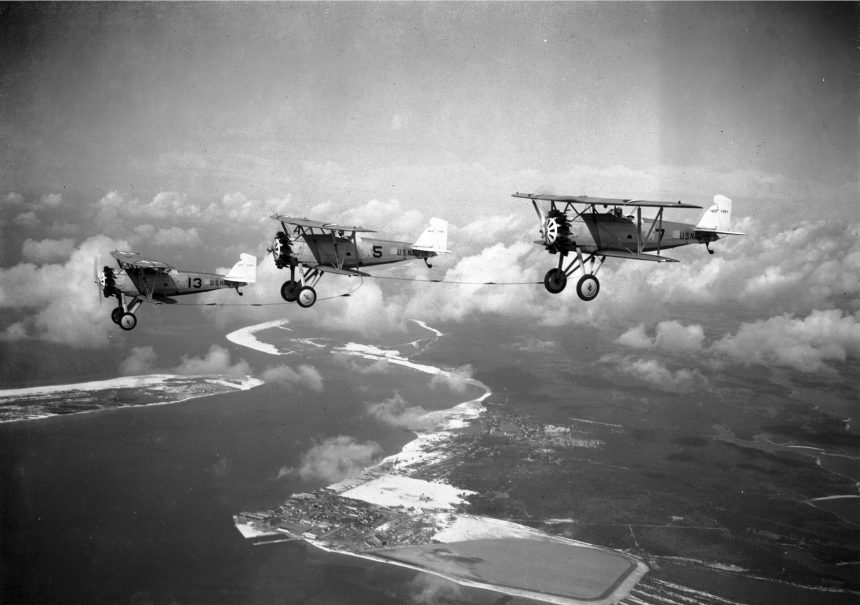
A total of 32 Boeing F2Bs were built, including the prototype XF2B-1. Boeing’s carrier-based fighter served with fighter squadron VF-1B and bomber squadron VF-2B, both based on the carrier Saratoga. F2Bs also served as the aircraft for the US Navy flight demonstration team, called Three Sea Hawks. This three-ship demo team made their debut during the National Air Races at Mines Field (modern-day LAX). The production F2B-1s could not fly inverted without the engine quitting; so the Three Sea Hawks aircraft were modified to allow for brief periods of upside-down flying. The F2B also flew with Brazilian Naval Aviation and the Imperial Japanese Navy Air Service. The Boeing F2B-1 was powered by a 450-horsepower Pratt & Whitney R-1340-8 Wasp radial engine, which propelled the fighter to a maximum speed of 158 mph (cruise airspeed was closer to 132). The aircraft had a range of 274 nautical miles, a service ceiling of 21,500 feet, and a 1,890 feet per minute rate of climb. Armament came in the form of one .50 calibre Browning M1921E1 and another .30 calibre forward-firing Browning M1918 machine gun, or two 0.30 cals in the forward fuselage. Additionally, the F2B-1 could be loaded with five 25-pound bombs, carried under the fuselage and lower wings.