
(Image credit: VAN)
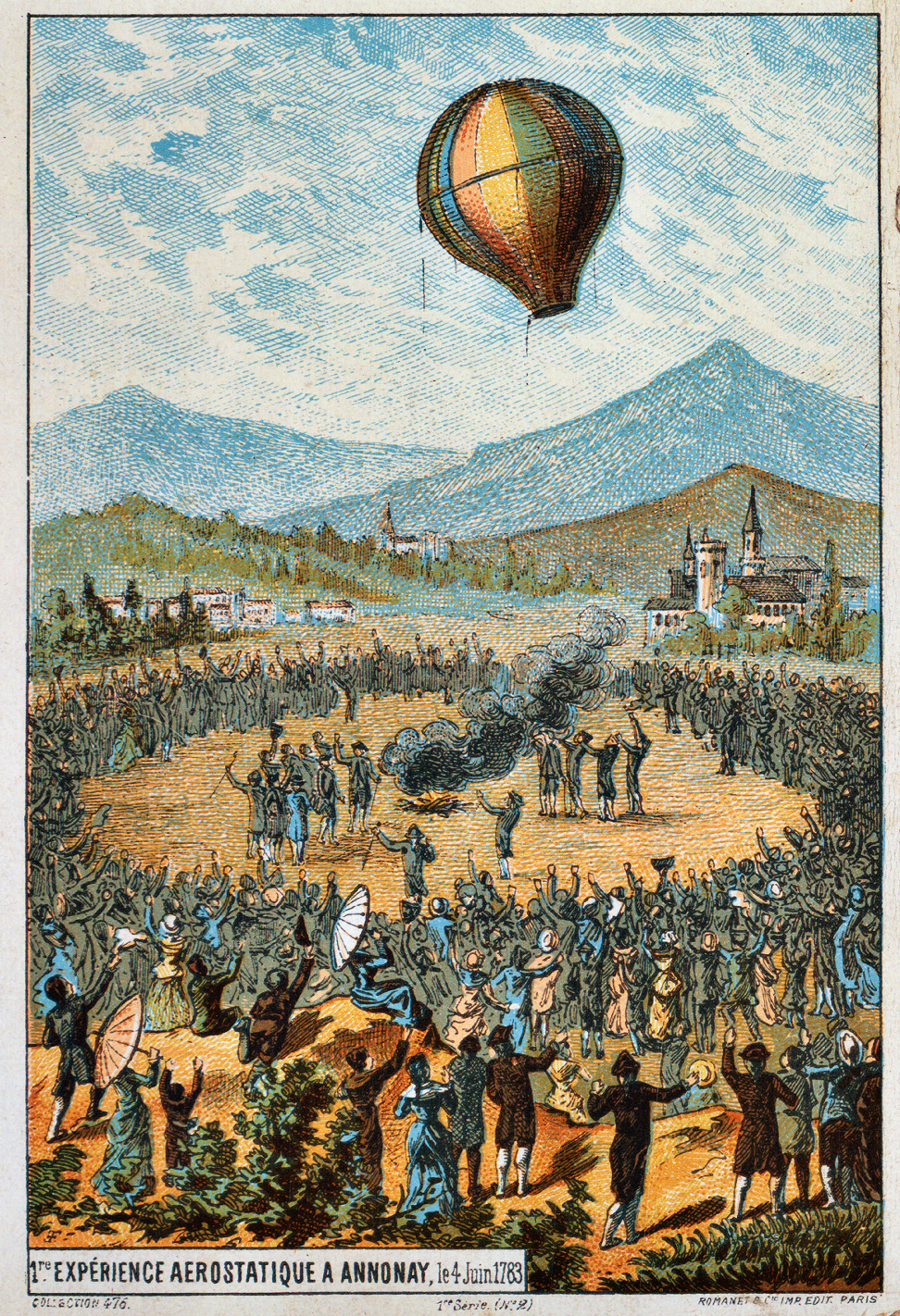
On this day in aviation history, 242 years ago (November 21, 1783), the first documented free-flight of humans took place. French aviation pioneers, the Montgolfier brothers — Joseph-Michel and Jacques-Étienne — spearheaded the efforts that led to this historic event. Originally, these brothers came from a paper manufacturing background; it was their family’s trade. The aviation-focused brother grew up with 14 other siblings. Joseph-Michel was described as a bit of a “maverick” and an optimist, often ignoring the impracticality of his dreams of flight. Jacques-Étienne was more of a realistic type, with a sound business mind.
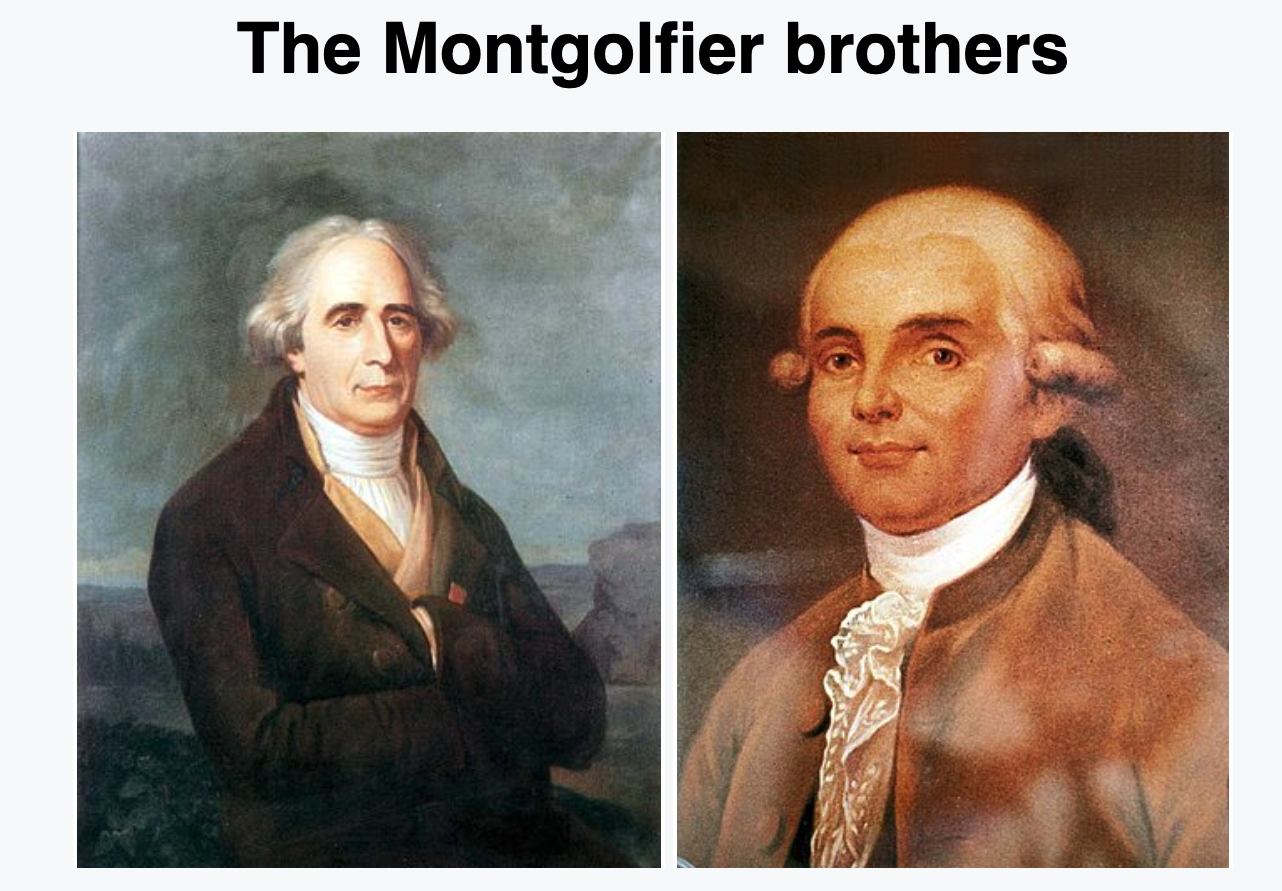
Joseph-Michel’s strong desire to soar began to show itself in 1775, when he began to build parachutes (once jumping from atop the family home!). His inspiration for the hot-air balloon was sparked by watching laundry drying over a fire, and how the flames’ gases created pockets of air, or lift, in the garments. In 1782, Joseph-Michel began to experiment more with the idea of hot-air propulsion for flight. He built a small box — 3′ x 3′ x 4′ — from wood and a cloth covering. The aspiring French aviator lit some paper on fire in the bottom chamber of the box, and sure enough, it began to lift from its stand to the ceiling above.
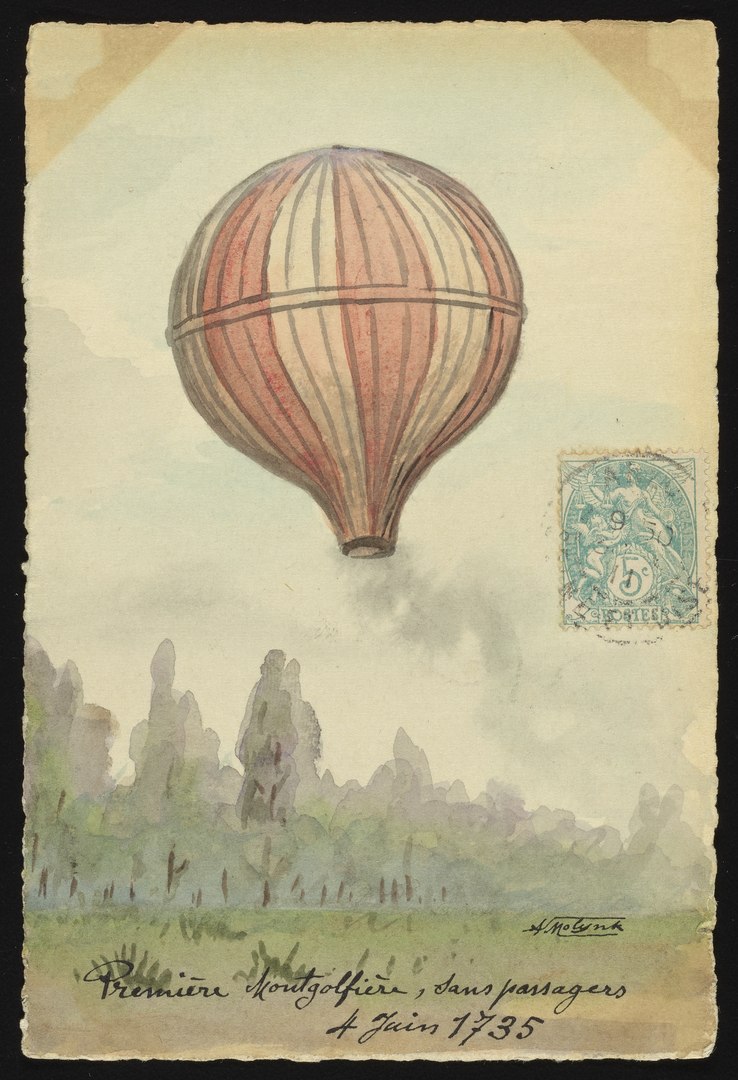
Soon, Joseph-Michel was able to convince his brother Jacques-Étienne of the realistic possibility of balloon flight. Having now recruited a partner with a mind for business, Joseph began to set his sights on something bigger and better. Soon, a globe-shaped balloon was constructed from sackcloth, reinforced by three layers of thin paper inside. The brother’s balloon had a capacity of 28,000 cubic feet of air and weighed 496 pounds. Four major components made up the airship: a dome and three lateral bands. The entire airframe was held together by 1,800 buttons.
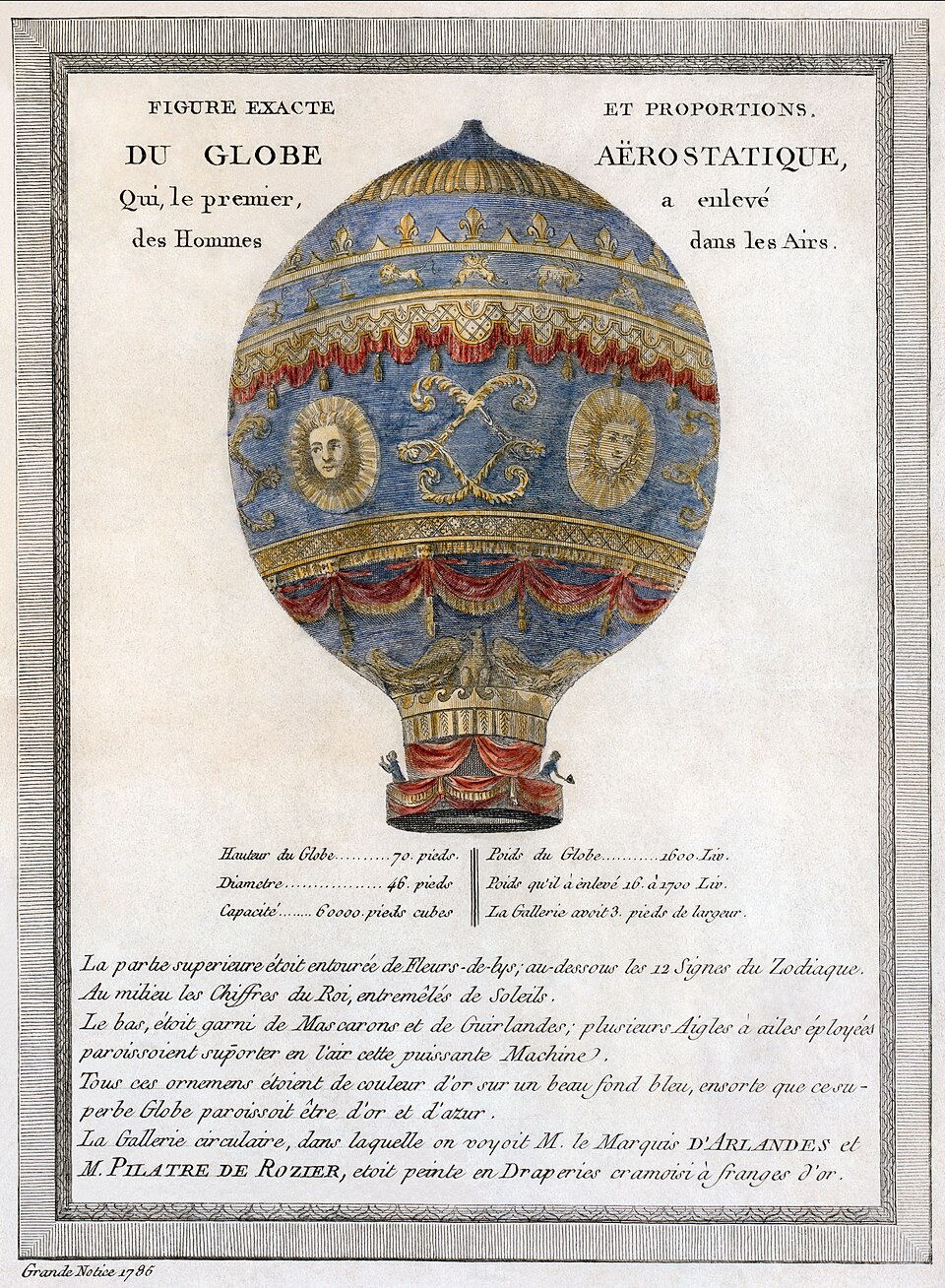
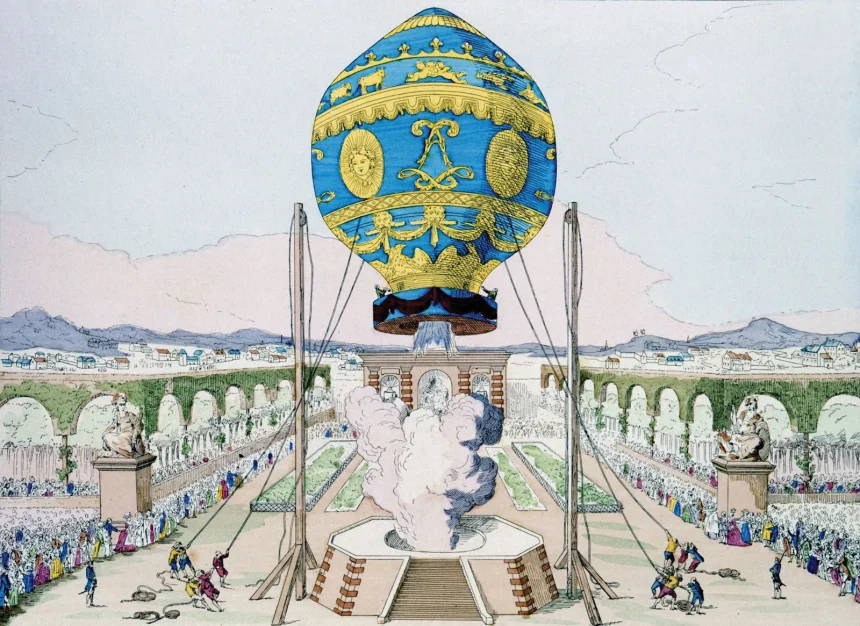
After test flights with animals as the passengers, the Montgolfier brothers were ready to send the first person into the skies. From the grounds of the Château de la Muette, near Paris, pilot Pilâtre de Rozier and army officer François Laurent d’Arlandes soared to 3,000 feet. The pair flew for a total of 9 kilometers (5.6 miles) in a 25-minute span. The balloon soon landed on the outskirts of downtown Paris, amongst a grouping of windmills. This flight could have hypothetically gone four or five times longer, but embers from the fire began to scorch the balloon’s material. The decision was made to end the flight then and there. History had been made.