
(Image credit: VAN)
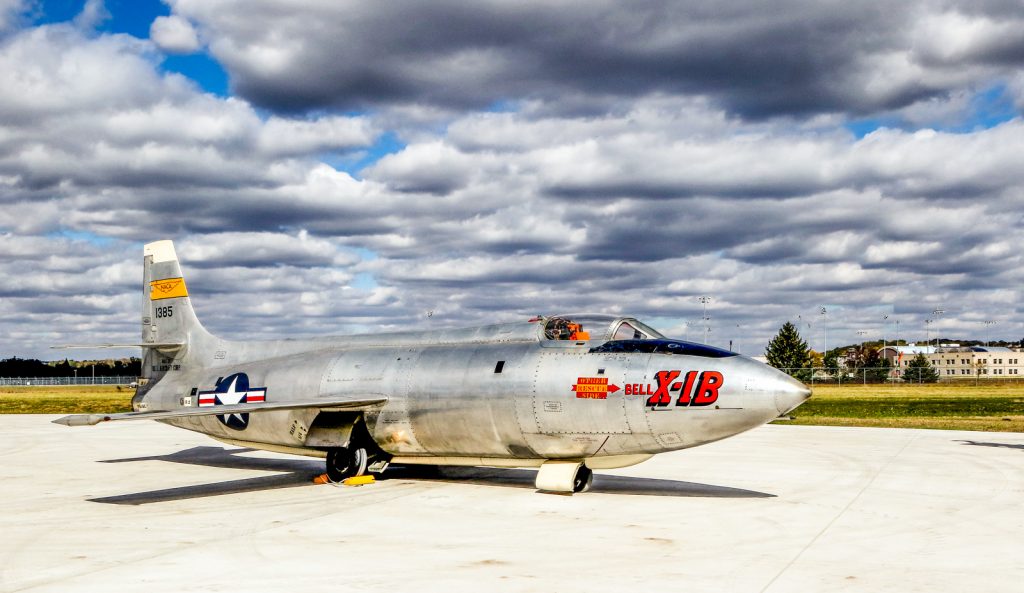
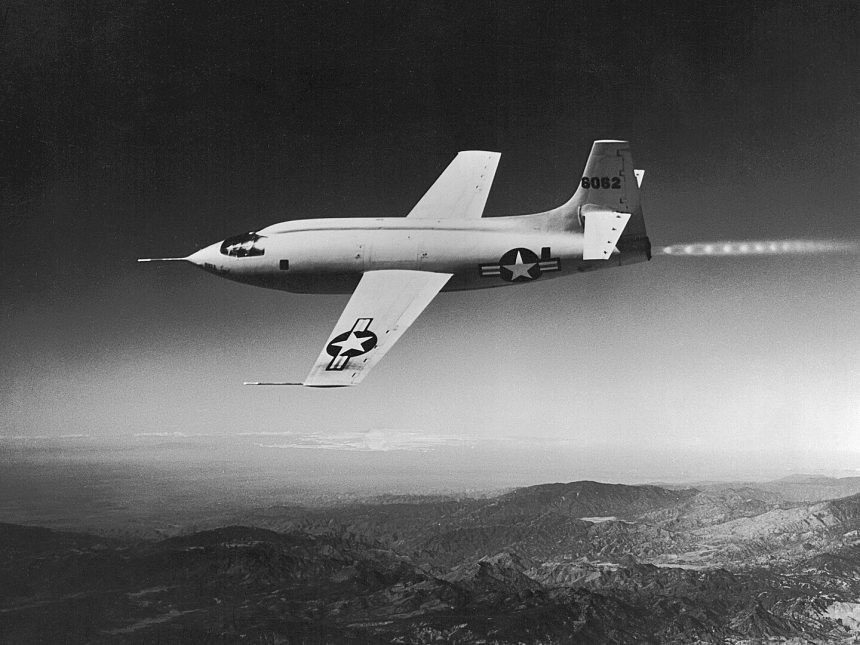
On this day in aviation history, 80 years ago (January 19, 1946), the first flight of the Bell X-1 took place. The X-1 was a rocket engine–powered supersonic research aircraft that was designed in a joint effort by the National Advisory Committee for Aeronautics (NACA) and the U.S. Army Air Forces/U.S. Air Force (by 1947). The X-1 was built by Bell Aircraft Corporation of Buffalo, New York. Bell named the research aircraft the Model 44 during development, and it was initially designated as the XS-1.
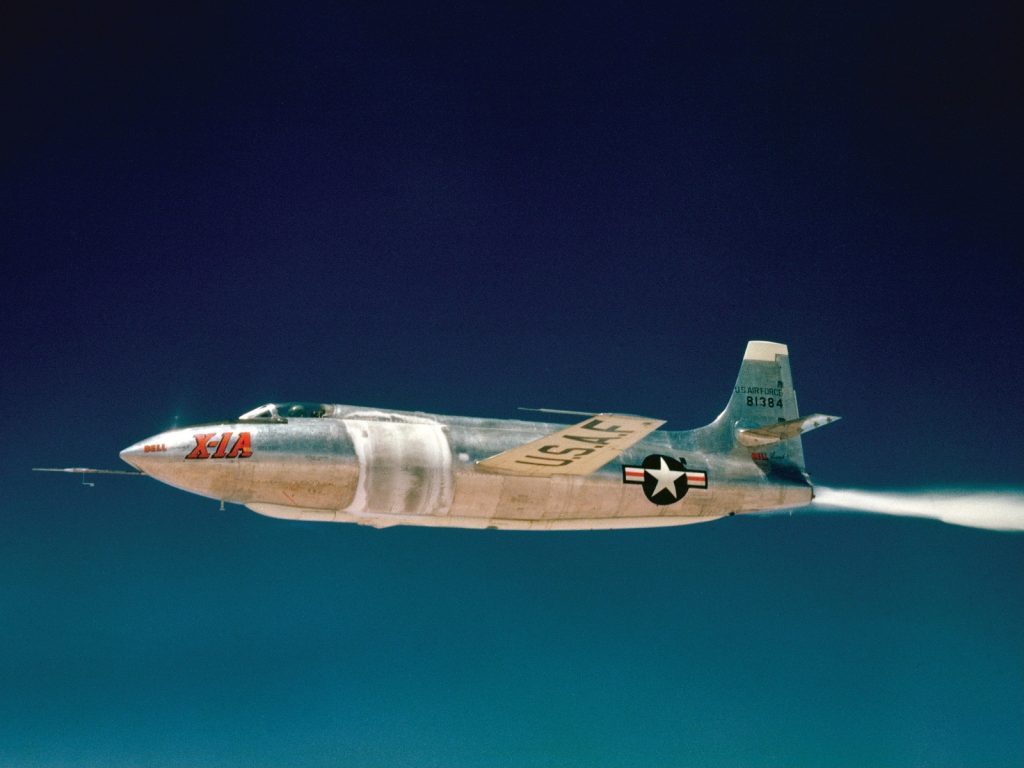
Development of the X-1 began in December 1944, when specifications were released for a piloted supersonic aircraft that could attain 800 miles per hour. On March 16, 1945, NACA and the USAAF contracted Bell Aircraft to build three XS-1s for flight testing. What resulted from Bell’s efforts was a “bullet with wings.” Built for speed, the X-1 was a product of extensive research, as many unknowns existed about sustained transonic flight, let alone supersonic flight. Bell Aircraft’s chief test pilot, Jack Woolams, was the first to fly the XS-1 on 1/19/46. The XS-1 he was flying was dropped via B-29 over Pinecastle Army Airfield in Florida. Woolams proceeded to make a gliding flight in the XS-1 to obtain initial aerodynamic data on the airframe.
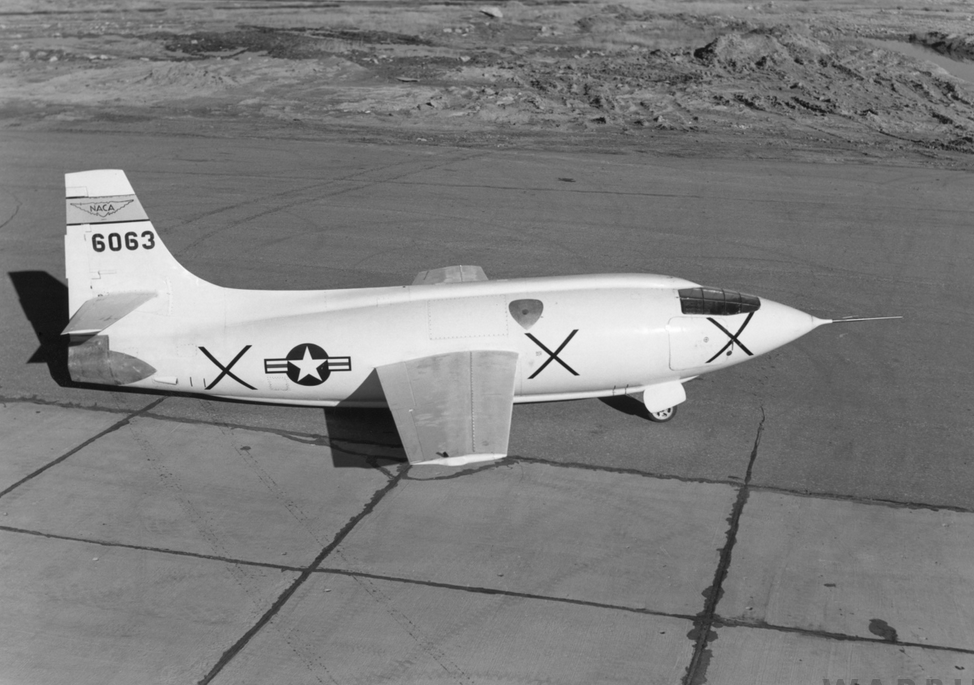
On October 14, 1947, Bell X-1 #46-062 made the first supersonic flight. Piloted by Chuck Yeager, the X-1 Glamorous Glennis attained an airspeed of Mach 1.06 (700 mph) over the Mojave Desert in California. This aircraft is now on display in the Boeing Milestones of Flight Hall at the Smithsonian National Air and Space Museum in Washington, D.C. Bell ultimately manufactured seven X-1 variants, from the X-1A to the X-1E. The sound-barrier-breaking X-1A was powered by the Reaction Motors XLR11-RM-3 rocket engine, with 6,000 pounds of thrust.