
(Image credit: VAN)
On September 23, 1911 — 114 years ago today — the first official airmail flight in the United States was successfully completed. The historic flight was made by pioneering aviator Earle Ovington, who became the nation’s first certified airmail pilot. Although earlier attempts to move mail by air had taken place — including John Wise’s balloon flight in 1859 and Fred Wiseman’s experimental airplane mail run earlier in 1911 — Ovington’s flight marked the first time mail was carried under official sanction by the U.S. Post Office Department.
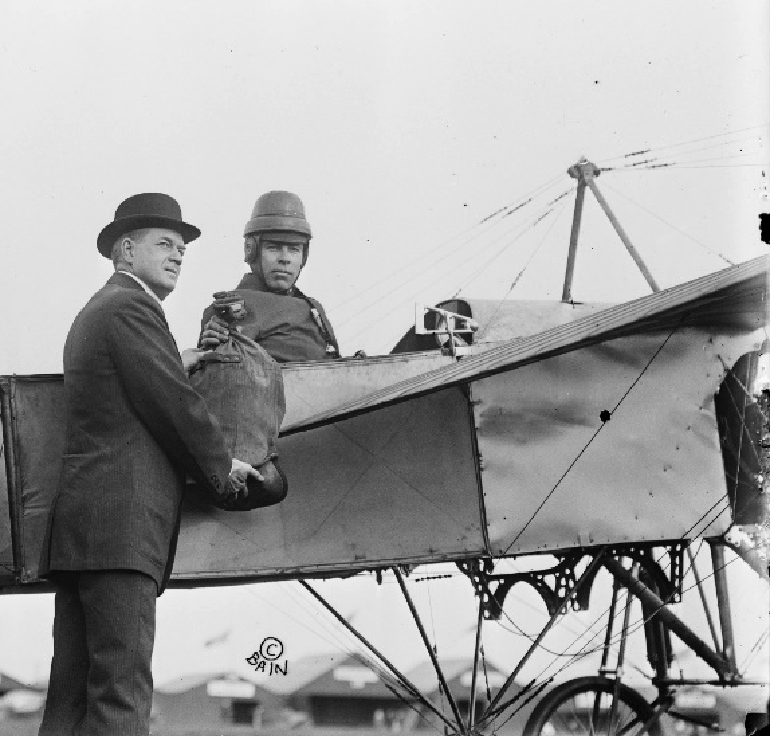
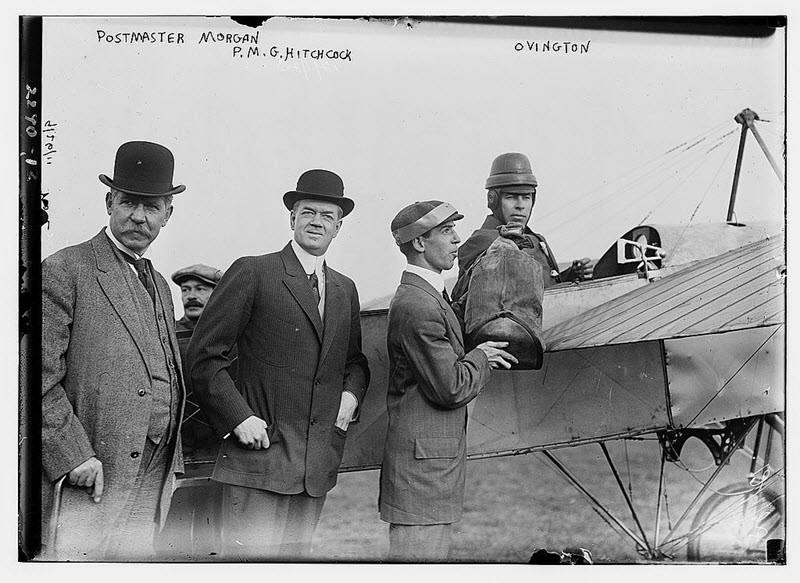
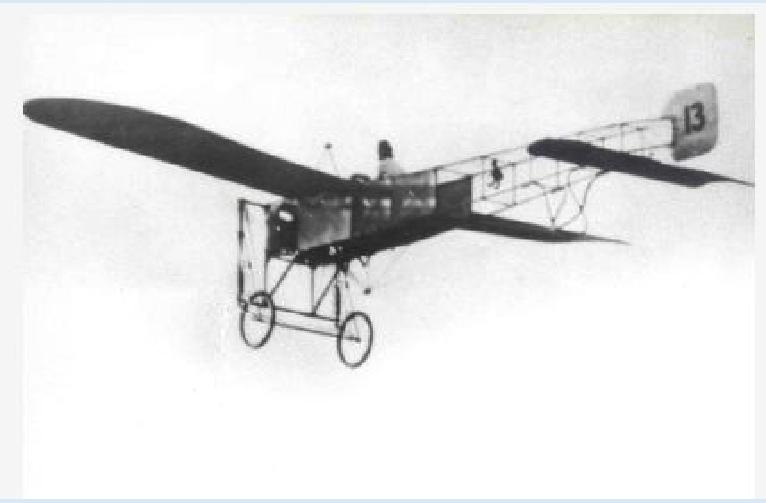
Ovington’s mission began at the International Aviation Tournament in Garden City, New York. Before takeoff, he was formally sworn in as a postal carrier. A heavy mailbag, filled with letters and postcards, was loaded into his airplane — a modified Blériot XI he nicknamed Dragonfly. Ovington climbed to an altitude of about 500 feet and flew a short hop to the nearby town of Mineola, where he dropped the bag from the cockpit, letting it float to the ground by parachute. It was a simple flight, but one that symbolized the dawn of a new era.
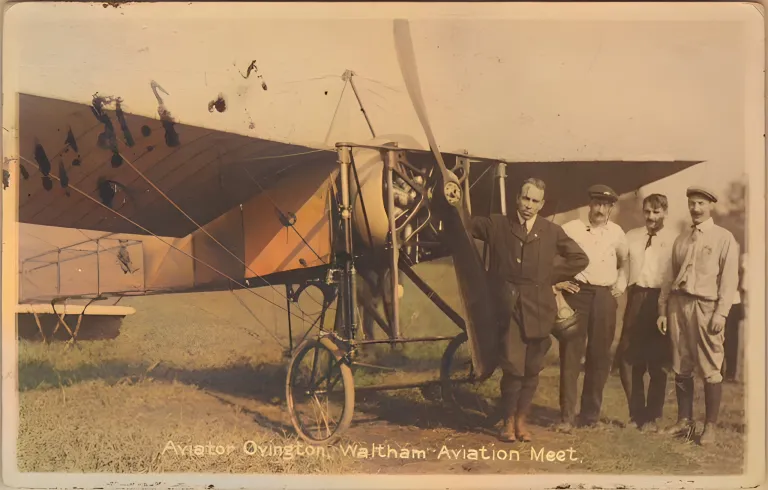
Earle Ovington was no stranger to innovation. Born in 1879, he showed a fascination with science and engineering from an early age. At nine, he was given a one-dollar electric motor and the book Experimental Science, sparking a lifelong passion for invention. He worked as a messenger for Edison Electric Illuminating Company and was immersed in the excitement of the “electrical revolution.” In 1900, Ovington enrolled at the Massachusetts Institute of Technology to study electrical engineering. His interest in motorcycles eventually led him to meet aviation pioneer Glenn Curtiss, who became a close friend and introduced Ovington to the world of flight.
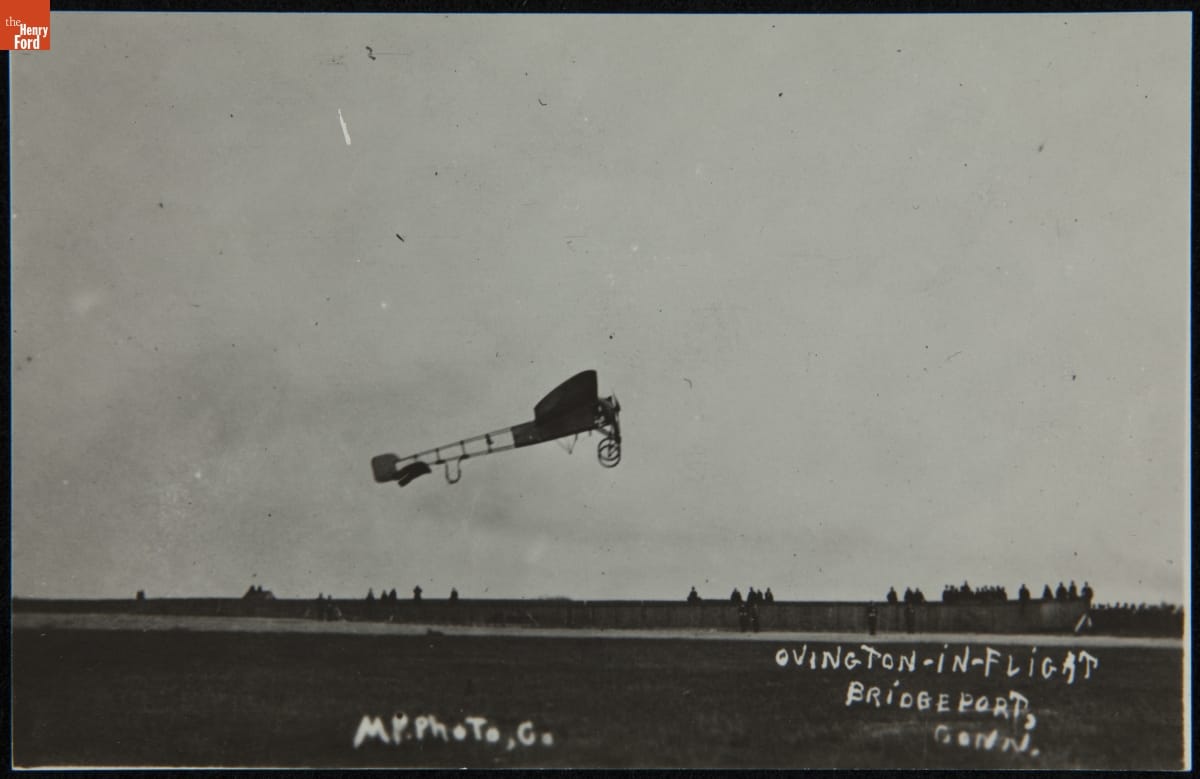
Determined to learn to fly, Ovington traveled to France to attend Louis Blériot’s aviation school, where he mastered the fundamentals of piloting and aircraft design. His Blériot XI, the Dragonfly, was modified with six steel wing straps instead of the original four, a change that improved the aircraft’s stability and allowed it to reach a greater service ceiling — just enough to carry out the nation’s first official airmail run.
The idea for the flight came when Ovington learned that Postmaster General Frank H. Hitchcock was seeking a way to demonstrate the feasibility of an airmail service. Ovington volunteered for the job, and with the support of New York Lieutenant Governor Timothy L. Woodruff, the flight was approved. The success of the mission proved that the airplane could be a viable tool for mail delivery, laying the groundwork for the future of airmail service in the United States.