
By Emma Quedzuweit
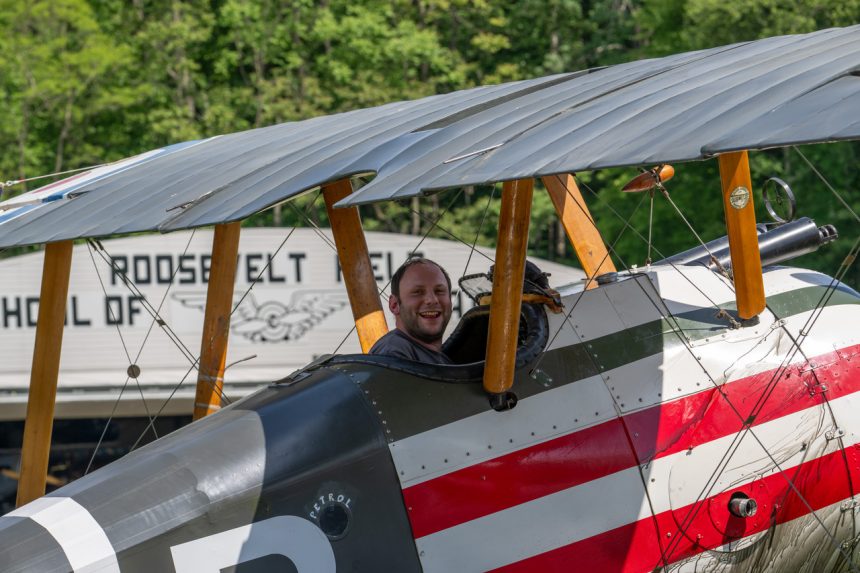
At Old Rhinebeck Airdrome in Red Hook, New York, sits one of the premier collections of vintage aircraft in the United States. Director of Maintenance Mark Mondello is one of the key people responsible for keeping these historic airplanes in the sky. A commercial pilot and A&P/IA, Mondello has been working at Old Rhinebeck in some capacity for more than 20 years. His primary responsibility is maintaining the fleet of 14 airworthy museum airplanes — along with seven additional privately owned vintage aircraft based on the field. When he’s not wrenching on airplanes, he’s often flying passenger rides in the museum’s New Standard D-25 or working with organizations like the Collings Foundation, the Golden Age Air Museum, and the Commemorative Air Force.
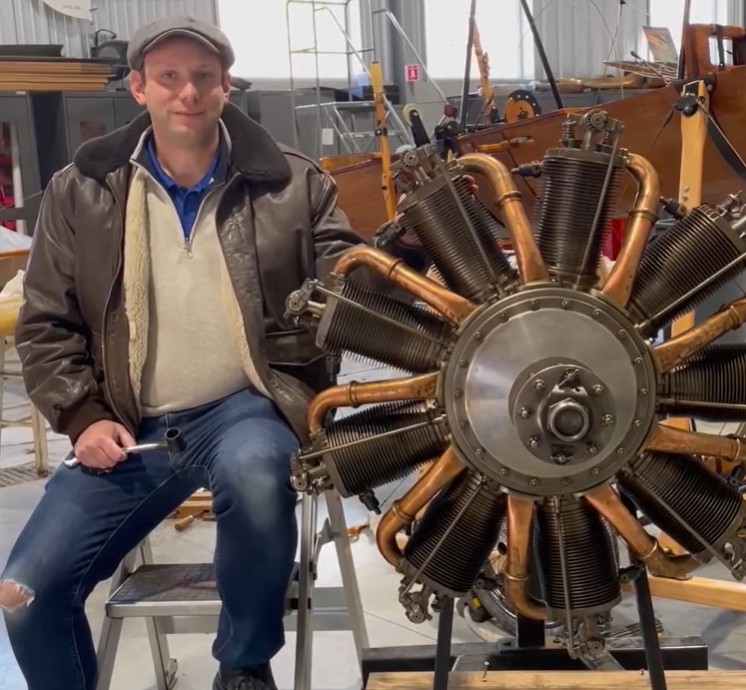
When I sat down with Mondello, his enthusiasm for the unique machines under his care was immediately clear, particularly when we turned the conversation to World War I aircraft powered by original rotary engines — an experience very few pilots today can claim. Rotary engines, Mondello explained, always catch the attention of visitors. “The first thing I tell people is, ‘the whole engine spins.’ I ask them to imagine if their car’s engine was directly connected to the wheels and spun around as fast as they do. That always gets people thinking about what that means for operating the engine,” he said.

He broke down the unusual mechanics that make rotaries so fascinating. “How do you get fuel into a spinning engine? Through the hollow crankshaft. How do you get spark? Normal plug wires would tangle, so they use an ebonite collector disc. Most engines circulate oil, but you can’t collect oil from a spinning engine, so you don’t — it’s a total-loss system, flinging oil out of the exhaust on every cylinder. After every flight, you have to refill the tank.” Mondello said the whole design ultimately came down to one thing: cooling. “Before radial engines came along, the reason for rotaries was to make an engine that wouldn’t overheat and didn’t weigh a ton. A Le Rhône rotary weighs 250 pounds but makes the same horsepower as a 450-pound water-cooled engine.”
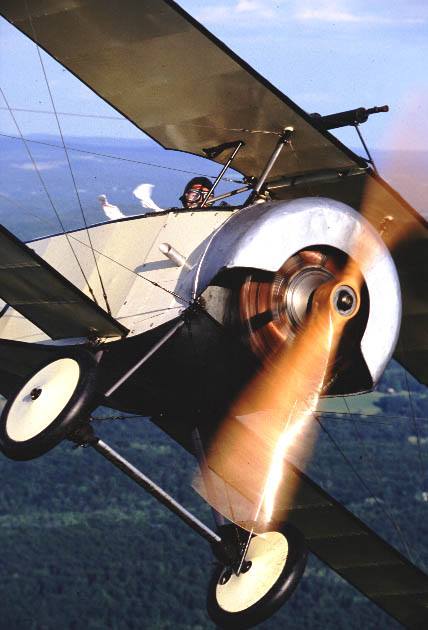
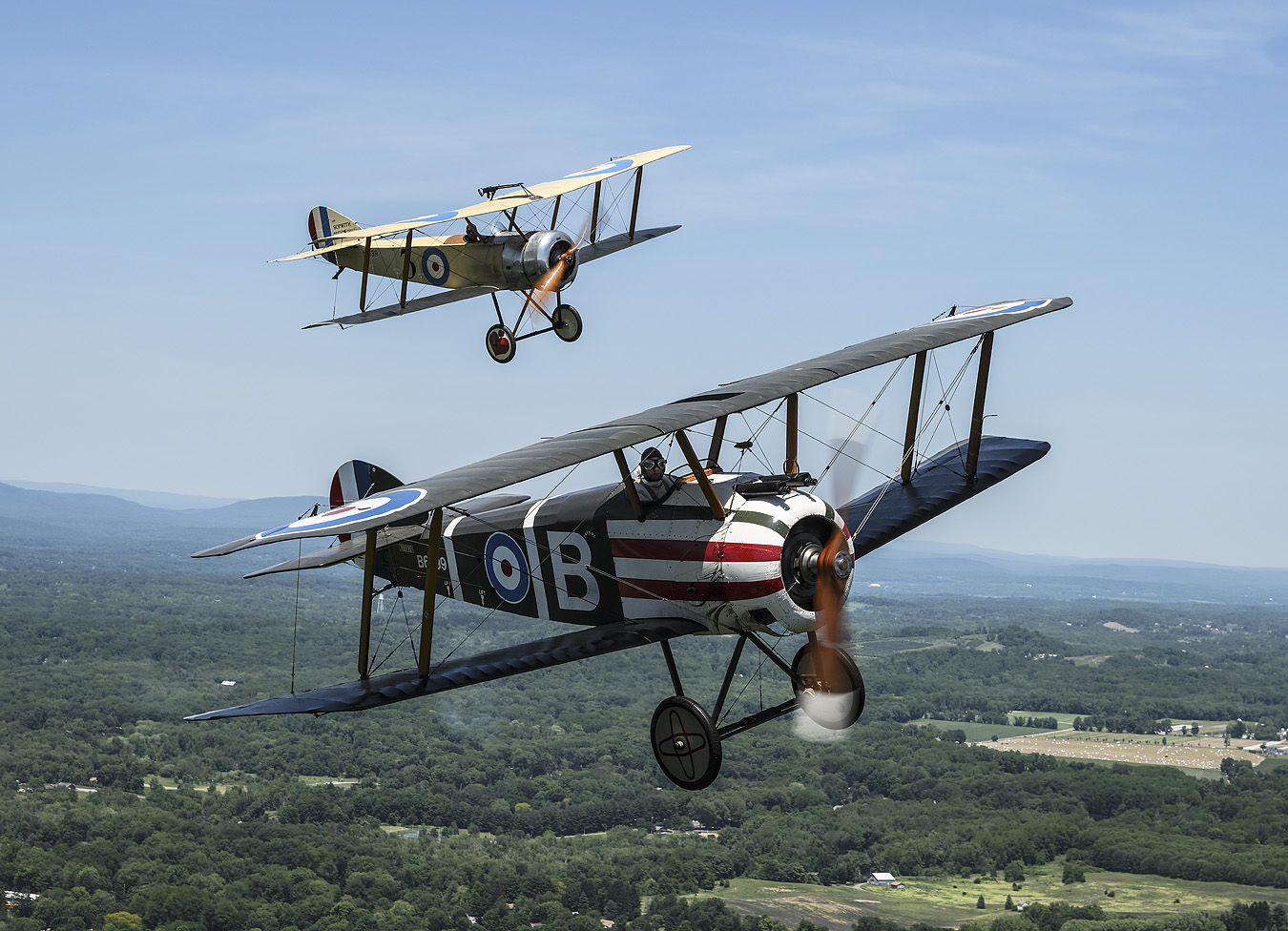
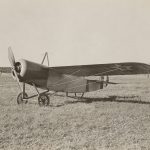
Old Rhinebeck’s collection is home to a remarkable number of rotary-powered aircraft, including a Sopwith Camel with a 160-horsepower Gnome rotary engine, a Sopwith Pup with an 80-horsepower Le Rhône, a Caudron G.3, a Morane-Saulnier AI, a Deperdussin, and a Gnome-powered Blériot. The field also hosts a Nieuport 83E (a two-seat Nieuport) with a Le Rhône, two rotary-powered Fokker Dr.I triplanes, and more — 16 rotary engines in total when counting spares.
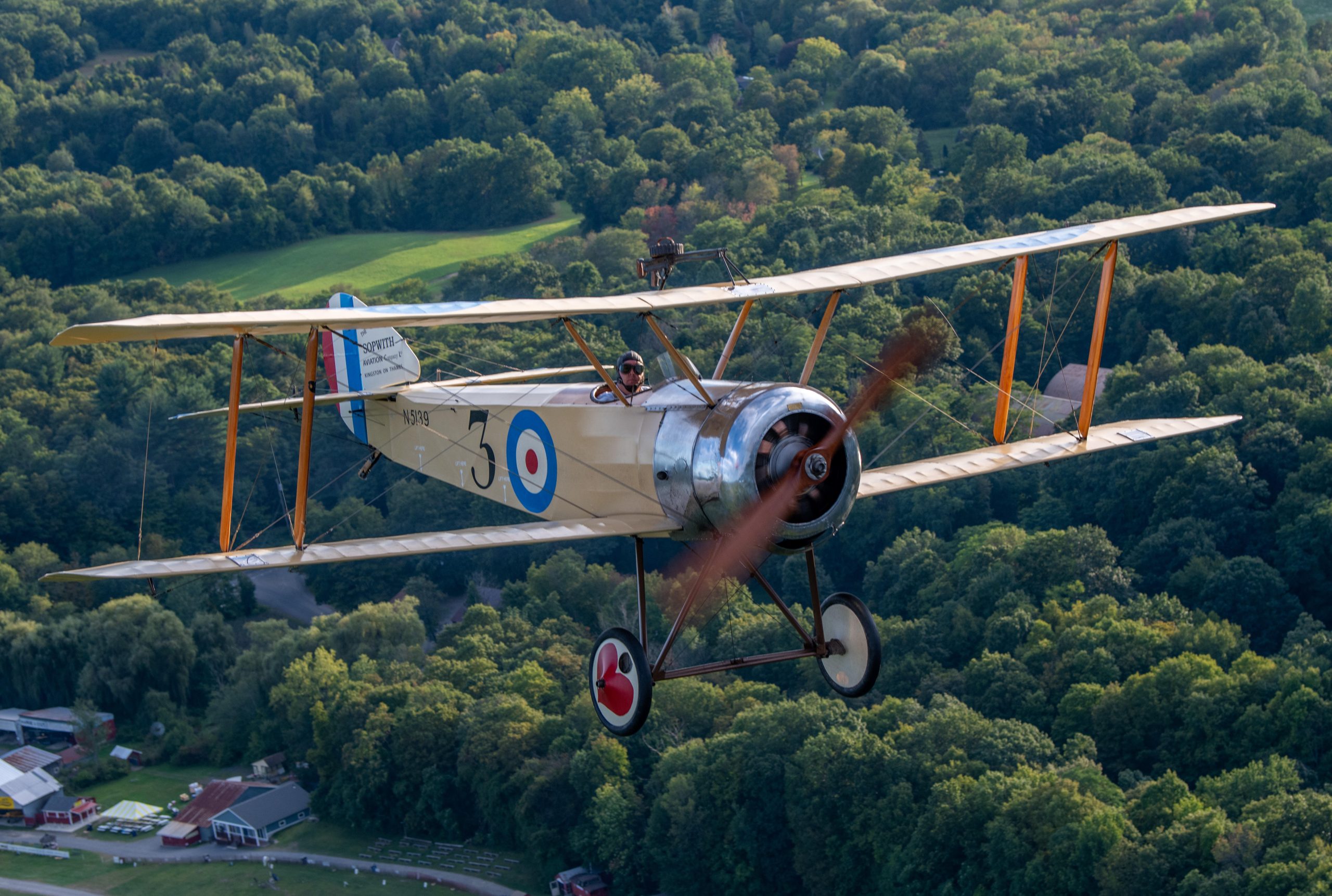
Naturally, I wanted to know what it was like to fly the legendary Camel with that much power packed into such a small airframe. Mondello smiled at the memory. “The first thing I said after my first landing was, ‘it’s like having a tiger by the tail.’ I’ve flown around ten different WWI fighters, and the Camel feels more like a fighter than any of them — even more so than the Fokker Triplane. It’s nimble, very unstable, and it really surprises you. The thrust is incredible — you just point the nose up and it goes.” He noted that the Camel is also the only rotary-powered airplane he’s flown where the gyroscopic precession is unmistakable. “The Pup and some of the others aren’t affected as badly. As an experienced pilot, you automatically compensate without even thinking, but with the Camel, it’s very evident and it can really screw you up if you’re not on top of it.”
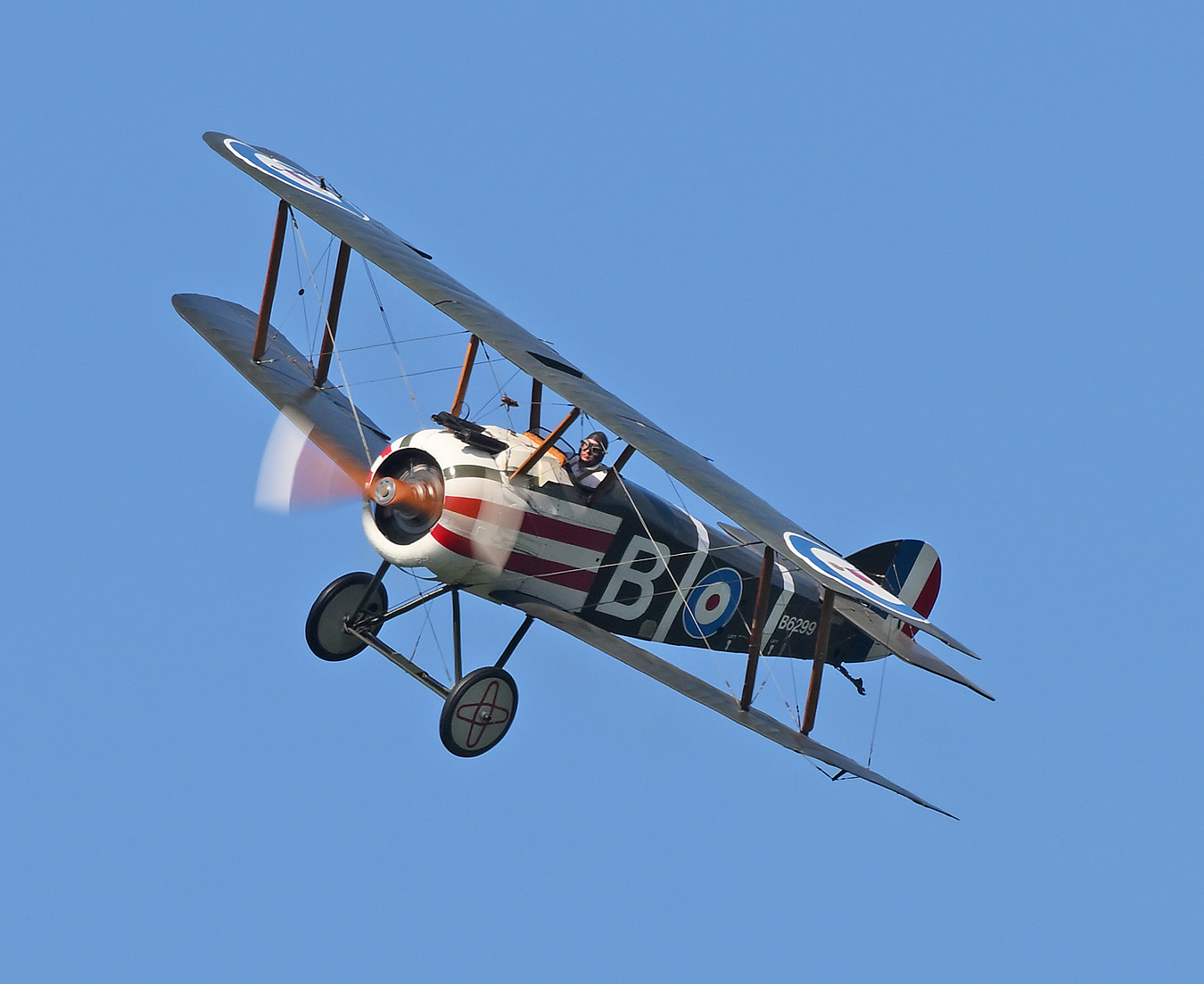
Complicating matters further, the Camel is “very under-ruddered,” Mondello said. “A lot of WWI airplanes have a balance area in front of the rudder post to keep forces light, but the Camel doesn’t have that. The rudder is small and heavy to push in flight. It’s easy to get behind it, but you really need it going into turns.” When comparing the experience of flying a rotary-powered airplane to later designs, Mondello said the mental workload is far higher. “In a 1920s airplane, 80 to 90 percent of your brain power is on flying and 10 to 20 percent is on engine management. In a rotary, about half your brain is focused just on keeping the engine running. That leaves the other half to actually fly the airplane. It amazes me that these young WWI pilots were managing these finicky engines while trying to survive in combat.”
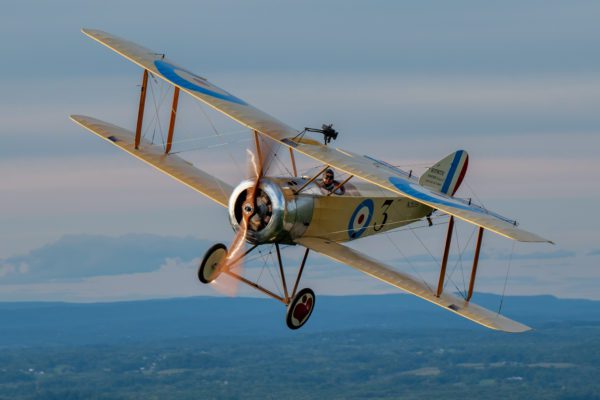
Both the Gnome and Le Rhône engines require constant attention to keep them running. “They’re cantankerous and very old,” Mondello said, “and you have to add in the odd handling of a 900-pound airplane with a 300-pound spinning engine and sometimes a nine-foot propeller. Your whole body is engaged.” Sensory overload is part of the experience. “You’re listening all the time because the tachometers are inaccurate — they only take a reading every three-quarters of a second — so it’s more reliable to use your ear. A good-running rotary sounds like a fizzy soda. If it sounds like bubbling coffee, that’s a problem. You use your nose to smell the burnt castor oil — your first sign that the oil system is working — and your eyes to make sure there’s white smoke. You don’t even need to look at the ball to know if your turn is coordinated; you just feel the wind on your cheek. It’s about as close to being one with the airplane as you can get.”

Our conversation turned to the future of rotary-powered aviation and the people who keep it alive. “With anything in general aviation, the big concern is that the community is shrinking and becoming just for the ultra-rich. Fortunately, there’s a good group of younger people getting into it, building and flying rotaries. That’s the next generation.” Mondello noted that as original parts become scarce, more airplanes will be powered by reproduction engines, such as those built by CAMS or The Vintage Aviator, ensuring rotary-powered flight continues for decades to come.

For Mondello, working with these machines is as much an intellectual challenge as it is a hands-on one. “It’s like aviation archaeology,” he said. “You’re constantly figuring things out because there’s no manual with every step written out. In the documentation we do have, torque specs say things like ‘make sure fastener is appropriately tight’ or ‘bring nut home fast.’ You have to put yourself in the mindset of a 1914 mechanic and work out what they would have done. I find that mental exercise fascinating.”
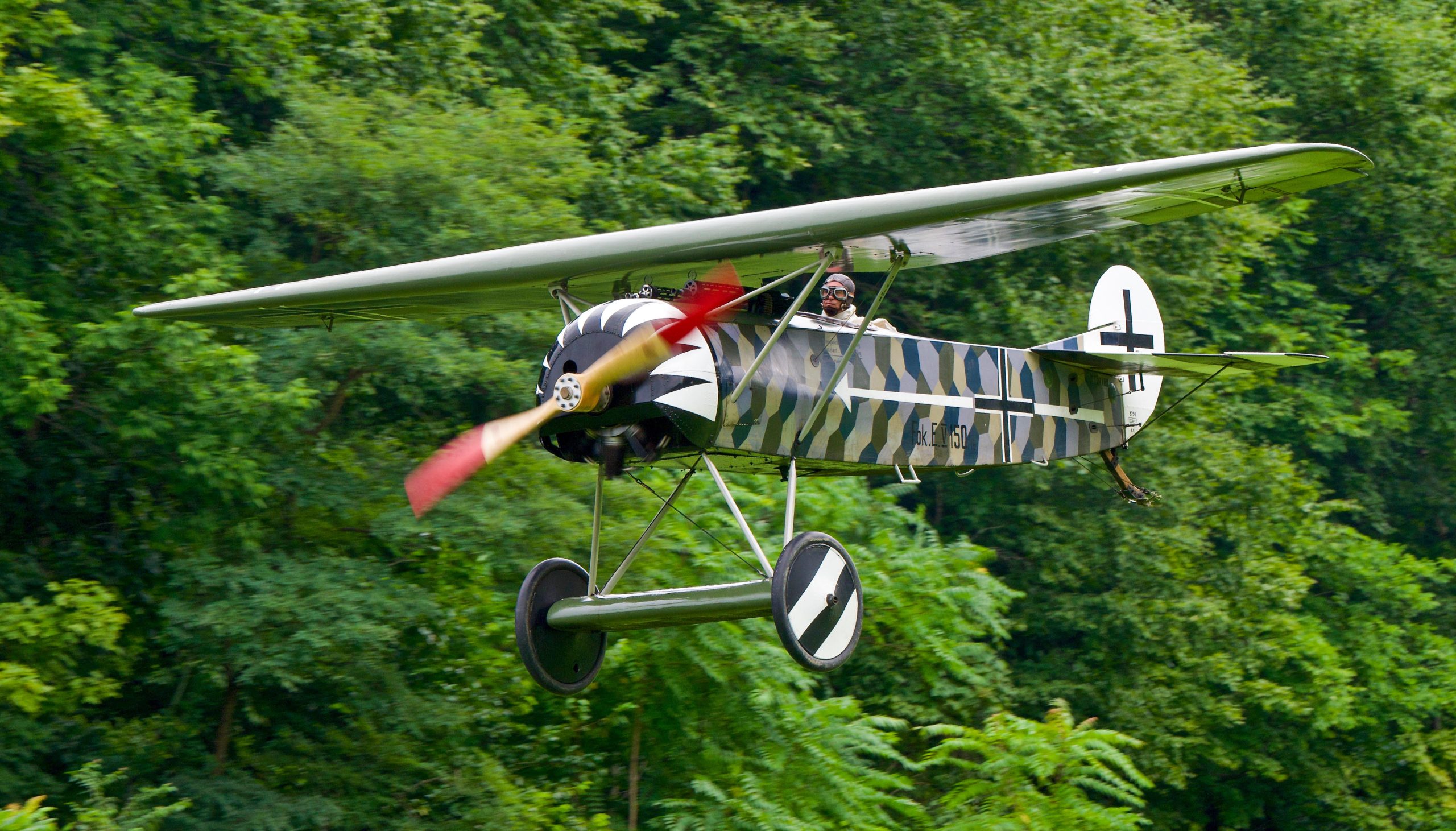
Beyond the mechanical puzzle, Mondello loves sharing the experience. “It’s a very small club — very few pilots have flown a rotary engine — so yes, I feel a little special. I’ve put many people in the cockpit just to let them run the engine. The look on their faces is amazing — you don’t get that from starting a Cessna 172. Running a rotary is a whole other level.” For Mondello, and for Old Rhinebeck, keeping these rare engines flying is more than just maintenance — it’s preserving a fleeting but pivotal moment in aviation history. “These engines were basically obsolete by the end of World War I,” he said, “but they shaped so much of what came later. They’re worth keeping around.”