






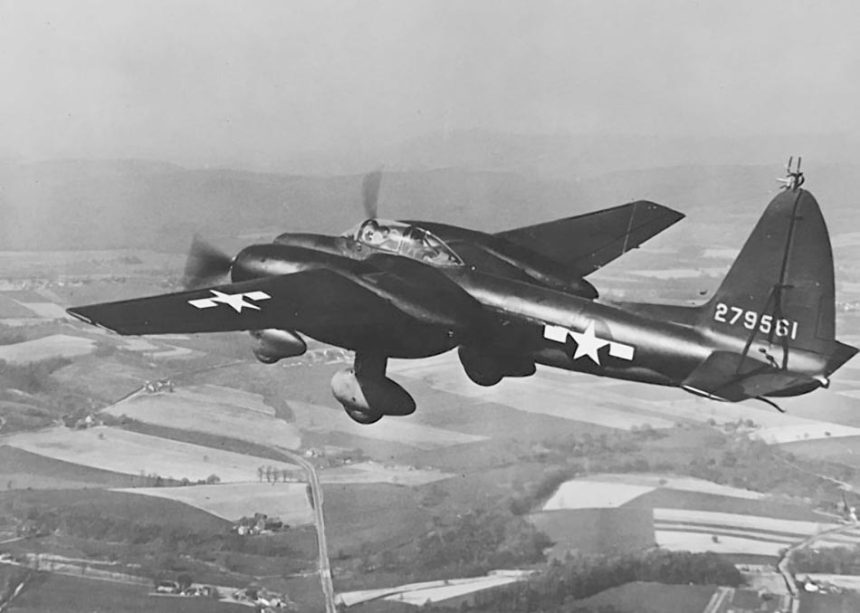

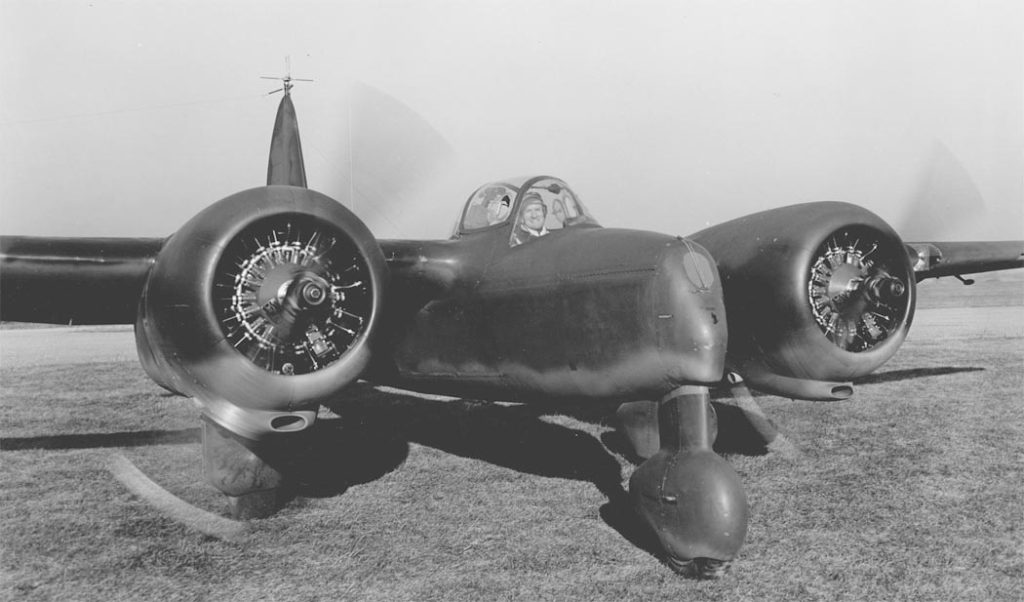
During WWII, Fleetwings, later called Kaiser-Fleetwings, developed an unmanned aerial vehicle for the US Army Air Forces, designated the Fleetwings BQ-1. The program started in March 1942 when the US Army Air Forces began developing radio-controlled assault drones, often called “aerial torpedoes.” These aerial torpedoes were unmanned, designed to be used only once, and could be specially built or modified from existing aircraft. The drones were developed to carry a large amount of explosives, remote-control equipment, and a forward-facing camera. To control the aircraft, the operators had to send radio commands to guide it toward its target and use its camera feed to help them navigate.
Design of Fleetwings BQ-1
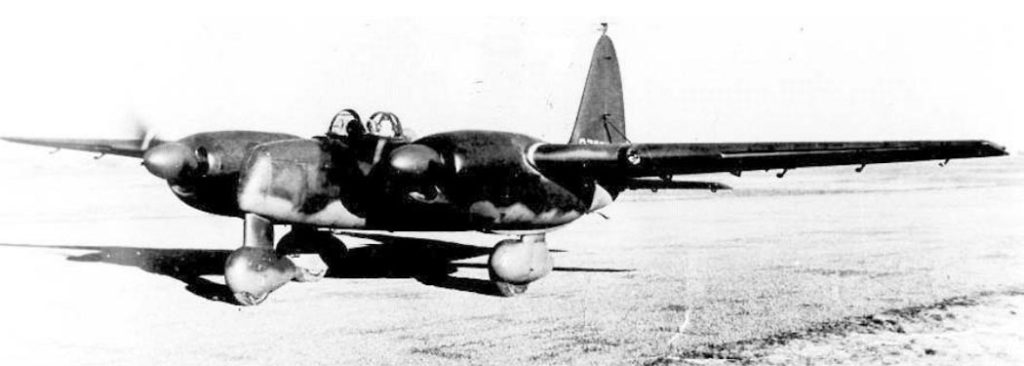
The Fleetwings BQ-1 development began on July 10, 1942, after the company was tasked with building one XBQ-1 assault drone. The drone was powered by two Franklin O-405-7 piston engines, each producing 225 horsepower, and had a fixed tricycle landing gear. It could be flown by a pilot, as it had a single-seat cockpit for ferry and training flights. For operational missions, a fairing replaced the cockpit canopy. The Fleetwings BQ-1 was meant to carry a 2,000-pound warhead over a distance of 1,717 miles at a speed of 225 miles per hour. In October 1943, Fleetwings successfully demonstrated the drone’s guidance method using a YPQ-12A target drone, developed as part of the PQ-12 program, which the company turned into a radio-controlled bomb with a TV camera. The PQ-12 was a radio-controlled target drone designed with a fixed tricycle landing gear and an open cockpit that could fit a pilot if needed. It was powered by a single Lycoming O-435-5 piston engine producing 225 horsepower. A single XPQ-12 was ordered in 1941 but was later canceled. However, one XPQ-12A and eight YPQ-12A aircraft were delivered to the US Army Air Forces. A planned production of 40 PQ-12A drones was also canceled. The YPQ-12A could carry a 500-pound bomb instead of a pilot.
The Cancellation
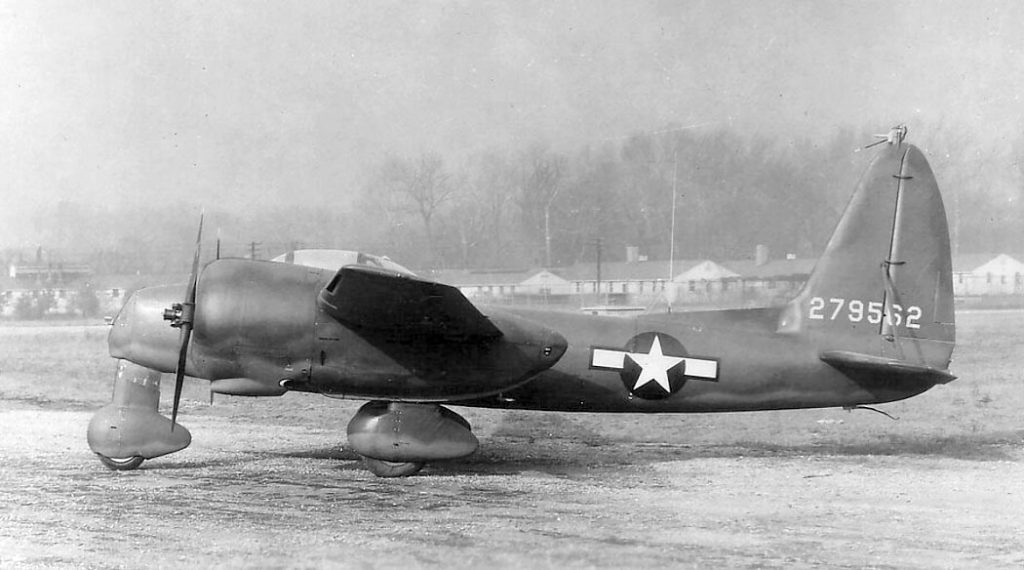
The Fleetwings BQ-1 program ended in July 1944, when the only prototype, the XBQ-1, crashed shortly after takeoff from Wright Field due to an engine failure. The US Army Air Forces ordered one XBQ-2 aircraft along with the XBQ-1. The XBQ-2 was meant to be the same as the XBQ-1, but it would have Lycoming XO-435-3 engines and a landing gear that could be removed. However, the XBQ-2 was never built either. Instead, it was replaced by the XBQ-2A, which was upgraded with two Lycoming R-680-13 engines. The XBQ-2A project ended in December 1943 due to high costs, and the aircraft was then renamed ZXBQ-2A to show that it was outdated. In the Grounded Dreams series, the Fleetwings BQ-1 could have been a good drone if it had addressed some issues. Read more Grounded Dreams articles HERE.








I always enjoy Kapil’s work.