
(Image credit: VAN)
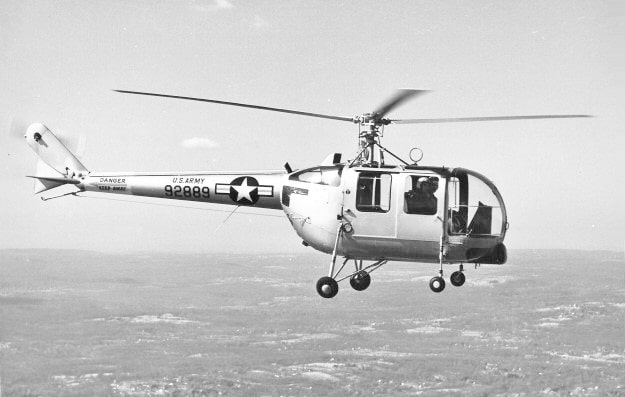
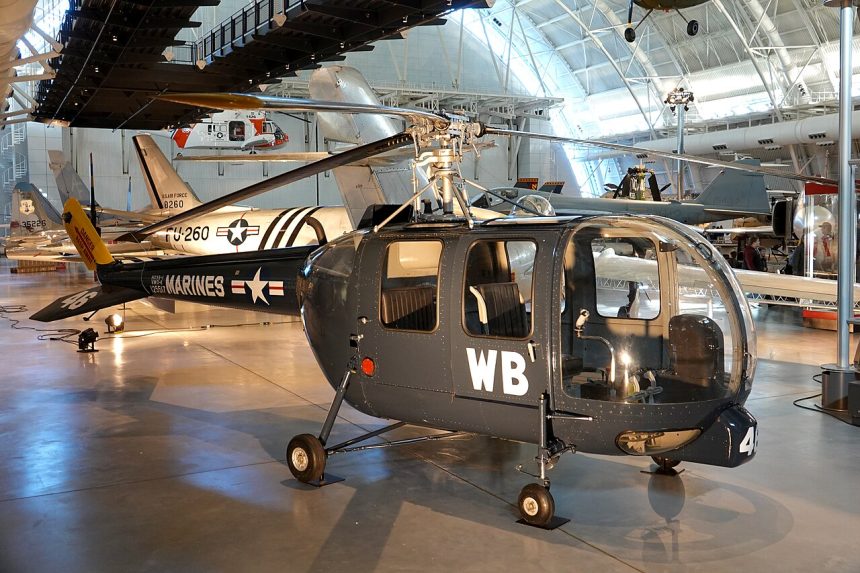
On this day in aviation history, 79 years ago (February 12, 1947), the Sikorsky S-52 flew for the first time. The S-52 was a utility helicopter that was flown by the United States Army, Navy, Marine Corps, and Coast Guard. Initially designed as a two-seat helicopter, the S-52 would be further developed into four-seat variants: the S-52-2 and S-52-3. Sikorsky’s S-52 holds the distinction of being the first US helicopter with all-metal rotor blades. Sikorsky designed the S-52 around the all-metal main and tail rotors and implemented offset flapping hinges for the main rotor. This feature allowed the helicopter greater maneuverability and would become Sikorsky’s trademark design in later rotorcraft developments. During flight testing in 1948, the S-52 prototype set several speed and altitude records. The S-52 was able to attain 129.6 mph on a 2-mile course, 122.75 mph on a 1,100-yard circuit, and an altitude of 21,220 feet.
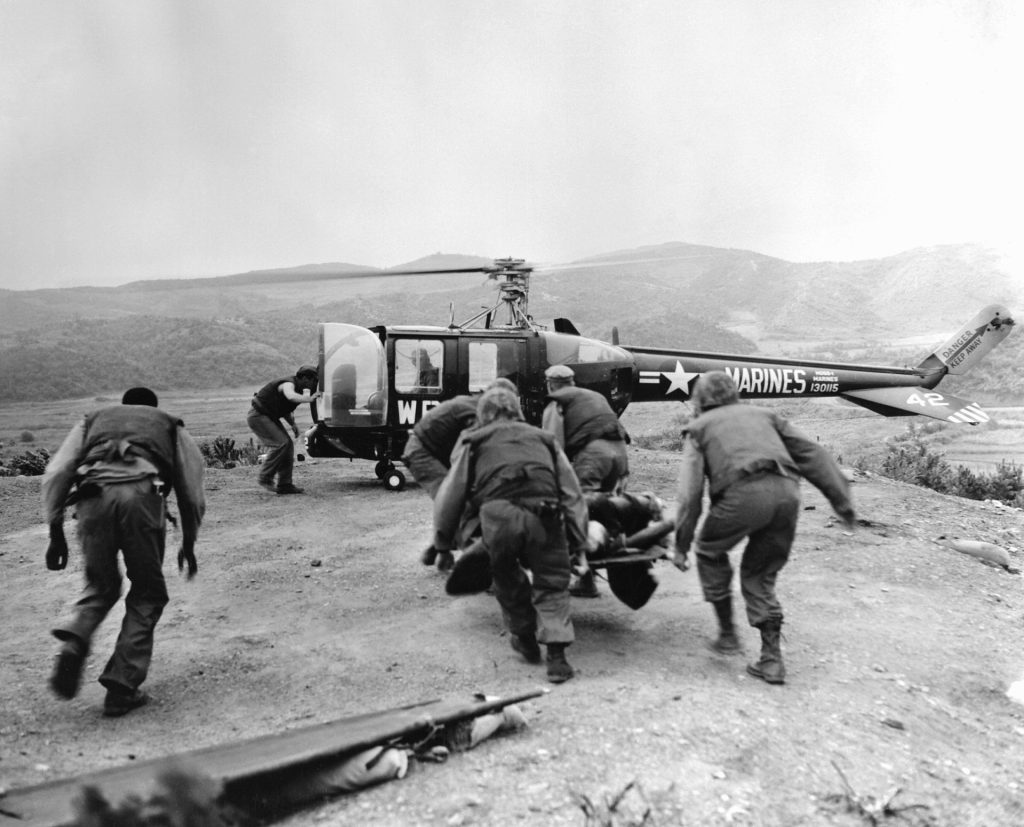
The US Navy and Marine Corps designated the S-52 as the HO5S-1, while the Coast Guard named the rotorcraft the HO5S-1G. In the Korean War, the Navy and Marine Corps flew the S-52 on observation and scouting missions. Marines also used the HO5S-1 as a medevac platform, as it could carry two stretchers internally. The US Army flew the S-52 under the designation YH-18A, but only acquired four of the helicopters for testing purposes. After the S-52’s retirement from military service, many helicopters found their way to the civilian market for utility use. In the 2022 film Devotion, the sole remaining airworthy HO5S-1 was used during the ending rescue attempt. Sikorsky’s S-52 had a crew of two and a capacity for two passengers or stretchers. The aircraft was powered by a 245-horsepower Franklin 6V6-245-B16F 6-cylinder horizontally-opposed engine. The main rotor had a diameter of 33 feet, covering an area of 855 square feet. Cruise speed for the S-52 was 96 mph, but it could attain a maximum airspeed of 110 mph. The S-52 had a range of 361 nautical miles and a service ceiling of 15,500 feet. Sikorsky built 93 S-52s in total, and the aircraft was first introduced in April 1951.