

(Image credit: VAN)
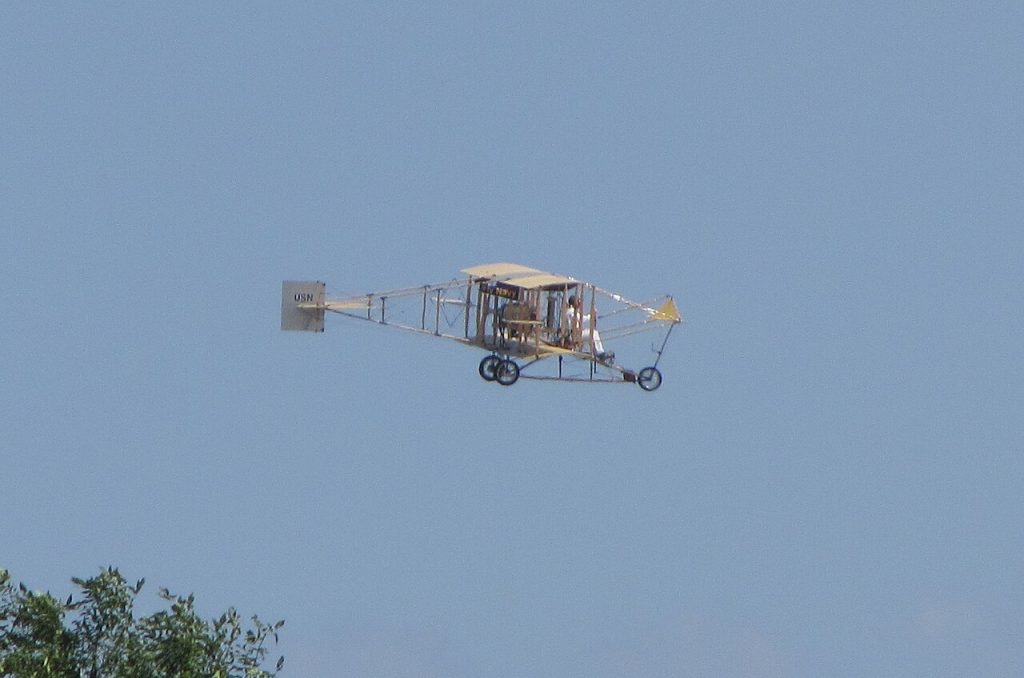
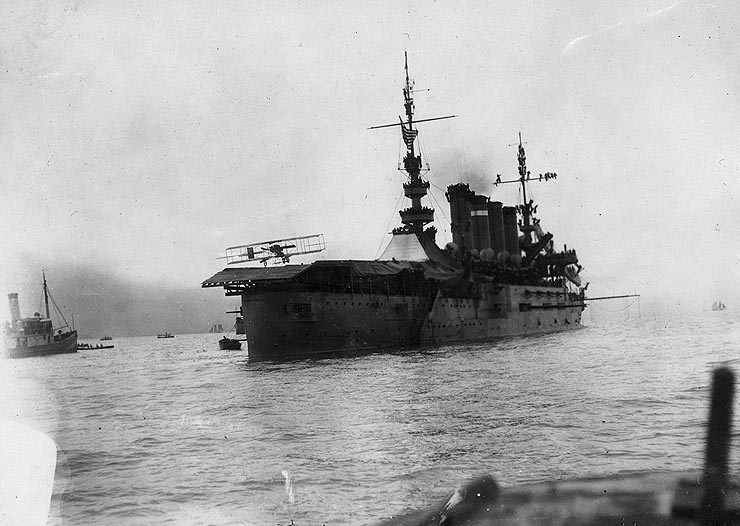
On this day in aviation history, 115 years ago (January 18, 1911), the first shipboard aircraft landing was accomplished. At 10:45 a.m., Pilot Eugene Burton Ely departed from U.S. Army Selfridge Field, flying his Curtiss-Ely pusher. Ely proceeded to fly to San Francisco Bay, where the USS Pennsylvania (ACR-4) awaited his arrival. A temporary wooden deck, 133 feet, 7 inches long and 31 feet, 6 inches wide, had been constructed upon the Pennsylvania’s deck for Ely’s approach to land. Twenty-two cables spanned across the deck, one every 3 feet, awaiting the catch-hook mounted beneath Ely’s pusher. This would allow the aircraft to come to a stop after landing.
Prior to Ely’s attempt to land, ACR-4’s Captain, Charles Fremont Pond, offered to take the ship out to sea and orient into the wind for a more favorable landing. The winds in the bay were 10 to 15 mph, and Ely felt comfortable with the ship remaining under anchor. Ten minutes after departing Selfridge Field, Ely and the pusher arrived over the USS Pennsylvania. As Ely reached a point of 75 feet astern the ship, he cut the power to begin a glide for landing. At 11:01 a.m., traveling a speed of 40 miles per hour, the Curtiss pusher’s hook caught the wire aboard ACR-4’s temporary landing deck. Eugene B. Ely had successfully completed the first “carrier” landing.
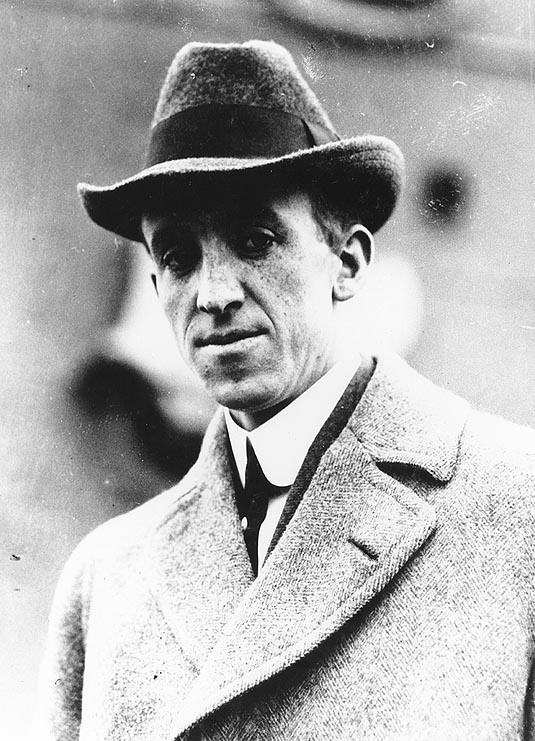
Eugene Burton Ely was born on October 21, 1886, in Williamsburg, Iowa. Ely was a self-instructed pilot, teaching himself to fly in an airplane he had restored himself. Ely gained notoriety as an expert in the field of aviation. He enlisted in the California National Guard shortly after its establishment, and was appointed Aviation Aide to Governor Hiram Warren Johnson shortly after. Ely sadly lost his life in an accident on October 19, 1911, while flying over the Georgia State Fairgrounds in Macon. Ely’s contributions to aviation would not go unrecognized, however. In 1933, the United States Congress passed Senate Bill 5514, which awarded the Distinguished Flying Cross to Eugene posthumously.