







By Kevin Wilkins
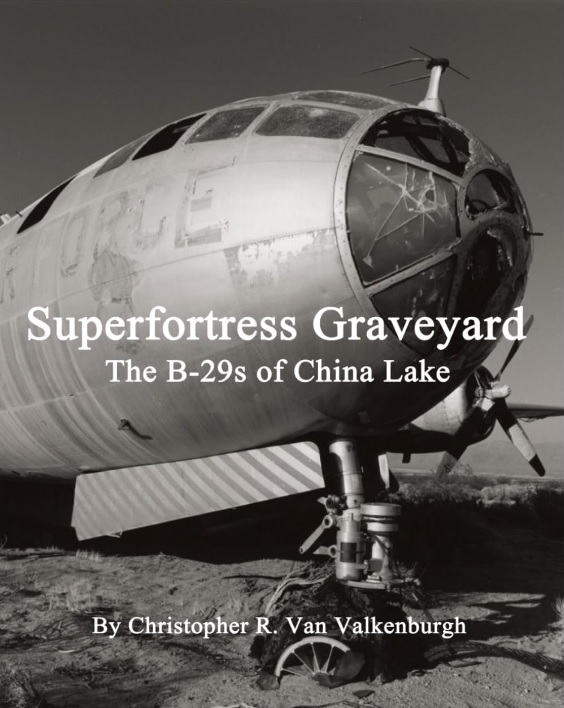
It has been just over a year since the highly anticipated Superfortress Graveyard – The B-29s of China Lake by Christopher R. Van Valkenburgh was released. This book covers the complete production history of the B-29 across all four manufacturing facilities by serial number, documents all surviving B-29s, and presents the full service and postwar story—including photographs—of every B-29 that ended its life as a ground target. Most of the B-29s preserved today in museums were recovered from China Lake. In this excerpt, Van Valkenburgh highlights a few well-known examples, including Doc and FIFI, the only two airworthy B-29s in the world. He also shares the history of his own B-29 fuselage, The Big Time Operator, and T-Square 54, which is preserved at the Museum of Flight in Seattle. The book is available on Amazon, click HERE.
B-29-50-BW 42-24791 – The Big Time Operator
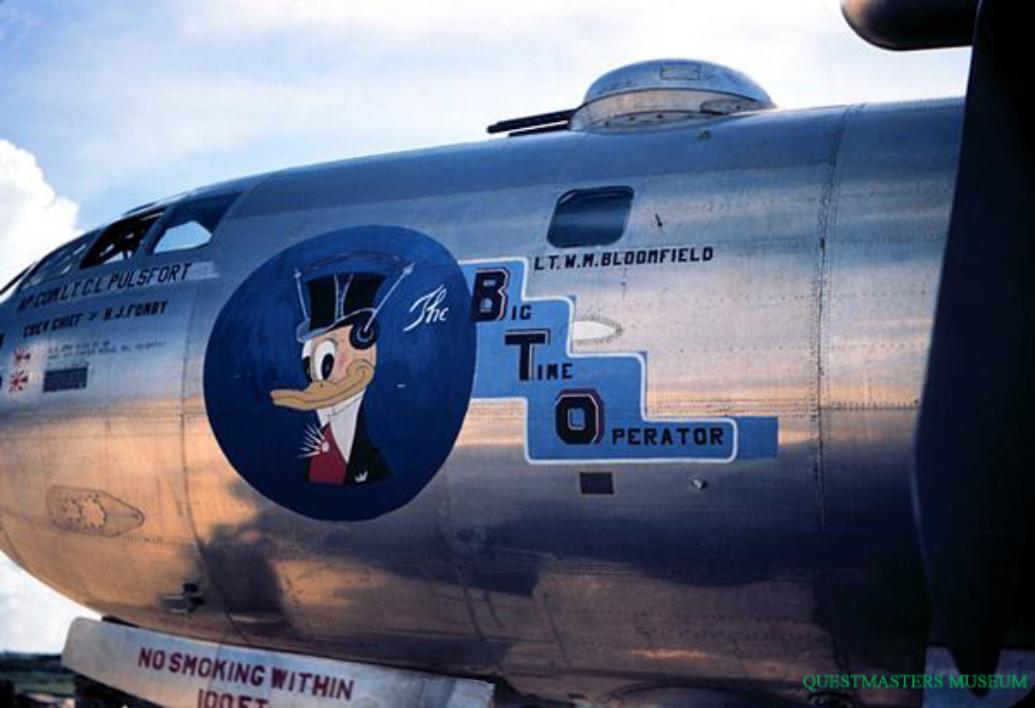
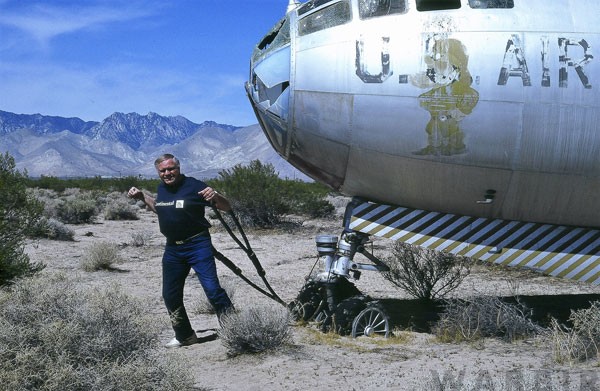
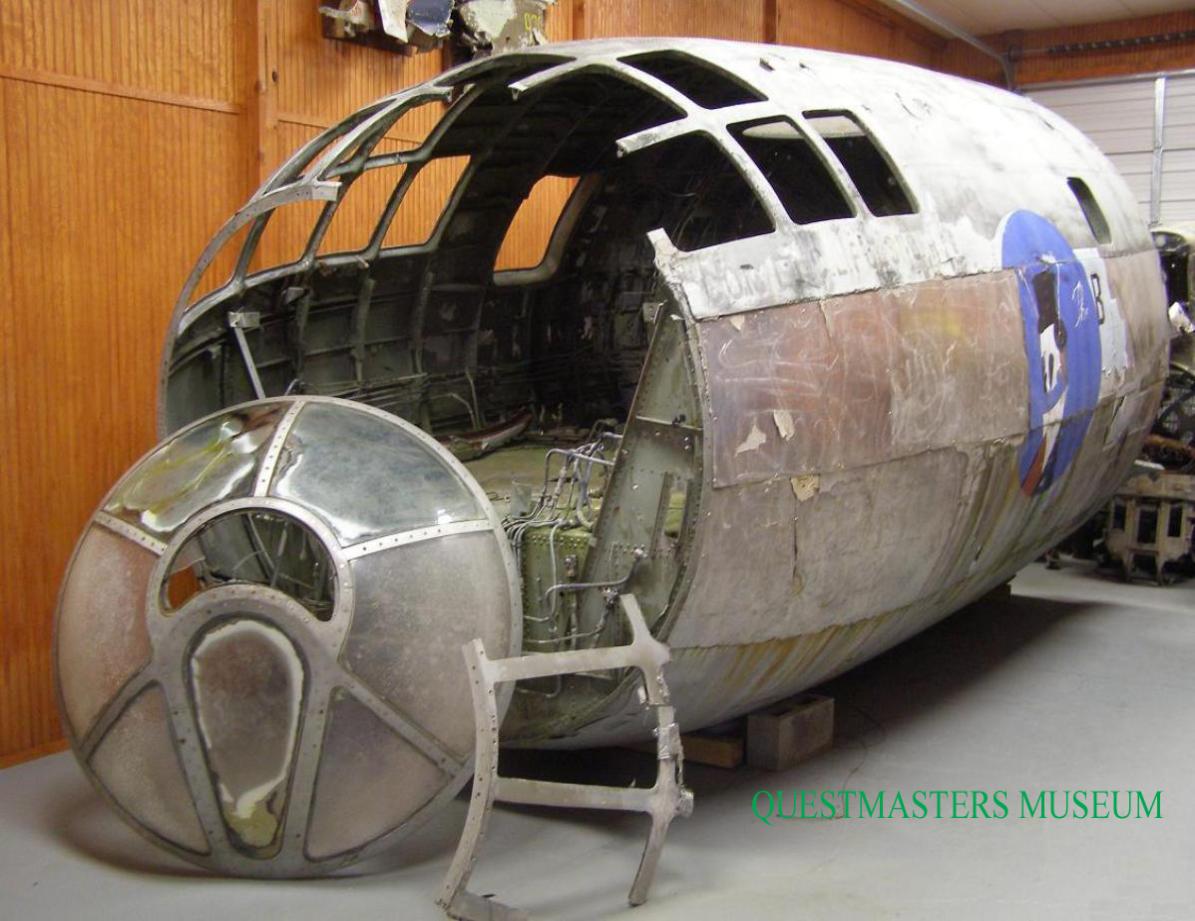
B-29-50-BW 42-24791 was accepted by the United States Army Air Forces on October 17, 1944, at Boeing, Wichita, Kansas. It then underwent modifications at facilities in Omaha, Nebraska; Oklahoma City, Oklahoma; McCook Army Air Field, Nebraska; and finally Mather Army Air Force Base, California. On January 19, 1945, the aircraft departed the U.S. for assignment to the 1st Bomb Squadron (Very Heavy), 9th Bomb Group, 313th Bomb Wing, XX Bomber Command, 20th Air Force, stationed at Tinian in the Mariana Islands. Named The Big Time Operator, the aircraft featured nose art depicting Walt Disney’s “Donald Duck” wearing radio headphones. It carried a large circle with an “X” on the vertical stabilizer and the number four on the empennage. While with the 1st Bomb Squadron, The Big Time Operator completed 46 bombing missions, eight mining missions, and shot down two Japanese aircraft. It returned to the U.S. on December 2, 1945, and was placed in storage with the 4105th AAF Base Unit at Davis-Monthan AFB, Tucson, Arizona, then with the 4196th AAF Base Unit (Air Materiel Command) at Victorville AAF, California, beginning December 12, 1945. On March 24, 1946, it was transferred to the 4117th AAF Base Unit, Warner Robins Air Materiel Area, Robins AAF, Georgia, and remained there until its reclamation in 1950. The aircraft was subsequently removed from inventory and transferred to the U.S. Navy’s Naval Air Weapons Station (NAWS) at China Lake, California, to be used as a ground target for weapons testing. The forward fuselage was recovered and displayed at the Edward F. Beale Museum in California until its closure in 2001. The cockpit section was then transferred through the National Museum of the U.S. Air Force to the New England Air Museum in Connecticut, where parts were used to restore the museum’s B-29 Jack’s Hack, which had been damaged in a 1979 tornado. In November 2012, QuestMasters Museum acquired the forward fuselage (from the bomb bay pressure wall forward) of 42-24791. It remains in the QuestMasters Museum and the author’s collection as of the book’s writing. The Big Time Operator is the oldest surviving B-29, the highest-mission B-29 remaining from WWII, and the second highest-mission B-29 in existence—second only to It’s Hawg Wild, which served in the Korean Conflict. A complete profile of The Big Time Operator is available in the book; click HERE.
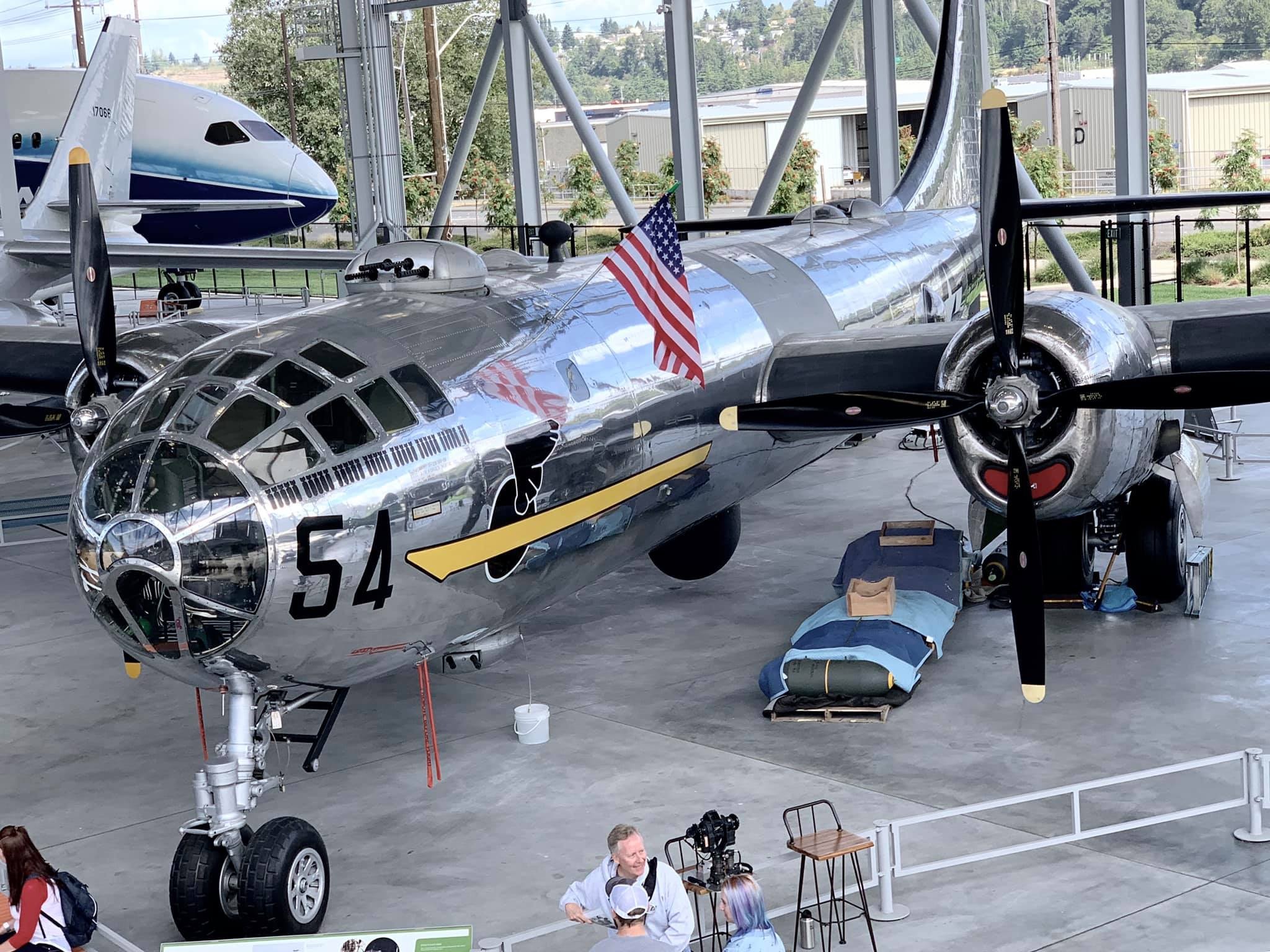
B-29-60-BW 44-69729 – T-Square 54
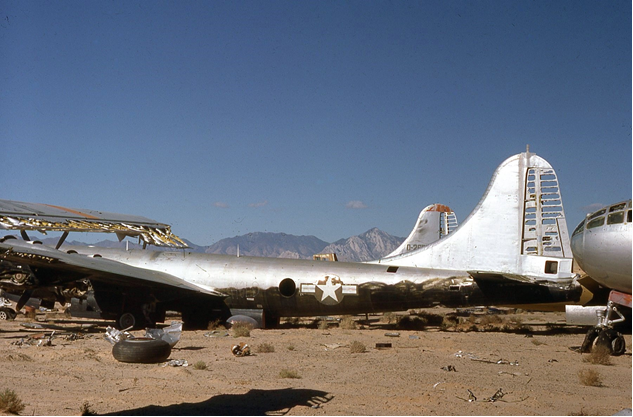
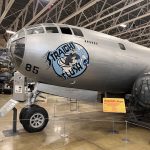
B-29-60-BW 44-69729 was accepted by the USAAF on January 4, 1945, at Boeing, Wichita, Kansas, and modified at the Bechtel-McCone Modification Center in Birmingham, Alabama. It departed from Mather AAF, California, on February 21, 1945, for assignment to the 874th Bomb Squadron, 498th Bomb Group, and was later transferred to the 875th Bomb Squadron, 498th Bomb Group, 73rd Bomb Wing, 20th Air Force, based in Saipan. After completing 36 combat missions, it returned to the U.S. on October 14, 1945, and was stored at Pyote AAF, Texas, under the 236th and 4141st AAF Base Units. During WWII, it carried no nose art and was known only by its tail marking: a “T” over a square with the number 54 below. On January 9, 1950, it was converted to a KB-29M fuel tanker at Boeing, Wichita, with additional work at Tinker AFB, Oklahoma, the next day. It was assigned to the 91st Strategic Reconnaissance Wing at Barksdale AFB, Louisiana, on April 21, 1950, then to the 55th Air Refueling Squadron, 55th Strategic Reconnaissance Wing, at Ramey AFB, Puerto Rico, on November 4, 1951. It transferred to Forbes AFB, Kansas, on September 25, 1952, and was named Tillie the Tanker. The aircraft was reclaimed at Biggs AFB, Texas, on August 30, 1954, and removed from inventory in 1956. It was transferred to NAWS China Lake for use as a ground target. Assigned to the USAF Museum Loan Program, the aircraft was recovered from China Lake in 1986 and moved to the Lowry Heritage Museum (LHM) for restoration. When LHM closed in September 1994, it was transferred to the Museum of Flight in Seattle, Washington, where it went on display in 1996. Another restoration was completed in 2006, and T-Square 54 remains on display at the Museum of Flight. A complete profile of T-Square 54 is available in the book; click HERE.
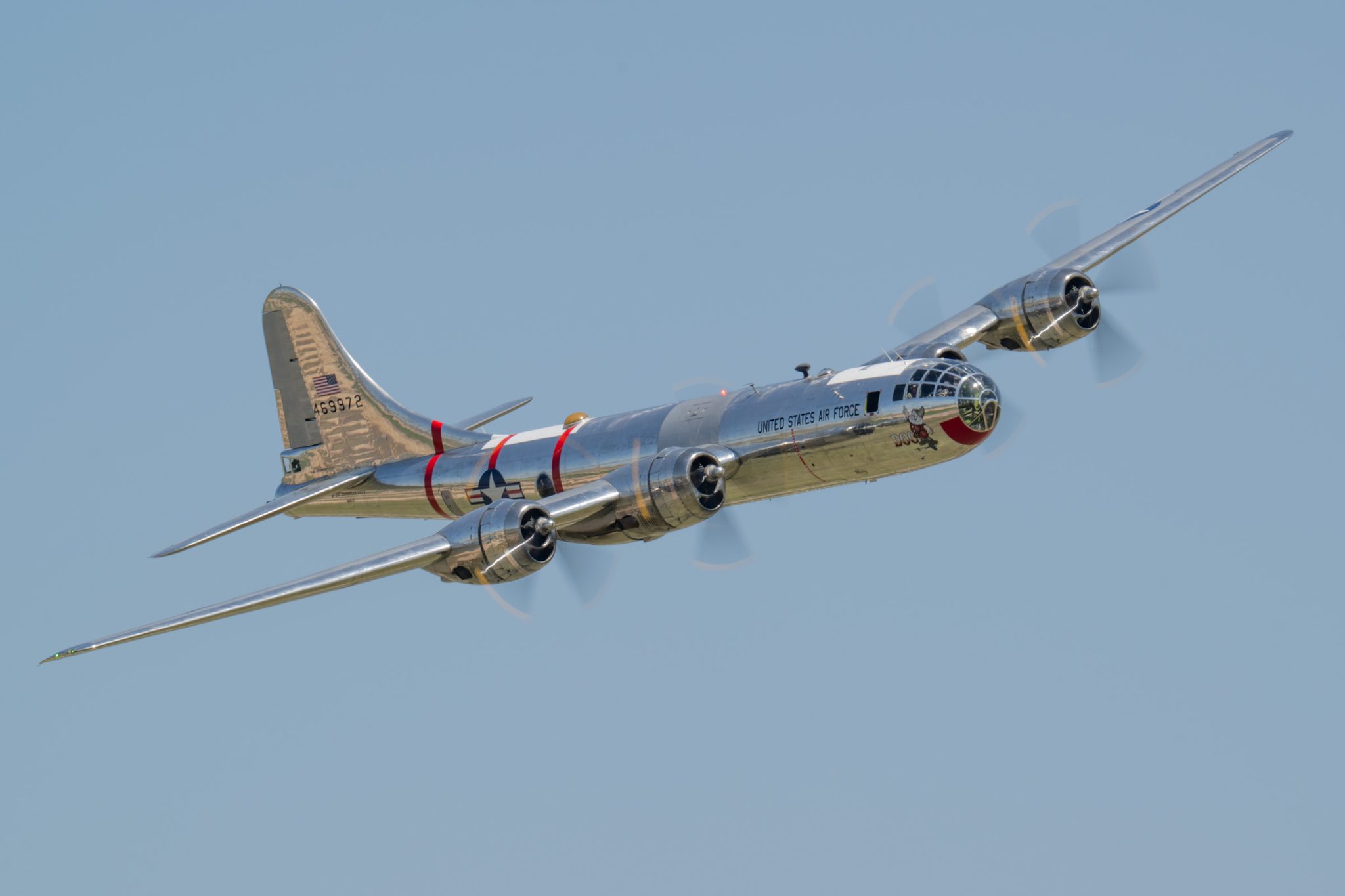
B-29-70-BW 44-69972 – Doc
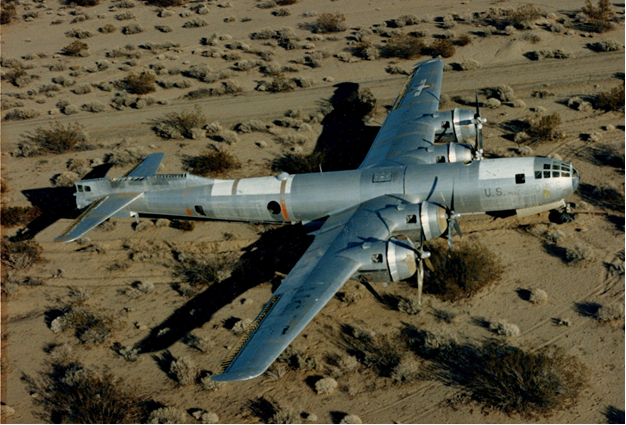
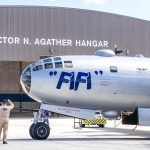
Delivered on March 23, 1945, at Boeing, Wichita, Kansas, B-29-70-BW 44-69972 was modified at Bechtel-McCone in Birmingham and at Barksdale Army Air Field, Louisiana. It was assigned to the Combat Crew Training Squadron, 331st AAF Base Unit, at Barksdale in April 1945 and then transferred to the 4141st AAF Base Unit at Pyote AAF in November 1945. It was stored under the 2753rd Aircraft Storage Squadron until November 2, 1950, then transferred to San Antonio Air Materiel Area, Kelly AFB, Texas. On May 8, 1951, it was converted to TB-29, the tow-target/trainer variant, and assigned to the 7th Radar Calibration Squadron at Griffiss AFB, New York. The aircraft suffered a mechanical failure on landing at Robins AFB, Georgia, on November 28, 1951. It was later assigned to the 109th and then 1st Radar Calibration Squadrons at Griffiss AFB. While at Griffiss, the aircraft was named Doc as part of the 1st RCS’s tradition of naming aircraft after characters from Snow White and the Seven Dwarfs. Doc went to Tinker AFB on February 17, 1953, returning to Griffiss that May. It was then assigned to the 4713th Radar Evaluation Flight and later to the 17th Tow Target Squadron at Yuma County Airport, Arizona, in May 1955. In March 1956, it was dropped from inventory and transferred to NAWS China Lake. Stored separately from other B-29s in Area R, Doc remained relatively intact and became a prime restoration candidate. In February 1994, the aircraft was acquired by the National Museum of Naval Aviation and registered as N6735C. It was recovered on April 15, 1998, and sent to the United States Air Museum in Inyokern, California, in exchange for a restored B-25 Mitchell bomber. Re-registered as N44697 and later N69972, the aircraft was sent to the Boeing plant in Wichita for restoration to airworthiness in July 1998. Doc was moved out of the Boeing plant in March 2007, and its restoration was nearly complete by September 2015. The FAA awarded an airworthiness certificate on May 19, 2016, and Doc flew for the first time on July 17, 2016. It is currently based at the Kansas Aviation Museum in Wichita and remains one of only two flying B-29s. A complete profile of Doc is available in the book; click HERE.
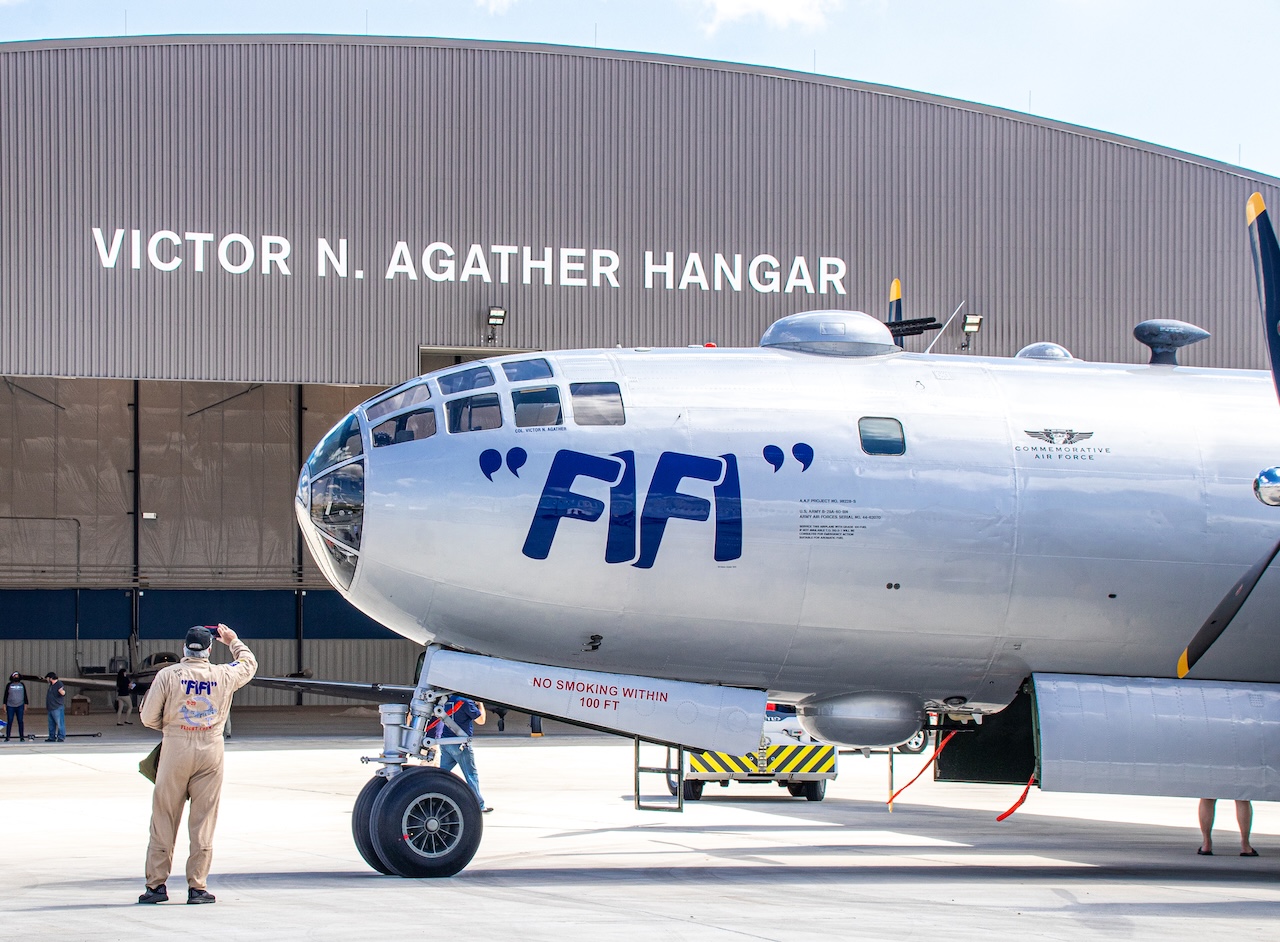
B-29A-60-BN 44-62070 – FIFI
B-29A-60-BN 44-62070 was delivered on July 31, 1945, at Boeing, Renton, Washington. It was assigned to the 247th AAF Base Unit at Smoky Hill AAF, Kansas, and later to the 232nd AAF Base Unit at Dalhart AAF, Texas, in September 1945. In April 1946, it was transferred to the 242nd AAF Base Unit at Grand Island AAF, Nebraska, where it was converted to a TB-29A. On November 6, 1947, it was reassigned to the 4141st AAF Base Unit and then to the 2753rd Aircraft Storage Squadron at Pyote AAF, Texas. The TB-29A designation was removed in April 1952 during its assignment in Marietta, Georgia. In September 1952, it was assigned to the 310th Bombardment Wing (Medium) at Smoky Hill AFB, Kansas. Though some believed it was named Lucky Strike, the Commemorative Air Force (CAF) later disproved this. On August 10, 1953, it was assigned to the 3510th Flying Training Wing at Randolph AFB, Texas, and redesignated TB-29A again on November 9, 1953. The aircraft was eventually dropped from inventory and sent to China Lake as a ground target. In 1971, it was civil registered as N4249 and recovered by the Confederate Air Force (now Commemorative Air Force) in Harlingen, Texas. It was flown to Harlingen on August 3, 1971, and re-registered as N529B under the American Airpower Heritage Flying Museum in 1981. Painted as FIFI, the aircraft is based at the Henry B. Tippie National Aviation Education Center (NAEC) at Dallas Executive Airport, Texas, and remains the flagship B-29 of the Commemorative Air Force. A complete profile of FIFI is available in the book; click HERE.
About the Author
 Christopher R. Van Valkenburgh—known as “Van”—has been a WWII collector, historian, and archivist for 40 years. A retired U.S. Navy Senior Chief Petty Officer with 26 years of service and operational deployments to Kosovo, Afghanistan, and Iraq, he is also the founder of QuestMasters Museum. The museum is dedicated to recovering and preserving WWII aircraft, vehicles, artillery, and artifacts. This book was inspired by his acquisition of The Big Time Operator, a China Lake survivor. It is his fourth publication and features many never-before-seen color photos from China Lake. The book is available on Amazon.






Related but unrelated, my dad was part of the March AFB gang that went up there & disassembled the B-47 that’s at March Air Museum. He said that the work was “hellish”