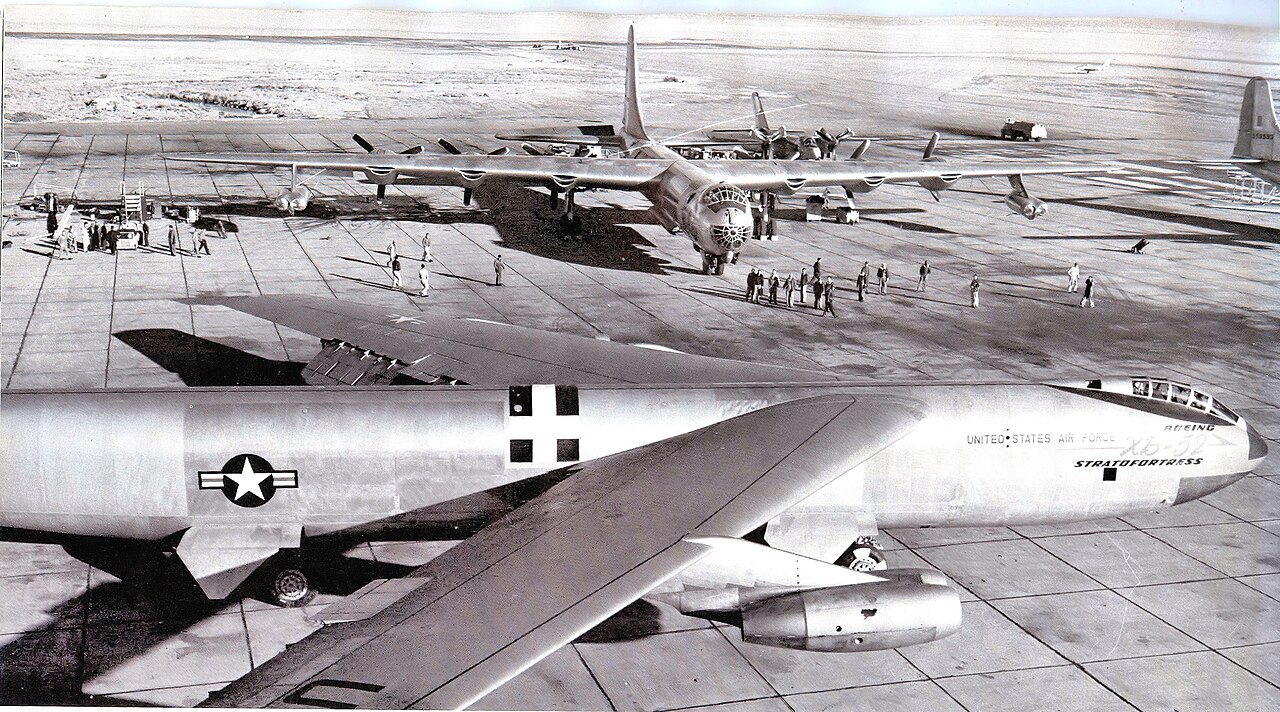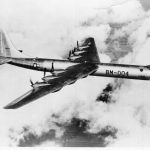
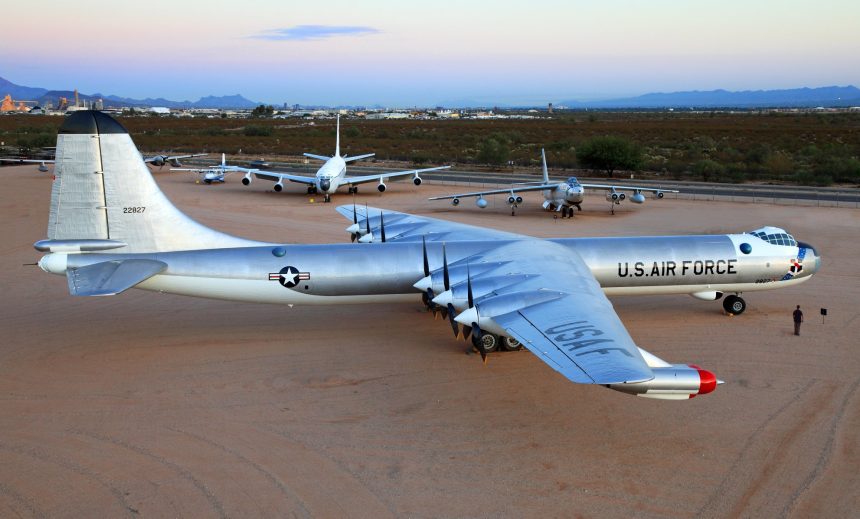

Before the existence of the Boeing B-52 Stratofortress, America’s first intercontinental bomber and the largest airplane to enter operational service with the U.S. Air Force was the Convair B-36 Peacemaker. Originally designed to directly attack Nazi Germany from bases on the U.S. East Coast in the event of Great Britain’s fall, the B-36 came too late to serve in WWII, but just in time for the early stages of the Cold War that would see nearly five decades of brinksmanship as the United States and the Soviet Union worked to spread their influence on the rest of the globe.
- RB-36H 51-13730
- Castle Air Museum: RB-36, Part I — The Disassembly
- Castle Air Museum: RB-36, Part II — The Move
- Castle Air Museum: RB-36, Part III — The Build
- B-36J 52-2217
- B-36J 52-2220
- B-36J 52-2827
- Restoration of the last B-36 Bomber
- Restoration of the last B-36 Bomber in Ft Worth
- Honorable Mention: YB-36/RB-36E 42-13571

Today, of the 384 examples of the Convair B-36 Peacemaker produced, only four complete examples remain in aviation museums across the United States. Like our previous article on the surviving examples of America’s first operational jet bomber, the North American B-45 Tornado, we will be going through the stories of each of these surviving Peacemakers and tell you where to find them on your next road trip.
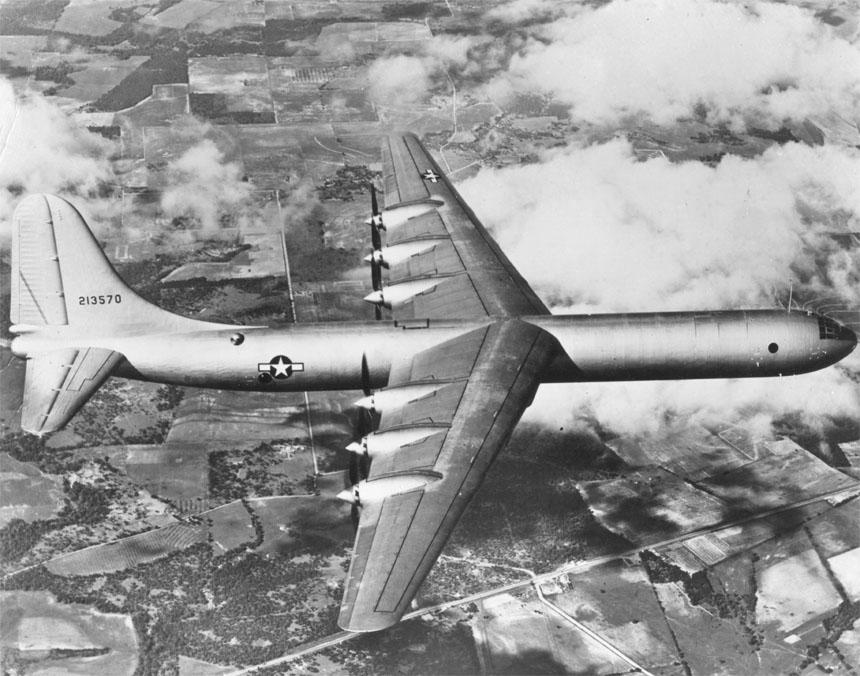
RB-36H 51-13730
During the Cold War, one of the largest bases on the U.S. West Coast for the USAF’s Strategic Air Command (SAC) was Castle Air Force Base in Atwater, California, just north of the city of Merced in the Golden State’s Central Valley. While Castle Air Force Base was deactivated in 1995, many of the facilities remain in use as part of Castle Airport. Among these is the Castle Air Museum, which is home to the oldest intact B-36 and the only RB-36H model remaining. This particular aircraft has already been the subject of a previous article on our site originally published in 2022 (link to that article HERE), but to summarize, it was built at the Convair plant in Ft Worth, Texas, as construction number 275 and was accepted into the USAF in September of 1952 as 51-13730. Following her acceptance, 51-13730 was assigned to the 28th Strategic Reconnaissance Wing at Ellsworth AFB in Rapid City, South Dakota.

The RB-36H was the fourth of the strategic reconnaissance variants of the Peacemakers, with the prior models being the RB-63D, RB-36E, and RB-36F. Instead of bombs, these reconnaissance aircraft carried dozens of cameras at oblique angles to capture their targets in three dimensions. The crew was expanded from 15 to 22 to accommodate the additional personnel required to operate the cameras, while the first of the four bomb bays was converted to hold a pressurized manned compartment with fourteen cameras and a darkroom for technicians to develop the film in-flight. The second bomb bay could hold up to 80 T86 photoflash bombs to illuminate targets for night-time photography, while the third held an additional 3,000-gallon fuel tank that could be jettisoned if necessary, and the fourth bomb bay held electronic countermeasure (ECM) equipment. However, if necessary, many of the reconnaissance variants could have their second through fourth bomb bays reconfigured to carry live ordinance.
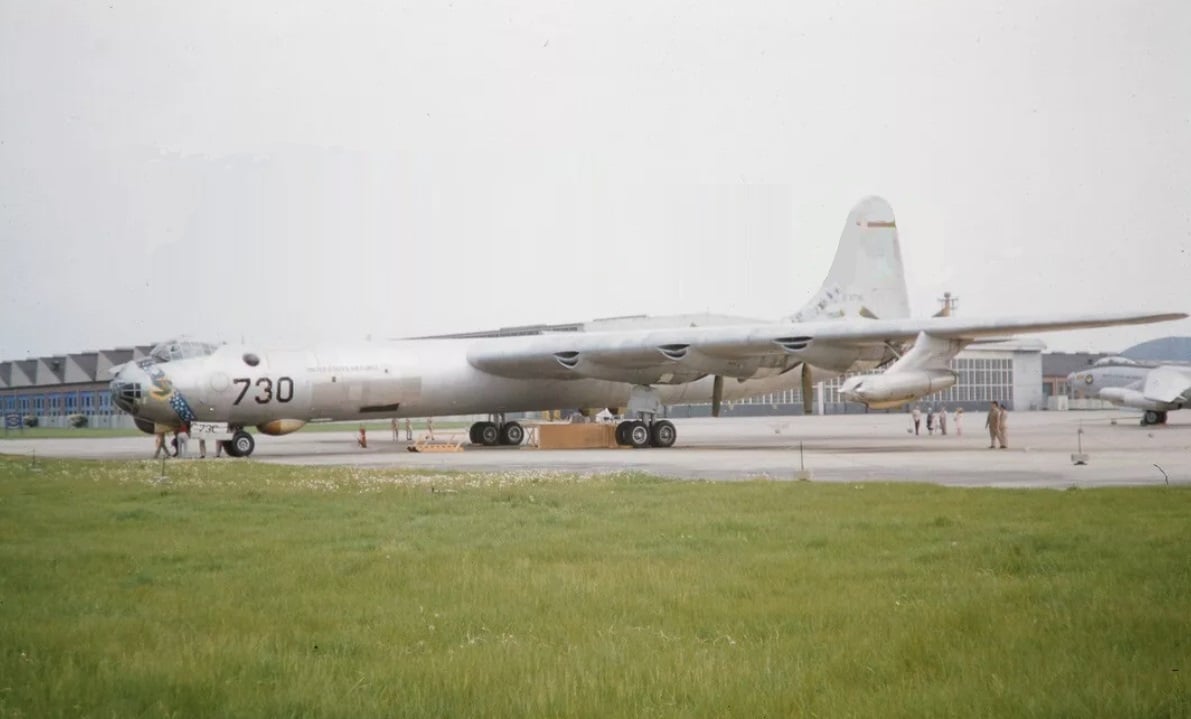
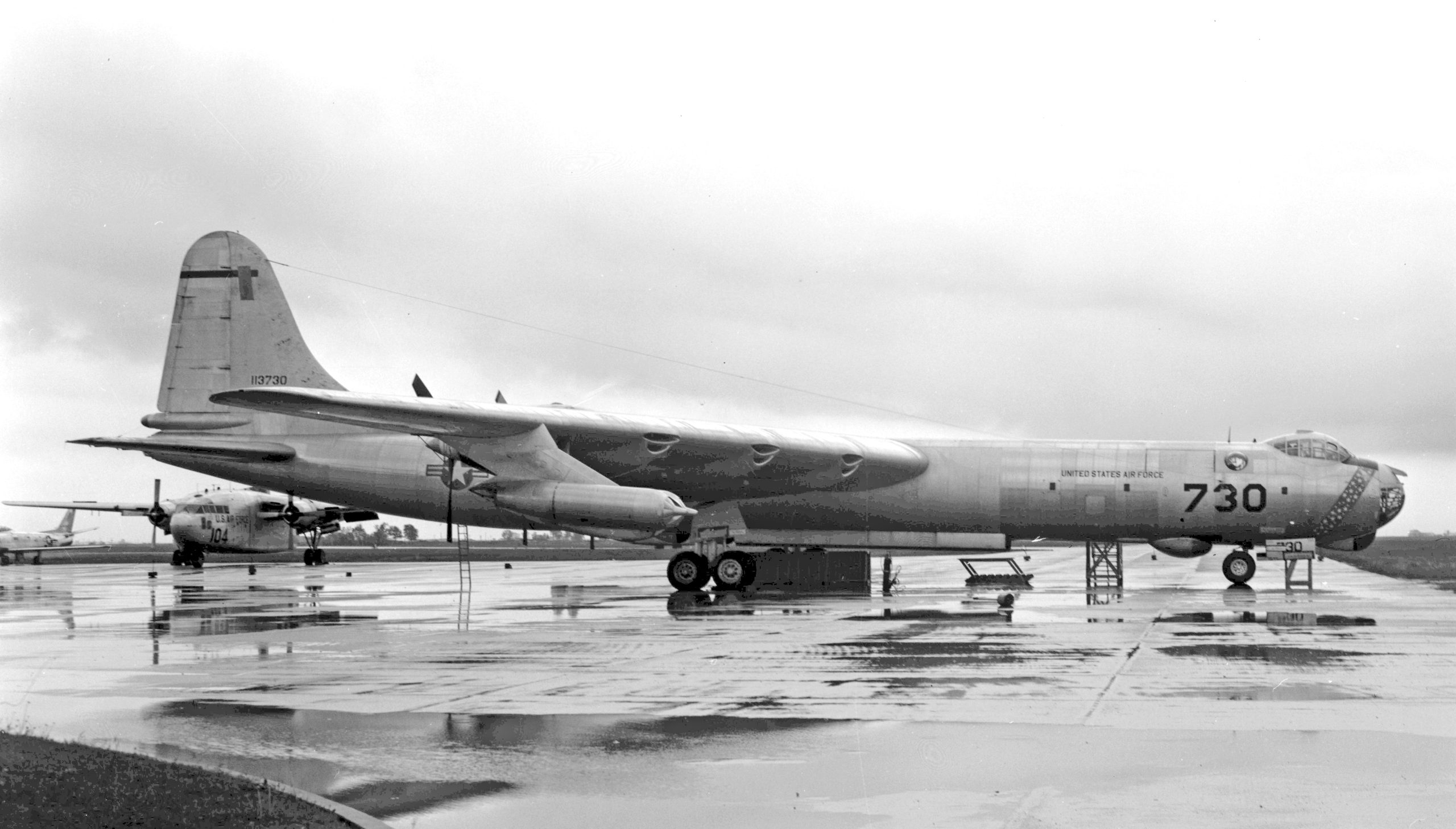
With the introduction of new all-jet strategic reconnaissance bombers, such as the Boeing RB-47 Stratojet, all of the RB-36s in service were relegated to secondary roles before being phased out of operational service completely. After just over four years of service, RB-36H 51-13730 was decommissioned by March 1957. Rather than being scrapped, though, 51-13730 was brought to Chanute Air Force Base in Rantoul, Illinois, where it became an instructional airframe on outdoor display alongside other decommissioned aircraft in the base’s air park. There, personnel at Chanute AFB painted the aircraft in the markings of B-36D-45-CF 44-92065 (c/n 62; originally built as a B-36B-15-CF) of the 326th Bombardment Squadron, 92d Bombardment Wing at Fairchild AFB in Spokane, Washington. The actual 44-92065 had already flown to Davis-Monthan AFB on February 27, 1957, before being scrapped just three months later on May 27, 1957. It was a common practice that other aircraft displayed outdoors at Chanute were given paint schemes reflective of other aircraft rather than their own individual colors. There were also times, however, when strong gusts of wind blew 51-13730 on its tail despite being tied down. On December 29, 1988, Chanute Air Force Base was one of 17 major bases recommended for closure by the Department of Defense, considering the global situation during the final years of the Cold War. As Chanute AFB began to shut down, the National Museum of the United States Air Force, whose loan program was responsible for the aircraft displays at Chanute, decided in 1991 to allocate RB-36H 51-13730 to the Castle Air Museum, which was adjacent to the then-still active Castle Air Force Base. In order to make the trip from Illinois to California, the massive Peacemaker was disassembled into 167 pieces and loaded onto a total of 11 railroad flatcars and shipped out west. By September 1992, the first components of RB-36H 51-13730 arrived at Castle, with reassembly lasting another two and a half years, being completed by May 1994. Video of the aircraft’s move from Chanute to Castle has been uploaded to YouTube by Bruce Anderson, whose videos are linked here:
Castle Air Museum: RB-36, Part I — The Disassembly
Castle Air Museum: RB-36, Part II — The Move
Castle Air Museum: RB-36, Part III — The Build
Museum volunteers also repainted the aircraft to its original colors when it was flown by the 28th Strategic Reconnaissance Wing. By this point, Castle Air Force Base itself was shutting down, but the museum would remain in operation as the former air force base was converted into a civilian airport. In addition to the aircraft, the Castle Air Museum displays the deactivated casing of a Mk 17 thermonuclear bomb recovered from Edwards Air Force Base, with the Mk 17 being the largest nuclear device dropped from an American bomber, and the B-36 was the only aircraft capable of carrying it.
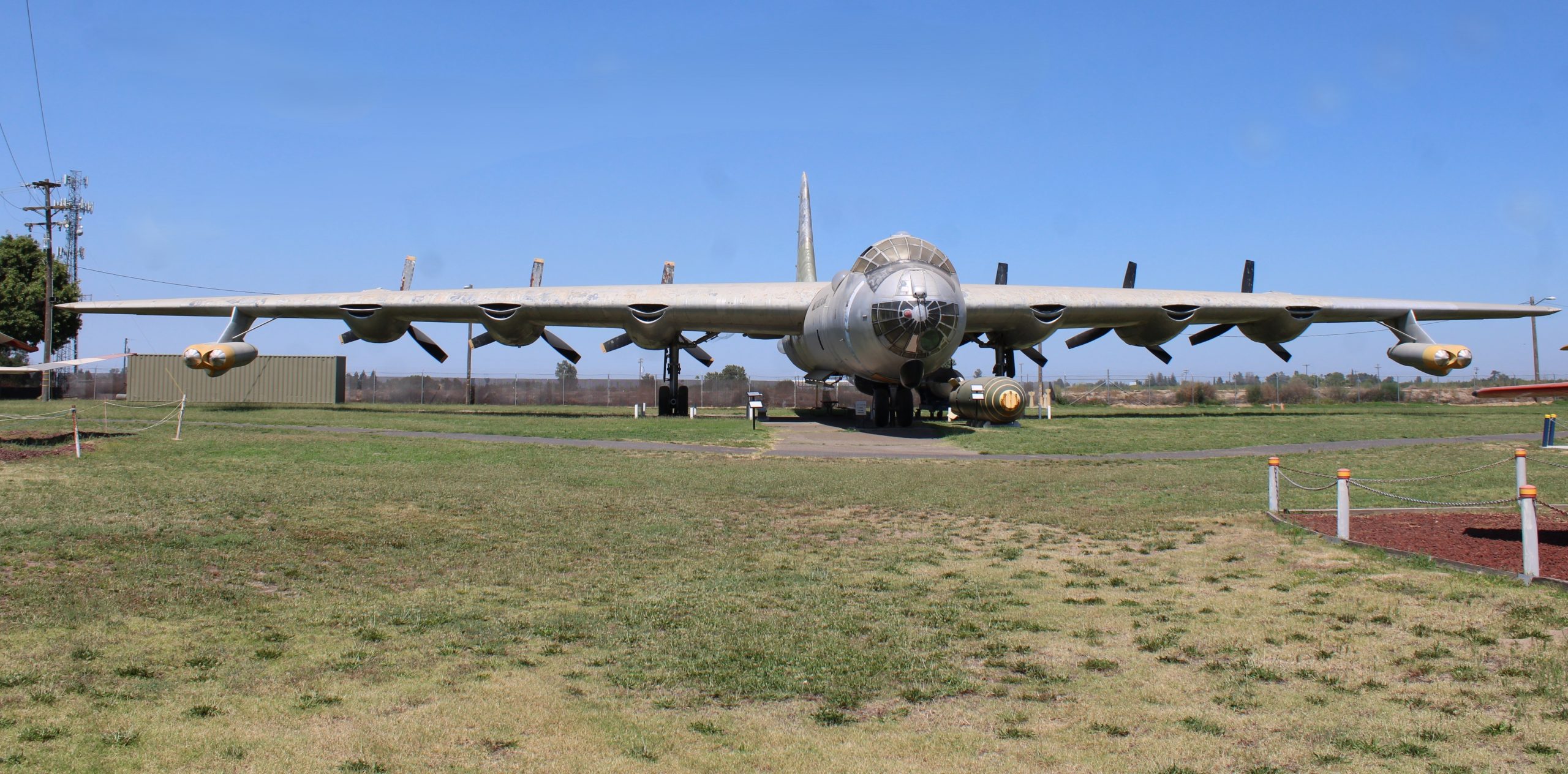
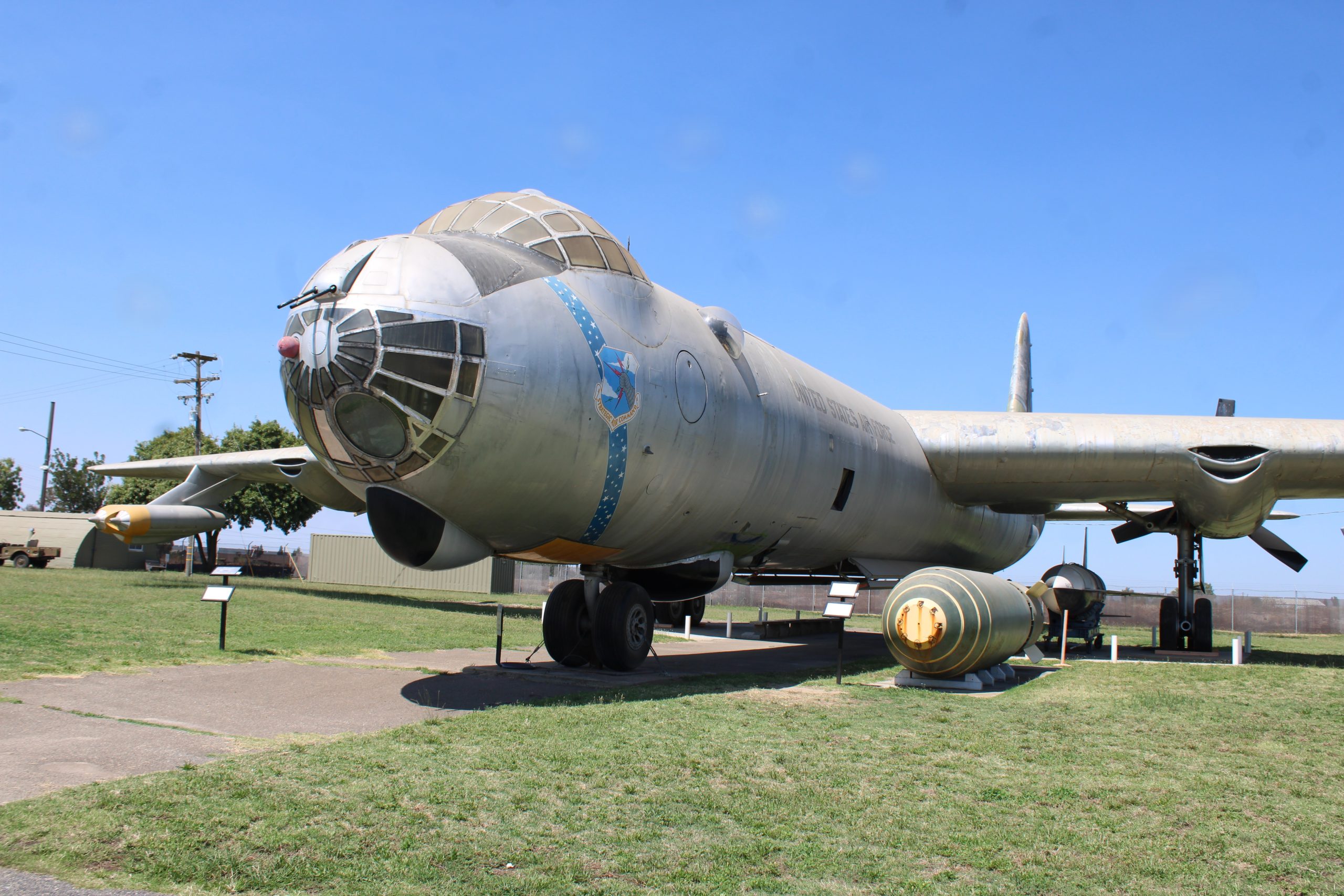
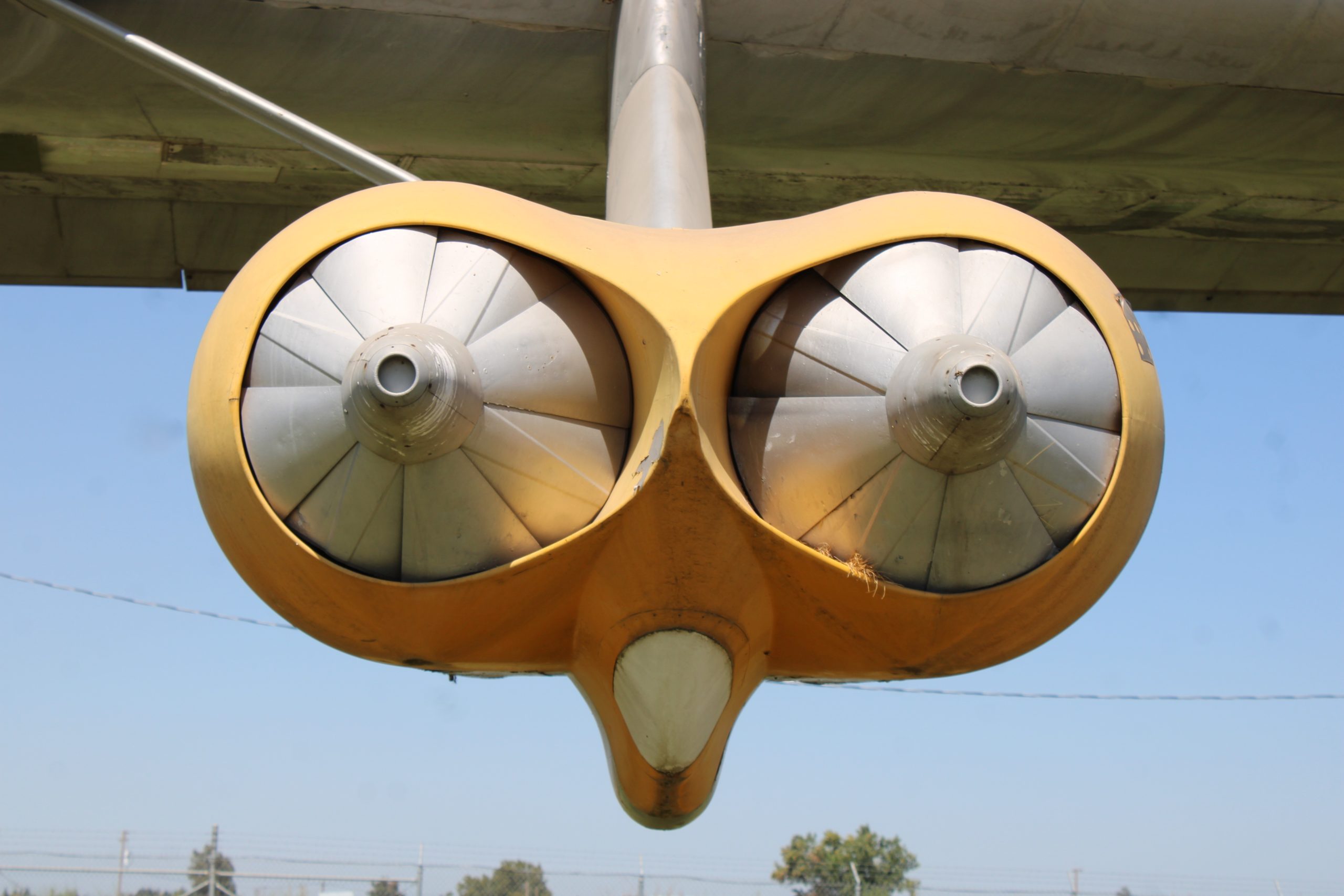
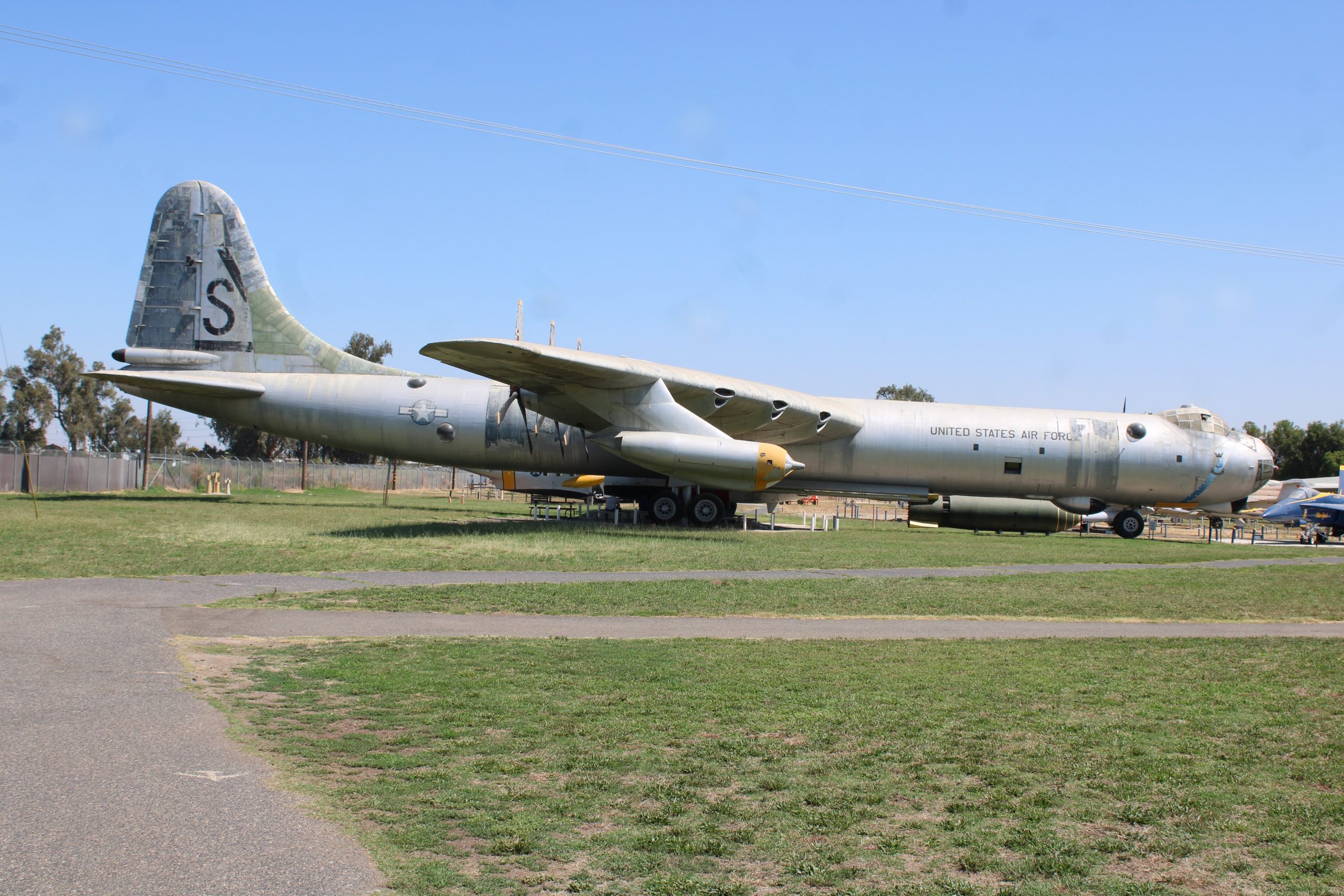
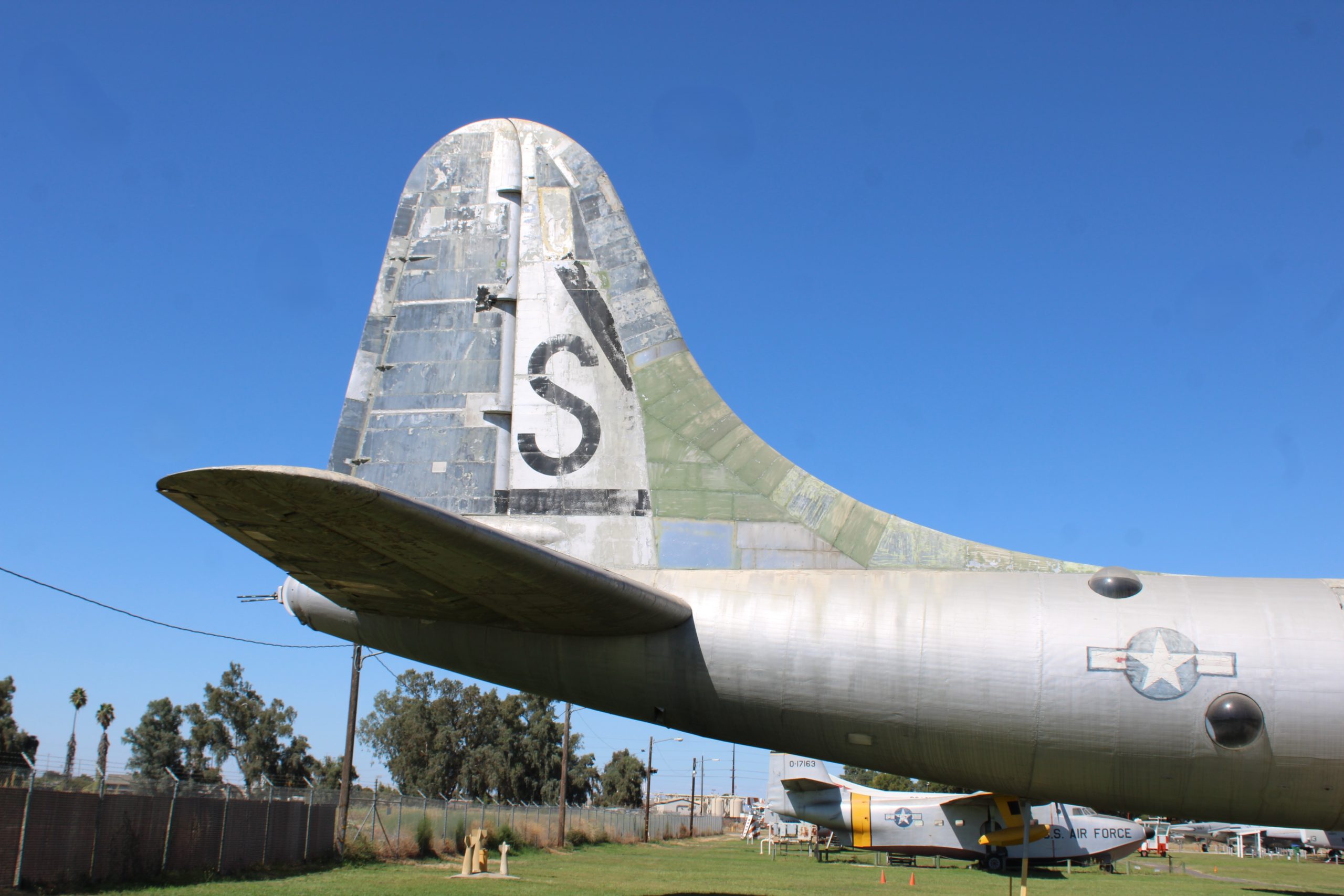
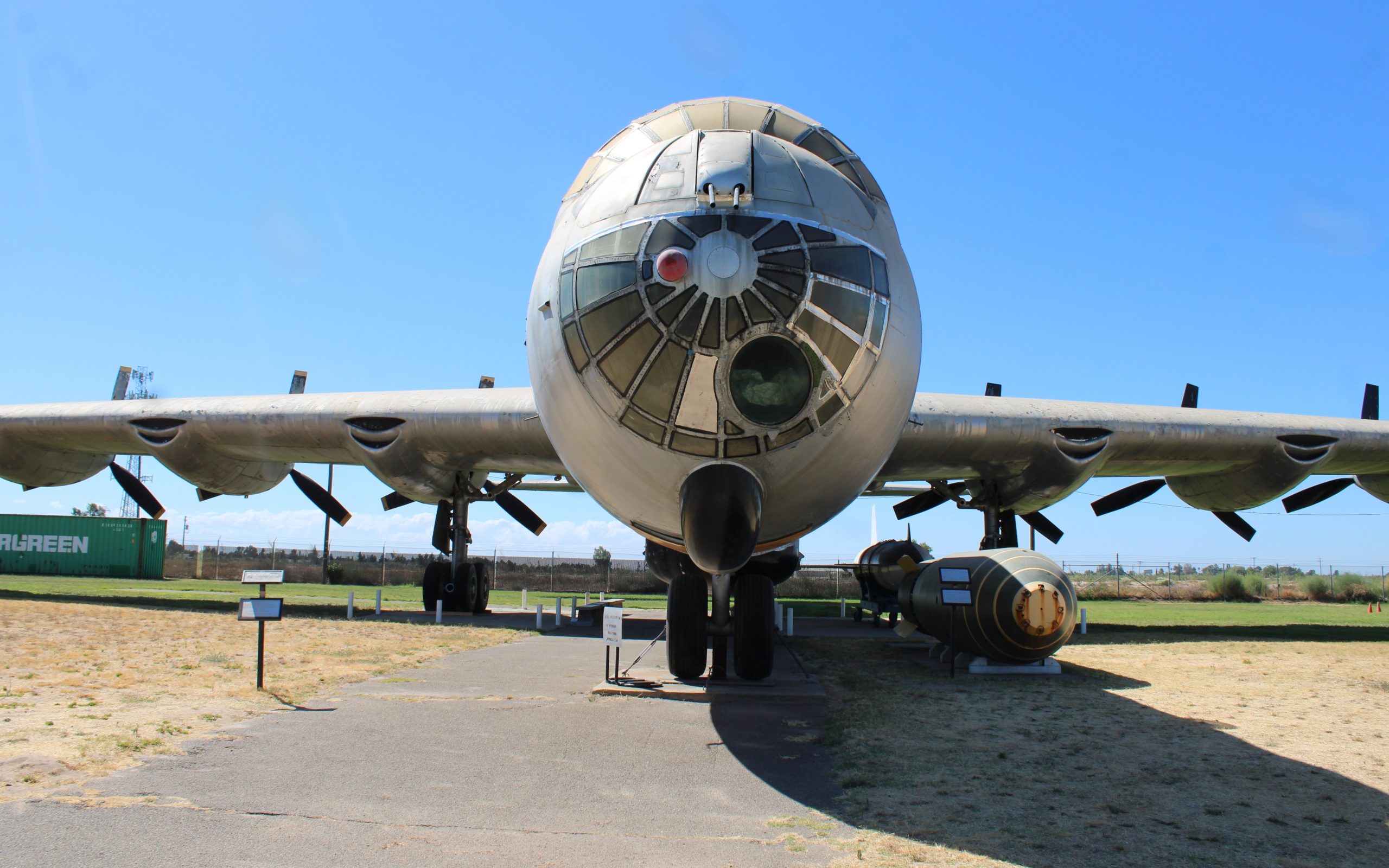
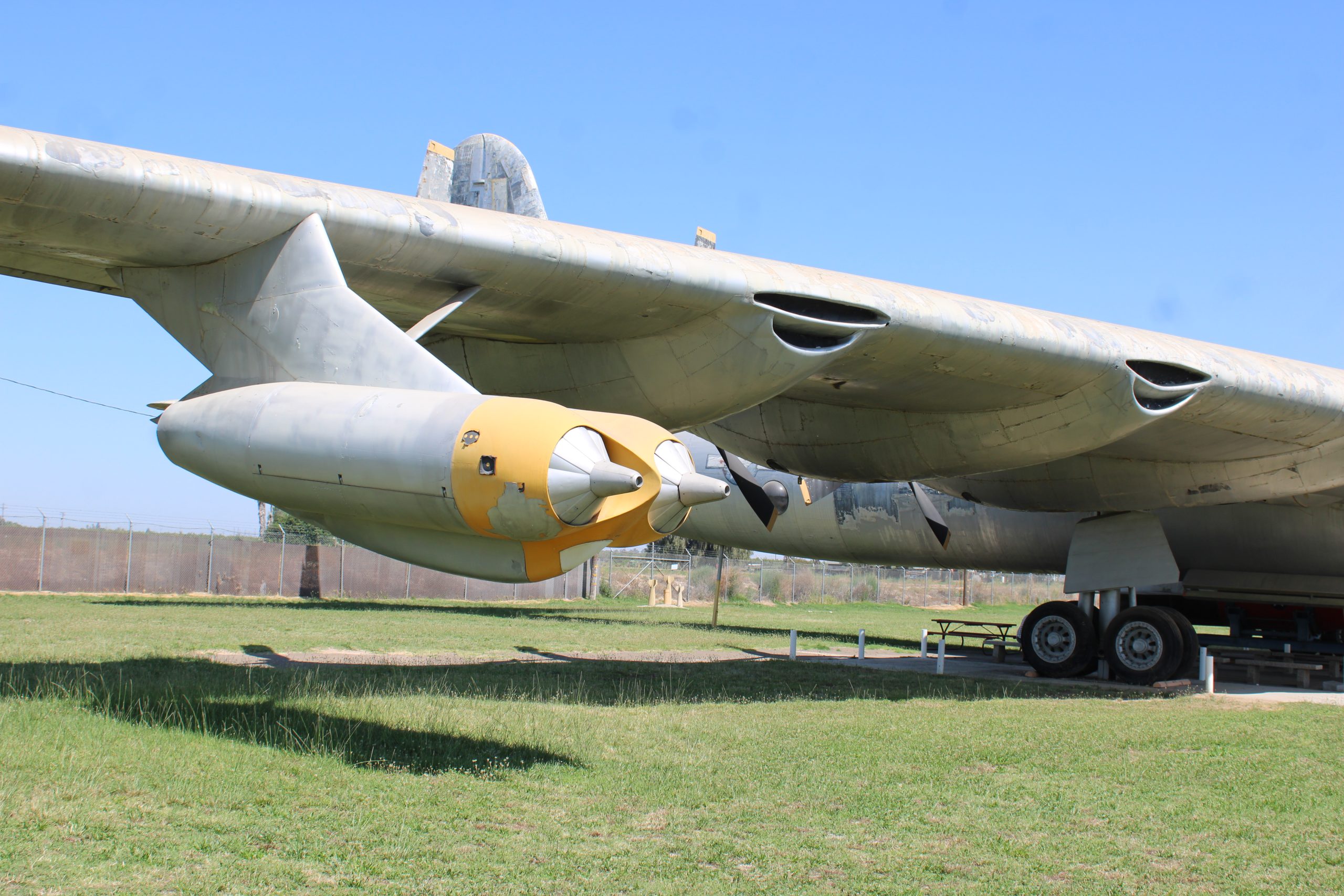
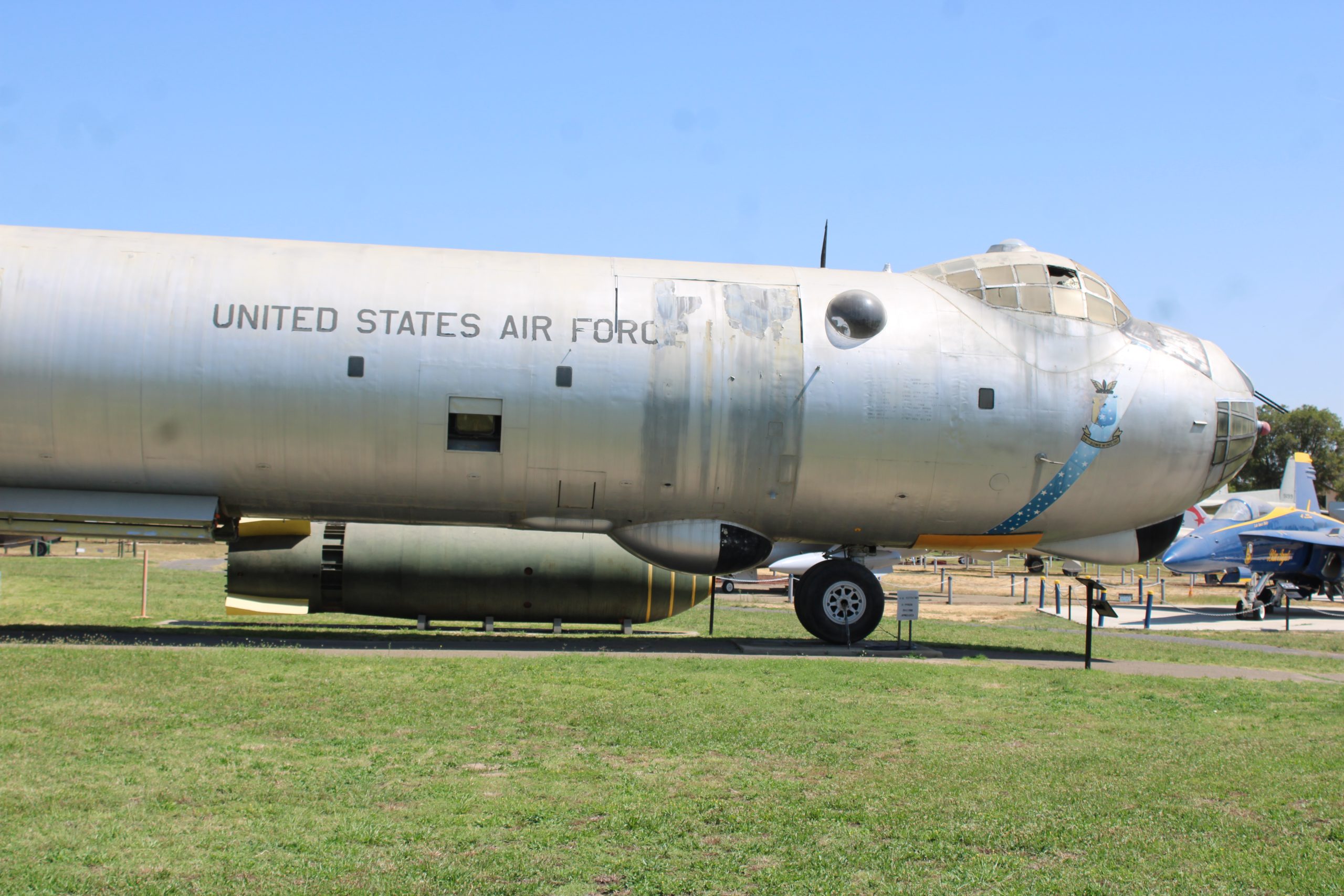
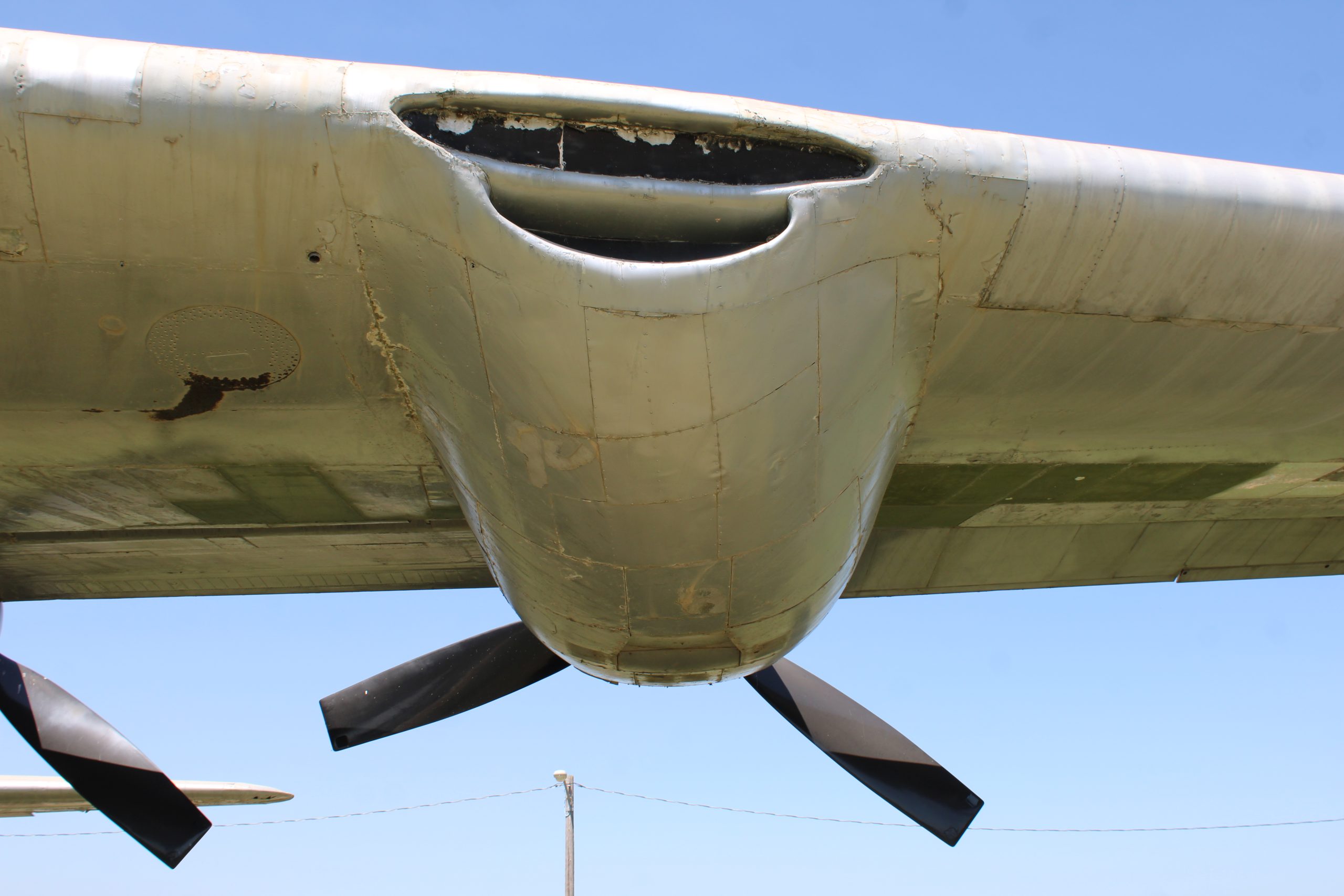
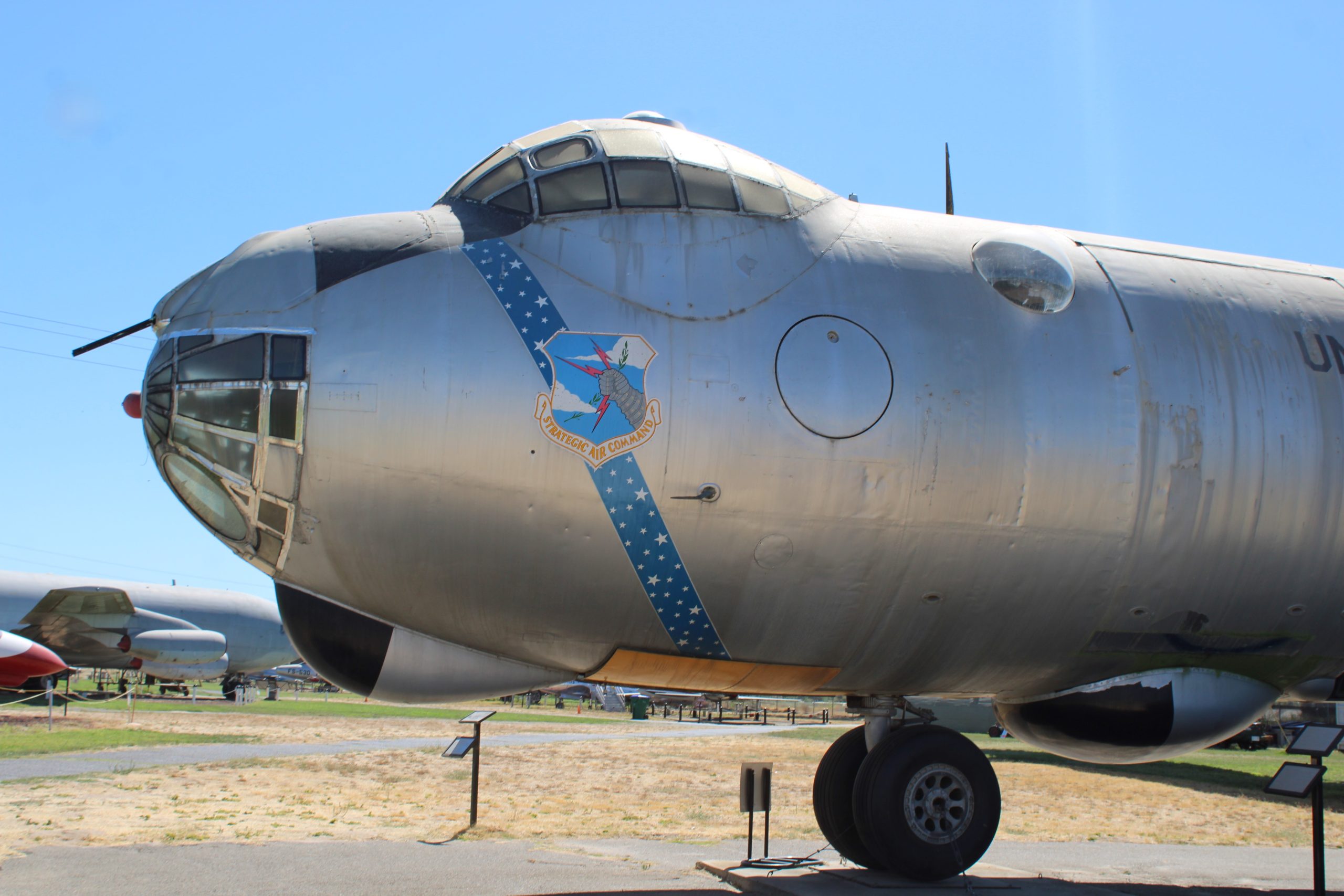
RB-36H 51-13730 has been on display ever since and is the only surviving strategic reconnaissance variant of the Peacemaker left. Unfortunately, the outdoor conditions and exposure to pesticide chemicals from nearby agricultural fields continue to take a toll on the aircraft, and it is certainly a tall order for any team of volunteers to maintain a Convair B-36 Peacemaker. Yet the volunteers of the Castle Air Museum remain committed to doing what they can with the funds available to them. Admission to the museum also helps pay the cost of refurbishing the museum’s inventory, so be sure to pay RB-36H 51-13730 a visit if you happen to be in California’s Central Valley.

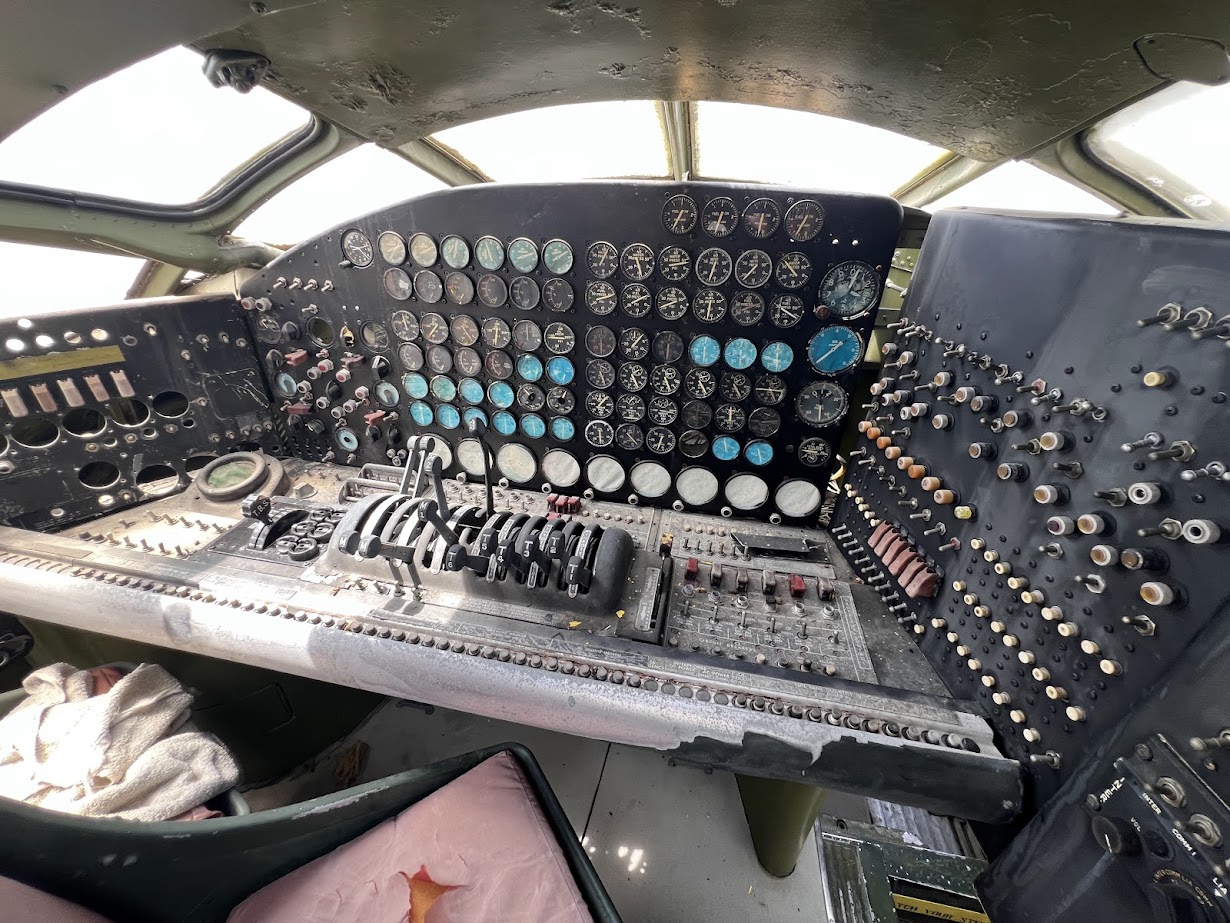
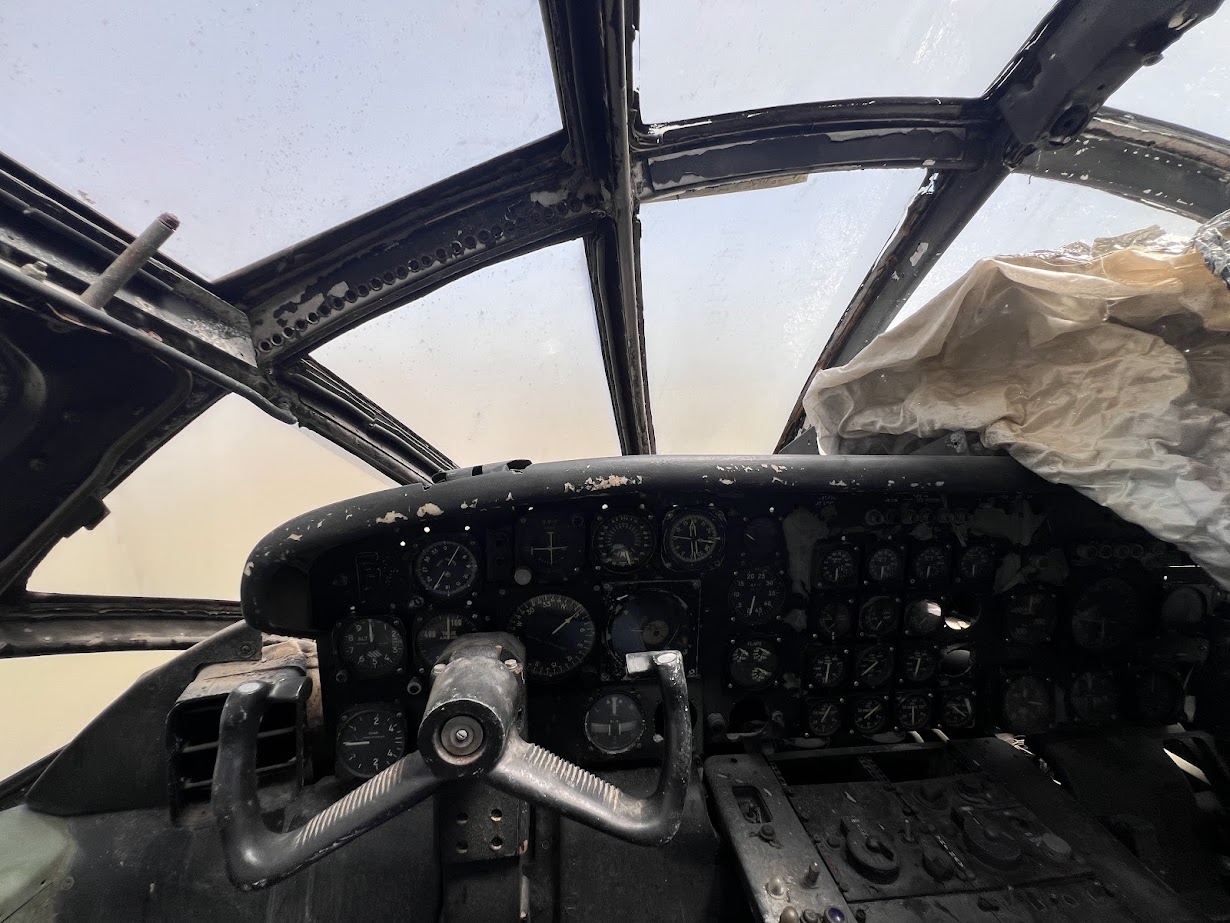
B-36J 52-2217
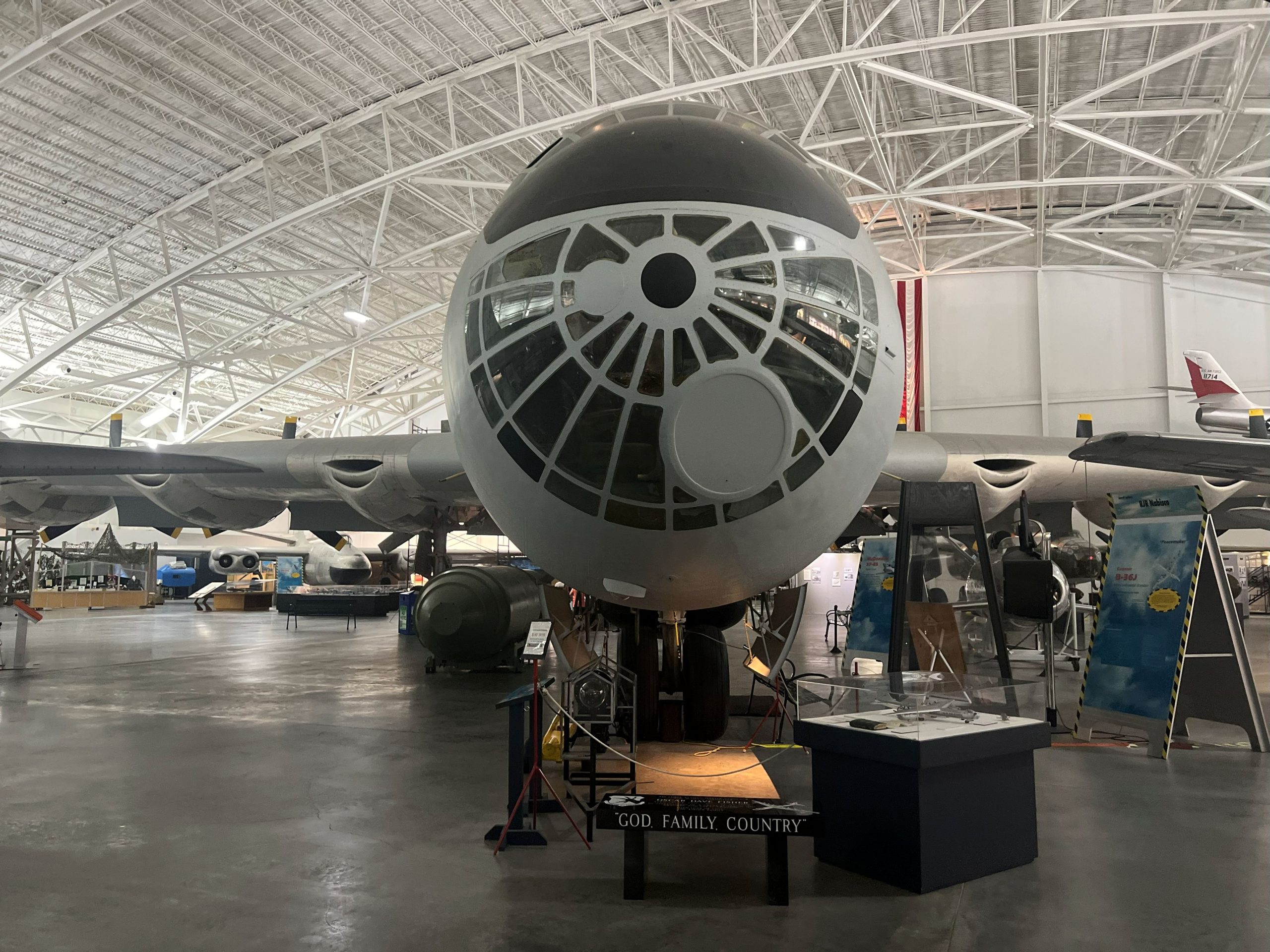
The next aircraft on our list can be found just southwest of Omaha, Nebraska, at the Strategic Air Command and Aerospace Museum in Ashland, just off Interstate 80. This is B-36J 52-2217, which was built in Fort Worth, Texas as construction number 358 and accepted into operational service with the USAF on December 22, 1953, being delivered to the 7th Bombardment Wing (Heavy) of the U.S. Air Force Strategic Air Command (SAC) at Carswell Air Force Base in Fort Worth (now Naval Air Station Joint Reserve Base Fort Worth), which was also where the Convair B-36 plant was located. From February 18 to March 5, 1954, aircraft 55-2217 went through a modification program at the Convair Fort Worth Aircraft Modification Center to receive the latest round of updates to the B-36Js before returning to the 7th Bomb Wing.
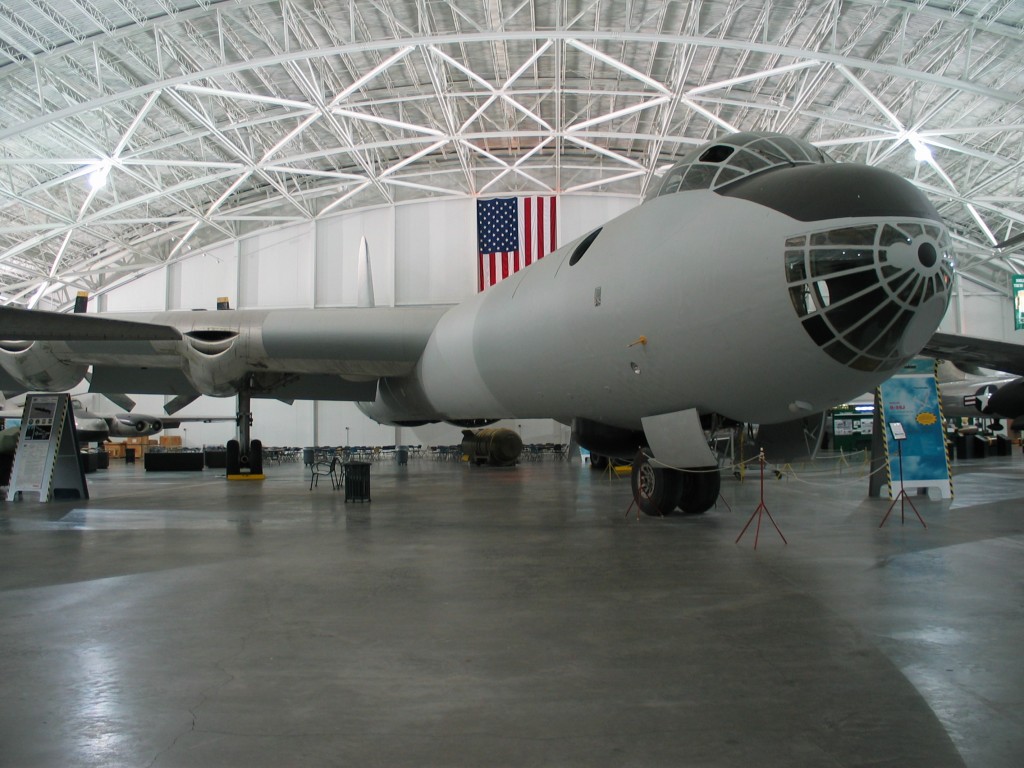
On September 30, 1954, B-36J 52-2217 was transferred to SAC’s 42nd Bombardment Wing (Heavy) at Loring AFB in Maine, the closest air base in the continental U.S. to Europe. After going through another month of modifications at Convair Fort Worth Aircraft Modification Center from February 9 to March 31, 1955, the aircraft resumed its duties with the 42nd Bomb Wing and went with the wing for a month-long deployment to RAF Upper Heyford in Oxfordshire, England, between October 17 and November 11, 1955. May 16, 1956, would see B-36J 52-2217 return to Fort Worth for further modifications before being transferred to the 95th Bombardment Wing (Heavy) at Biggs Air Force Base near El Paso, Texas (now Biggs Army Airfield at Fort Bliss). By this point, the new Boeing B-52 Stratofortress was replacing the Convair B-36 Peacemaker as America’s premier intercontinental bomber, and the 95th Bomb Wing would be where many B-36s would spend the final days of their service lives before being flown to the “Boneyard” at Davis-Monthan Air Force Base in Tucson, Arizona, to be cut up and scrapped. On February 10, 1959, B-36J 52-2217 made what its crew must have thought would be its final flight when they flew the massive bomber from Biggs AFB to Davis-Monthan, and two days later, the aircraft was set for “Reclamation”.
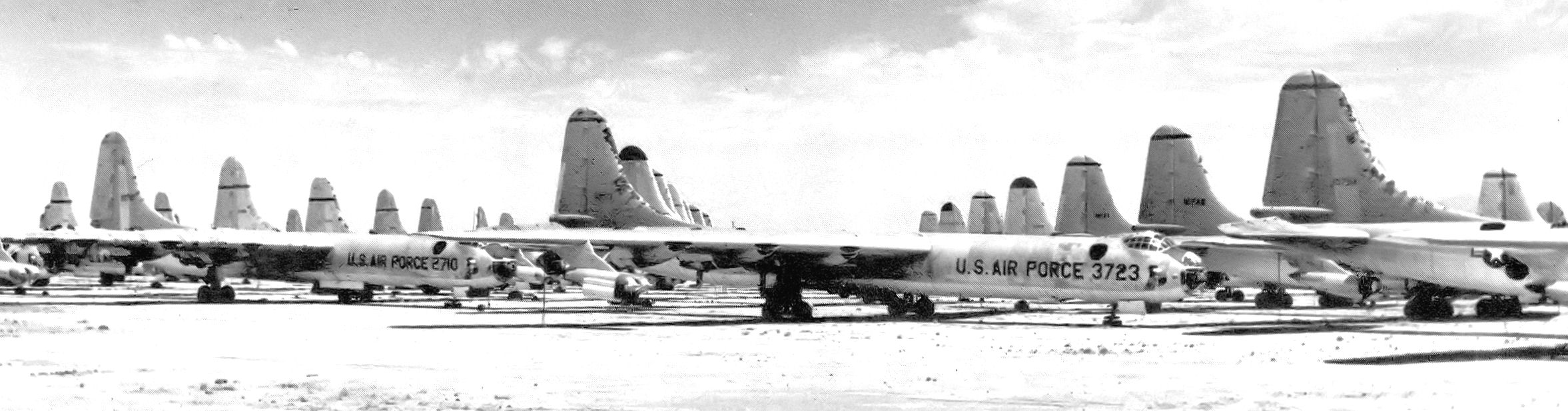
But then, the aircraft’s fate changed when it was ordered to be flown to Offutt Air Force Base near Omaha, Nebraska, the headquarters of Strategic Air Command. Seeing the rapid technological advancements in SAC’s bomber fleet and sensing the need to preserve some of the aircraft being decommissioned, Colonel A.A. Arnhym, assistant to SAC’s commander in chief, Lt. General Thomas S. Power, made an appeal to establish a museum for Strategic Air Command at Offutt AFB. Power approved of the idea, and soon aircraft began making their way to Offutt. Among those aircraft selected for preservation was B-36J 52-2217, which was made ready for its last flight. On April 22, 1959, 52-2217 departed Davis-Monthan AFB and arrived at Offutt AFB, making the second-to-last ever flight of a Convair B-36 Peacemaker. By August 12, 1959, the museum was made an official USAF museum. From there, B-36J 52-2217 stood alongside numerous other old bombers on display at Offutt, and by January 8, 1970, the Strategic Air Command Museum at Offutt AFB was officially transferred to the State of Nebraska, while the aircraft were officially on long term loan from the National Museum of the United States Air Force at Wright-Patterson Air Force Base in Dayton, Ohio. By 1992, Strategic Air Command itself was decommissioned following the collapse of the Soviet Union, but the future of the Strategic Air Command Museum was uncertain. The USAF Museum in Dayton deemed the aircraft on outdoor display to be in a deteriorating state, and if nothing was done to address this, the aircraft would be moved to other locations. That same year, the SAC Museum was transferred to the Strategic Air Command Museum Memorial Society. At the same time, local philanthropists Robert Daugherty, Walter Scott Jr., and Lee Seemann each raised $4 million for the museum, while other donations totaled $32 million for the current-day facility off Interstate 80, just off the westbound stretch to Lincoln. In 1996, the museum held a ceremonial groundbreaking at the new site in Ashland, some 30 miles southwest of Offutt AFB, and as construction began on the new museum building, locally based Worldwide Aircraft Recovery, one of the nation’s premier contractors in moving aircraft by road, disassembled the aircraft at Offutt and trucked them piece by piece to Ashland. Among these was B-36J Peacemaker 52-2217, which was carefully disassembled and trucked in sections from Offutt AFB. The wing was disassembled into its outer panels and center section, the latter of which was lifted from the fuselage of the aircraft, while the horizontal and vertical stabilizers, engines, and landing gear were removed for shipment. Once the aircraft was brought to Ashland, the hangar was big enough to fit the massive bomber inside, but its doors were not built for the aircraft to roll in fully reassembled. So the aircraft’s center wing section and landing gear were reattached by Worldwide Aircraft Recovery’s skilled specialists, and it was towed into the main museum hangar to be fully reassembled indoors.
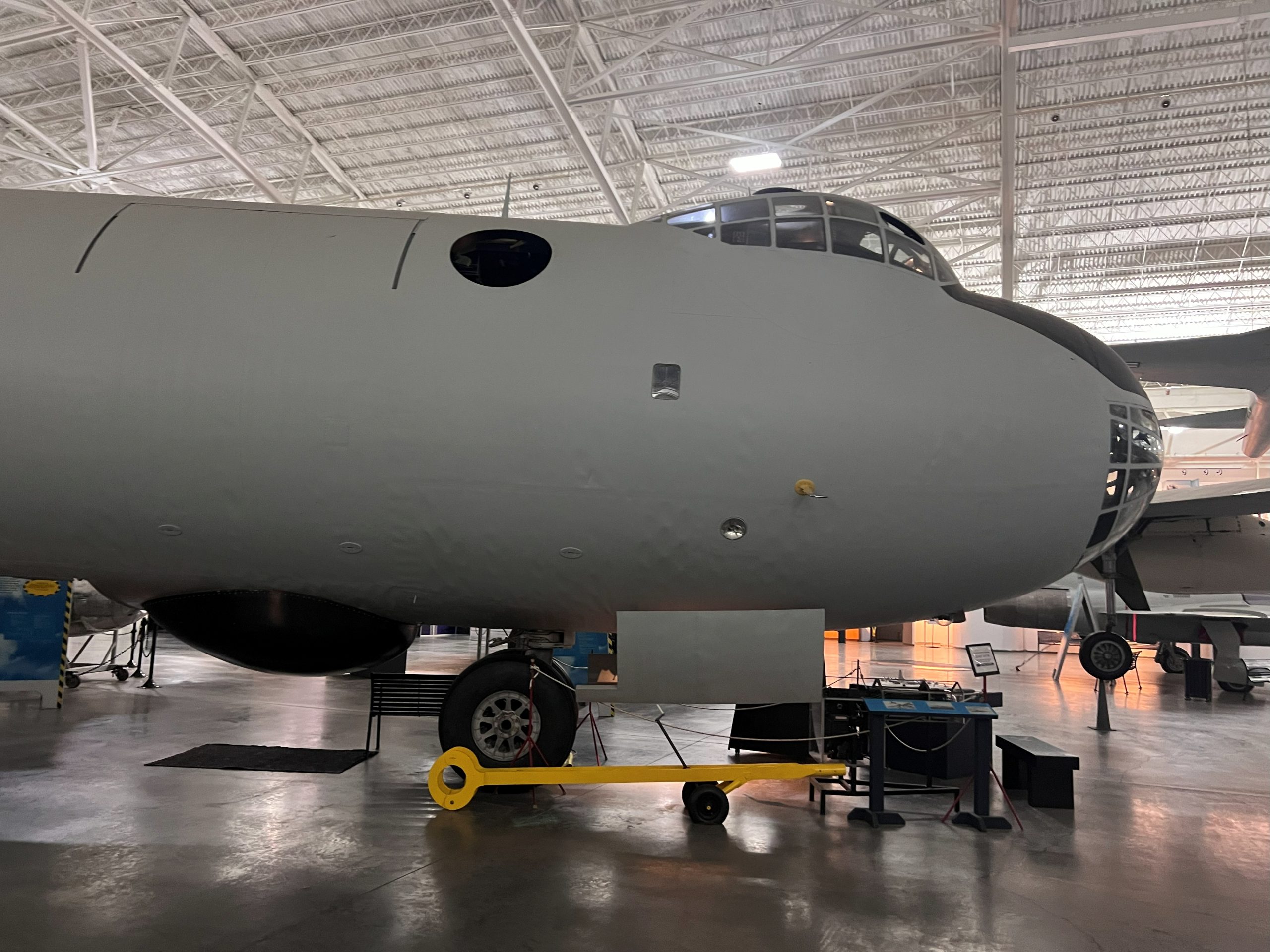
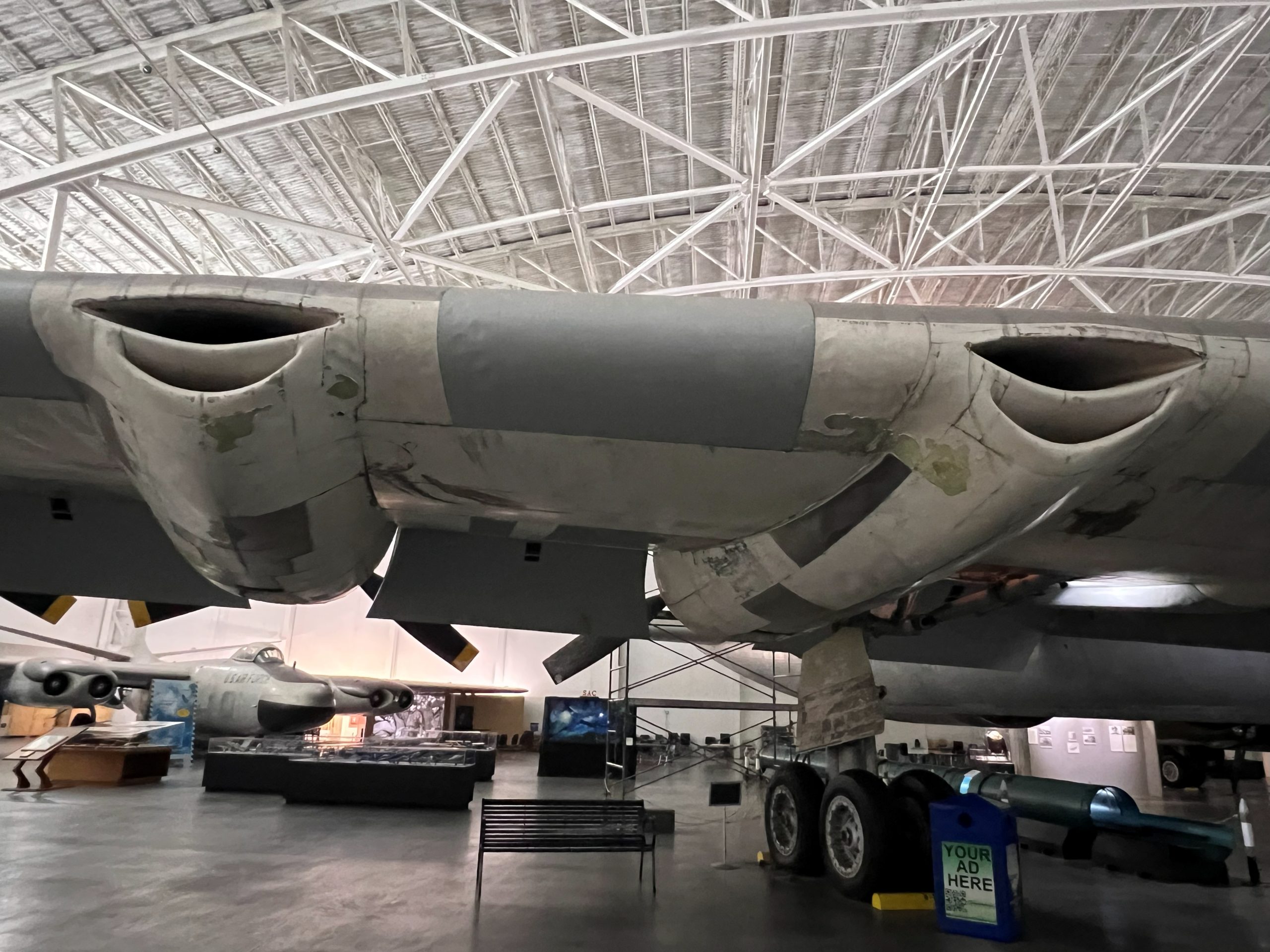
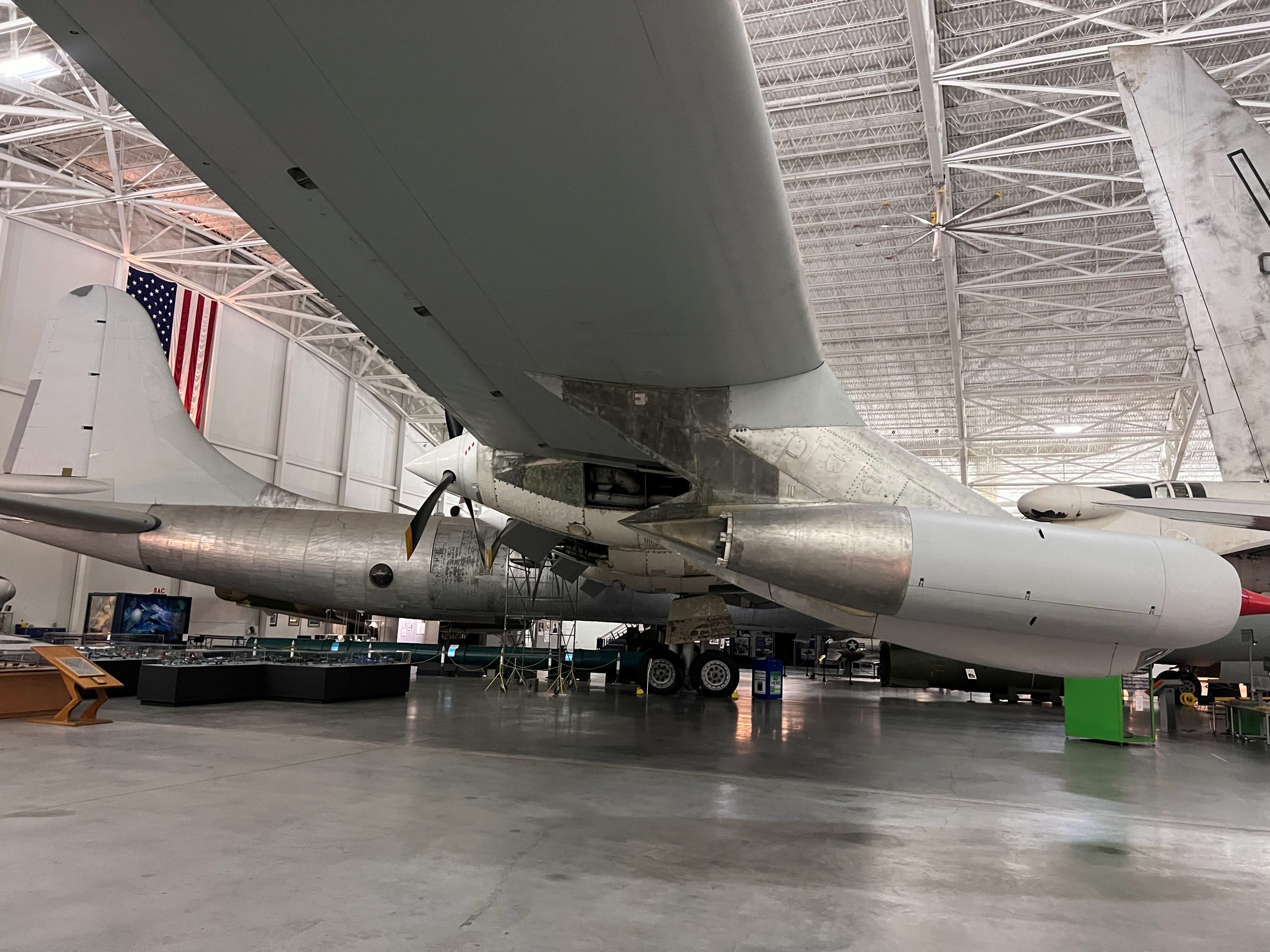
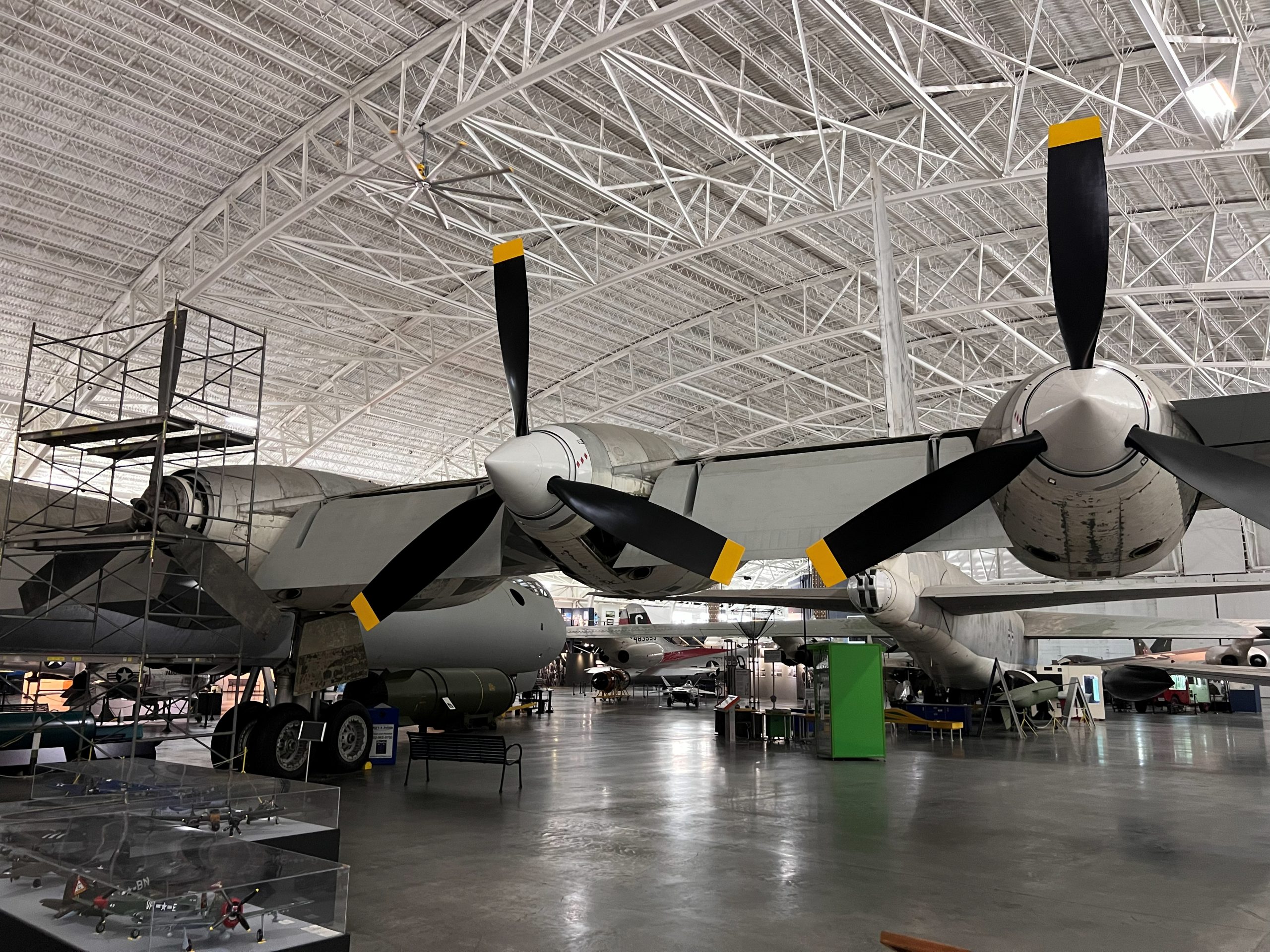
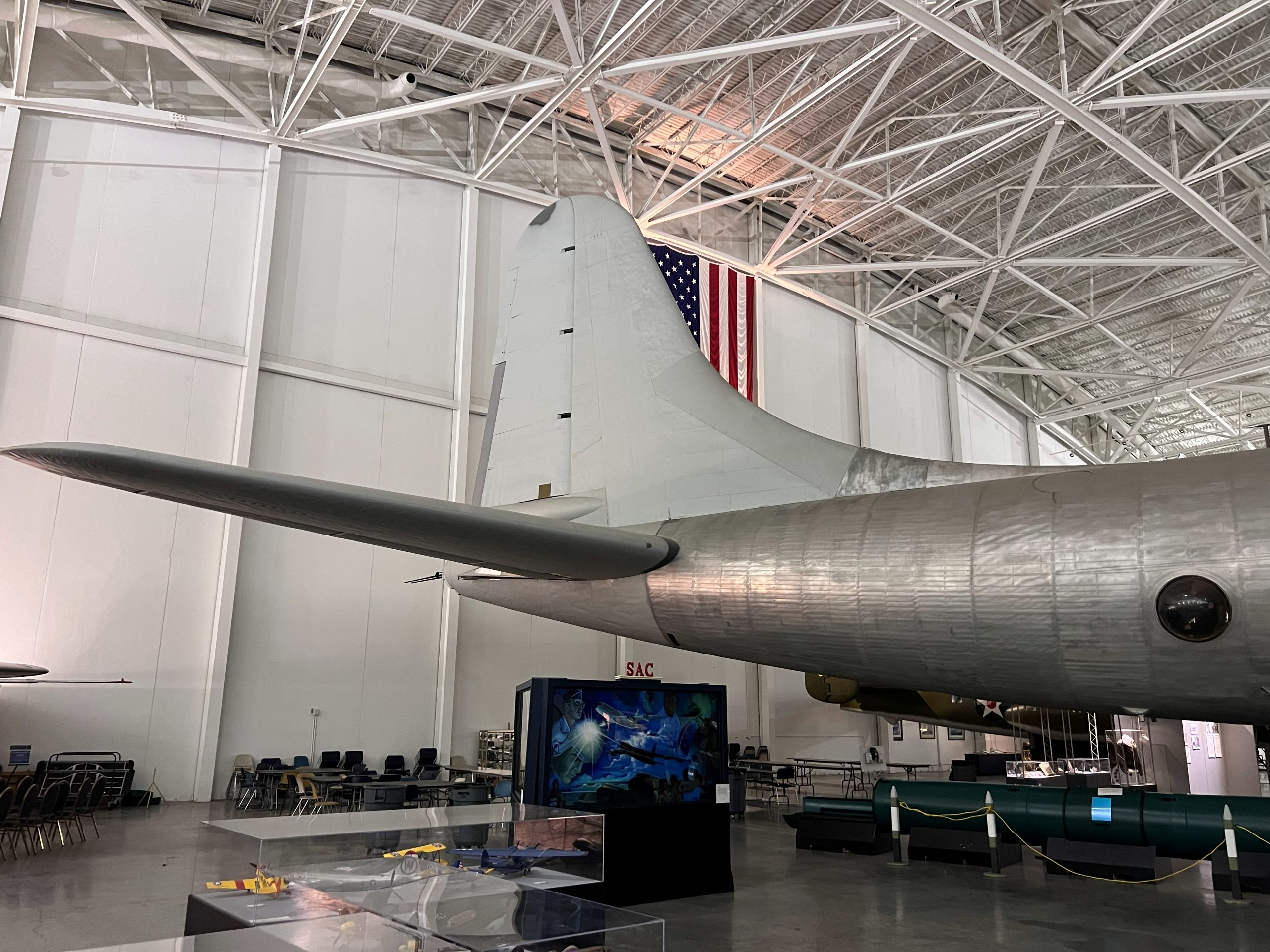
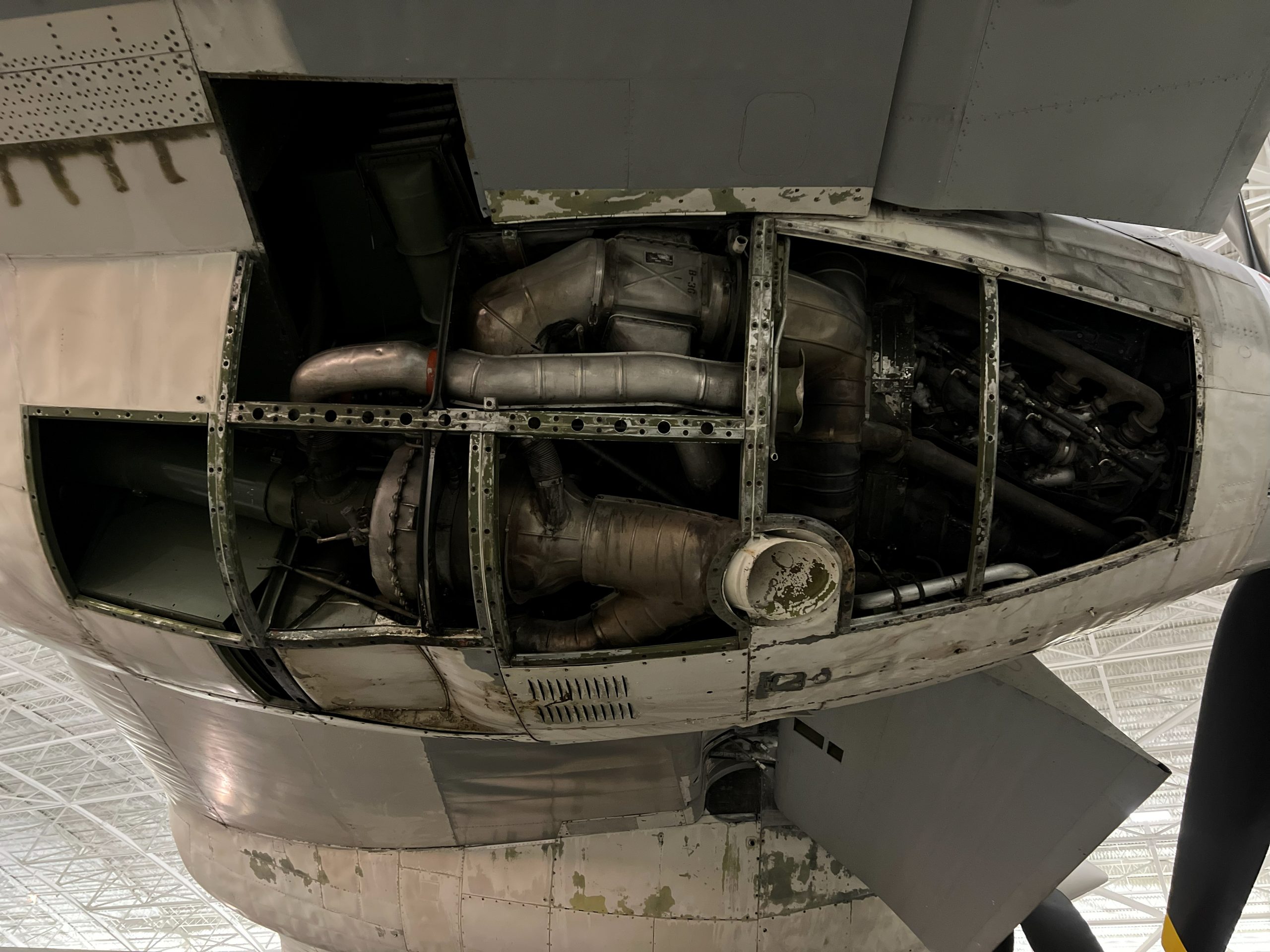
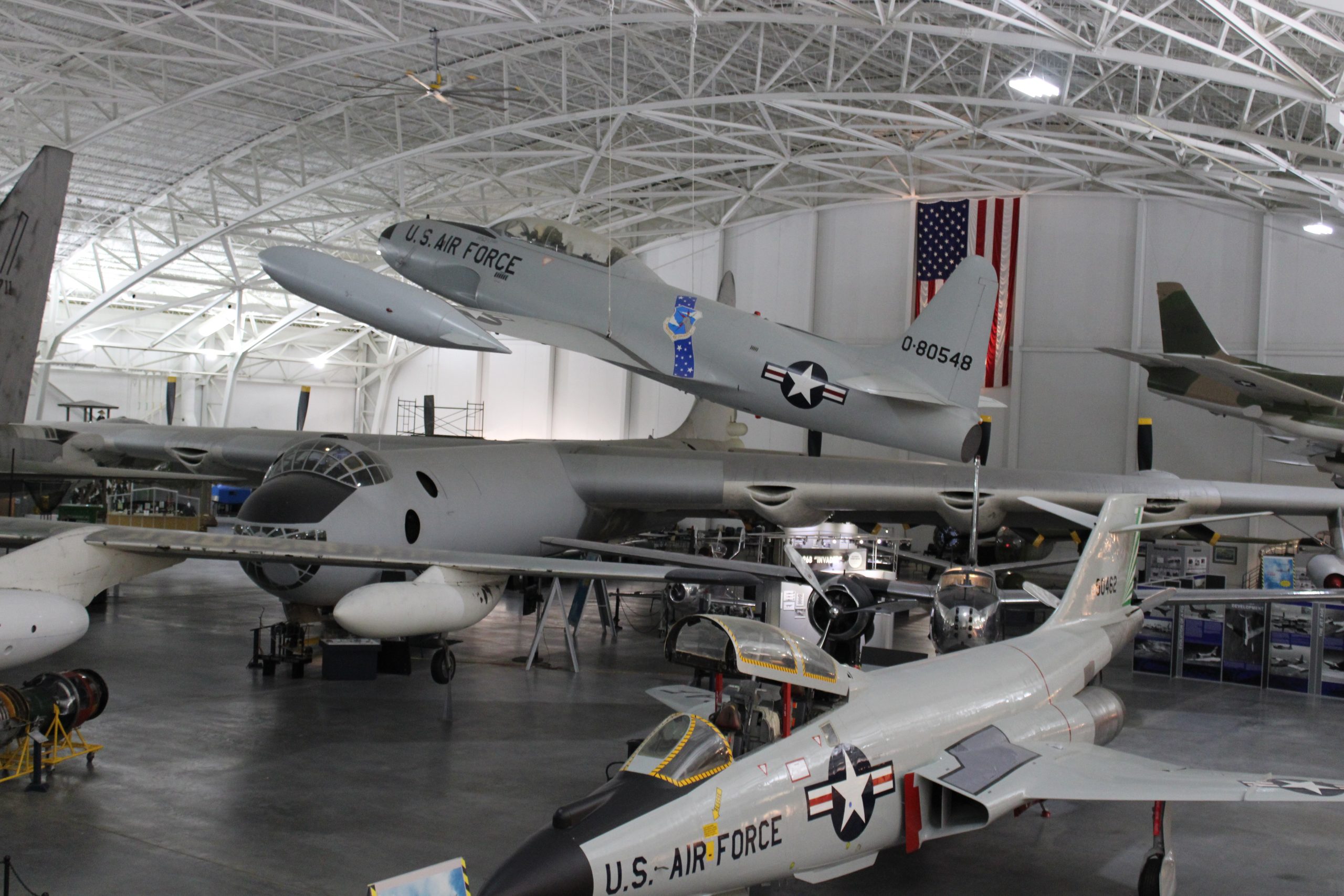
On May 16, 1998, the new museum was opened to the public, and today B-36J 52-2217 sits on display with numerous other aircraft in what is now Hangar A, with nearby Hangar B housing further aircraft. Because of its prolonged exposure to the elements for nearly 40 years prior to the move from Offutt, museum restoration volunteers have been gradually continuing their work on 52-2217, with much of the aircraft’s nose and tail surfaces restored, but more work is being done on the engines and the wings. The aircraft is also displayed with a Mk 17 thermonuclear bomb casing, and a McDonnell XF-85 Goblin, an experimental parasite fighter originally designed to be carried in the bomb bay of a B-36 Peacemaker but never flown on a B-36 or deployed in operational service. If you have not had the opportunity to visit the Strategic Air Command and Aerospace Museum, be sure to make it one of your next stops, not just for the Convair B-36 Peacemaker, but for the vast array of Cold War-era aircraft on display here as well, from the Boeing B-52B Stratofortress to the Avro Vulcan and the Lockheed-Martin F-117 Nighthawk.

B-36J 52-2220
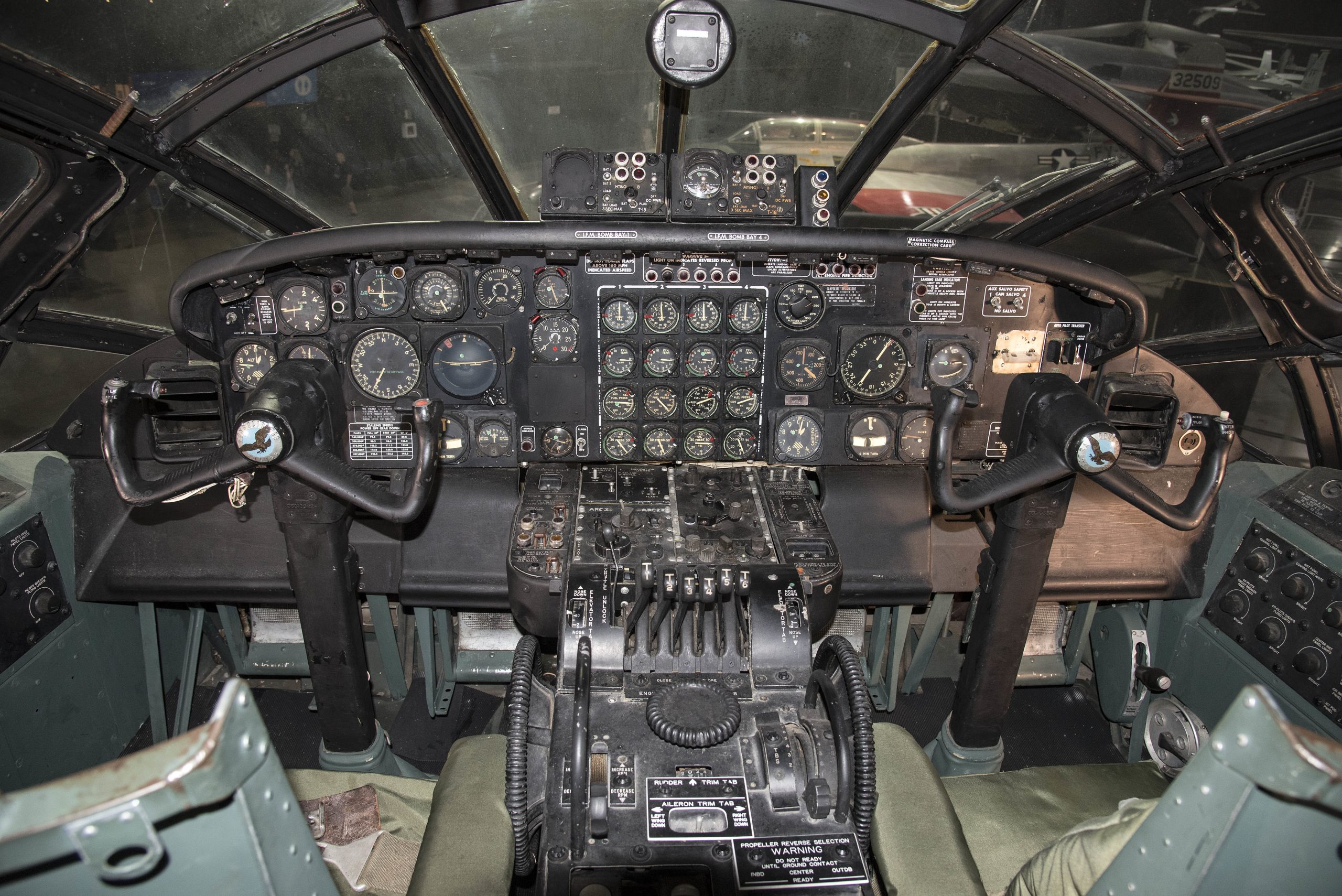
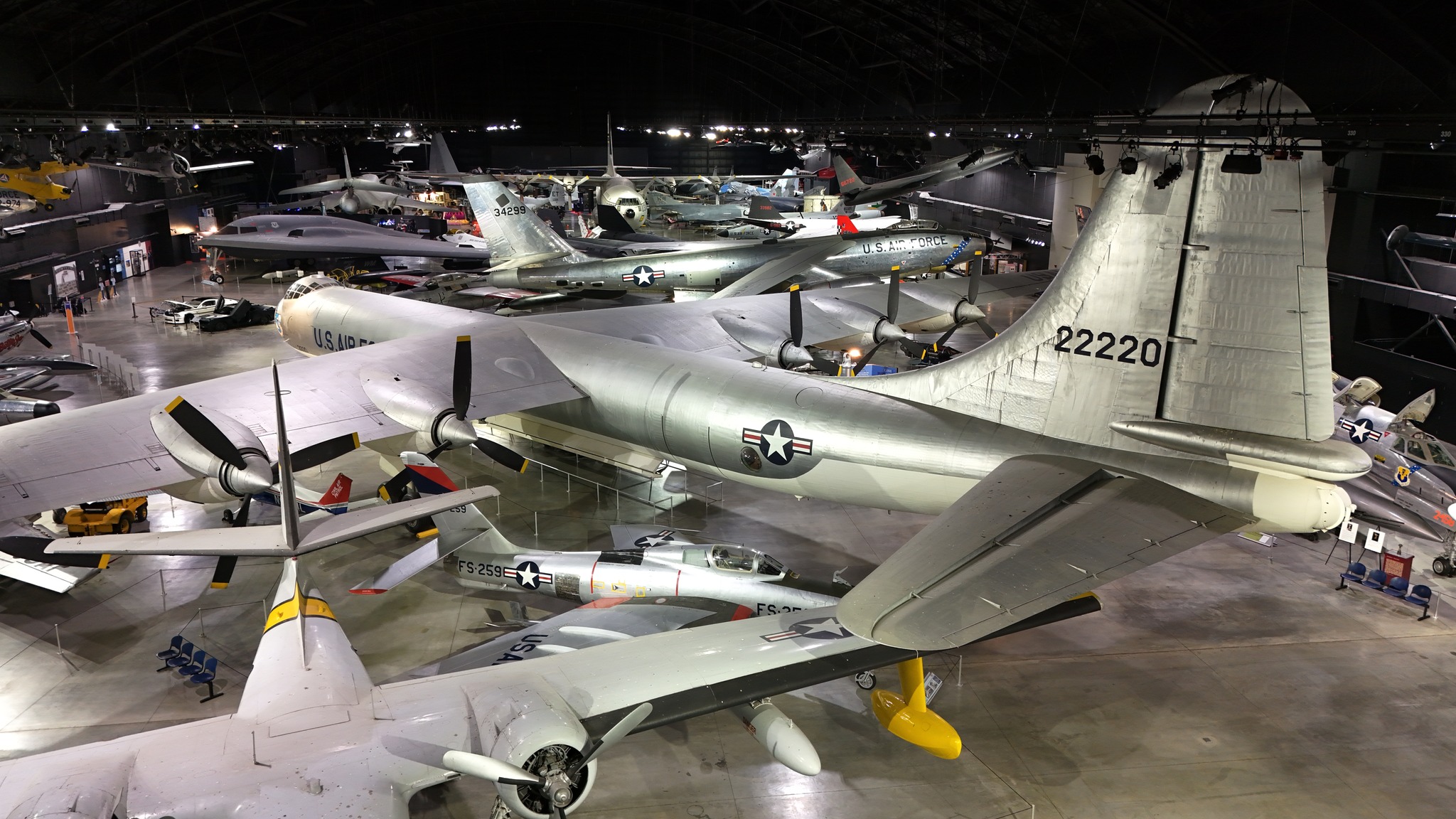
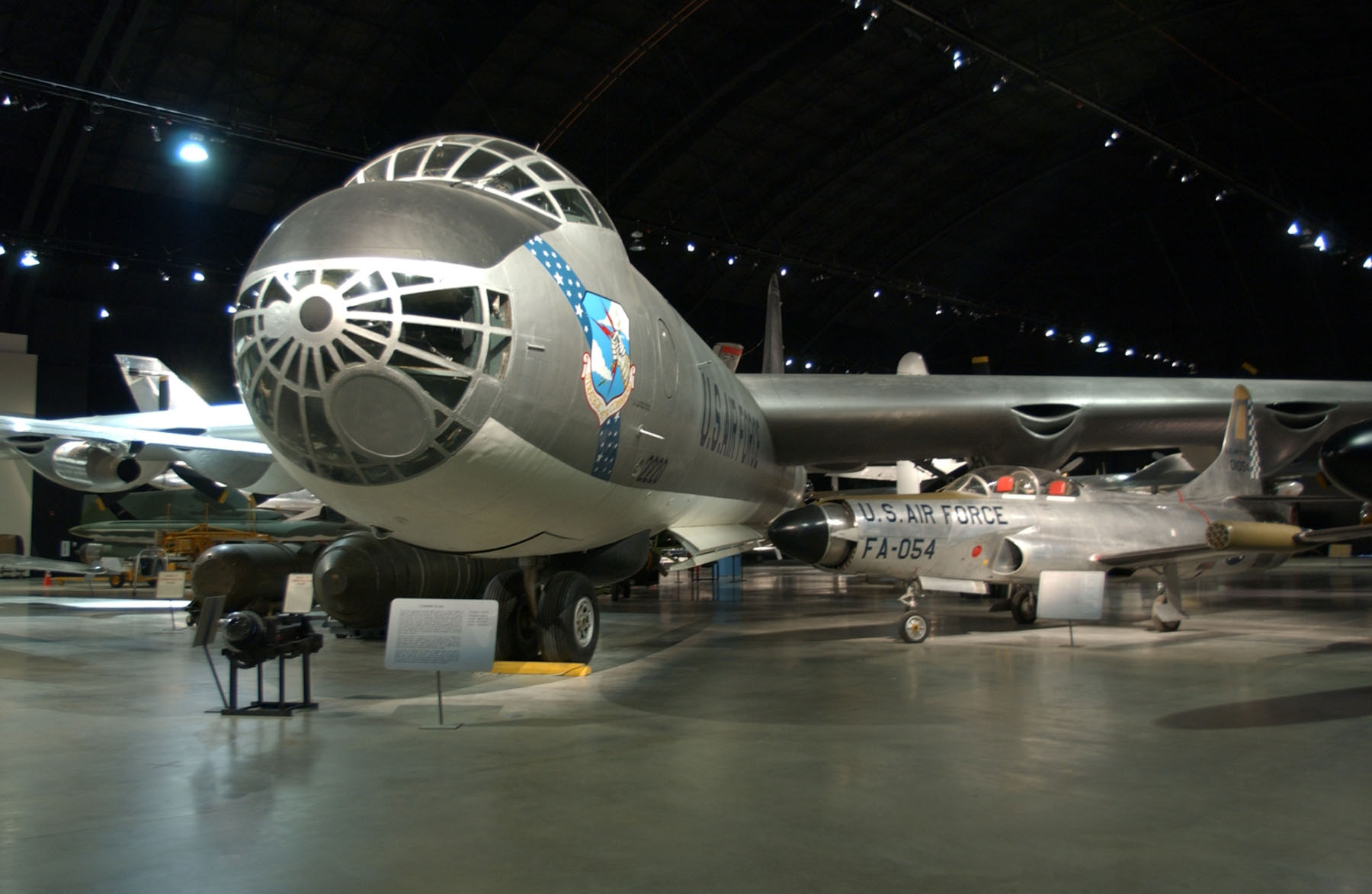
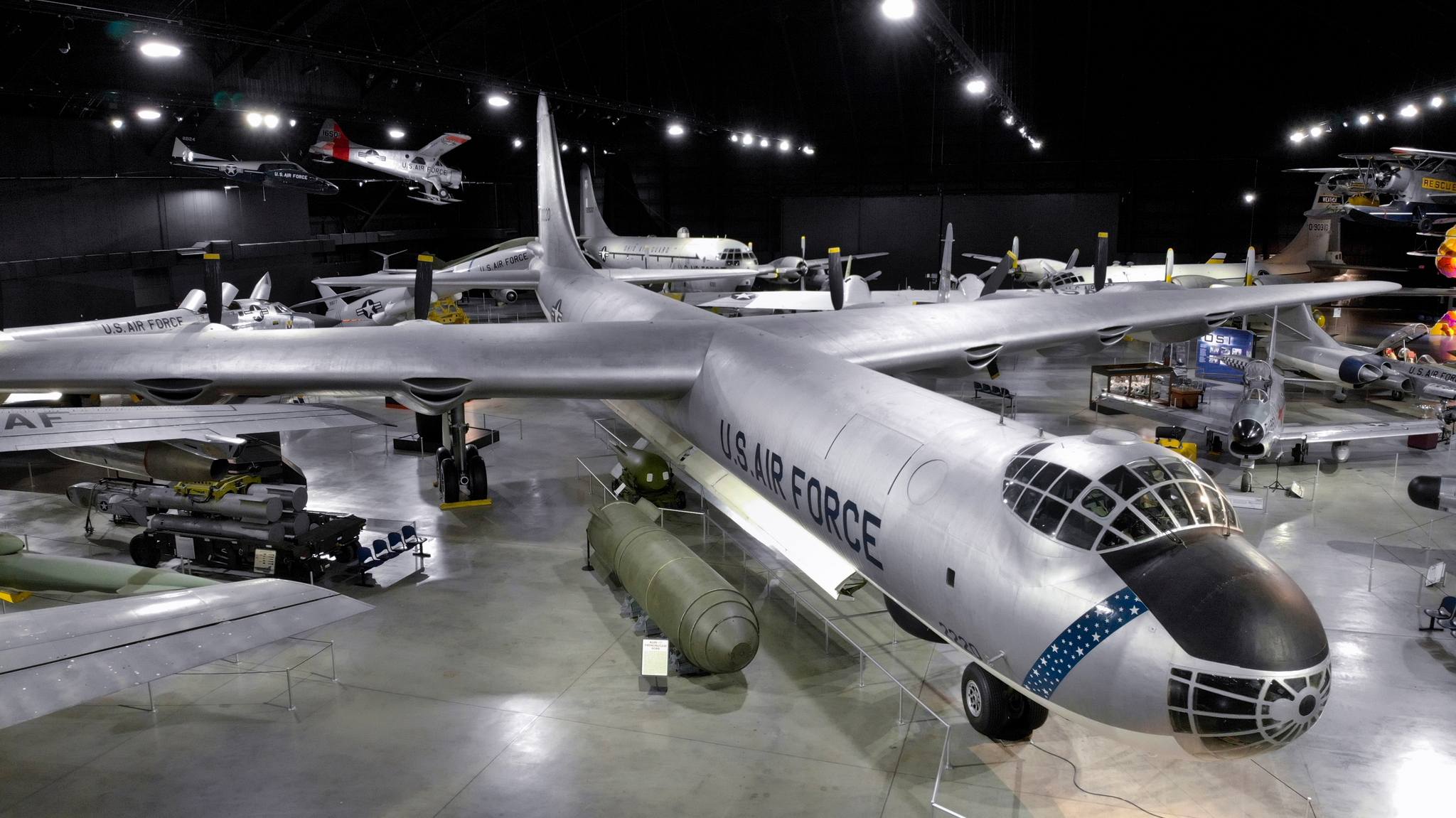
One of the best aviation museums not only in the United States but in the whole world is without doubt the National Museum of the United States Air Force at Wright-Patterson Air Force Base in Dayton, Ohio. Spread across its four hangars are hundreds of airplanes, engines, and artifacts that tell the story of America’s history of airpower from the Wright Flyer to the F-22 Raptor. But inside the museum’s Hangar 3 is the Eugene Kettering Cold War Gallery, which contains the museum’s very own Convair B-36 Peacemaker, serial number 52-2220, fittingly displayed in the middle of the gallery.
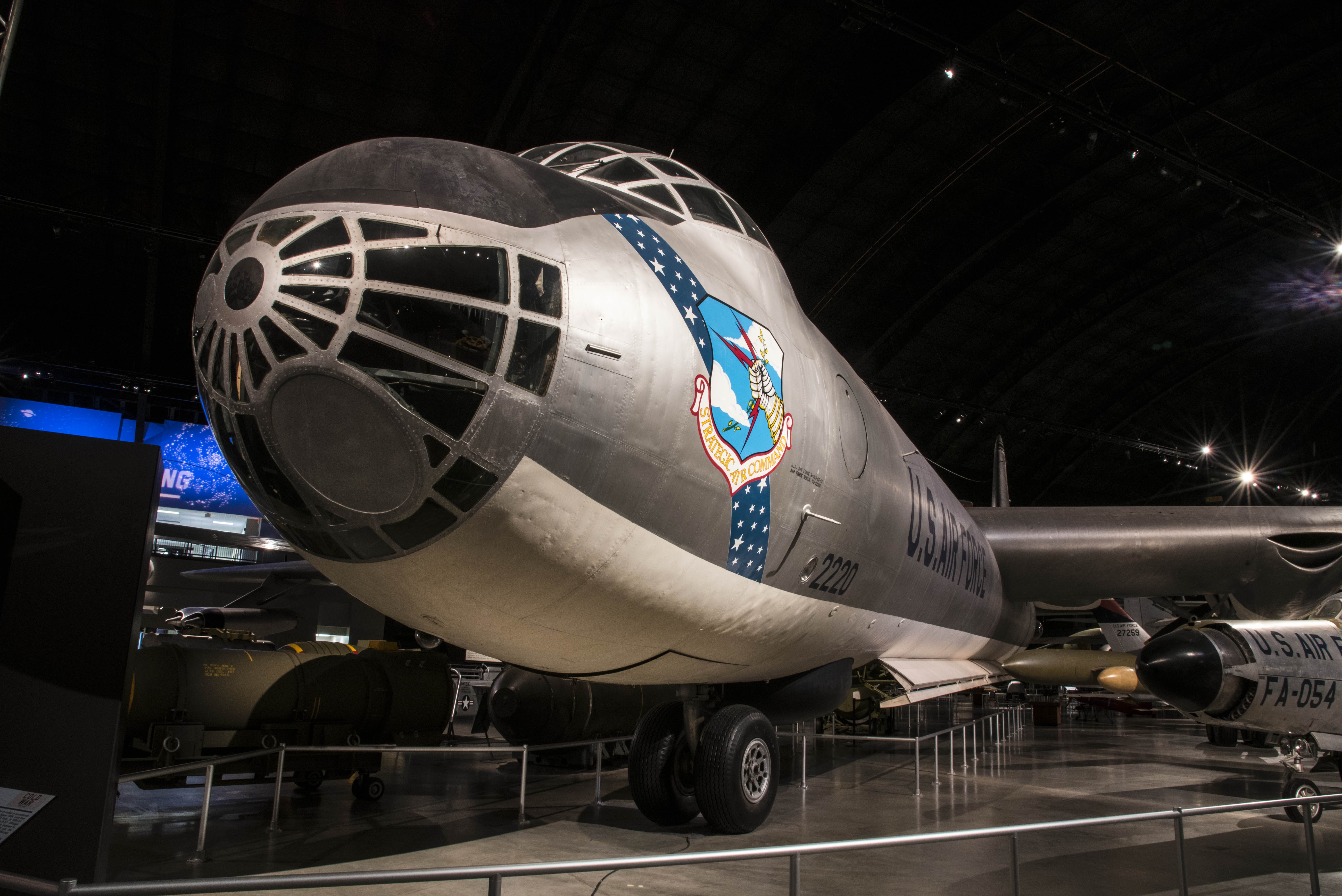
B-36J 52-2220 was constructed at the Convair Fort Worth plant in December 1953 before being accepted by the USAF on January 19, 1954, and being attached to Strategic Air Command’s 11th Bombardment (Heavy) Wing at Carswell AFB. According to the late aviation historian Joe Baugher, the aircraft was damaged by bad weather near Carswell AFB on April 30, 1954, but was soon repaired and returned to service. Besides this incident, 52-2220’s service history is very similar to that of B-36J 52-2217 mentioned earlier, as it was later deployed with the 42nd Bombardment (H) Wing at Loring AFB, Maine in December 1954, went on to be deployed from Loring to RAF Upper Heyford, and then spent its final days in service with the 95th Bombardment Wing (Heavy) at Biggs AFB near El Paso. On February 3, 1959, B-36J 52-2220 was flown to Davis-Monthan AFB in Arizona to be reclaimed as scrap metal. However, before it was destroyed, the United States Air Force Museum, despite already having another B-36 in its collection, YB-36/RB-36E 42-13571, decided to acquire B-36J 52-2220 for future preservation. On April 30, 1959, B-36J 52-2220 made its final flight from Davis-Monthan AFB to Wright-Patterson AFB in Dayton, Ohio. In doing so, 52-2220 was the last Peacemaker to ever fly. Though the museum was then part of the Patterson Field portion of Wright-Patterson, B-36J 52-2220 remained outdoors on the Wright Field portion, as the museum already had plans to move from the former engine overhaul hangar turned museum hangar and outdoor displays on the Patterson Field side near Fairborn, Ohio to the Wright Field side where B-36J 52-2220 was being kept in outdoor storage. With support from the Air Force Museum Foundation and from philanthropist Virginia Weiffenbach Kettering, widow of Eugene Kettering, first chairman of the Foundation’s board, the United States Air Force Museum, as it was then known, reopened on the Wright Field portion of Wright-Patterson.
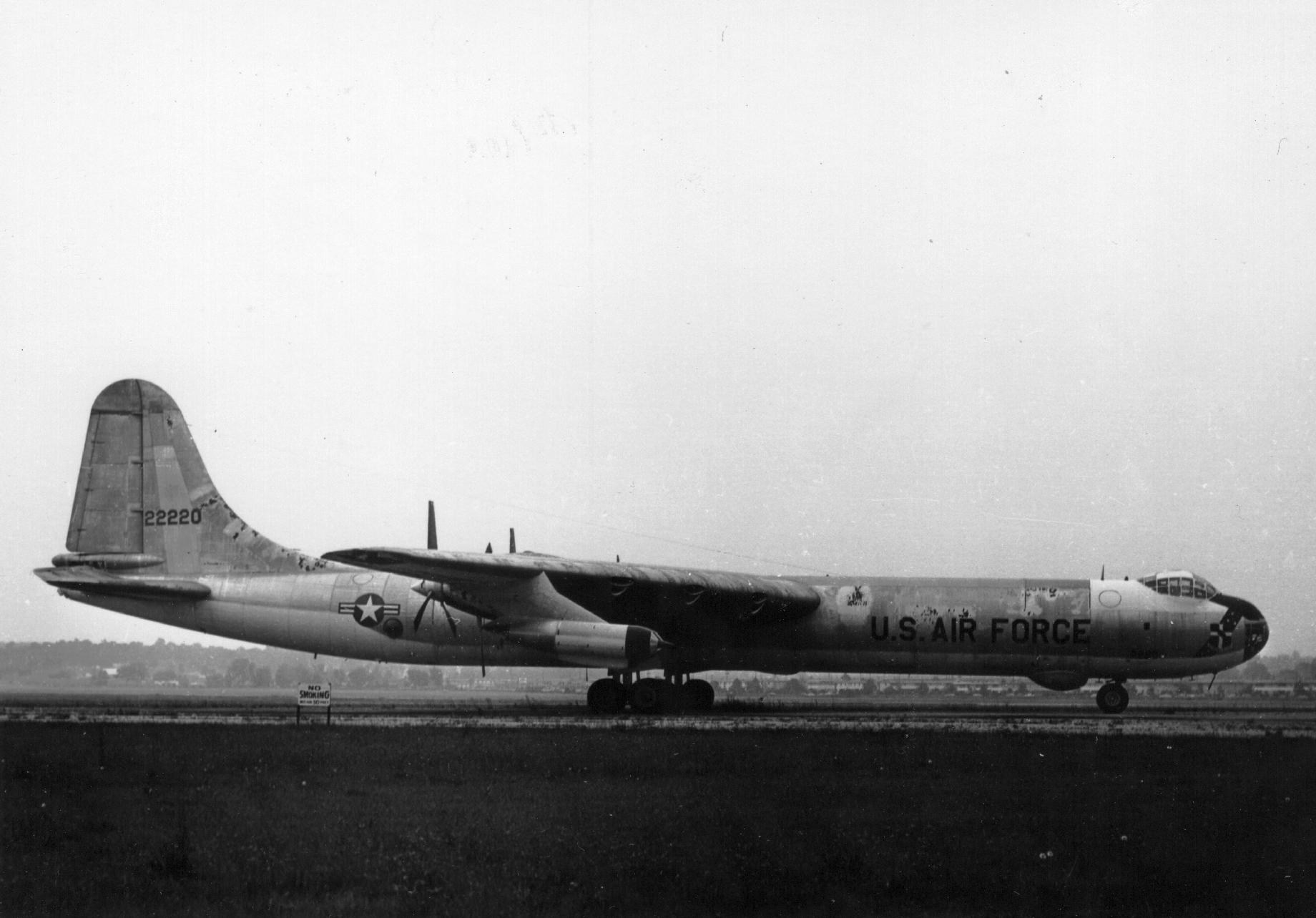
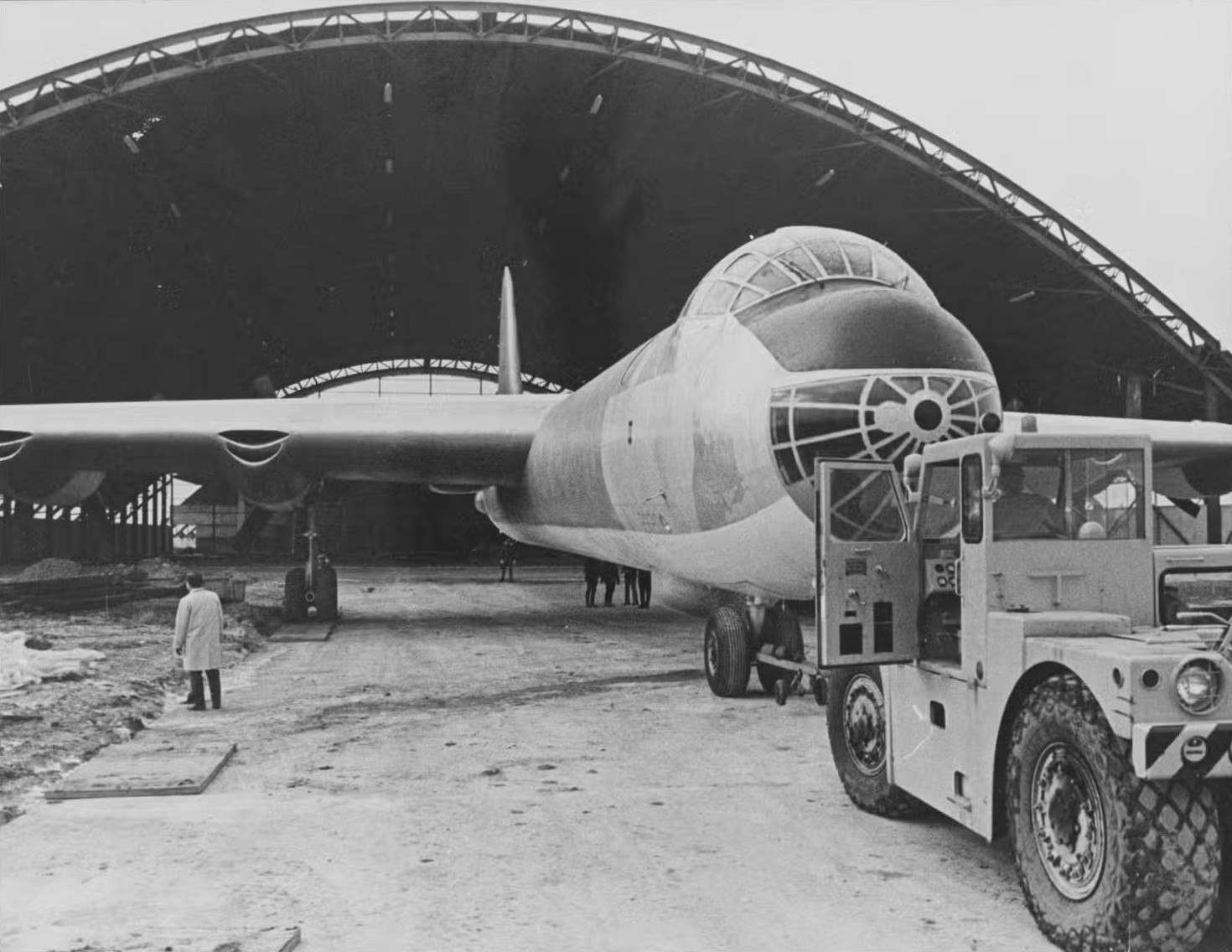
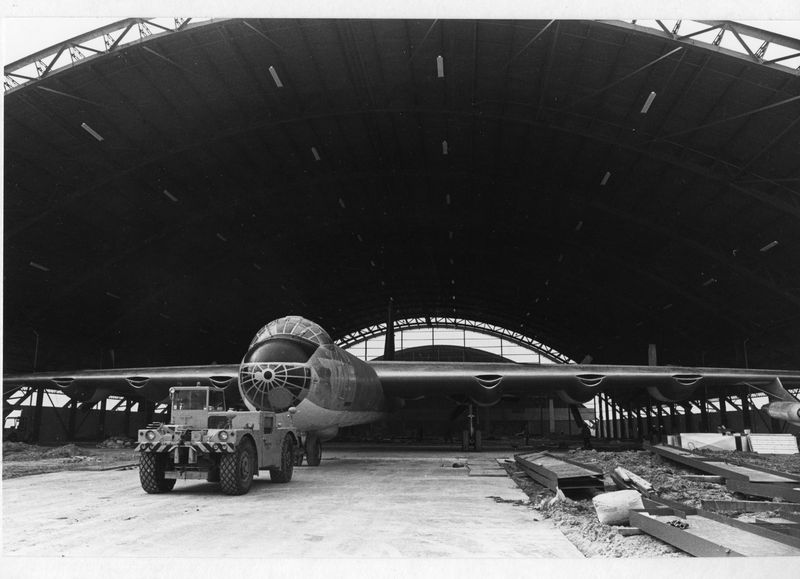
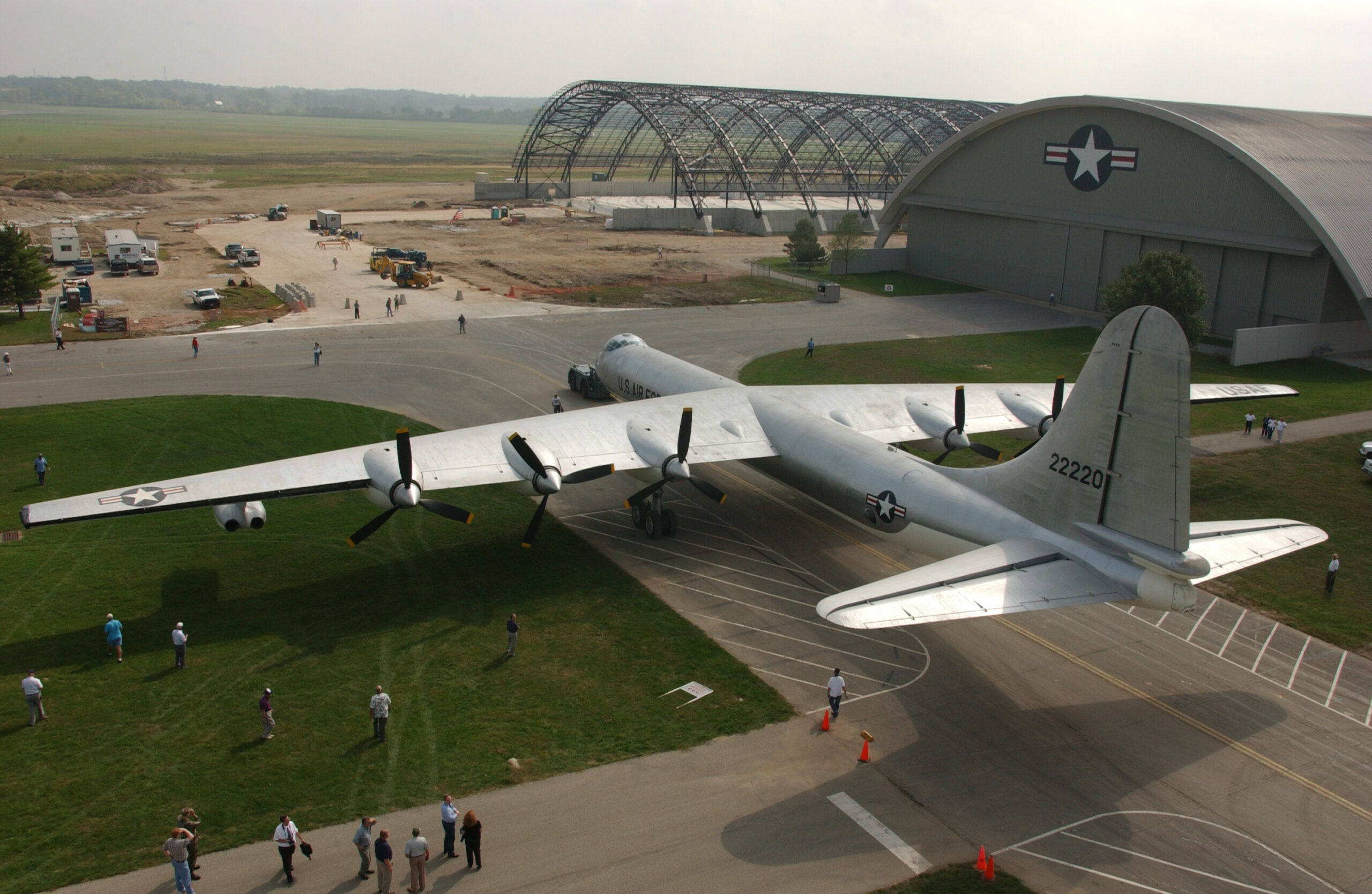
At this point, there was only one hangar at the museum site, the one that now houses the Early Years and WWII Galleries, with B-36J 52-2220 being displayed in the north half of the hangar that now houses the WWII Gallery. Thanks to further funds raised by the Air Force Museum Foundation, the museum added a second hangar in 1988, which now houses the Korean War and Southeast Asia War Galleries, and in 2003, the museum’s third hangar was added. Just prior to this, in October 2002, B-36J 52-2220 was rolled out of the first hangar and parked in front of the museum’s second hangar as the third was being worked on, with the formation having been poured and the framework of the structure erected. The Peacemaker was then moved inside the hangar as it received its walls and ceiling, and today B-36J 52-2220 rests in the National Museum of the USAF’s Cold War Gallery, and the aircraft that is likely the best-preserved example of the type remains freely available to the public.
B-36J 52-2827
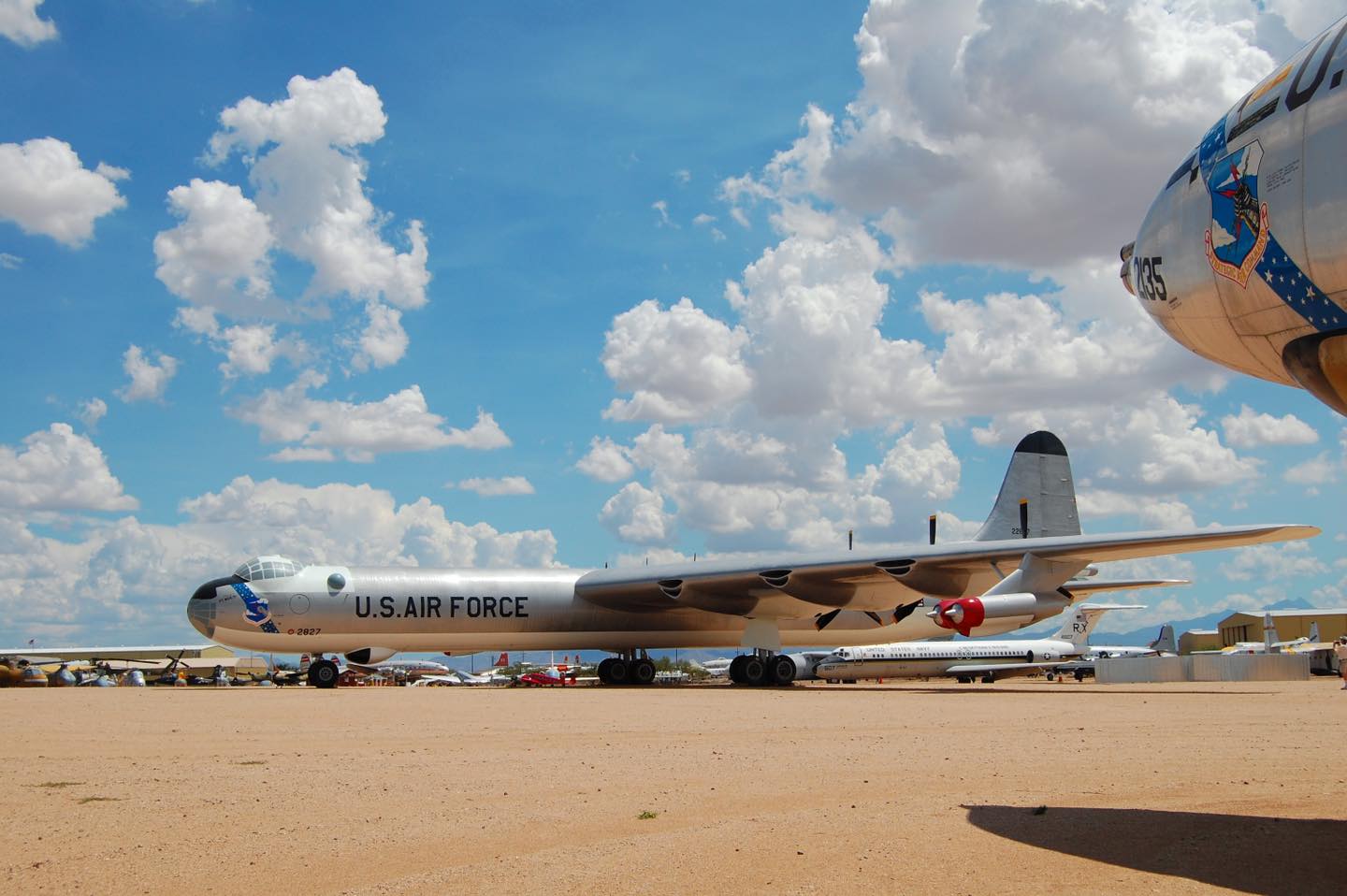
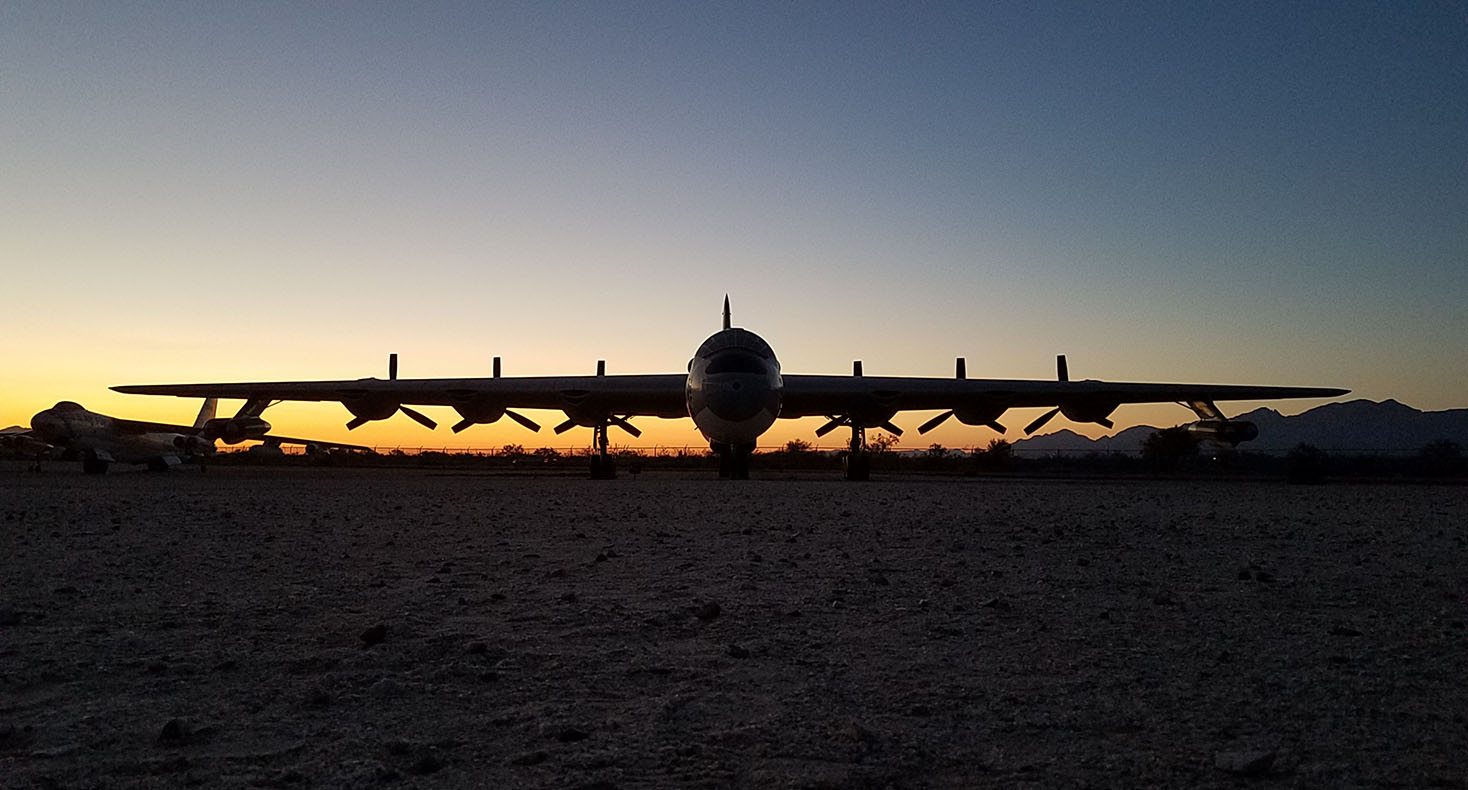
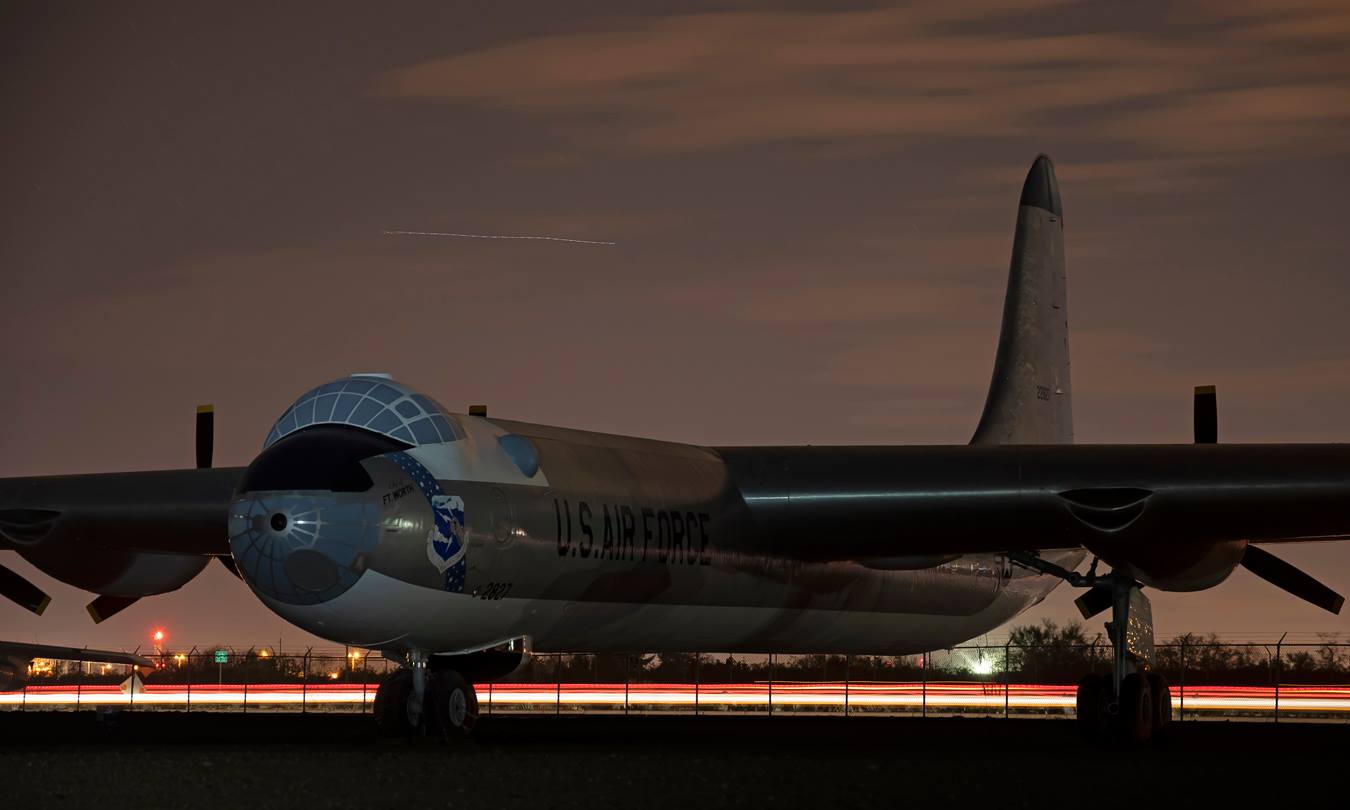
It is fitting that the last Convair B-36 Peacemaker ever built is one of the four survivors to be featured on this list. While this last aircraft spent much of its life in its birthplace of Fort Worth, Texas, this aircraft can be found today at the Pima Air and Space Museum in Tucson, Arizona, just across the street from Davis-Monthan Air Force Base.
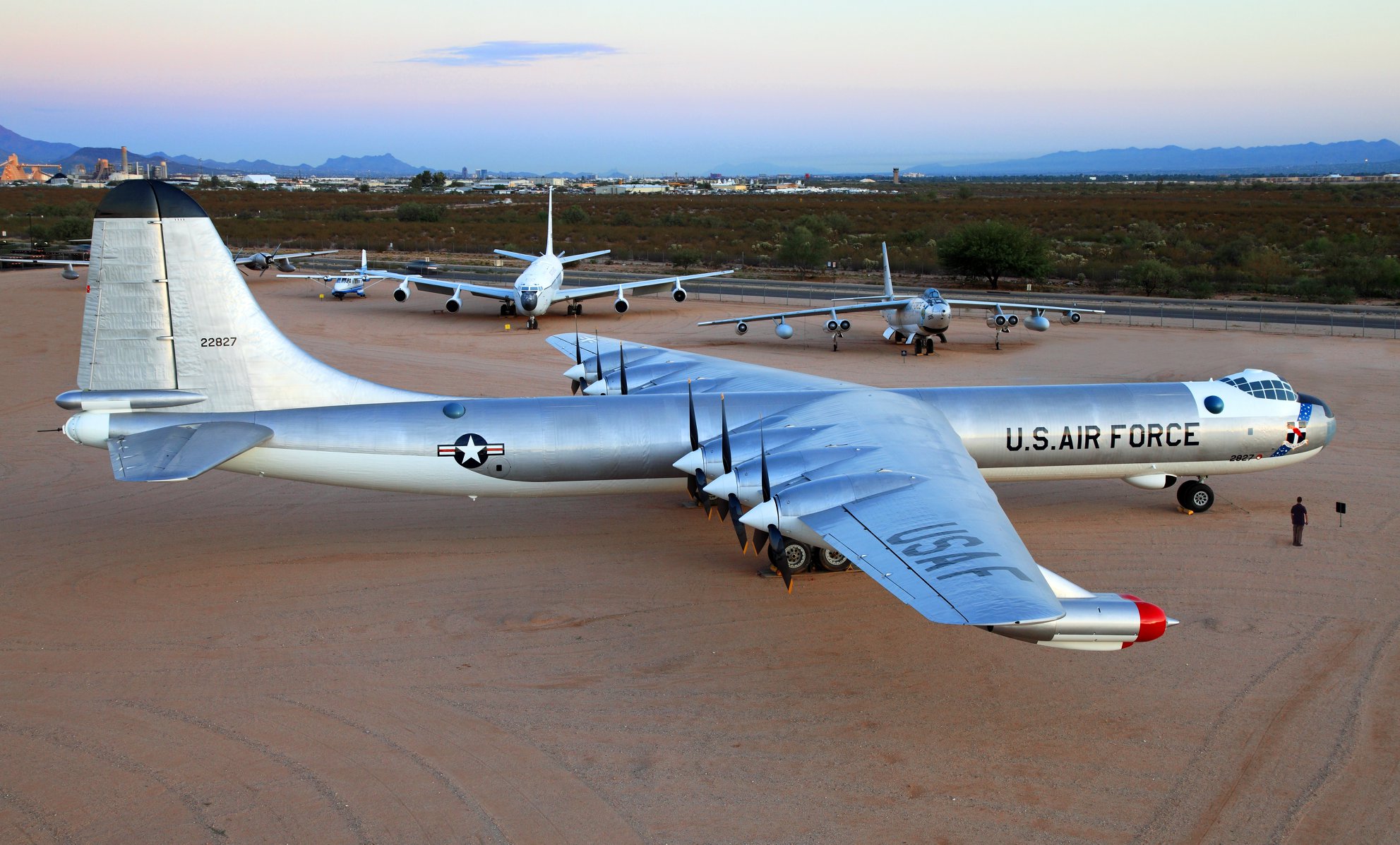
Built as construction number 383, it was already a significant aircraft even before its first flight, as it was the final Convair B-36 Peacemaker ever produced over the bomber’s production run at Fort Worth. On August 14, 1954, it was accepted by the United States Air Force as serial number 52-2827 and assigned to the 92nd Bombardment Wing of Strategic Air Command at Fairchild AFB near Spokane, Washington. Since it was the last B-36 off the production line, a public ceremony was held at Carswell Air Force Base that day, with retired General Joseph T. McNarney, president of Convair, delivering the aircraft to Major General Francis H. Griswold, vice commander of Strategic Air Command. The aircraft and its 13-man crew under the command of Major Laurence M. Nickerson of Thorndike, Maine, then took off, buzzed the crowd, and then turned northwest for Spokane.
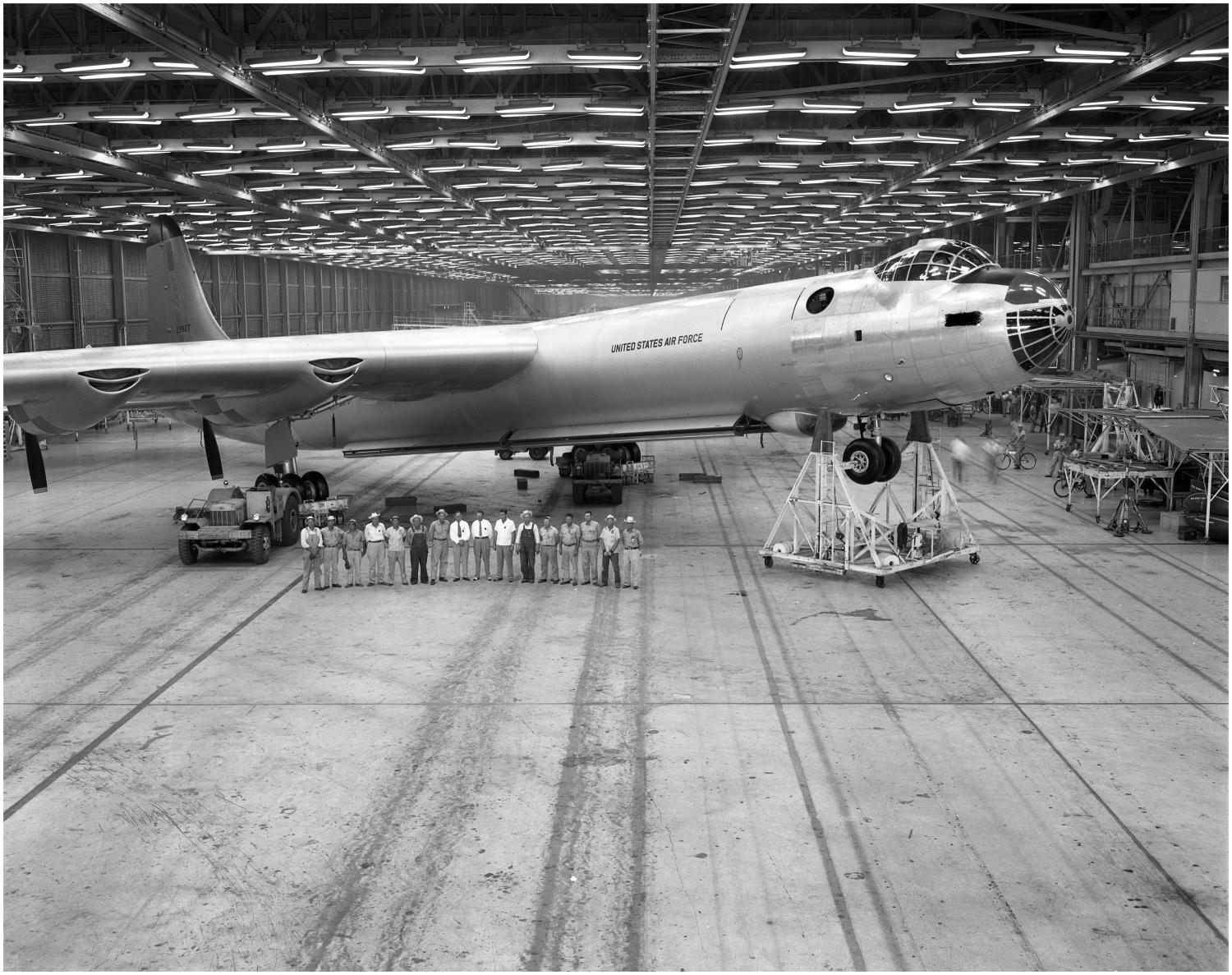
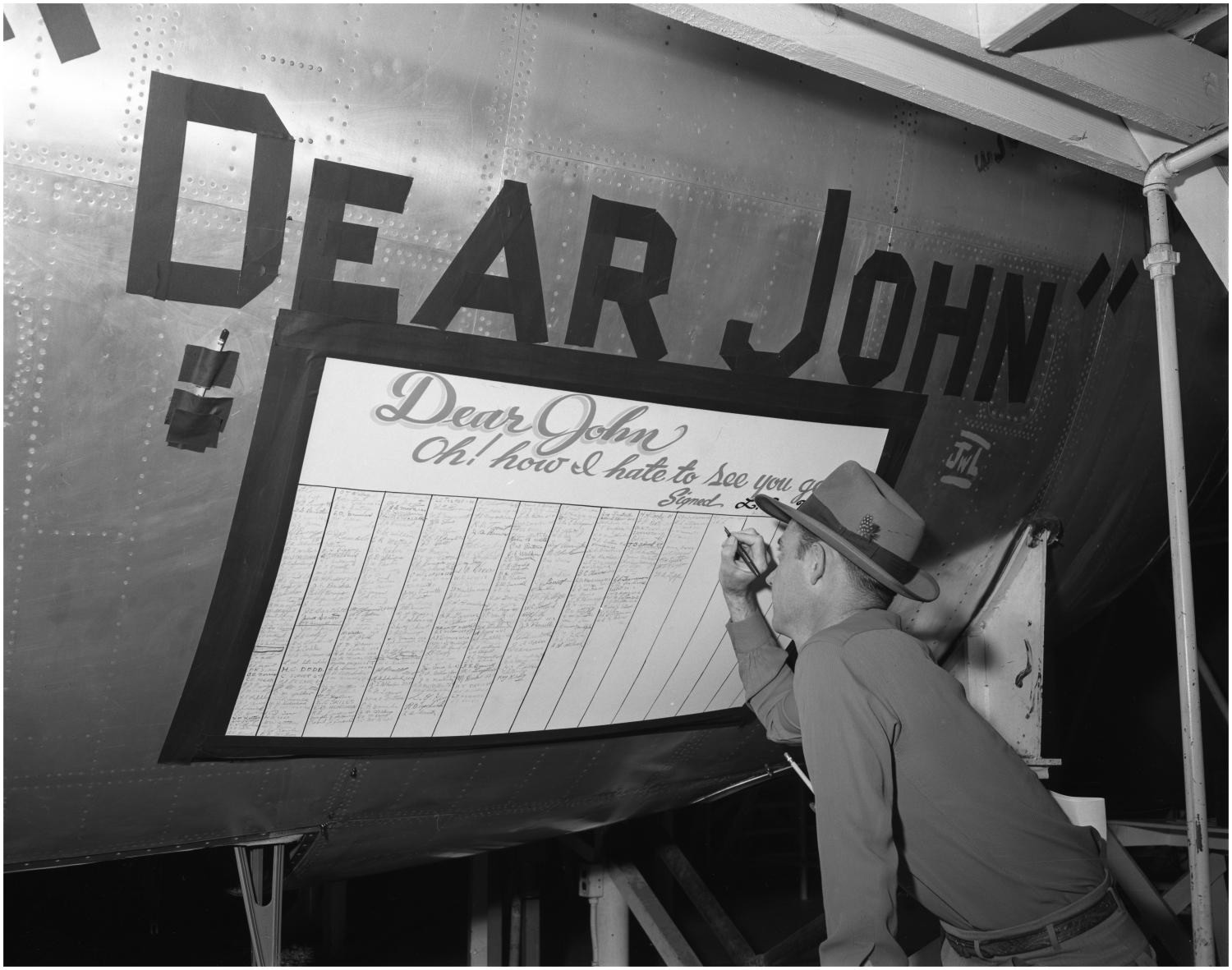


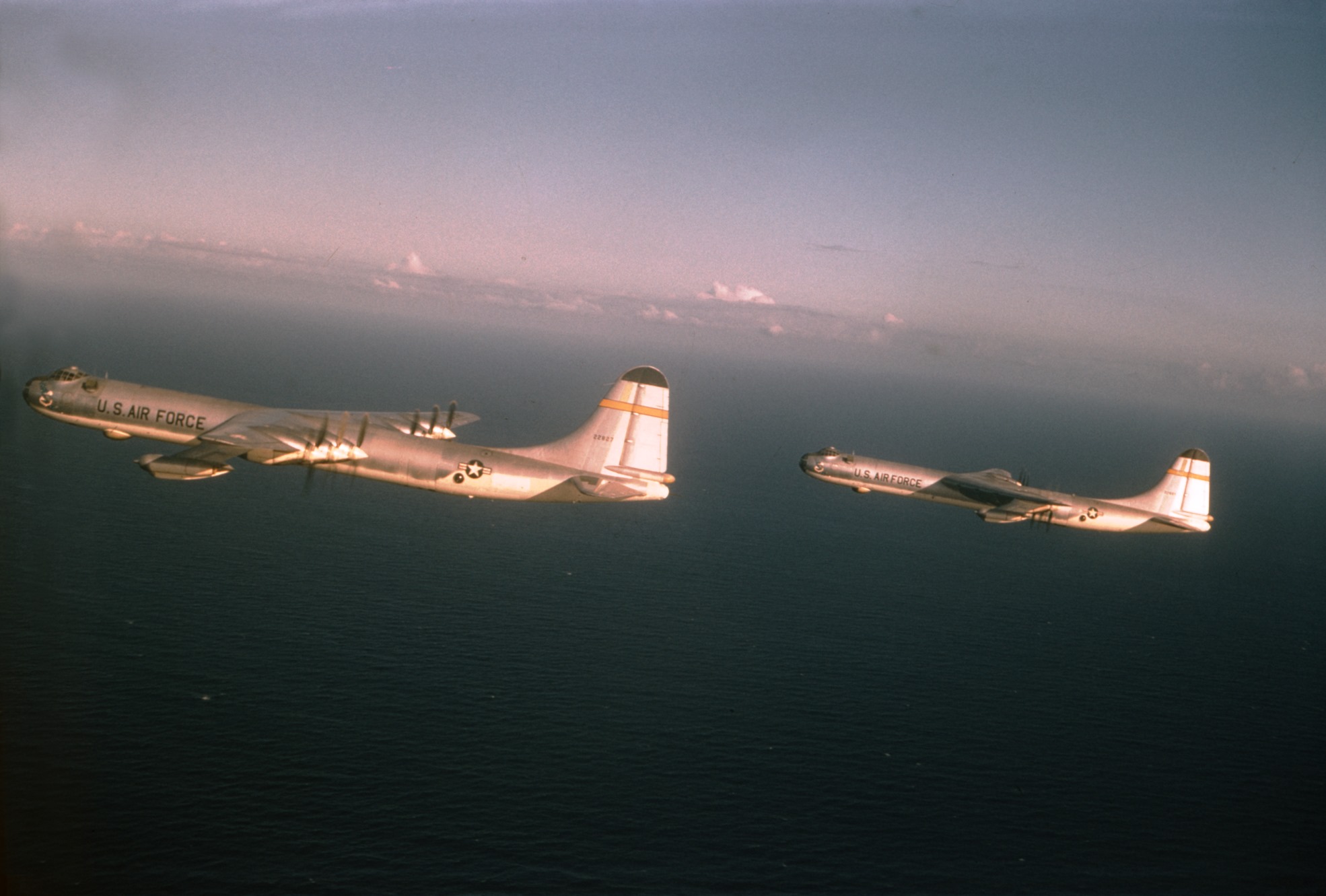
Later in its service life, it too went to the 95th Bombardment Wing at Biggs Air Force Base in El Paso to see out its final days as an active-duty bomber as the B-52s came online. On February 12, 1959, B-36J 52-2827, the last of the Peacemakers, made the last flight of an active-duty B-36 when it was flown from Biggs AFB to Amon Carter Field (later Greater Southwest International Airport) to be placed on permanent display at what was then Fort Worth’s largest commercial airport. As part of what was called Operation Sayanora, a crew of 23 under the command of Major Ferdinand J. Winter boarded 52-2827, with a Fairchild C-123 Provider transport trailing behind them with dignitaries for the ceremony to be held in Fort Worth.

When the aircraft approached Fort Worth, the scheduled touch-and-go was cancelled due to local fog, and when it made a flyover over downtown Fort Worth, residents could not see the Peacemaker through the low-lying clouds, but the drone of its six Pratt & Whitney R-4360 Wasp Majors echoed through the fog, causing many to cheer at the sound of the massive bomber overhead. Meanwhile, residents of Arlington, Texas, could see the B-36 descending through the fog and clouds on approach to Amon Carter Field. B-36J 52-2827 touched down at 2:55 pm and arrived in front of the reviewing stand at precisely 3:00 pm.
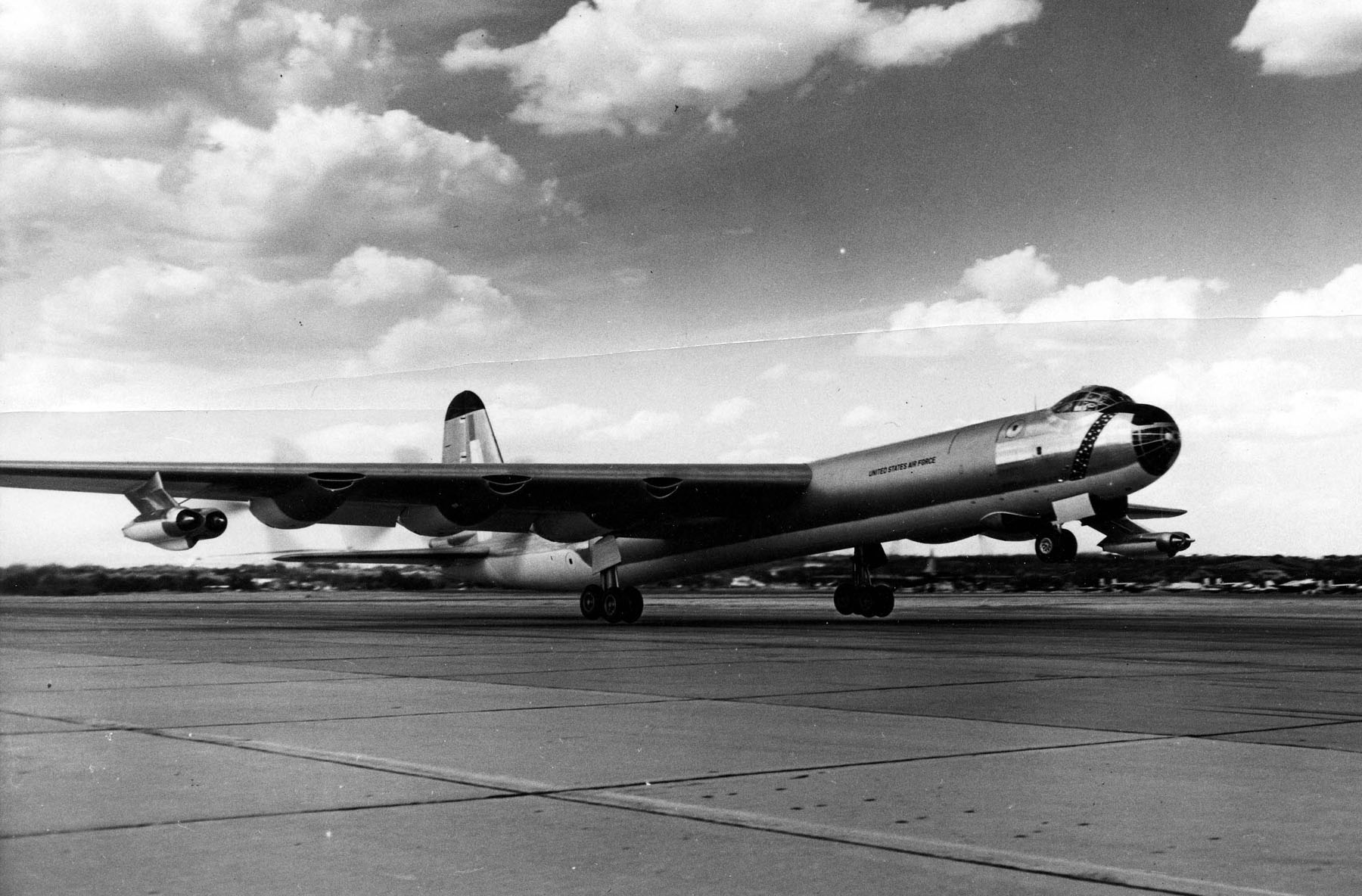
Soon after its arrival, the aircraft was at the center of a decommissioning ceremony with representatives from the US Air Force, local government, school groups, B-36 crews, Convair factory workers, local media, and a Reserve Officer Training Corps (ROTC) band that played the National Anthem. The end of the ceremony would see the aircraft loaned by the U.S. Air Force Museum to the city of Fort Worth, and the aircraft itself would adopt the name City of Fort Worth. At 4:25pm, the band played Taps for the aircraft, which was then towed to a grass field with heavy steel matting placed for the B-36 to rest upon. This field was adjacent to the entrance to the Amon Carter Field terminal building and would become the site of a memorial park for the B-36 that would be dedicated to the public on May 17, 1959, with nearly 4,000 people in attendance.
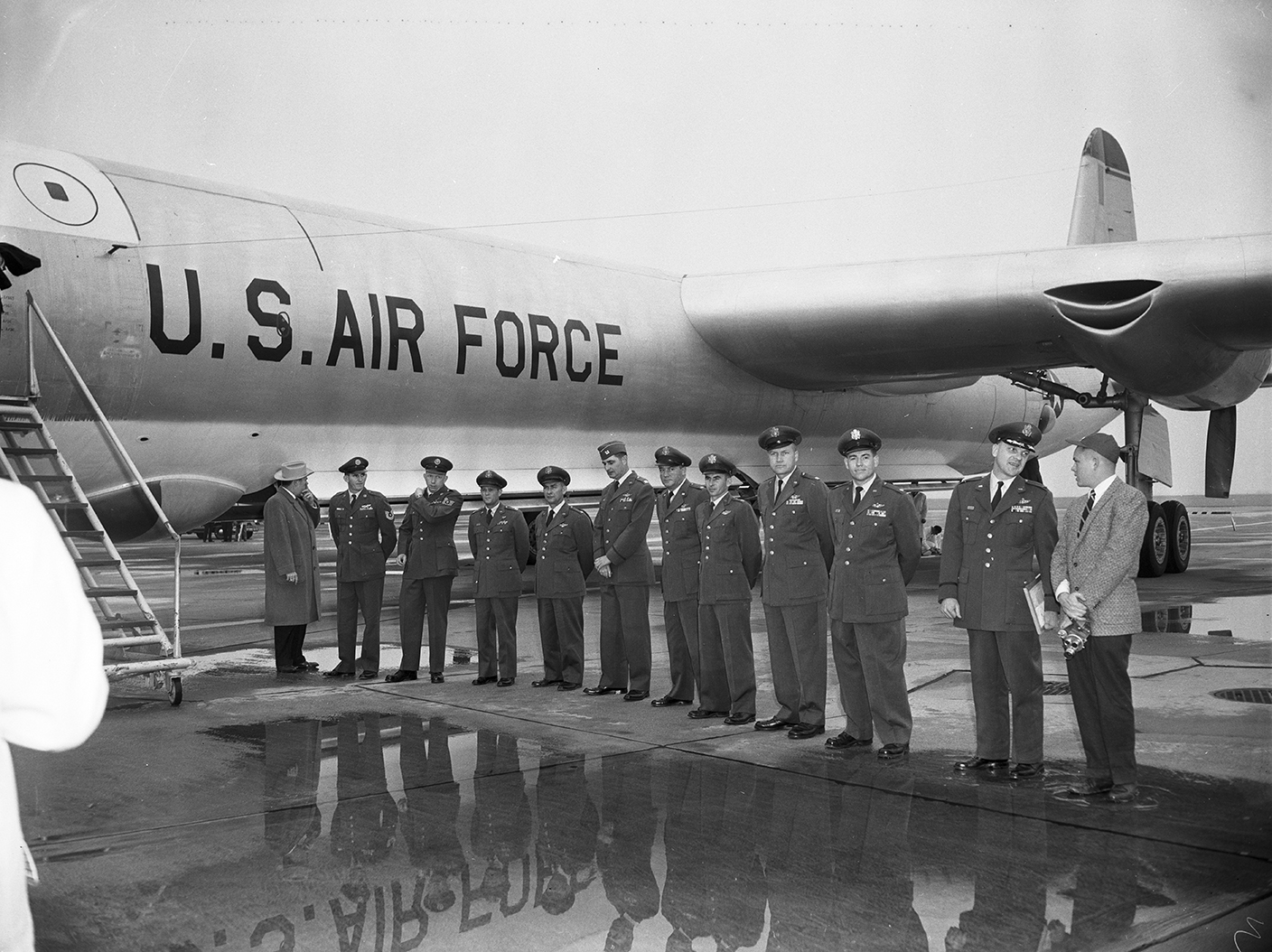
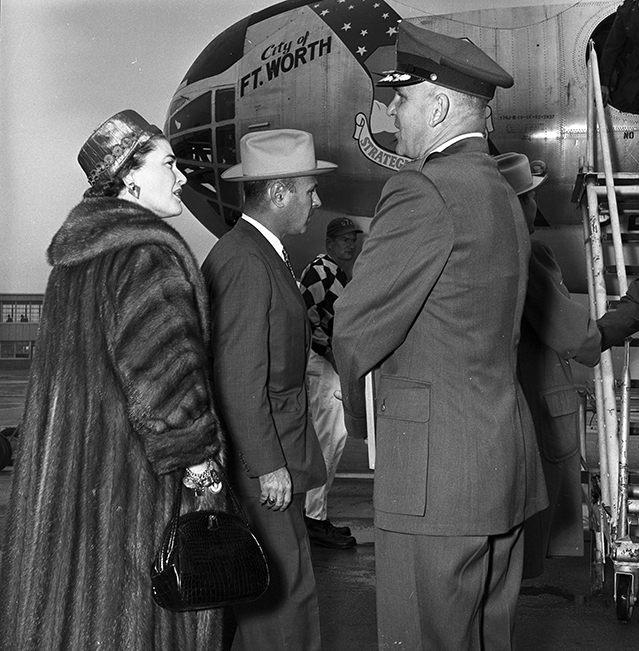

The next ten years were not kind to the B-36 City of Ft. Worth, though. The aircraft sat exposed to the weather, became a nest for thousands of birds, whose droppings created issues with corrosion, and vandals broke into the fuselage and stole items from the crew compartments. Worse still, the Federal Aviation Administration announced its interest in facilitating the creation of an international airport to serve both Dallas and Fort Worth as opposed to continuing to have traffic at both Greater Southwest International Airport (GSW) in Fort Worth and Love Field in Dallas, which led to the creation of Dallas-Fort Worth International Airport, built just north of Greater Southwest. Though Dallas Love Field endures as a hub for Southwest Airlines, the creation of Dallas-Fort Worth International Airport would spell the end of Amon Carter Field/Greater Southwest International Airport, and thus, the last of the Peacemakers had to find a new home.
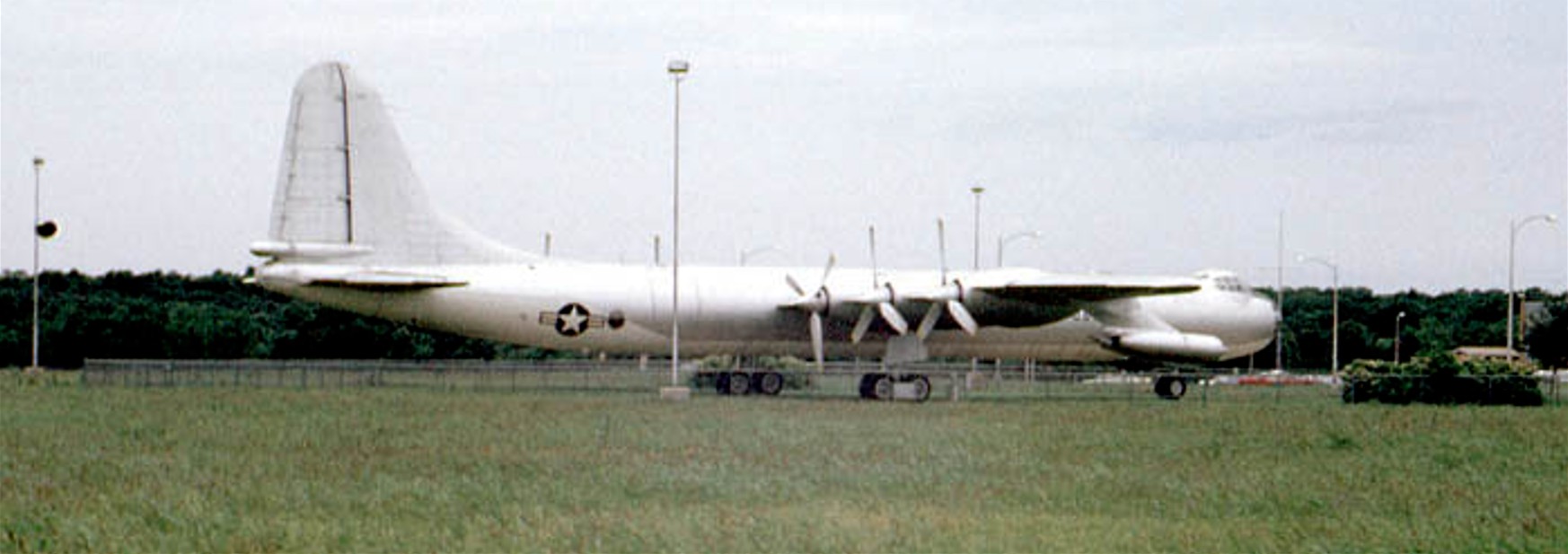
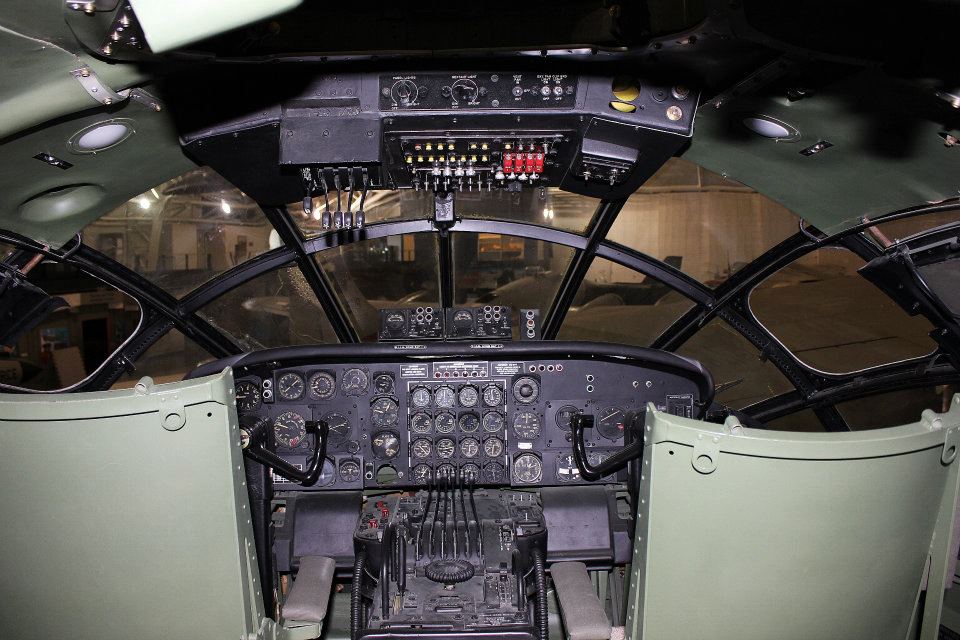
At one point, an aeronautical engineer from Convair named Sam Ball came up with a remarkable idea to save the old B-36. He proposed restoring the aircraft for it to be flown to nearby Fort Worth Meacham International Airport, for it to be restored to airworthy condition as a “flying museum” based out of Ft Worth. In order to restore 52-2827, the Peacemaker Foundation was formed and received permission from the city of Fort Worth to begin the project. Restoring the Peacemaker was easier said than done, as just one complete set of instruments was still intact, and the instrument panel bore the scars of hammers and fire axes used by thieves to steal the equipment, and each new instrument had to be rewired to the six Wasp Major radial engines, and eventually, all six of the R-4360 radial engines were successfully restarted, with one being run for 15 minutes after nearly 12 years of silence.
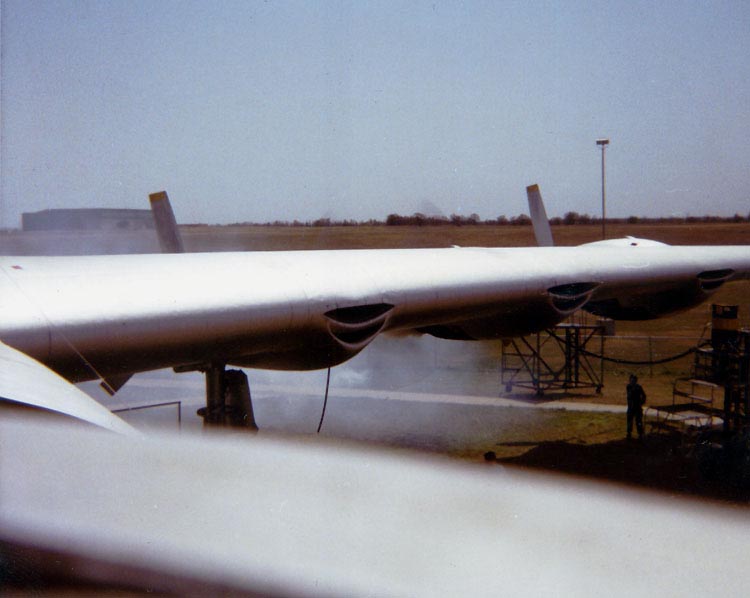
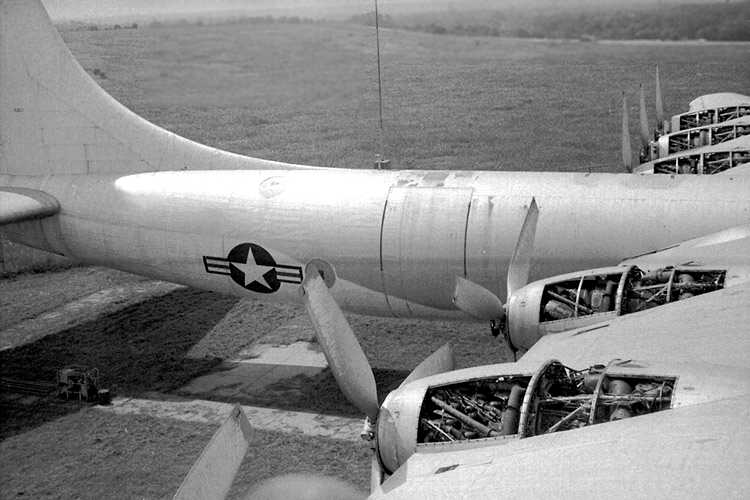
When officials at the USAF Museum heard about this, though, they ordered the Peacemaker Foundation to stop immediately, citing national security concerns of having an intercontinental bomber, albeit an outdated type, being flown in civilian hands. The USAF Museum also talked openly about repossessing the bomber from the city of Fort Worth, which began a series of negotiations between the city of Fort Worth and the USAF. As negotiations continued, work slowed down with the departure of volunteers who were eager to see the massive airplane fly again, but work to repair the damage from vandals remained steady, as was the search for more instruments. But with the opening of Dallas Fort Worth International Airport (DFW) on January 13, 1974, and the announcement of the closure of Greater Southwest International Airport’s runways set for March 31, it was now or never to fly the B-36 out. Although the Air Force now hinted that they might consider granting permission for a short ferry flight to Meacham Field, and several former B-36 crews, including Beryl Erickson, test pilot on the first flight of the XB-36 back in 1946, expressed interest in flying the aircraft if called upon. But Sam Ball also wanted to secure the title to the airplane from the USAF, with the hope that if the Air Force could grant him permission to fly the B-36J out of the now-closed Greater Southwest International Airport, getting the title would allow for further flights. But with the former Amon Carter Field closed, the managers at Meacham Field also cited that they did not have room to keep the massive Peacemaker there and were already trying to rid themselves of a derelict PBY Catalina. Meanwhile, the managers at DFW had no desire to house the old bomber, and the Air Force refused to transfer the title of the former intercontinental bomber to the Peacemaker Foundation, and the group failed to get tax-exempt status from the IRS. With that, the B-36J City of Ft. Worth would never have another chance to fly again, and the aircraft was repossessed by the US Air Force, citing lack of guarded storage facilities as a reason to prevent any civilian operation of an airworthy Peacemaker. At this time, a new organization called the Museum of Aviation Group (MAG) obtained ownership of B-36J 52-2827, and the MAG began its own negotiations to have the aircraft brought to DFW in order to save it from being scrapped at the former site of GSW. The first step in this process would see the aircraft towed from Peacemaker Park to a concrete apron just outside the old GSW terminal building, where efforts got underway to disassemble the B-36 and move it out. However, the negotiations at DFW failed, but a new site just outside the south gate of Air Force Plant 4, the former Convair plant that produced the B-36s, was located on the southwest corner of Air Force Plant 4/Carswell AFB complex. From 1976 to 1978, the team from MAG slowly disassembled B-36J 52-2827 and brought it to the General Dynamics plant to be displayed outdoors alongside other aircraft, including B-52D Stratofortress 55-0063, at what was renamed the Southwest Aerospace Museum (SAM), with MAG merging with SAM on February 18, 1983.
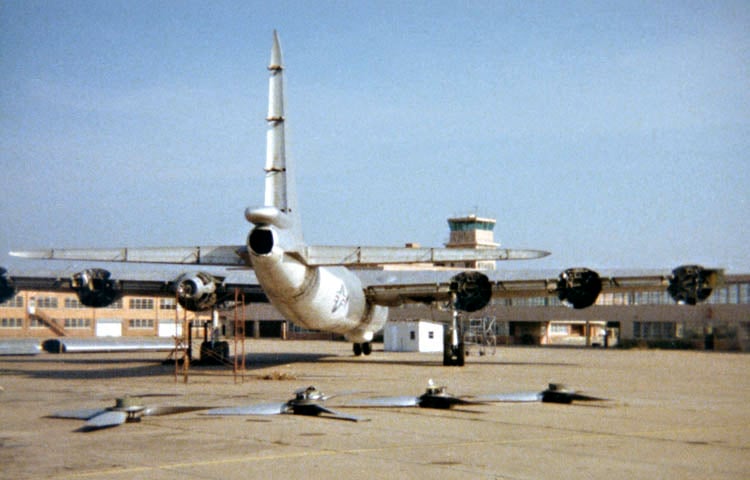
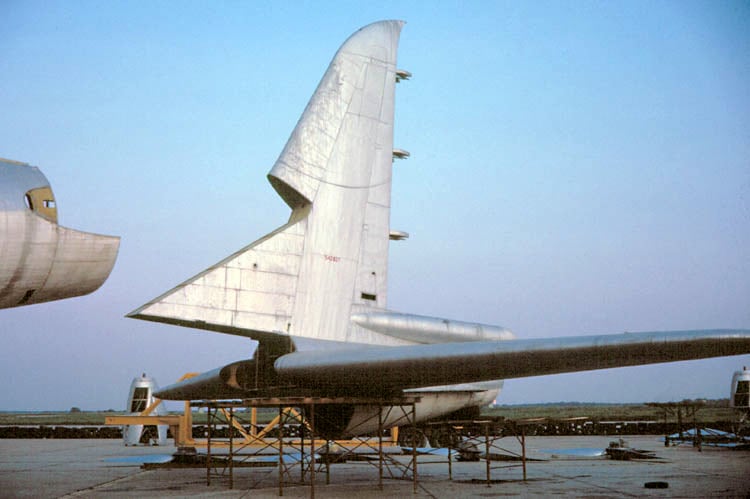
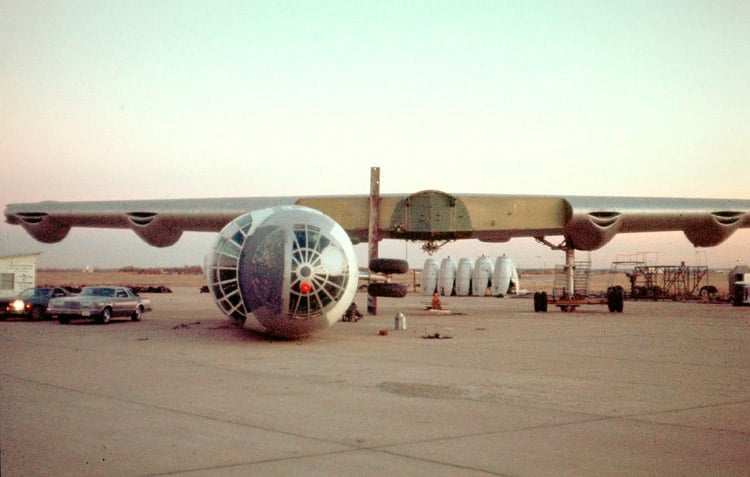
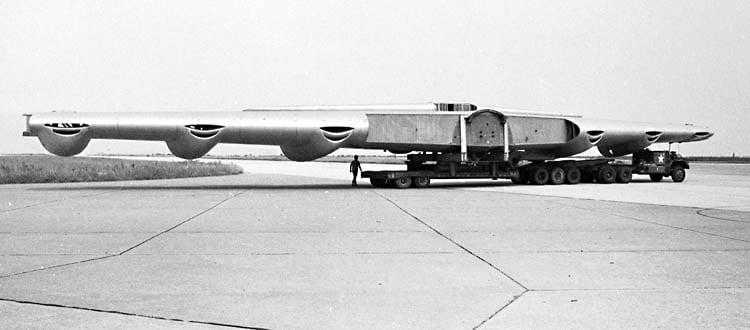
By the early 1990s, though, B-36J 52-2827 fell on hard times as it deteriorated further in the Texas weather, and the staff had little in the way of funds for detailers. Then, Carswell Air Force Base itself became one of many Air Force Bases to be closed as a result of the downsizing of the U.S. armed forces in the wake of the Soviet Union’s collapse. Once again, it was feared that the Peacemaker would be scrapped if nothing was done to save it. Indeed, although several fighters and trainers displayed at the Southwest Aerospace Museum were transferred to other locations, B-52D 55-0063 was later scrapped at Carswell. At one point, the Air Force considered sending the bomber up to Ellsworth Air Force Base near Rapid City, South Dakota, to be displayed with other aircraft up there. This went as far as uniformed but unnamed personnel removing and transporting engine nacelle panels and other parts of the aircraft to Ellsworth, with the idea of returning to Fort Worth to begin disassembling the rest of the aircraft. News of this outraged Fort Worth aviation officials, and with Fort Worth’s mayor Kay Granger, Texas Congressman Pete Geren, Melvin Haas (CEO of the Fort Worth Aviation Heritage Association), and others coming to the defense of the Peacemaker, forcing the Air Force to return the parts taken to Ellsworth back to Fort Worth. By October 1992, with Carswell AFB’s facilities set to be transferred to the US Navy, the Southwest Aerospace Museum and a group called the Aviation Heritage Association merged to save B-36J 52-2827. With the full support of the city of Fort Worth, the aircraft was moved to a hangar in Air Force Plant 4, the former Convair/General Dynamics facility where it was built, now operated by Lockheed Martin. Dozens of volunteers, many being retired Convair employees who had built the B-36 Peacemakers in the 1940s and 1950s, put in up to 40,000 manhours working on the aircraft, and completed their restoration in 1994. Meanwhile, the Aviation Heritage Association began efforts to establish a dedicated B-36 Peacemaker Museum at Alliance Airport (now Perot Field Fort Worth Alliance Airport) to house the bomber when it was completed. Unfortunately, though, as Lockheed-Martin had to use the facility to build the new F-22 Raptor and make preparations for the facility’s involvement in the upcoming Joint Strike Fighter (JSF) program that led to the development of the F-35 Lightning II, the last B-36 had to leave its birthplace by March 2003. At the same time, the effort to build a museum large enough to house the B-36 never got enough traction to proceed, and division came between the B-36 Restoration Team and the Aviation Heritage Association over where to place B-36J 52-2827. On April 11, 2003, the B-36 Peacemaker Museum Inc. was chartered, and four days later, the Fort Worth City Council unanimously approved a resolution that the B-36 City of Fort Worth remain within the incorporated city limits of Fort Worth, with alternate plans for displaying the bomber either at Dallas-Fort Worth or at Meacham Field. In 2005, however, the National Museum of the United States Air Force, which still owned the title to the aircraft, felt that none of the parties in Fort Worth had the resources to restore and display the last Convair B-36 Peacemaker, and began looking for another affiliate museum to display it. Eventually, it was decided that B-36J 52-2827 would be transported to the Pima Air and Space Museum in Tucson, Arizona, with Scott Marchand, Pima’s director of collections and restoration, overseeing the transportation effort. Having already been disassembled, the aircraft would be carried to Pima as part of 11 truckloads, with workers braving the Texas July heat and humidity to get the pieces of the Peacemaker loaded up. The forward and aft fuselage sections were transported separately, then came the engines, tail assembly, landing gear, and outer wing panels, with the journey for each of these oversized loads taking three days traveling at 50 mph down Interstate 20 from Fort Worth through Pecos down to Interstate 10 to head directly for Tucson. But the most challenging part of the move was the airplane’s 20-ton center wing section.
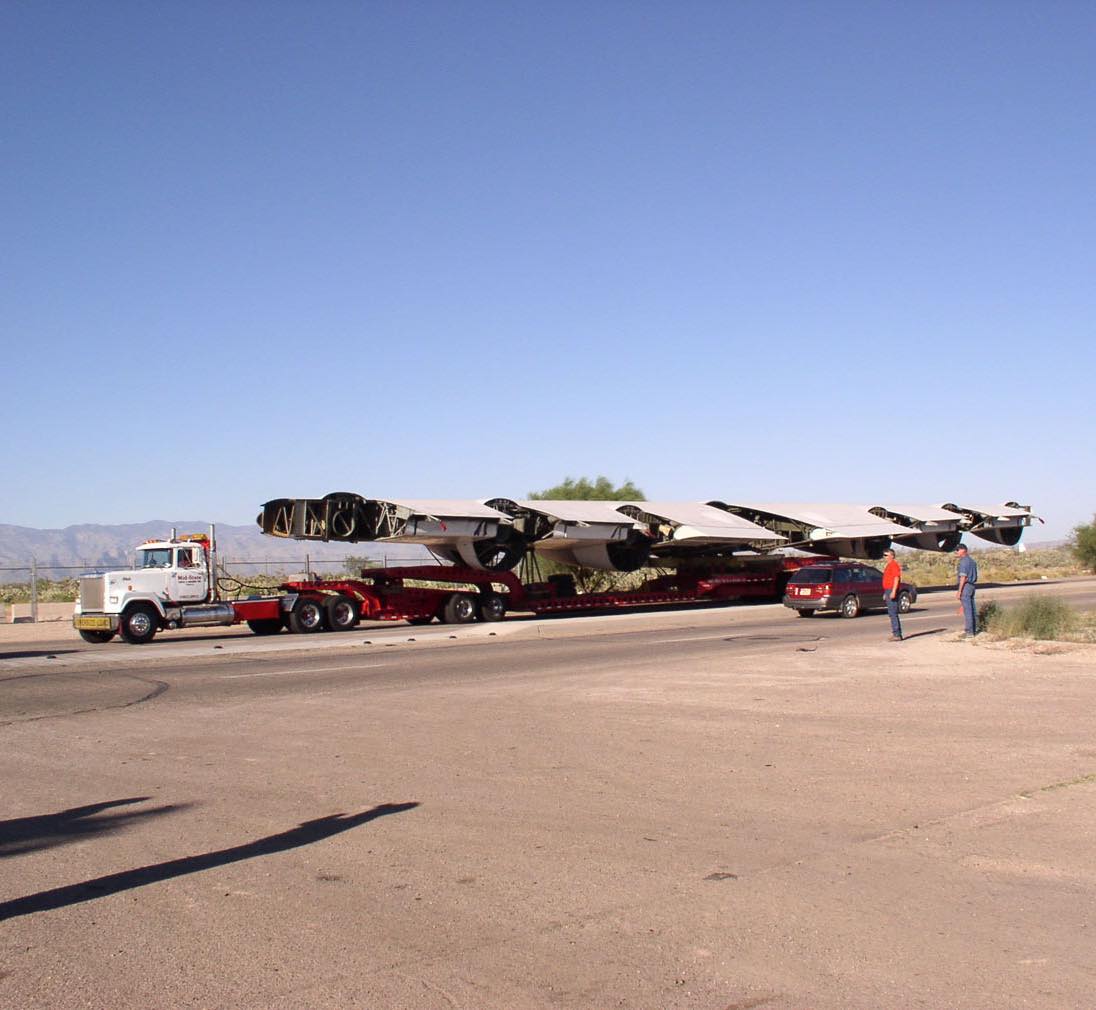
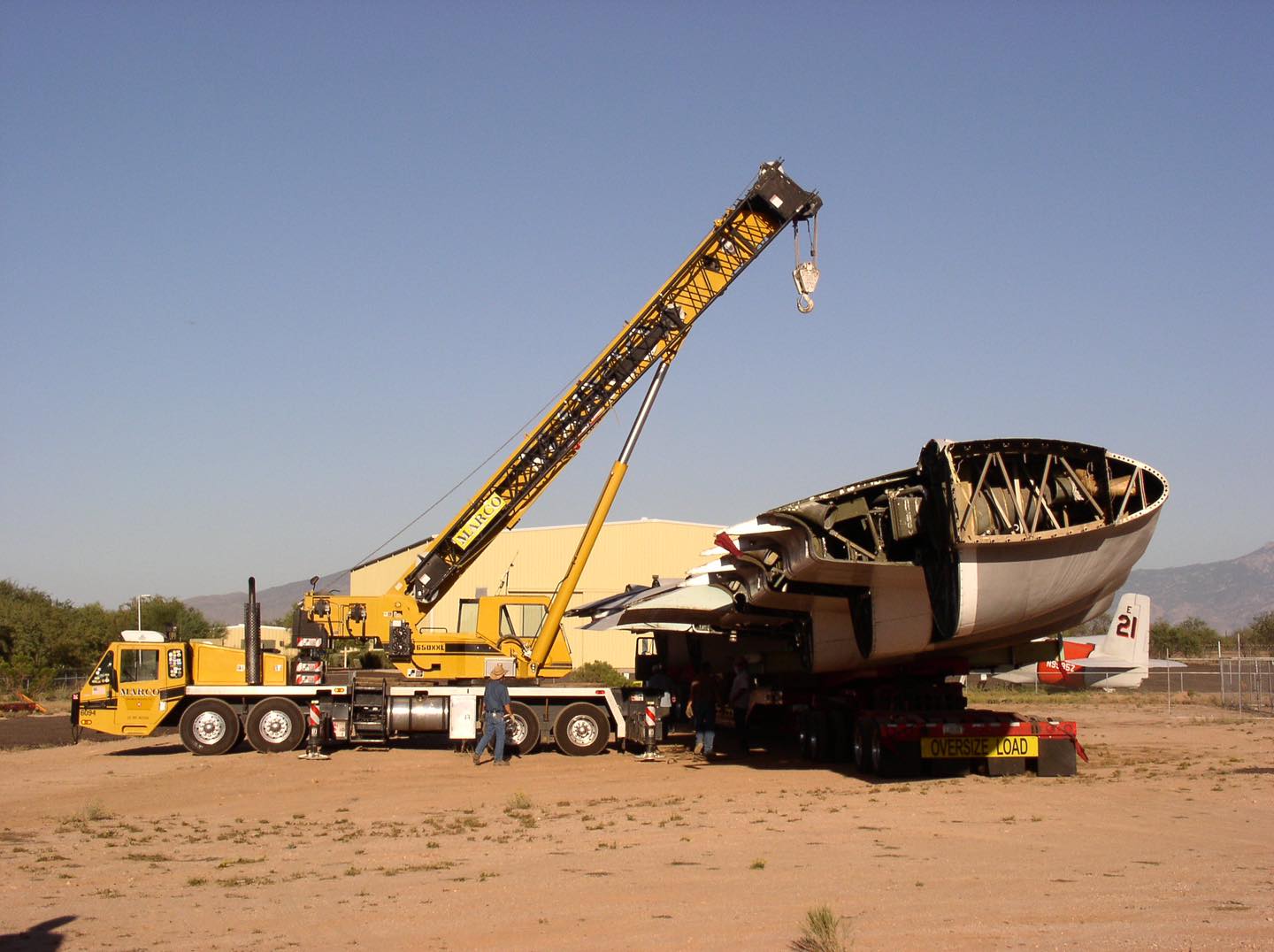
In September 2005, the center wing section of B-36J 52-2827 was loaded onto a custom oversize trailer nearly 100 feet in length, but even then, almost 40 feet of the center wing section hung freely from the trailer, and the 170-feet-long, 29-feet-wide, and 13-feet-high wing section took up both lanes of the westbound highway. With the help of Phoenix-based Southwest Industrial Rigging, who would later transport the Martin Mars flying boat “Philippine Mars” from Lake Pleasant to Tucson in 2025, and with the cooperation of local and state law enforcement agencies, the center wing section began its journey west to Pima. However, the width of the wing section almost prevented it from arriving in Tucson, as there was a highway underpass east of Tucson that was 30 feet wide, and with the wing section being 29 feet wide, it left just six inches of clearance on both sides for the center wing section pass through, but fortunately, the skillful hands of the contractors managed to get the wing section through the underpass without incident, and the last piece of B-36J 52-2827 arrived safely at Pima. To see more on the restoration in Fort Worth, one of the restorers of B-36J 52-2827, Bob Adams, has uploaded two videos of the restoration project on his YouTube channel here:
Restoration of the last B-36 Bomber
Restoration of the last B-36 Bomber in Ft Worth
Over the next four years, Pima Air and Space Museum’s restoration staff and volunteers worked on reassembling the City of Ft. Worth, which took 24,000 man hours to complete. By 2008, the aircraft was reassembled, and the museum would work on repainting the massive bomber. On July 1, 2009, B-36J 52-2827 City of Fort Worth was officially dedicated at the Pima Air and Space Museum, with members of the Fort Worth-based B-36 Peacemaker Museum in attendance. Since the aircraft’s tenure at Pima, the B-36 Peacemaker Museum has been hosted by the Fort Worth Aviation Museum at Fort Worth Meacham International Airport, and while many in Fort Worth’s aerospace community are still saddened that the city could not find a permanent home for the airplane in Fort Worth, the legacy of Peacemaker is still celebrated at Meacham Field to this day, and the men and women who worked on 52-2827 can at least rest assured that their efforts prevented the massive bomber from being scrapped long ago, and ensured that while it is not long in the city where it was born, it rests now as one of the most popular attractions of the Pima Air and Space Museum, alongside over 400 other aircraft of all shapes and sizes, including many of the B-36’s contemporaries from Strategic Air Command, such as the Boeing B-47 Stratojet, B-52 Stratofortress, and the Convair B-58 Hustler.
Honorable Mention: YB-36/RB-36E 42-13571
While no longer an intact airframe, no list of preserved B-36 Peacemakers would be complete without mention of what was once the oldest remaining example of the type, and while it is no longer in one piece, parts of it still remain to this day. This was YB-36 42-13571, the second ever B-36 built and the pre-production prototype. As the first B-36, XB-36 42-13570, was being constructed at what was then the Consolidated-Vultee plant in Ft Worth, 42-13571 was selected to become the pre-production prototype of the Peacemaker on April 27, 1945. Two years later, on December 4, 1947, YB-36 42-13571 made its first flight with Convair test pilot Beryl Erickson at the controls. The YB-36 differed from the XB-36 in that the YB-36 had a raised roof with a high visibility canopy and redesigned forward crew compartment, both of which became common features on the production model B-36s. The YB-36 was also fitted with improved turbosuperchargers, which allowed the aircraft to exhibit much better performance than the XB-36. For example, the aircraft climbed above 40,000 feet on its third test flight on December 19, 1947.
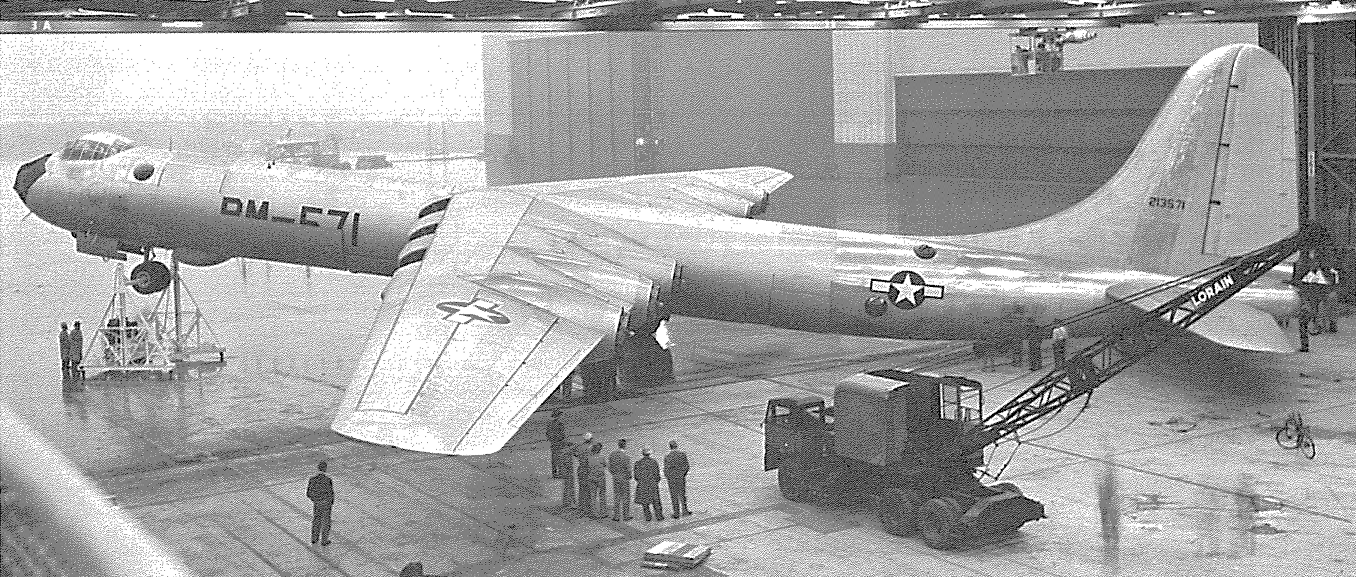
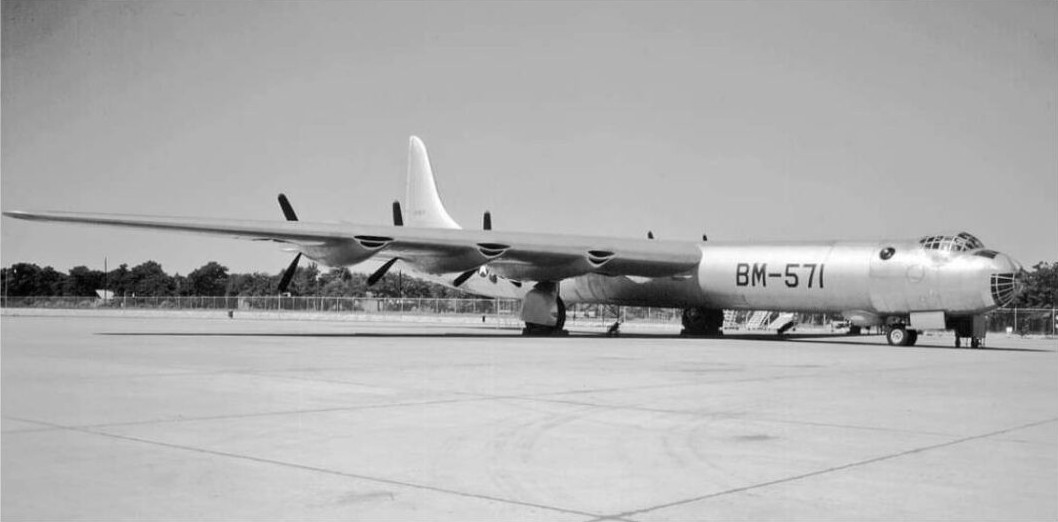
One feature that the aircraft did retain from the XB-36 was the single wheel undercarriage, where the main landing gear tires made by Goodyear were 110 inches in diameter and 36 inches in width, with each weighing 1,320 pounds alone. However, the pressure exerted by these tires on runway surfaces limited their operational potential, and so the YB-36 debuted a new landing gear arrangement with four smaller wheels for the main undercarriage, which was also adopted in the production model B-36s. At this time, the aircraft had its six R-4360 Wasp Major radial engines, as the General Electric J-47 turbojet engines were not installed until the advent of the B-36D model. For the rest of 1940, YB-36 42-13571 was retained by Convair for further testing and evaluation in cooperation with the USAF. On May 22, 1948, the aircraft was damaged while landing at Carswell AFB due to a mechanical failure relating to the single-wheel main landing gear, which was replaced by the four-wheel landing gear of the production models on May 27. After receiving upgraded Pratt & Whitney R-4360 engines, w42-13571 was redesignated the YB-36A and first flown in this new configuration in June 1948. After further tests involving turret systems for production models were tested, such as the Farrand hemisphere nose site, AN/APG-3 tail radar and two aft sighting stations, YB-36A 42-13571 was finally delivered to the U.S. Air Force on May 31, 1949, and by October, it was assigned to the 60th Strategic Reconnaissance Squadron, 72nd Strategic Reconnaissance Wing at Ramey AFB near Aguadilla, Puerto Rico. In October 1950, the aircraft was converted into an RB-36E strategic reconnaissance aircraft and fitted with four wing-mounted General Electric J47 jet engines mounted in pairs on the underside of the outer wing panels before returning to the 72nd Bombardment Wing. As the B-36 fleet was being retired in the mid-1950s, RB-36E 42-13571 was selected for preservation at the United States Air Force Museum at Wright-Patterson AFB in Dayton, Ohio. On February 18, 1957, the aircraft made its final, 12-hour, 10-minute flight from Ramey AFB, Puerto Rico, to Wright-Patterson AFB. The aircraft was placed on outdoor display at the Air Force Museum’s location, Patterson Field side of WPAFB near Fairborn, Ohio, where a former engine overhaul hangar turned museum hangar was used to house the collection’s pre-WWII aircraft, while the all-metal aircraft from WWII and the 1950s were displayed outdoors. Unfortunately, the old B-36 deteriorated from weather exposure, and when it was decided to move the museum to a new, dedicated facility on the Wright Field portion of the base, where B-36J 52-2220 was being kept, most aircraft were moved there, but a few of the larger ones, such as YB-36/RB-36E 42-13571 were deemed too large and/or too uneconomical to transport to the new museum.
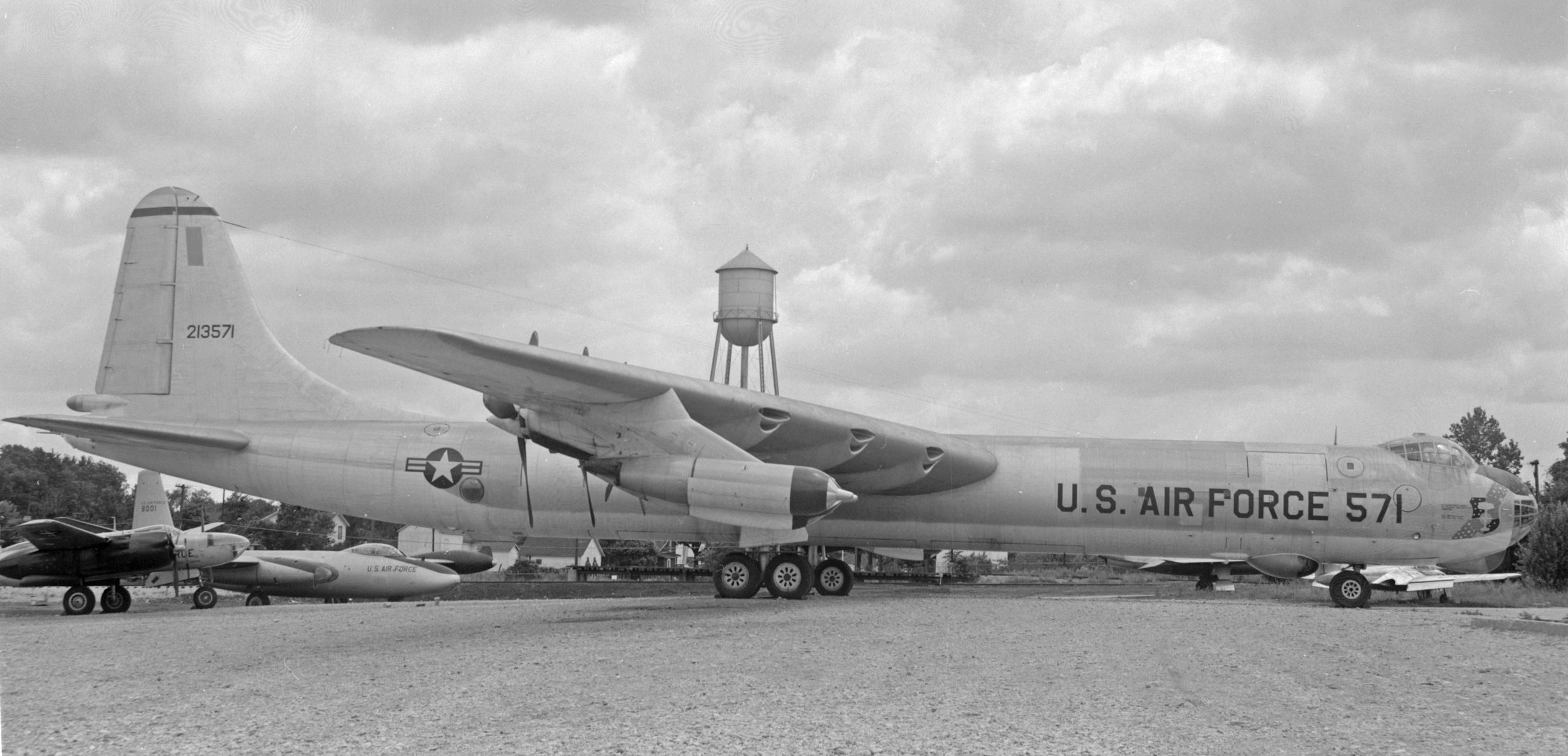
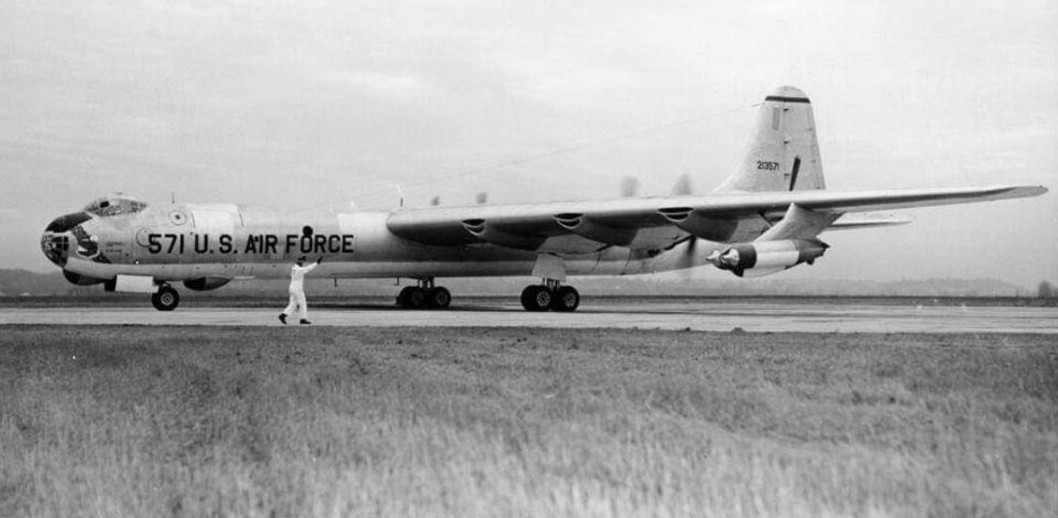
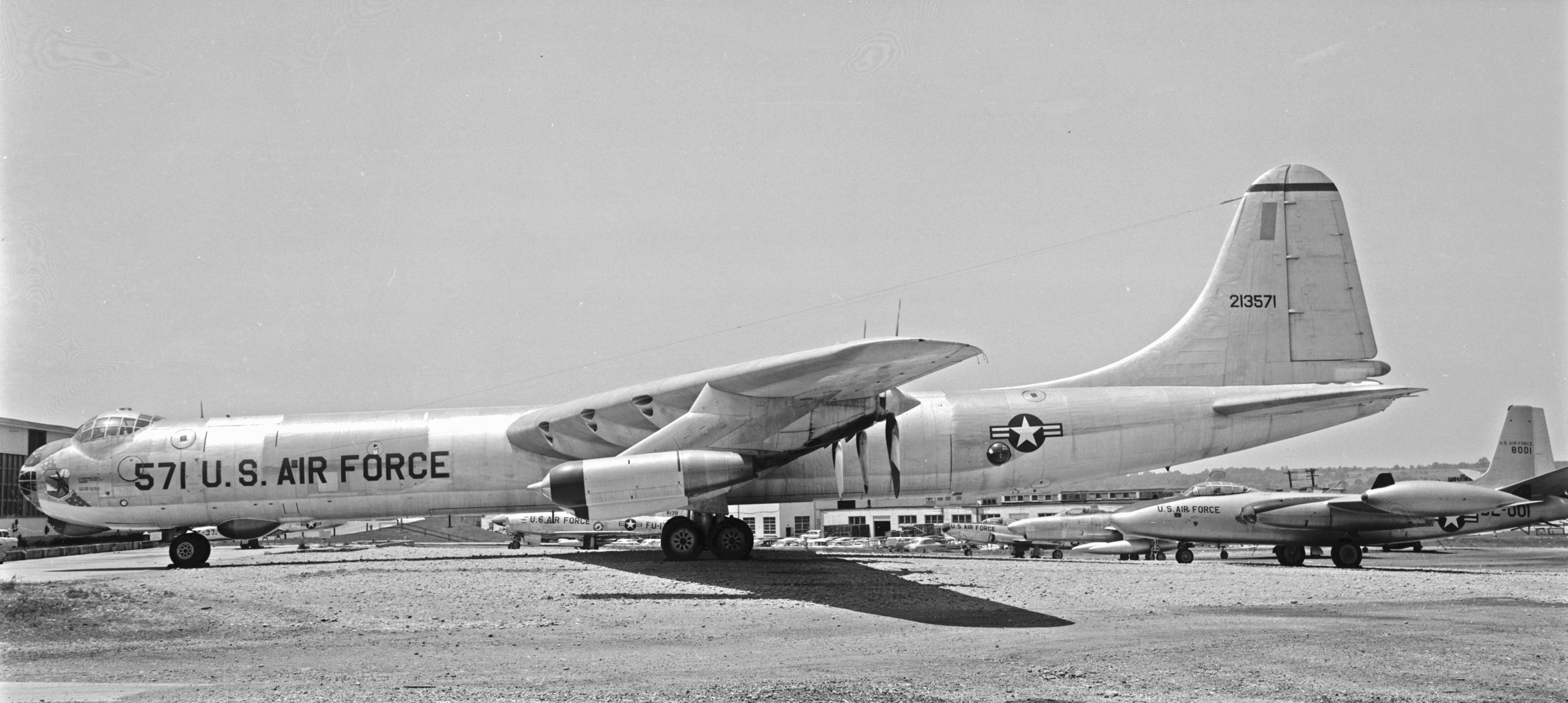
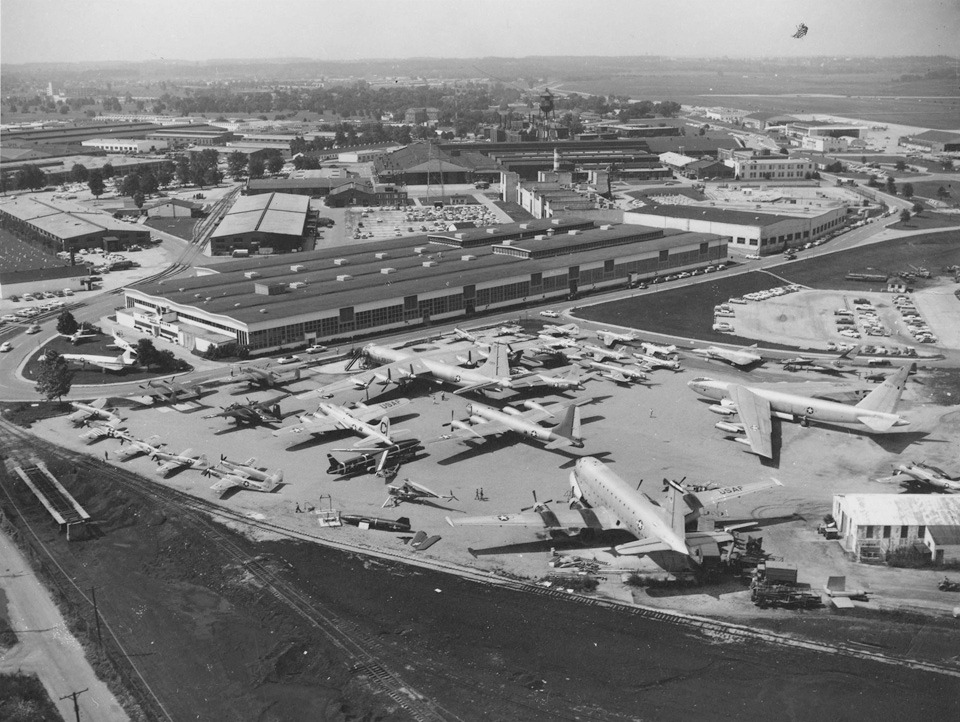
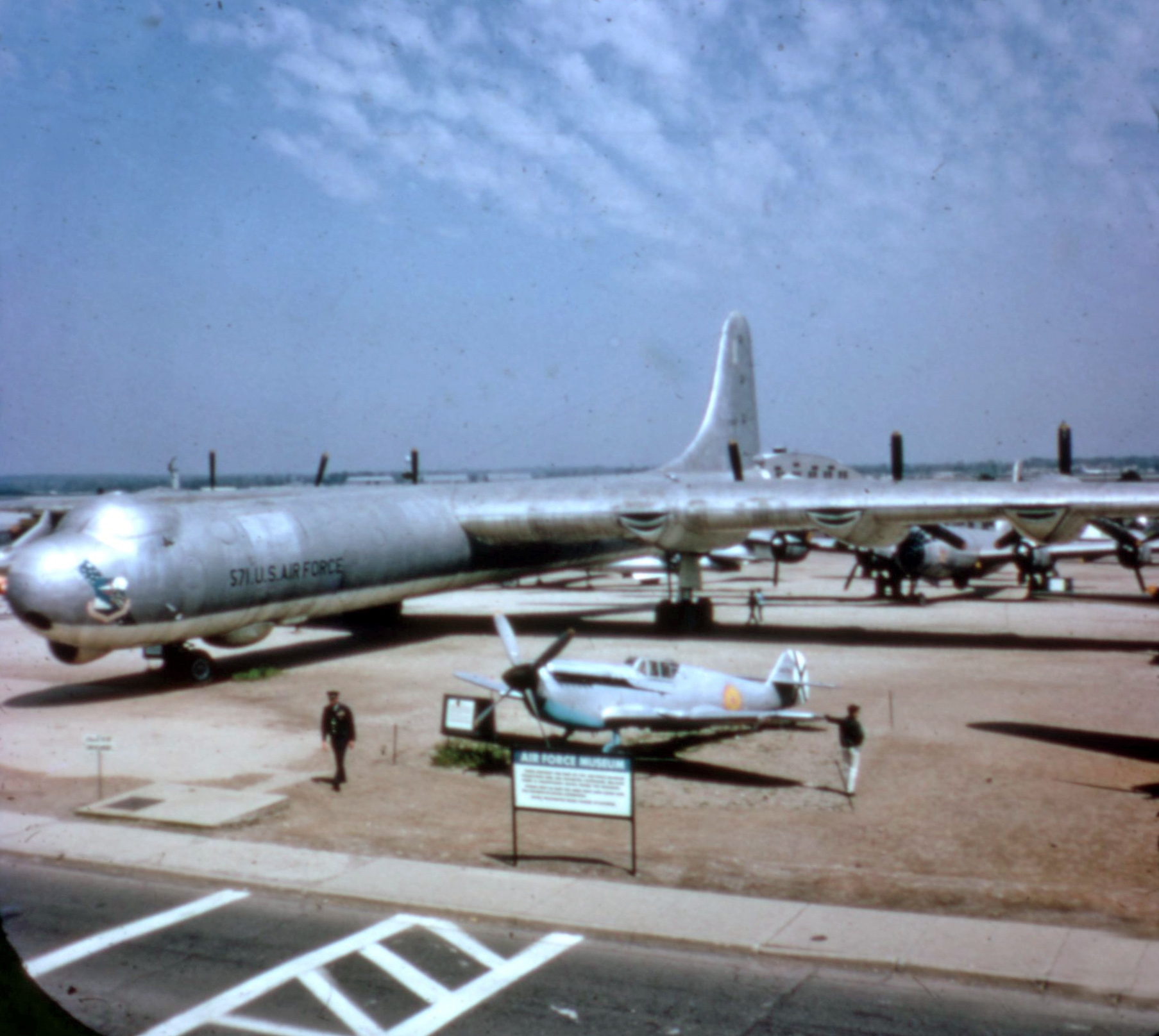
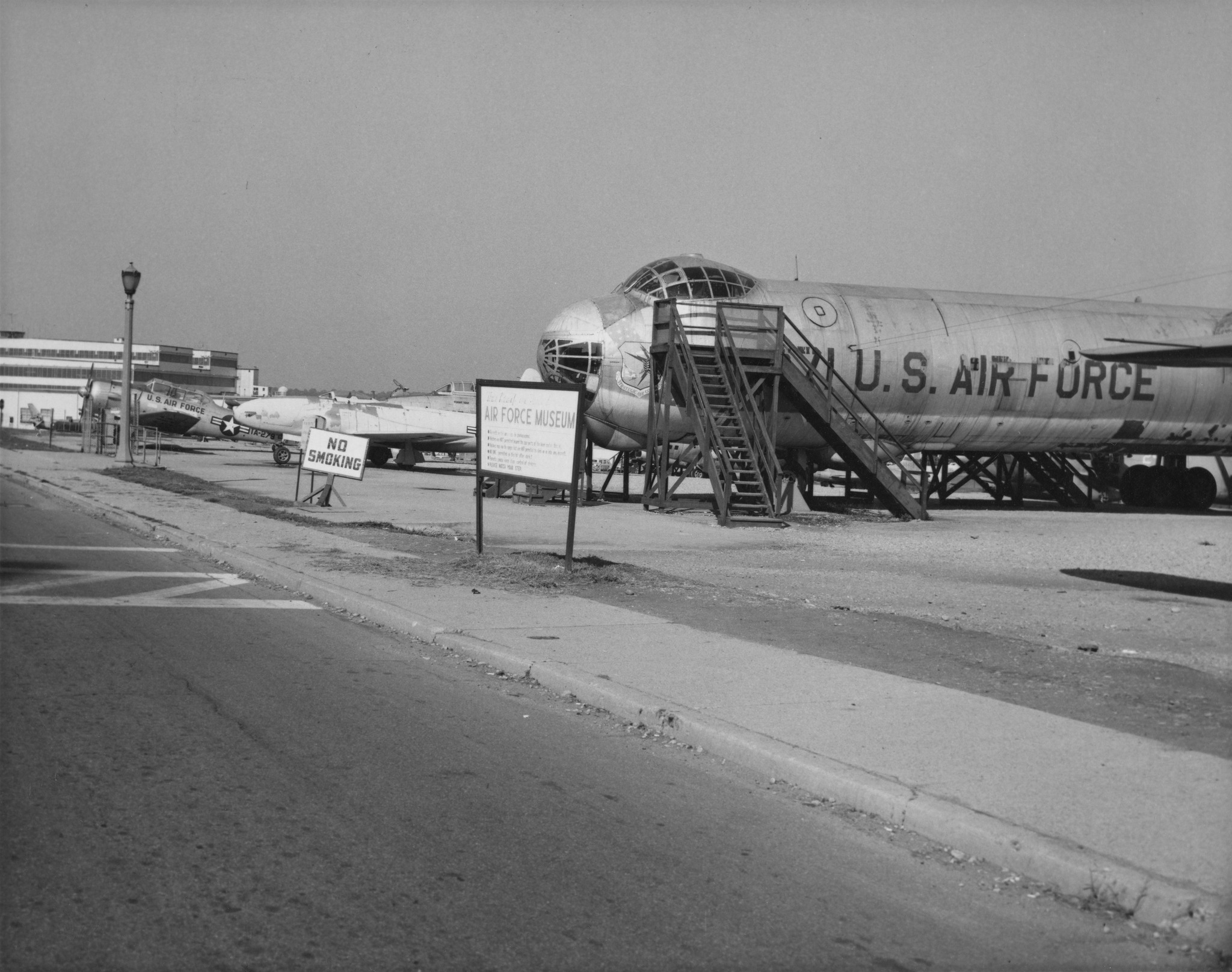
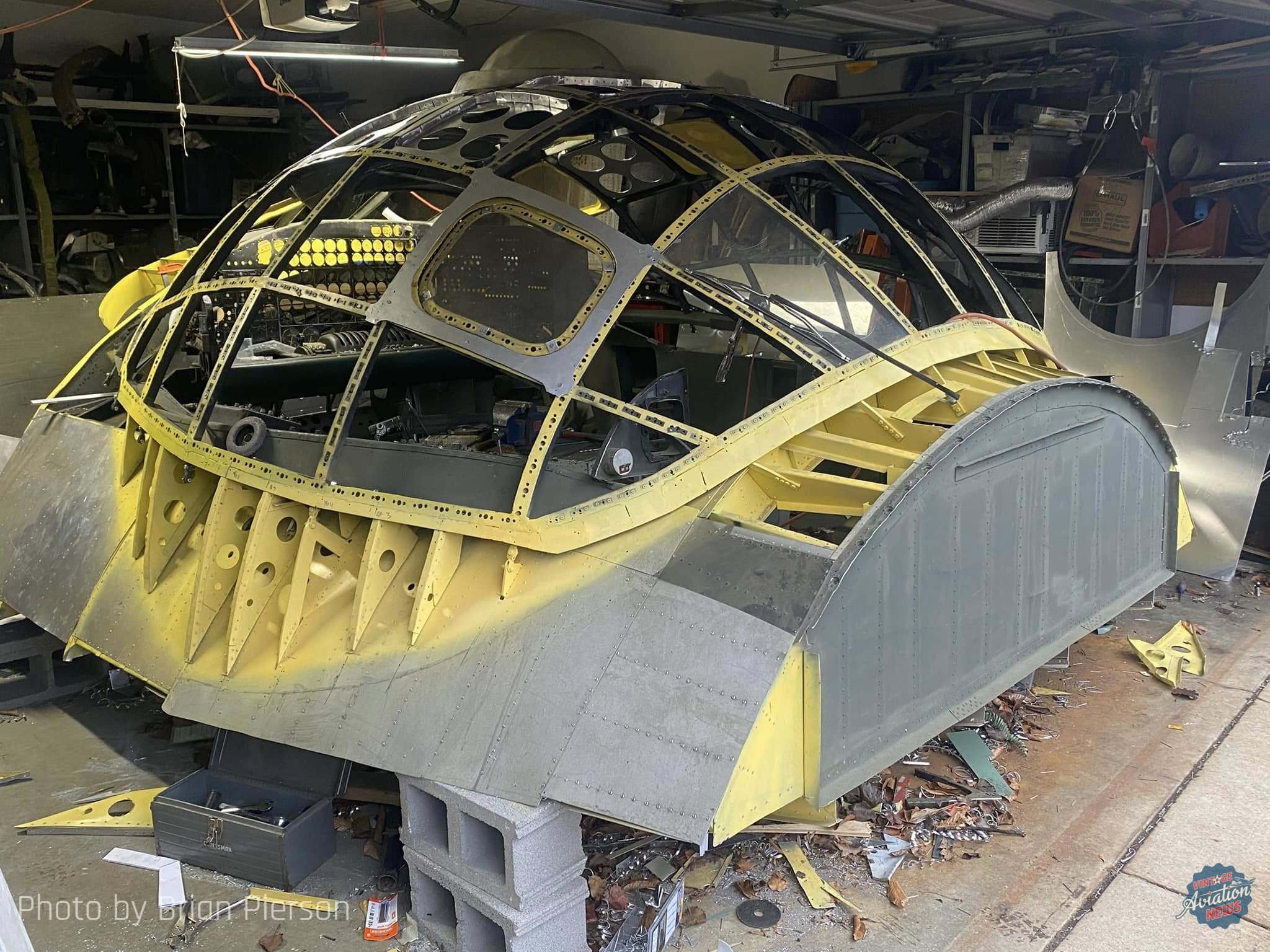
When no other museum showed an interest in collecting the aircraft written off, they were sold for scrap. The contract to scrap 42-13571 was awarded to Ralph Huffman and his son Ralph Jr after the Air Force had removed the engines and cut large sections into the aircraft with a bulldozer. Ralph Huffman had been in the business of scrapping airplanes since WWII and was involved in the scrapping of the Douglas XB-19 experimental bomber at Davis-Monthan Air Force Base in 1949. The Huffmans used fire axes and blow torches to cut up the plane into smaller sections over a two-week period in July 1972, then used A-frames and chain hoists to load the scrap metal onto flatbed trucks to be taken to at least three smelters across southern Ohio. During the scrapping process, the senior Huffman remembered that outside of Cleveland lived Walter Soplata, an airplane collector from Newbury, Ohio. Soplata had also started out as a scrapper before dedicating himself to saving as many airplanes as possible, employing his four daughters and only son Wally in helping him disassemble airplanes he would buy from scrap dealers to transport them to the family home and store in the family’s backyard. Ralph Huffman had transported what remained of the Peacemaker out of Wright-Patterson AFB to a private location bout 18 miles from Dayton and sold Soplata the forward and aft ends of the fuselage, sections of the wing, and two engines. Over the course of 30 months from 1972 to 1975, Soplata took the remains to his family home, with the total material saved being brought back in 26 truckloads. To hold the fuselage remains up, Soplat built a wooden framework to attach these sections to. Though most of the bomb bays were lost, what remained were used to store several items, including the fuselage of the XP-82 Twin Mustang 44-83887, which has since been restored to airworthiness by Tom Reilly of Kissimmee, Florida, and is currently loaned to the Valiant Air Command Warbird Museum in Titusville, Florida. (See our articles on this aircraft HERE) However, the remains of the B-36, deteriorated under exposure to the elements, and in 2019, the remains were sold to MotoArt PlaneTags, which removed 5,000 pieces of the aircraft’s skin from the tail cone and rear crew compartment to be sold as souvenir keychains (More on that project HERE). Not all of 42-13571 was cut up, though, as in October 2024, aircraft parts company Round Engine Aero of Nashville, Michigan, acquired the cockpit remains of YB-36/RB-36E 42-13571, and while they have yet to publicly reveal their plans for the cockpit action of this aircraft, it is currently stored at their facility, and they have stated their goal of preserving the aircraft’s cockpit. Meanwhile, Brian Pierson of West Virginia, who is currently constructing a fully functional replica of a B-36 cockpit in his garage, has previously surveyed the remains of 42-13571, and has also purchased the aft compartment of the aircraft. For more on his epic project, see our two articles on his project HERE and HERE.
In the end, the Convair B-36 Peacemaker certainly lived up to its name. From its introduction into service in 1948 to its retirement in 1959, the B-36 never dropped a bomb in combat and held the line as a deterrent until the introduction of the Boeing B-52 Stratofortress, which remains in service to this day. Despite the endurance of the B-52, the Convair B-36 Peacemaker remains the largest aircraft to enter mass production in the United States, and the largest bomber ever flown in operational service by the United States Air Force. Special thanks to Brian Pierson for his contributions that led to the making of this article.