

(Image credit: VAN)
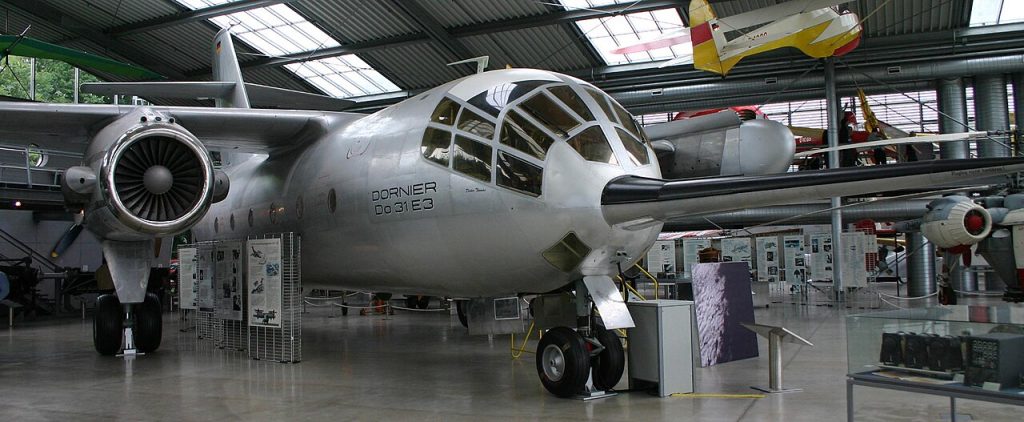
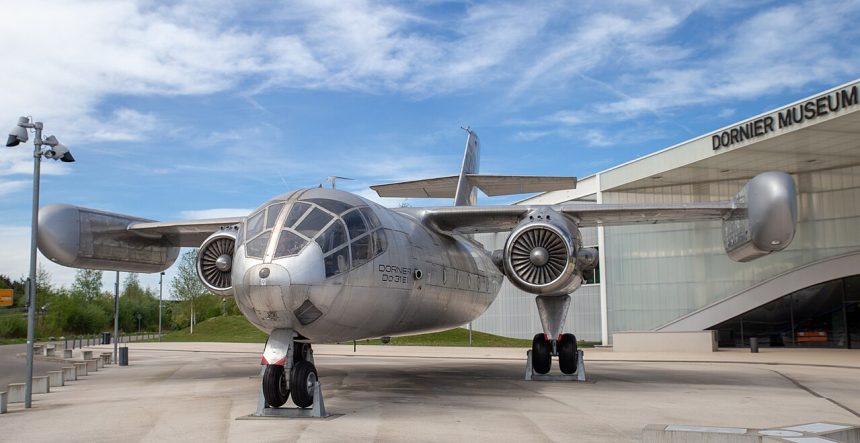
On this day in aviation history, 59 years ago (February 10, 1967), the first flight of the Dornier Do 31 took place. The Do 31 was an experimental VTOL (vertical takeoff and landing) cargo jet that was developed in West Germany by Dornier Flugzeugwerke. The concept of having a VTOL aircraft in the fleet intrigued the German Air Force after a recent NATO specification had been released. Spec NBMR-4 called for a VTOL-capable tactical support aircraft, one which would be operated in-step with another proposed German VTOL aircraft, the EWR VJ 101. The VJ 101 was an experimental strike aircraft designed under another NATO contract, BMR-3.
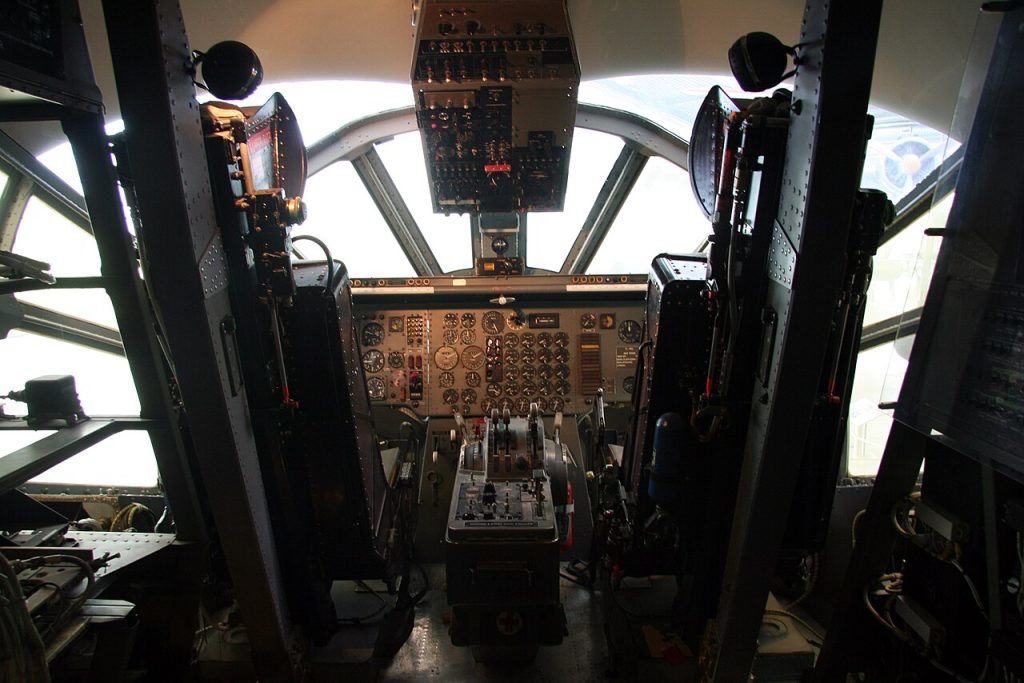
Dornier Flugzeugwerke developed three prototype Do 31 aircraft: two were airworthy, and one was used for static testing. The Do 31 flew for the first time on 2/10/67, but would not hover until July of the same year. The appeal of having an aircraft such as the Do 31 with SVTOL capability was spurred by a fear of major conflict with the Eastern Bloc. An SVTOL aircraft could hypothetically operate in confined spaces under attack, including one of Germany’s most precious resources, the Autobahns. As flight testing progressed, Germany began to showcase the Do 31 in public, starting with the 1969 Paris Airshow. During the Dornier Do 31’s limited flying career, the aircraft set several world records, including being the first (and to that point, only) vertical takeoff jet transport ever built.
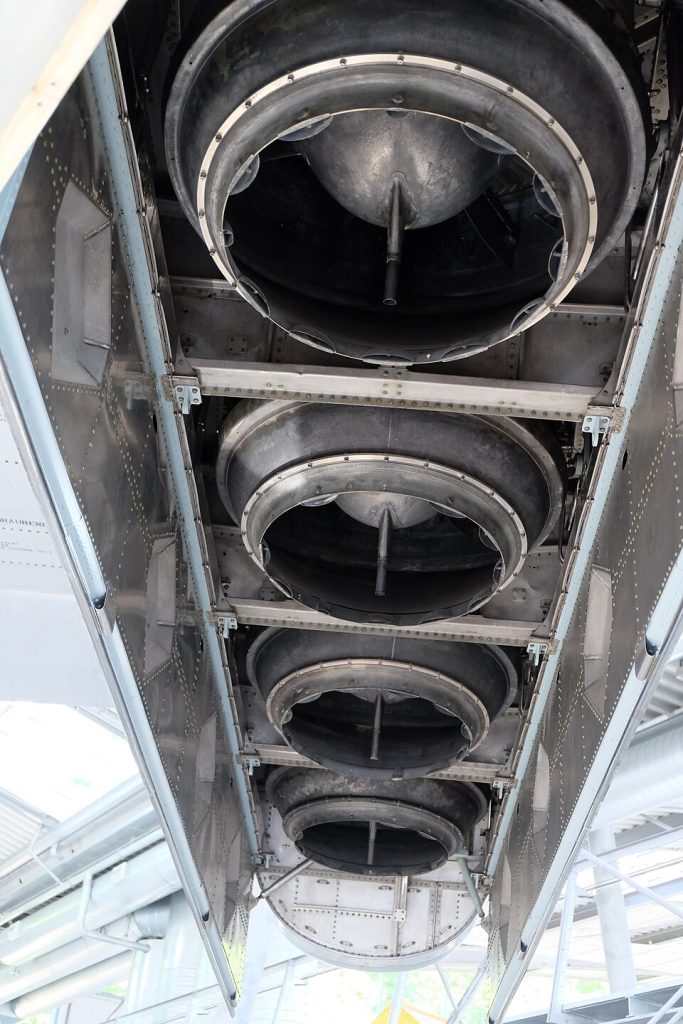
The Dornier Do 31E was flown by a crew of two and had a capacity for either 36 troops or 24 casualty stretchers. Additionally, 7,715 pounds of useful load could be carried. Two Rolls-Royce Pegasus BE.53/2 turbofan engines 15,500 pounds of thrust each) and eight Rolls-Royce RB162-4D vertically mounted turbojet lift engines (4,400 pounds of thrust each), powered the Do 31E. The aircraft cruised at 404 mph and had a maximum airspeed of 452 mph. The Do 31E’s range was 970 nautical miles, with maximum payload. Dornier’s VTOL aircraft had a service ceiling of 35,100 feet and a 3,780 feet per minute rate of climb when using the Pegasus engines alone. Flight testing revealed that operating the Do 31 came with a hefty price tag. Furthermore, German officials began to recognize the technical and logistical pains of flying an aircraft such as the Dornier and its unrefined SVTOL technology. The Do 31 program was ultimately cancelled, along with the EWR VJ 101 and other VTOL experiments. Lack of state support and funding was another contributor to the end of the program.