
(Image credit: VAN)
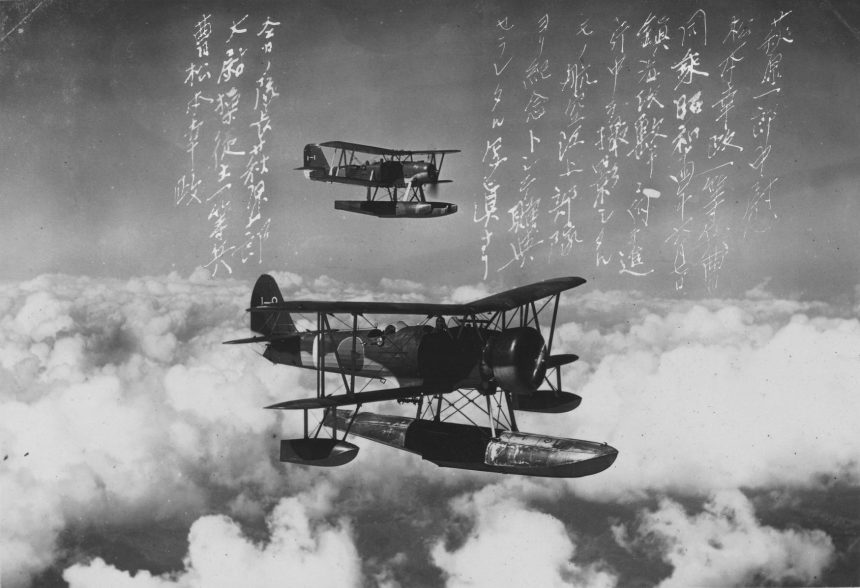
On this day in aviation history, 93 years ago (February 6, 1933), the first flight of the Kawanishi E7K took place. Referred to by the reporting name of “Alf” by the Allies, the E7K was a Japanese reconnaissance seaplane. Development of the E7K began in 1932, when the Imperial Japanese Navy (IJN) asked Kawanishi Aircraft Company to design a suitable replacement for their E5K. Kawanishi’s resulting design was that of a three-place biplane, with equal-span upper and lower wings. Three months after the aircraft’s first flight, the E7K1 was shifted to the IJN for trials.
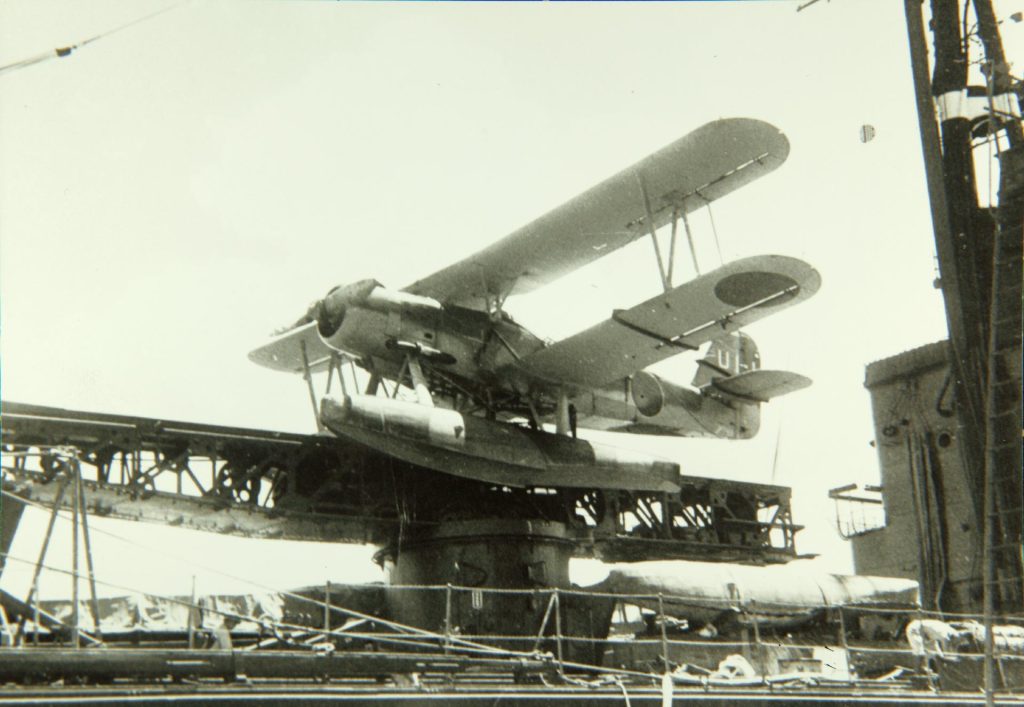
In a competition to fulfill the IJN’s 7-Shi requirement, the E7K1 flew off against the Aichi AB-6, designed with the same recon role in mind. The E7K1 was eventually ordered into production, earning the name Navy Type 94 Reconnaissance Seaplane. The Alf would enter service in early 1935. Although it became a somewhat popular aircraft, the E7K was limited by its unreliable Hiro engine. A more powerful variant of the Hiro 91 was used to replace the original powerplant, but reliability did not improve. As a result, Kawanishi developed the upgraded E7K2 in 1938, powered by the Mitsubishi MK2 Zuisei 11 14-cylinder radial engine. The Zuisei 11 provided 870 horsepower at take-off, and 850 hp at 7,500 feet.

Kawanishi’s E7K2 had a maximum airspeed of 171 mph and could cruise at 115 mph. The Alf had an endurance of 11 hours and 19 minutes, and could climb to 9,800 feet in 9 minutes and 6 seconds. Armament for the E7K2 came via one fixed Type 97 Vickers, and two 7.7 millimeter Type 92 Lewis machine guns, installed dorsally and ventrally. Additionally, the recon seaplane could be fitted with 264.6 pounds of bombs. From 1938 until the beginning of the War in the Pacific, the Imperial Japanese Navy made extensive use of the E7K1s. As these early variants became relegated to training sorties, the E7K2 continued to fly in front-line service until 1943. Both the E7K1 and E7K2 were used as kamikaze aircraft nearing the war’s end. Kawanishi Aircraft Company built 533 Alfs in total, but none have survived today.