
Today In Aviation History: First Flight of the Short SC.7 Skyvan

The Short SC.7 Skyvan is one of aviation’s most distinctive utility aircraft, famous for its boxy shape, massive rear cargo door, and ability to operate from short, rough runways. Designed by Short Brothers in Ireland, the Skyvan proved popular with freight operators, small airlines, and military users before finding a second life in skydiving and aerial photography roles. More than six decades after its first flight, the Flying Shoebox remains a symbol of simple, tough, and practical aircraft design.

Austin Hancock
Austin Hancock
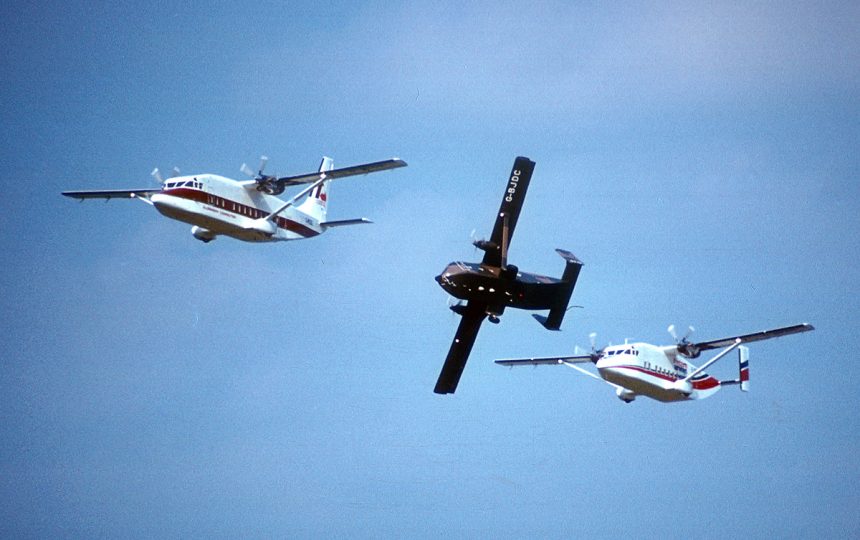
A Short Skyvan (center) together with the two types developed from it, Short 360 (front) and Short 330 (rear) at 1982 Farnborough Airshow. Photo by wiltshirespotter/Wikipedia
Barnerstormer Hugault 729x90
VAN Today in Aviation History Banner

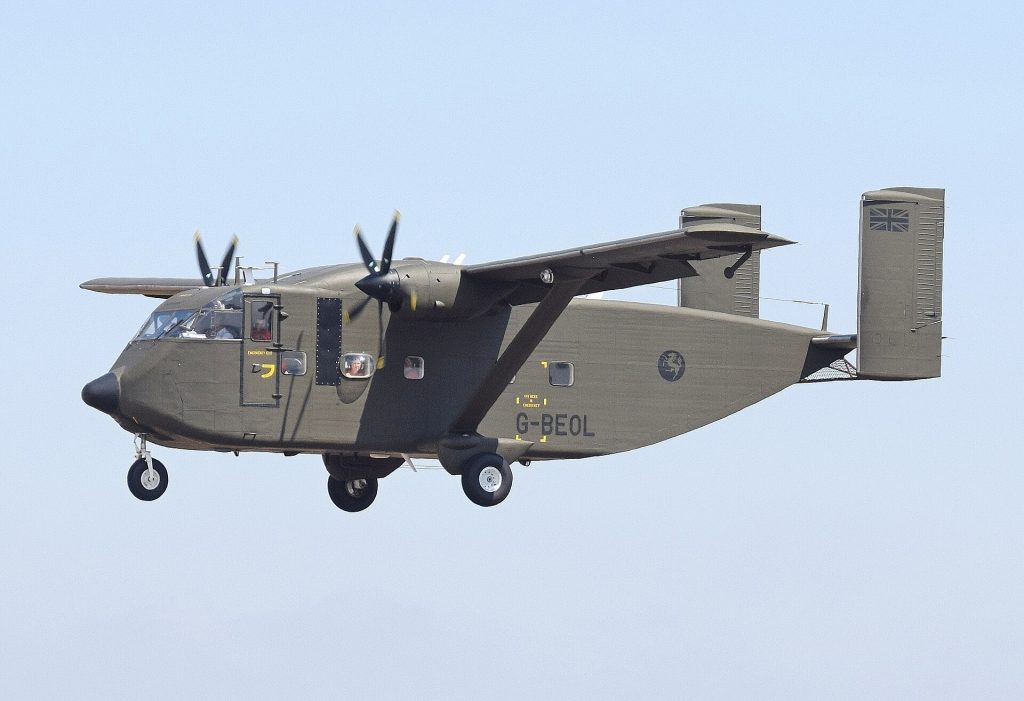
On this day in aviation history, 63 years ago (January 17, 1963), the Short SC.7 Skyvan flew for the first time. Nicknamed the “Flying Shoebox” due to the overall shape of the airframe, the SC.7 is a turboprop utility aircraft designed and built in Ireland by Short Brothers. The SC.7 is a strong, robust design that features STOL capabilities. Skyvans are twin-engined, high-wing monoplane designs with a braced, high-aspect-ratio wing. The fuselage was designed to accommodate people and cargo, giving the SC.7 the ability to deliver goods and people in and out of difficult spots.
Today In Aviation History First Flight of the Short SC.7 Skyvan 1
Short Skyvan SC.7 (G-BEOL) departs the 2018 Royal International Air Tattoo, RAF Fairford, England. Built in 1977. Photo by Adrian Pingstone/Wikipedia

The SC.7 Skyvan initially caught on with freight operators, due to the large rear door. This made the fuselage more accessible for loading and unloading the aircraft. Some militaries have flown the SC.7, including the Japanese Coast Guard and Mexican Air Force. Guyana and Oman still fly the Skyvan in their militaries. Airlines also found use for the Skyvan for short-haul “puddle jumping” flights, including British Airways and Gulf Aviation. Today, the type sees extensive use as an aerial photography and skydiving platform. Shorts’ Skyvan 3 was powered by two Garrett AiResearch TPE-331-2-201A turboprop engines, each with 715 shaft horsepower. The aircraft is flown by 1 or 2 pilots, and has a capacity for 19 passengers. The Skyvan can attain a maximum airspeed of 201 mph but will typically cruise at 173 mph. A range of 602 nautical miles, and a service ceiling of 22,5000 feet give the SC.7 ample space within which to carry people and supplies. Takeoff run to 50 feet altitude is 1,581 feet, while landing from 50 feet is accomplished within 1,860 feet. Between 1963 and 1986, Shorts manufactured a total of 149 SC.7 airframes. As mentioned above, a handful remain in limited civilian service.

Today In Aviation History First Flight of the Short SC.7 Skyvan 12
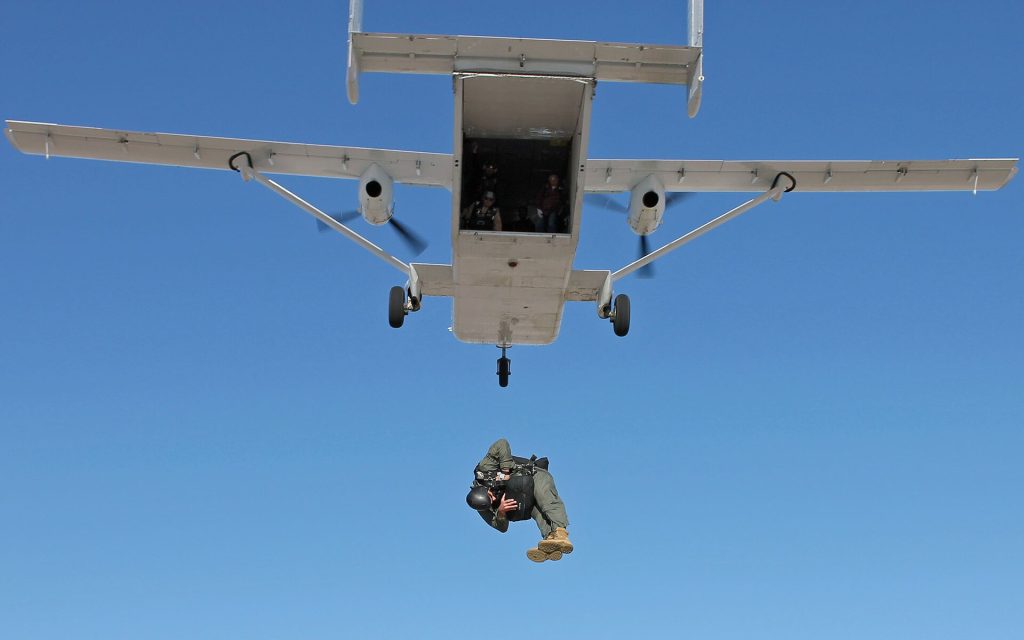
Tech. Sgt. Matthew Mensch exits a SC-7 Skyvan with a low-profile parachute April 12, 2013, over the Edwards Farm Dropzone, at Edwards Air Force Base, Calif. The low-profile parachute is intended to replace the BA-22 parachute, which is currently configured for use in the AC-130 gunship. Mensch is a 418th Flight Test Squadron parachute test jumper. Photo by US Air Force/Wikipedia
Barnerstormer Hugault 729x90
Share This Article
Commercial Pilot, CFI, and Museum Entrepreneur, with a subject focus on WWII Aviation. I am dedicated to building flight experience so I can fly WWII Fighters, such as the P-51 Mustang, for museums and airshows, and in the USAF Heritage Flight. I lead and run the Pennington Flight Memorial, to honor local MIA Tuskegee Airman F/O Leland “Sticky” Pennington.