
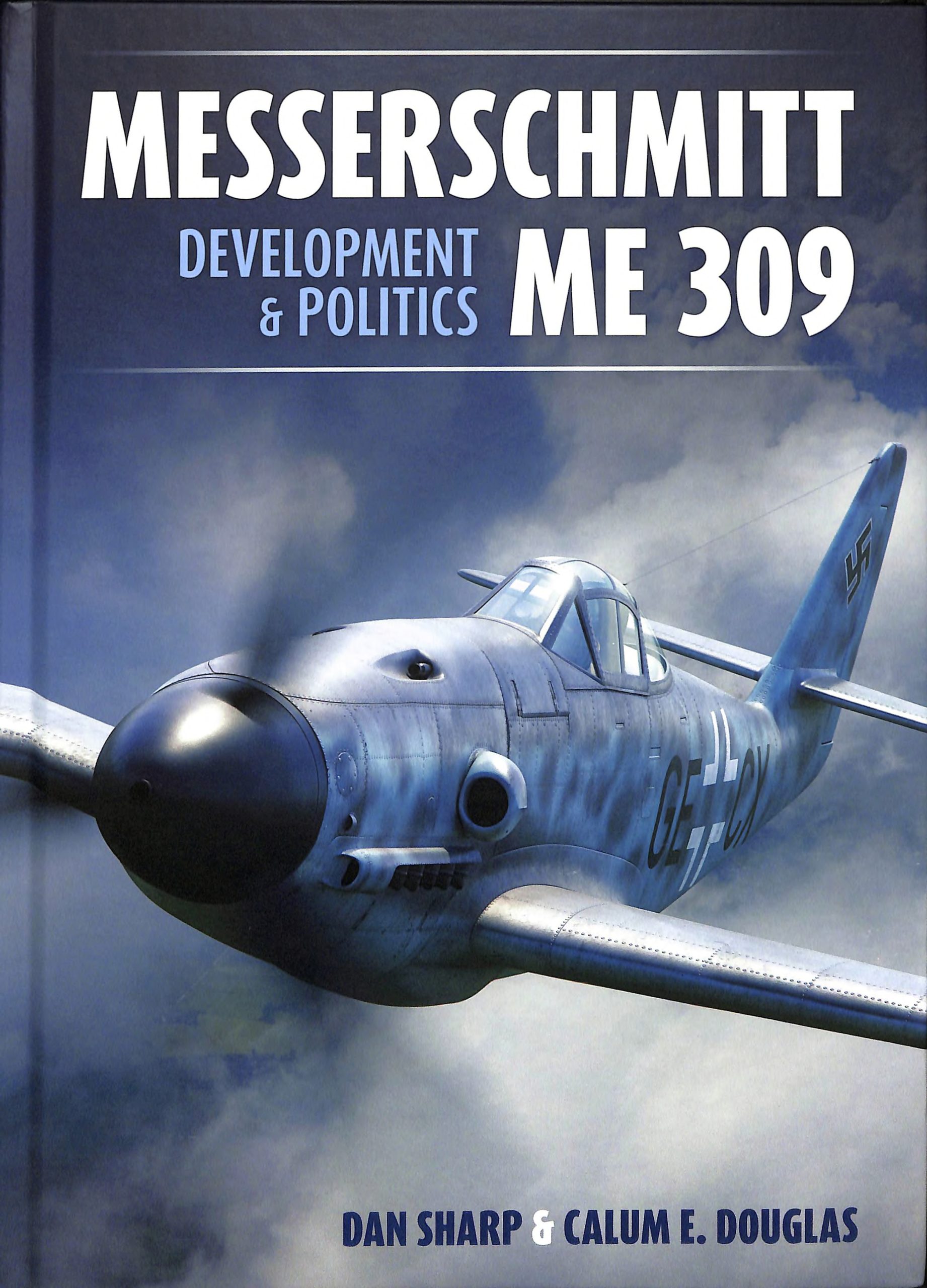
Messerschmitt Me 309 – Development & Politics by Dan Sharp & Calum Douglas, reviewed by Joe May, available on Amazon.
When I first saw the pre-publication announcement for Messerschmitt 309, I was puzzled, being unaware of the design. So I looked it up in Wikipedia, of course, where I found a sparse two paragraphs on an unremarkable story. Sharp and Douglas have remedied that and provided much more with Messerschmitt Me 309: Development & Politics. Some of their knowledge has been imparted, and the entry now stands at a full page.
But, as always, there is more to this story…
The story of the Me 309 (of which only a few were built and flown) is one of planning, strategy, overplaying, and gamesmanship between manufacturers and the Nazi German government during World War II. I pre-ordered the book based on Calum Douglas’s reputation for sincerity and thoroughness with his paradigm-setting, The Secret Horsepower Race – Western Front Fighter Engine Development, as well as a few email query exchanges with him. What an excellent decision it was! When I received it, my first thought was to look at the endnotes, where I saw the authors’ extensive use of Germany’s war archives (Douglas is fluent in Deutsch, and I imagine Sharp is as well). What an excellent start.
The tale told in this book not only is the story of the beautifully lined Me 309 but also revealed are insights regarding the inner workings of the World War II’s Reich’s thinking, to its future planning methodology, how invested government resources can be with industries to achieve superiority, and how the power a CEO in a prime company can yield to or influence an unstable fascist dictator (for all intents and purposes) against his own Air Ministry. Nazi Germany’s Air Ministry was well aware of the coming of the revolutionary high altitude super-heavy bomber in Boeing’s B-29 Superfortress. Specifically, the Air Ministry knew how B-29s would fly high above the Luftwaffe’s current interceptors to deliver enormous bomb loads for the time. So…the Air Ministry was inspired to issue directives for a high-altitude, heavily armed interceptor aircraft to defend their homeland against present B-17 and B-24 heavy bombers as well as future B-29 super-heavy bombers. Messerschmitt Me 309 is that story, as well as the story of Jumo and Daimler-Benz designing and producing a much more powerful engine, which this new interceptor design would surely require. Bluntly, a bomber killer was desired and one with an impressive time to altitude in order to place 20mm and 30mm cannon ordnance on targets, ensuring quick kills in an environment rich in defensive machine gun fire and offensive fighters. Newer, more powerful engines at the beginning of their development cycles were also required to be developed in parallel with this new aircraft.
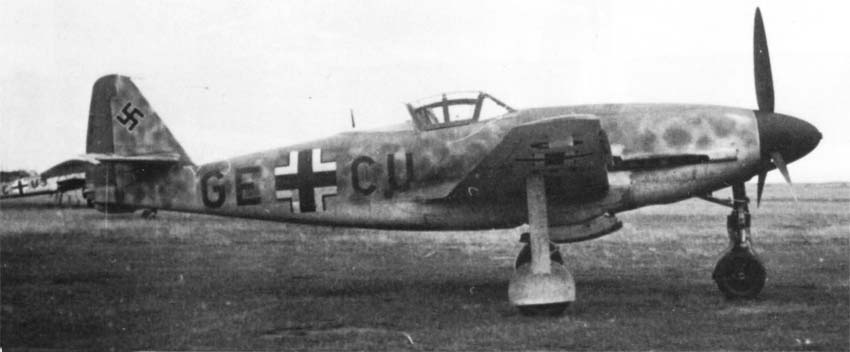
Willy Messerschmitt came through with innovative work. At first, upgrading Messerschmitt’s veteran Bf 109G was considered, but this was denied since the airframe could not accept the newer engines being developed. His innovation continued, though, and the Me 309 was the result. This design eliminated the tail wheel and narrow landing track of the Bf 109, which was intuitively expected to reduce landing accidents inherent to the Bf 109. More powerful engines would increase prop torque, so a tricycle landing gear arrangement would also aid in reducing take-off incidents. A pressurized cockpit would greatly increase the number of pilots who could fly high altitude intercept missions, as few were physically gifted with functionality while at an unpressurized 30,000 feet altitude. Fighter pilots could reliably function at 30,000 feet if the cockpit was at an equivalent altitude of ~11,500 feet. A variety of machine gun and cannon combinations were preferred, using 13mm machine guns and 20mm as well as 30mm autocannon weaponry.

The Air Ministry at the time, readers learn, was also a victim of its capacity for planning, as were the aeronautics manufacturers, as design after design was created — well over a dozen and with several versions of each design at times. Combined, the Air Ministry and aviation industry desperately needed new engines and interceptors, but development time was tight, to say the least. Why so much time was spent on designs looking too far into the future or on speculative ideas is an unanswered question. However, designers busy designing are seen to be working and might not be reassigned to make use of their idle time, perhaps to a combat assignment. Just a thought. Added to this stew of frustration for Nazi Germany was Willy Messerschmitt’s desire to remain with the Bf 109 production line. The jigs were there. The manufacturing bugs had been all but eliminated. Further flight testing was expected to proceed predictably. Profits would be further ensured with this fiscally prudent route. Messerschmitt’s strategy delayed Me 309 development by one or two years. By the time the Bf 109 evolved, design had finally been removed from the equation; the war’s loss and inevitable end were then only a matter of time. Nazi Germany did not have that designed development time to fritter away and not lose the war. There are many other insights these learned authors provide to their readers. The pros and cons of standard bearings versus roller bearings, especially when pushing oil through these bearings in a running high-performance engine. The design challenges that were overcome by Jumo and Daimler are discussed, as well as why Daimler’s engine became a fighter engine standard and the Jumo a bomber engine standard. The information illustrated is clear and revelatory.
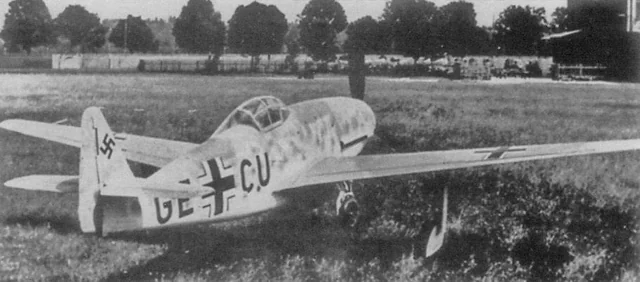
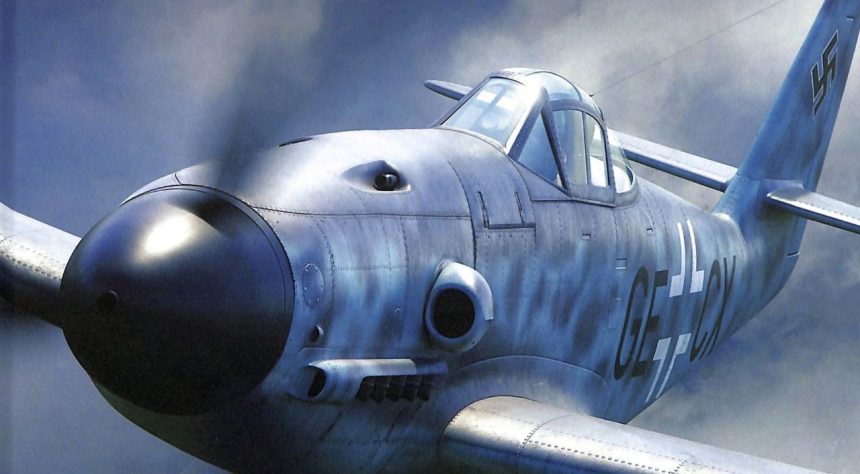
Messerschmitt Me 309: Development & Politics also delves a bit into a facet of a country at war, which is usually left unaddressed, and that is the economic dimension. Industry requires designers, resources, and workers, but money is the lubricant for this system. Many resources must be purchased from other countries, and workers need to buy food for their families. Businesses need to stay financially afloat. The book is extremely well-produced in its information, clarity, illustration resolution, thoroughness, and organization. The artwork of the color profiles by Thierry Vallet is a pleasing bonus. Appendices, endnotes, and an index make this an excellent reference work. I cannot recommend this book highly enough, as it is the story of the Me 309, thought processes, conflicting aims, and innovation. It is quite a story.
| Hardcover
Publisher: Mortons Books Year Published: 2024 12” x 8.5” Index ✔︎ Bibliography ✔︎ Notes: endnotes Photos (many and as well as artworks) Cost: £35/$70 ISBN 978-1-911658-96-2 192 pages Available on Amazon |