





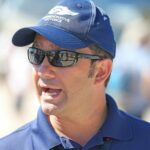
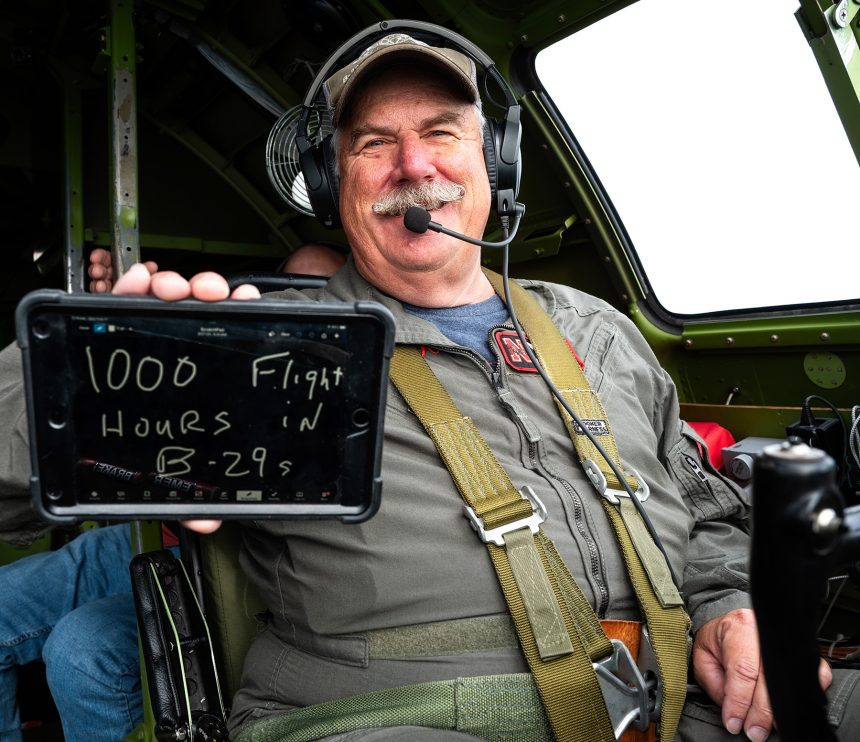

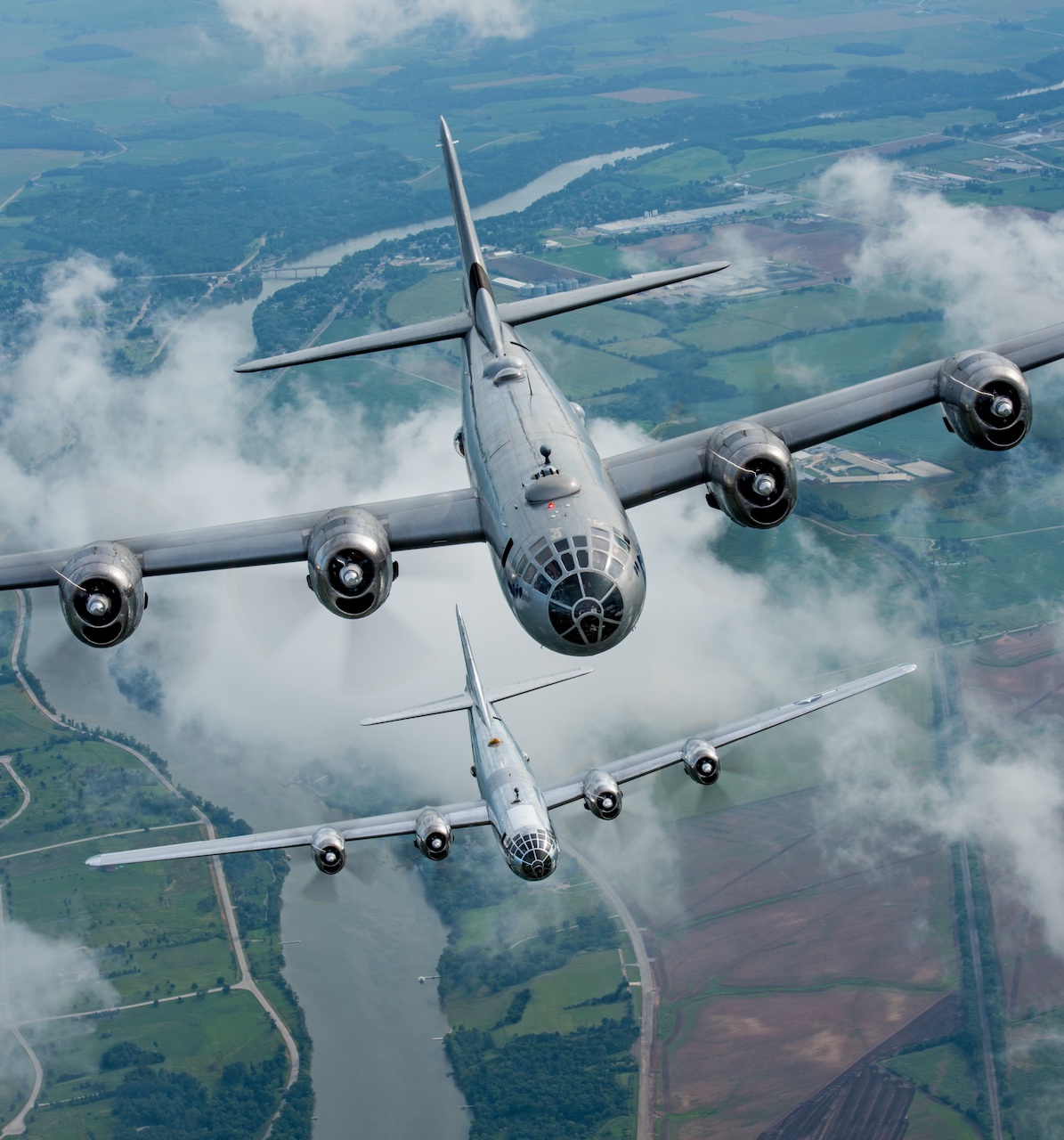
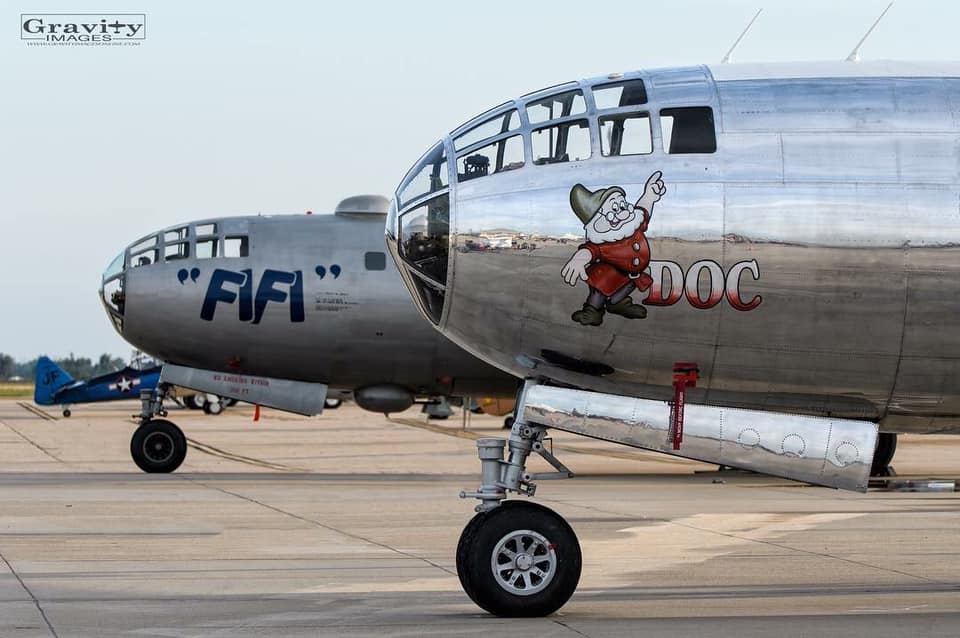
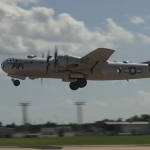
Warbird pilot Mark Novak has achieved a milestone few aviators could ever dream of—logging 1,000 hours at the controls of the Boeing B-29 Superfortress. As one of only two airworthy B-29s in the world—FIFI, operated by the Commemorative Air Force (CAF), and Doc, maintained by Doc’s Friends—flying this rare bomber is both a privilege and a heavy responsibility. For Novak, it has been the culmination of a lifetime spent in aviation.
Early Inspiration
Growing up in Council Bluffs, Iowa, Novak’s fascination with aviation began at a young age. Living just a mile and a half from the local airport, he often rode his bike there to watch aircraft come and go. Among them was the legendary P-51 Gunfighter, which left a lasting impression. His uncle, a private pilot, added to the allure. “When you’re eight or ten years old and you see your uncle step out of an airplane, it’s a pretty cool thing,” Novak recalled. By his teenage years, Novak had set his sights on the U.S. Air Force Academy, knowing that a commission could lead to pilot training. That plan paid off, launching him on a distinguished military flying career.
Military Aviation Career
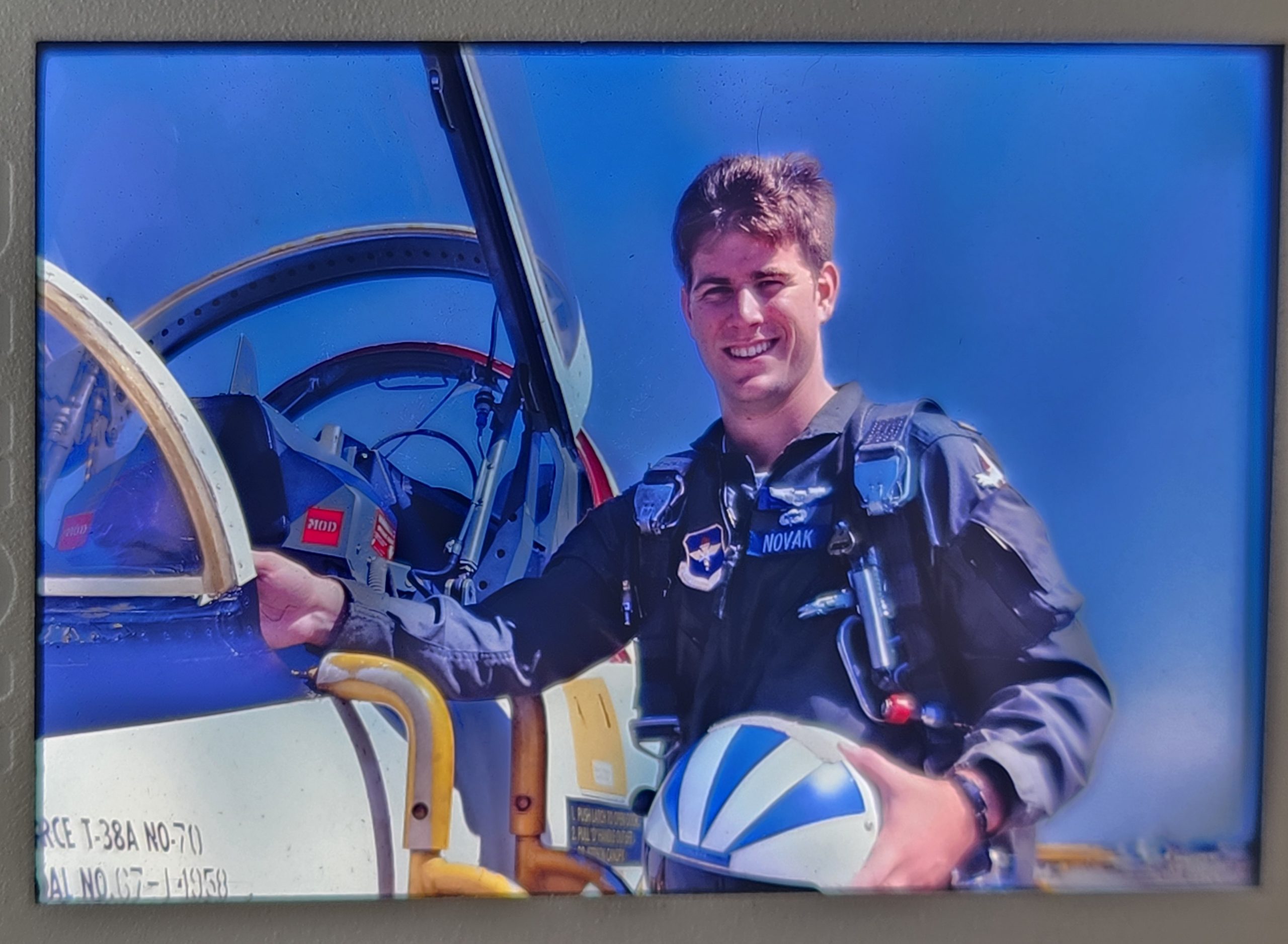
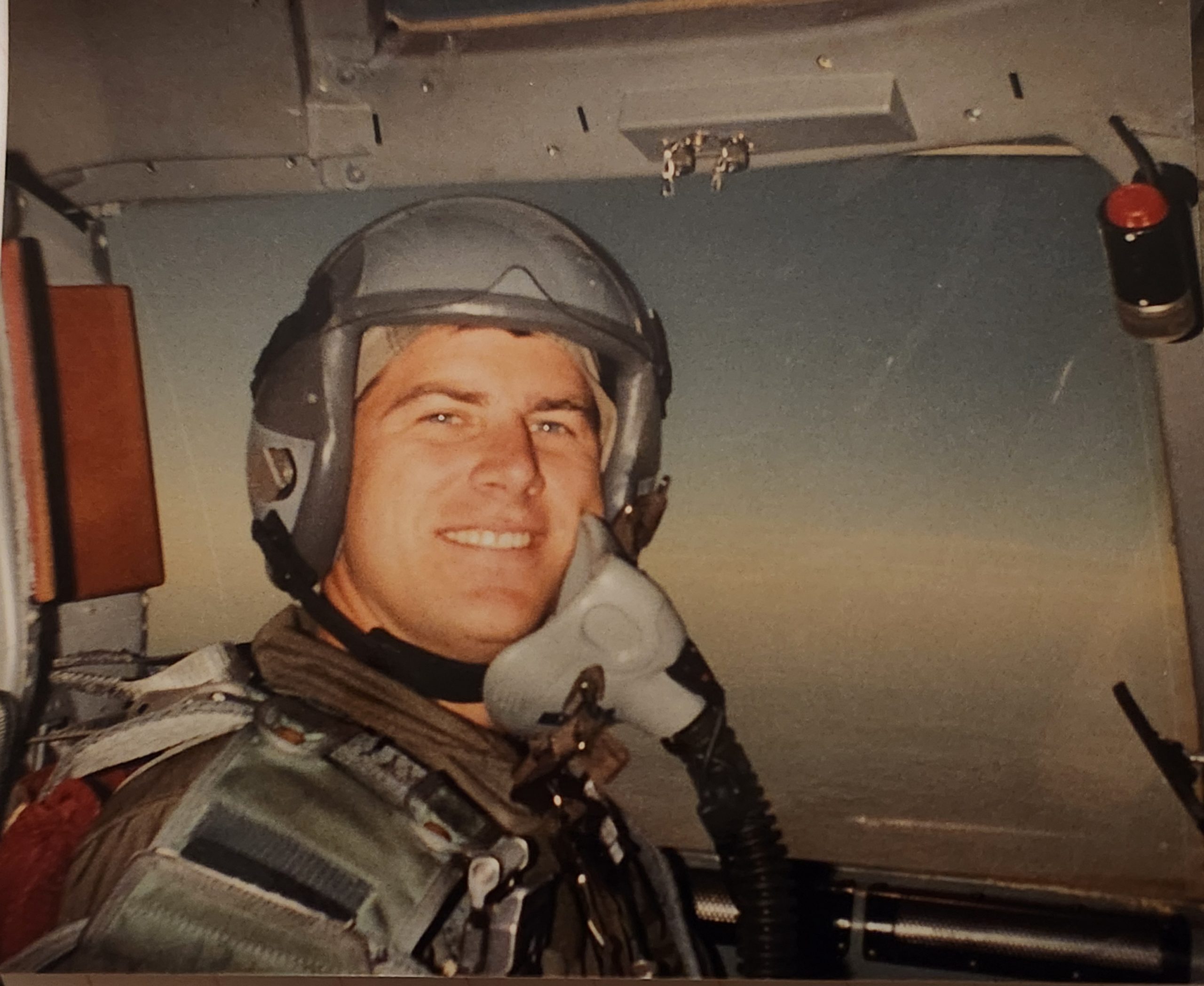
Novak entered the Air Force without ever having flown in an airplane. His first ride came during a motivational flight at the Academy—dangling from the open door of a Huey helicopter over the Rockies. “I thought, ‘Boy, this is great. This is what I want to do,’” he said. After initial flight screening in Cessna T-41s, Novak earned his wings at Vance Air Force Base in Oklahoma, flying T-37s and T-38s. His first assignment was in the C-21 Learjet, followed by a coveted slot in the B-1 Lancer at Dyess AFB, where he spent seven years as a co-pilot, aircraft commander, and instructor. Later, he returned to the Air Force Academy as an officer before transitioning to the Nebraska Air National Guard, where he flew KC-135 tankers until his military retirement in 2007.
A Path Into Warbirds
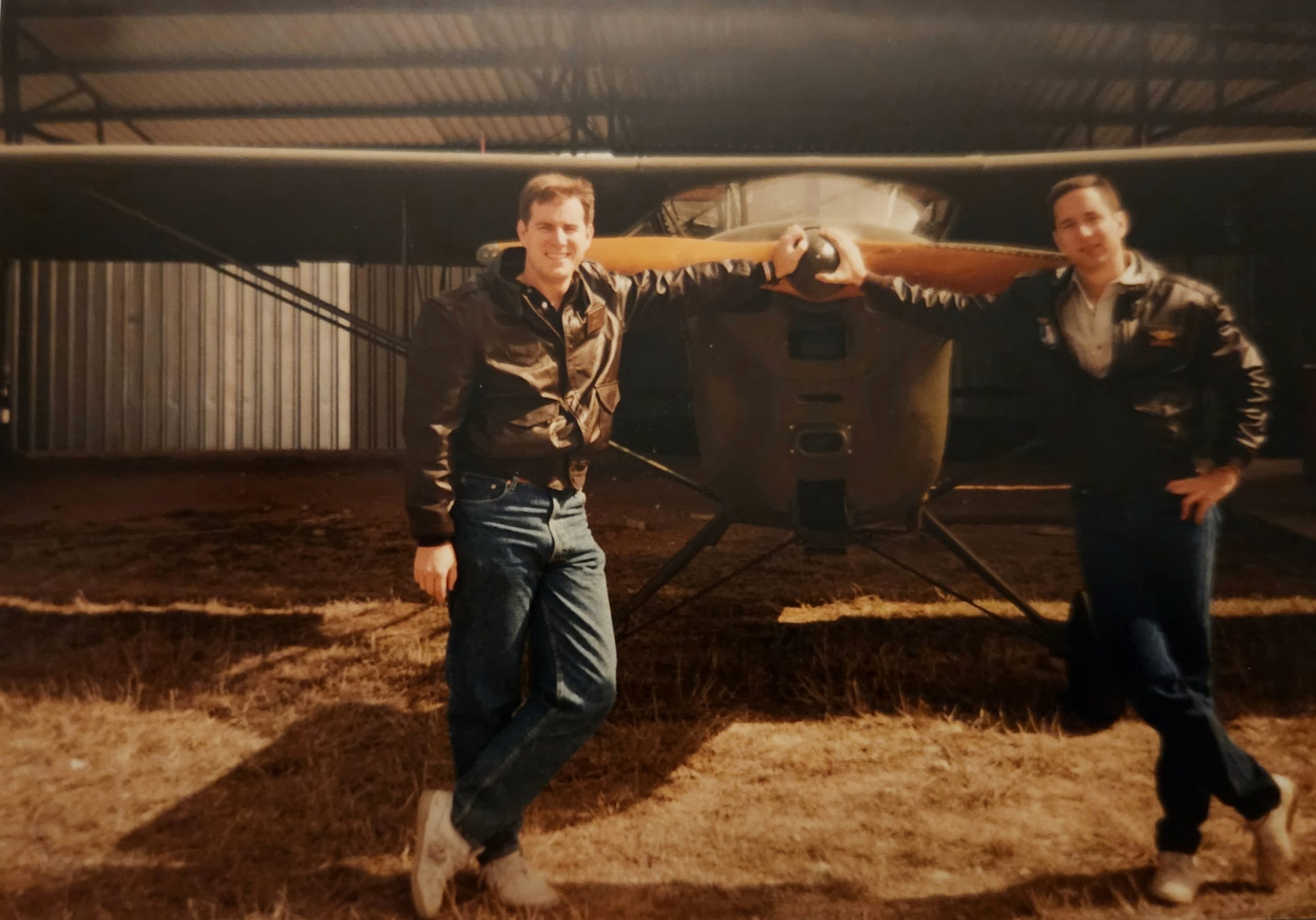
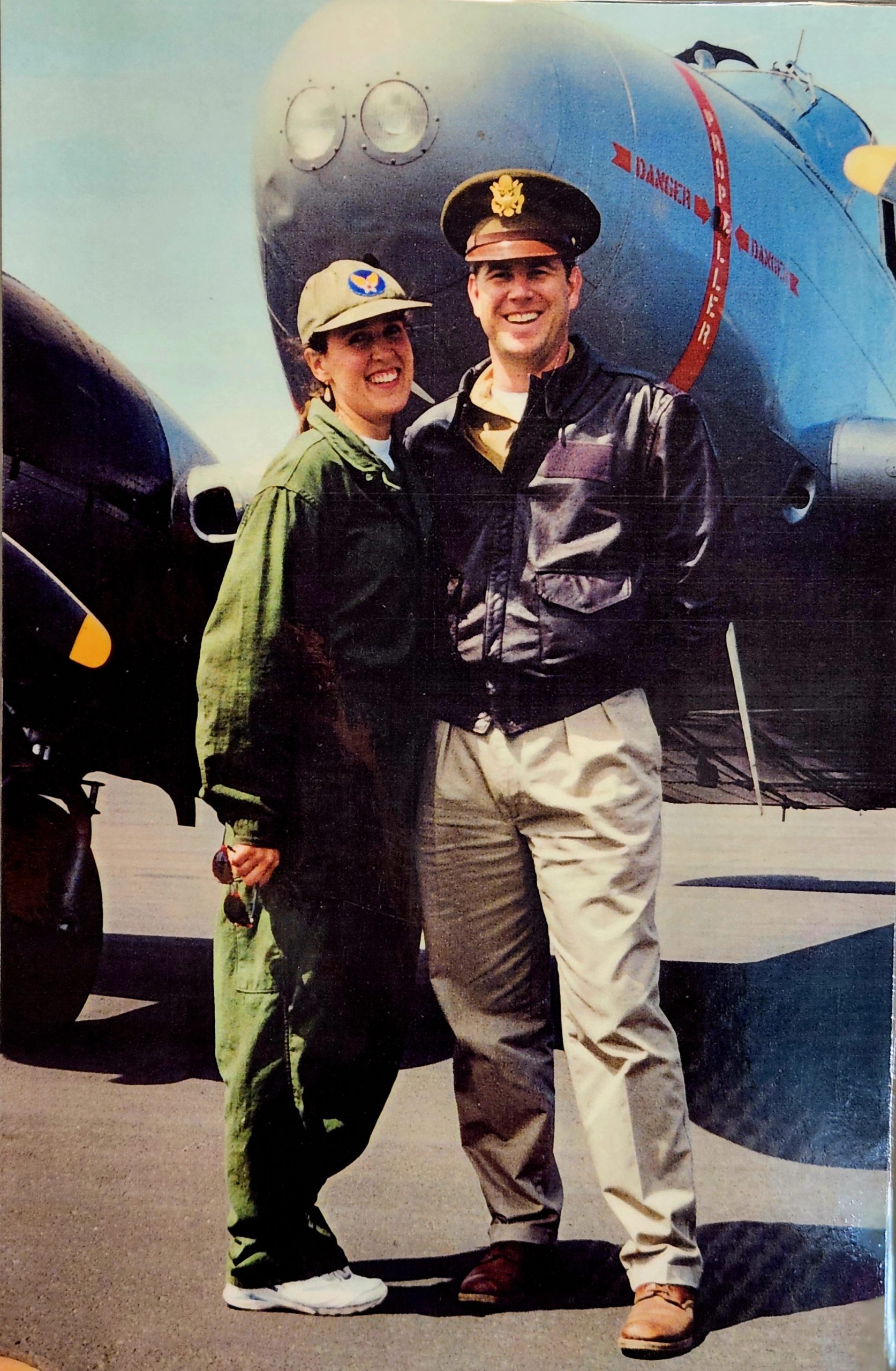
While Novak’s military career was filled with high-performance jets and long-haul tankers, his passion for vintage aircraft never faded. He joined the Commemorative Air Force (CAF) and worked his way up through smaller warbirds, eventually flying the T-6 Texan and A-26 Invader. In 2012, opportunity knocked: the CAF needed pilots for FIFI, its iconic B-29. Novak’s experience, availability, and crew-oriented flying skills made him a natural choice. With no simulators available for the B-29, training followed the “see one, do one” method. Novak cut his teeth as a co-pilot before upgrading to aircraft commander in 2013. Over time, he also became qualified in Doc, making him the only active pilot currently flying both Superfortresses.
The Challenge of Flying the B-29
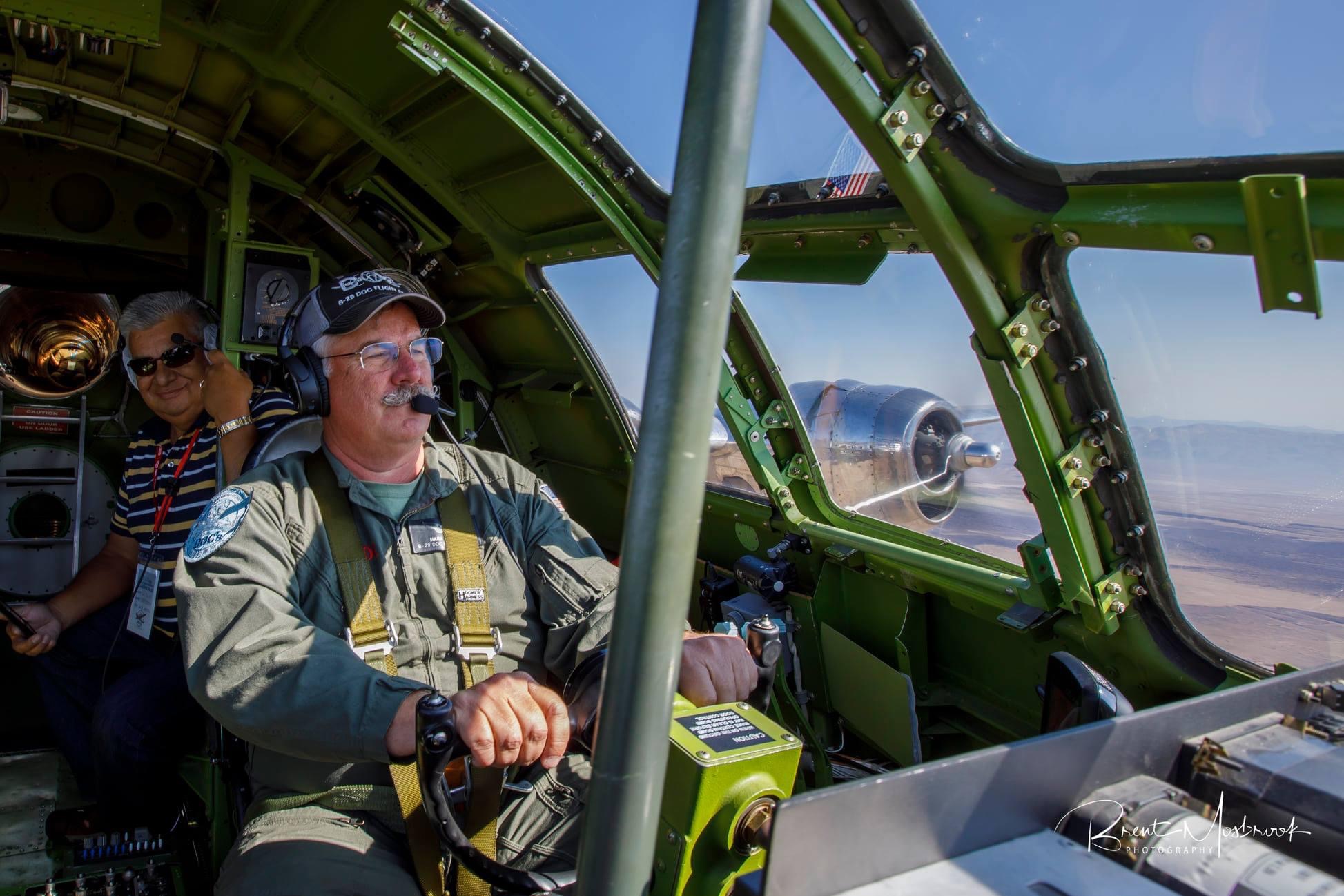
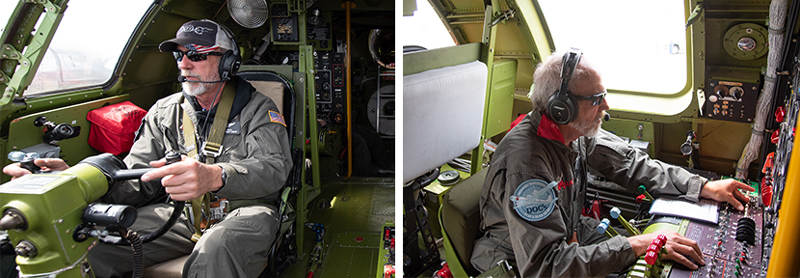
Operating the B-29 is a team effort, requiring two pilots, a flight engineer, and three scanners. Novak emphasizes the importance of crew resource management: “Fighter guys aren’t always the best fit. In the B-29, you have to manage your crew. The flight engineer has 40 gauges and 50 switches to manage—you can’t do it all yourself.” At 85,000 to 90,000 pounds, the B-29 demands careful handling. Without hydraulic boost, flying requires strength, precision, and constant trimming. Novak likens the experience to “driving a pickup truck on a gravel road”—wallowy at low speeds, but smooth and surprisingly nimble at higher airspeeds.
Reaching 1,000 Hours
In 2021, Novak surpassed 600 hours in the B-29. Just four years later, he crossed the 1,000-hour mark, likely making him the highest-time B-29 pilot in history. While World War II crews typically flew only a few dozen combat missions, rarely exceeding 500 to 600 hours, Novak has accumulated more than 1,000 in peacetime preservation flights. The moment, he said, was surreal: “The cockpit of the B-29 is a unique place. Once you get it trimmed, you can fly hands-off and just look around. I thought about how blessed I was.”
Honoring Veterans Through Flight
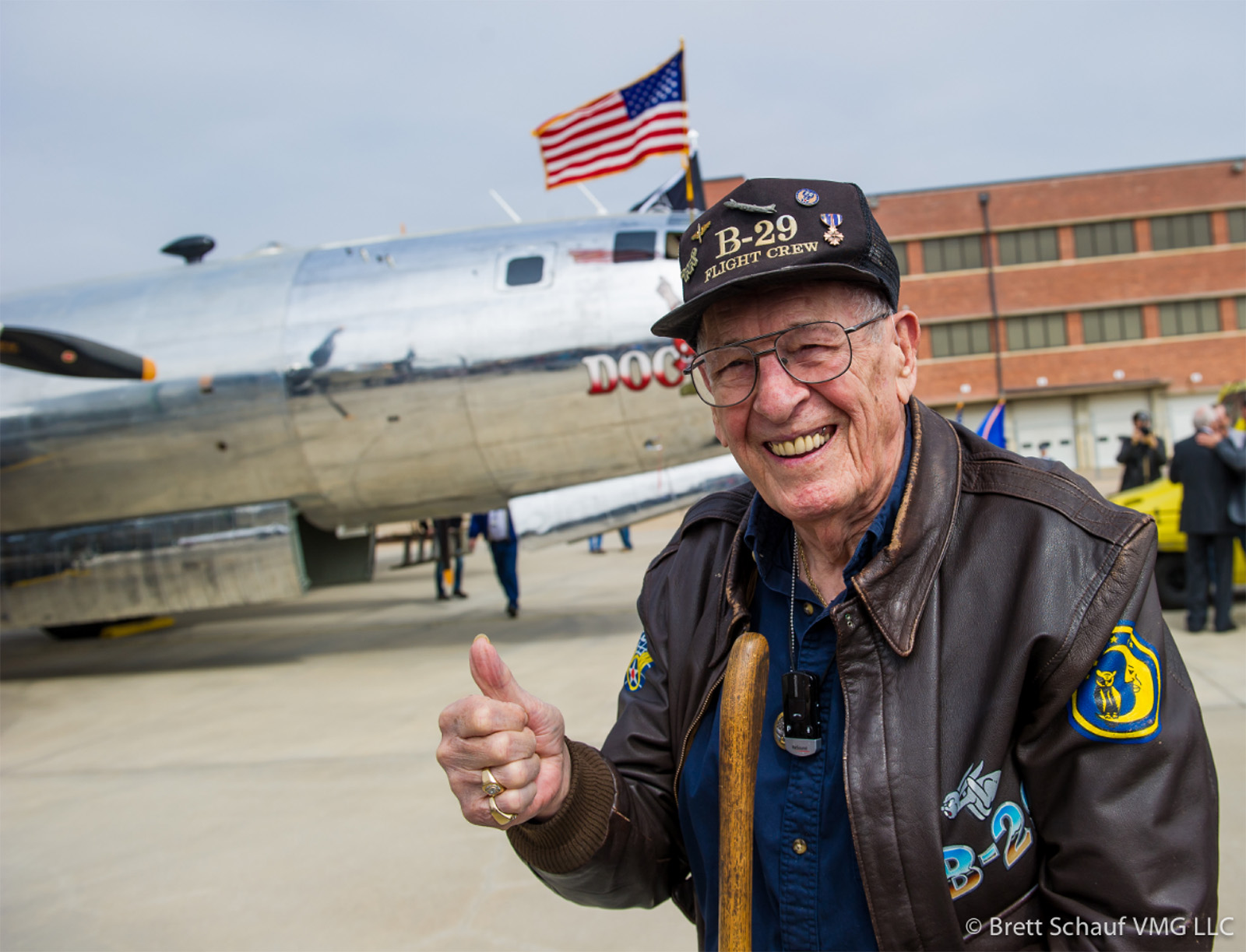
For Novak, flying the B-29 is about more than personal achievement—it’s about preserving history. He recalls a poignant memory of flying with a 92-year-old navigator on FIFI. The veteran refused to leave his old duty station, saying: “I’ve got 150 miles walking around this cockpit two steps at a time. This is where I’m supposed to be.” Moments like these, Novak explains, remind him why the work matters: “The World War II airplanes are time machines. They take veterans back to moments they haven’t thought of in 70 years. That’s why we do it.”
Looking Ahead
Now with over 1,014 hours logged, Novak continues flying both FIFI and Doc, traveling across the country to share these living legends with the public. He is quick to credit the teams that keep the aircraft airworthy: “I get the glory waving out the cockpit window, but it takes hundreds of people—volunteers, mechanics, and supporters—to make it happen.” For Novak, every flight is both a tribute and a responsibility: to honor the men who flew the B-29 into combat, the women who built them, and the veterans whose sacrifices shaped history.



To Moreno Aguiari: Thank you for bringing these wonderful stories to us!
To B-29 pilot Mark Novak: Thank you for flying these wonderful planes to us!
My pleasure. Thanks for the comment James!