Flight Test Files
Flight Test Files is a series that looks closely at the aircraft flown by NACA and later NASA at the High-Speed Flight Station in Edwards, California, known today as the Armstrong Flight Research Center. These were not always purpose-built research airplanes. Many were operational fighters, bombers, or transports that were brought to the desert to answer specific technical questions. Each article focuses on what problem NACA/NASA engineers were trying to solve, why a particular aircraft was chosen, what the flights revealed, and how it changed the future of aviation.



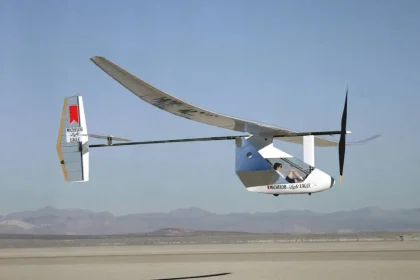
Flight Test Files: MIT Daedalus – The 72-Mile Marathon in the Sky
MIT’s Daedalus human-powered aircraft flew 115 km in 1988, setting records and advancing research in…
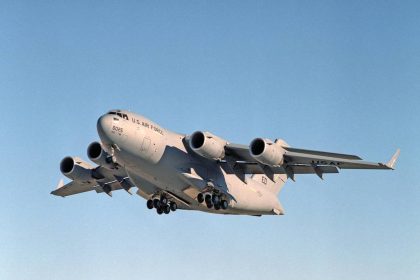
Flight Test Files: C-17 Globemaster III – The Role of NASA in Shaping a Cargo Aircraft Icon
C-17 Globemaster III development relied heavily on NASA research, combining advanced aerodynamics, STOL capability and…


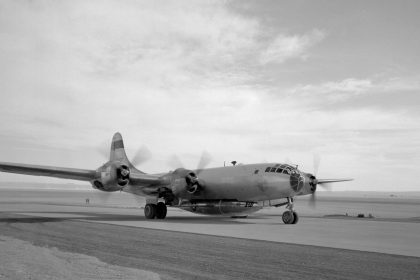
Flight Test Files: B-29 Mothership – The Aircraft That Launched Supersonic Flight
NASA’s modified B-29 Mothership launched the X-1 and D-558, enabling the first Mach 1 and…
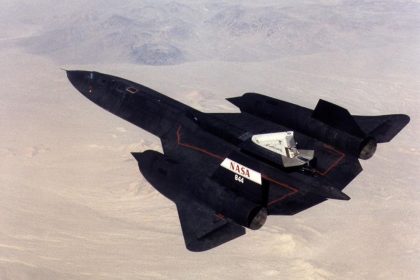
Flight Test Files: Lockheed SR-71 Blackbird – Managing the Expansion of the Titanium Skin
NASA used the SR-71 Blackbird in the 1990s to study high-speed flight, propulsion, sonic booms…
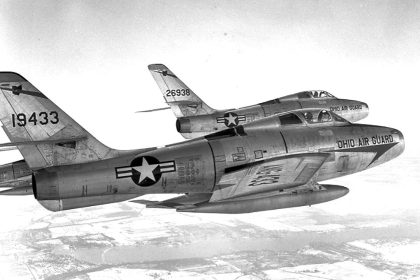
Flight Test Files: F-84F Thunderstreak – Testing the Limits of the 40-Degree Sweep
The F-84 Thunderjet evolved into the swept-wing F-84F Thunderstreak, aiding early jet research and NATO…
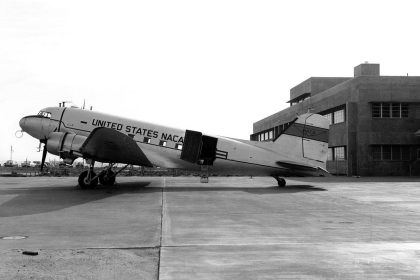
Flight Test Files: R4D Skytrain – The JATO-Powered Carrier Launch
The R4D Skytrain served in WWII, polar missions, and NASA research, proving its versatility from…
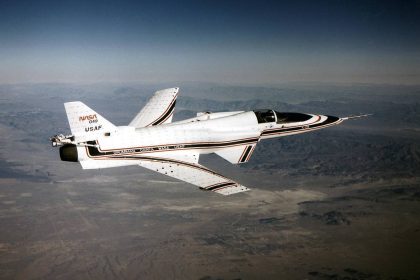
Flight Test Files: Grumman X-29 – Harnessing the Strength of Aero Tailored Composites
NASA’s X-29 tested forward-swept wings and digital fly-by-wire control, advancing unstable aircraft design and high-angle…
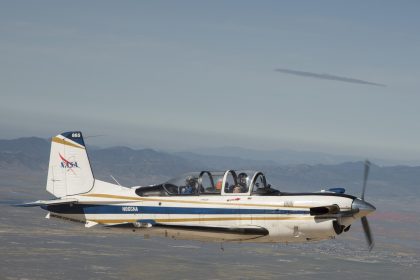
Flight Test Files: The T-34C Mentor – The Rugged Bridge to the Jet Age
NASA’s T-34C Mentor helped test detect-and-avoid systems for drones, supporting safe integration of unmanned aircraft…
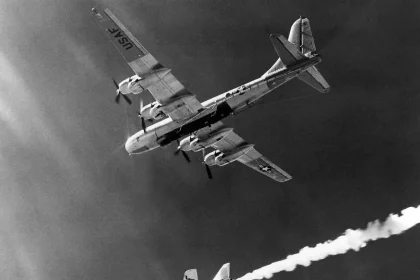
Flight Test Files: The X-2 Starbuster – A Pioneer of Aerodynamic Heating
The Bell X-2 Starbuster pushed flight beyond Mach 3 and 126,000 feet, advancing research on…
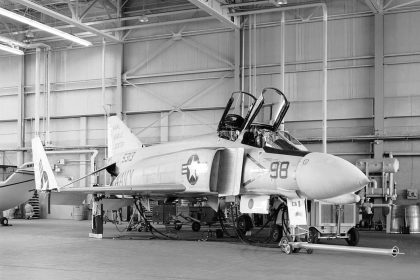
Flight Test Files: F-4 Phantom II – Exploring the Limits of Aerodynamics and Sonic Boom
How NASA used the F-4 Phantom II for unusual research, from biomedical monitoring flights and…
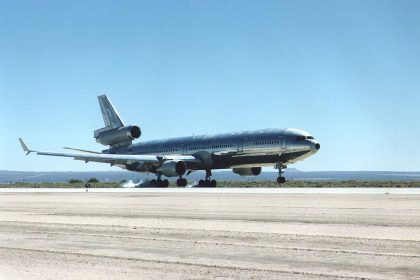
Flight Test Files: MD-11 – Pioneering Safe Landings with Propulsion Controlled Aircraft
How NASA tested Propulsion Controlled Aircraft (PCA) on an F-15 and MD-11, proving an airplane…
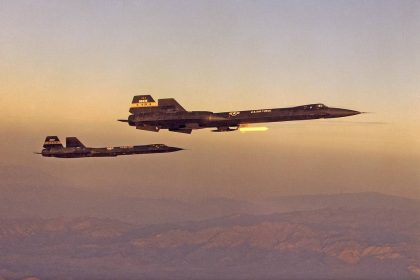
Flight Test Files: Lockheed YF-12 – The Mach 3 Interceptor That Almost Was
How the YF-12 set Mach 3 records and powered NASA research that shaped the SR-71…
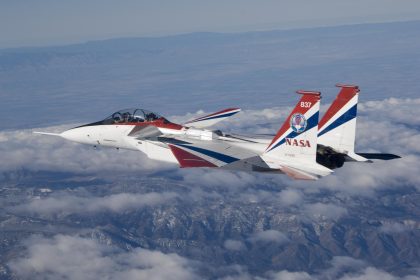
Flight Test Files F-15B TN 837 – Testing the Future of Thrust Vectoring
How NASA’s F-15 ACTIVE program tested thrust vectoring and adaptive controls to improve performance of…

Flight Test Files Northrop T-38 Talon – The Chase Plane That Saw It All
How the T-38 Talon became America’s first supersonic trainer, shaping USAF pilot training and NASA…
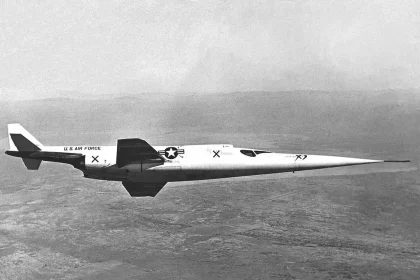
Flight Test Files: Douglas X-3 Stiletto – Taming the Inertia of the Needle Jet
The Douglas X-3 Stiletto fell short of Mach 2 but revealed roll coupling risks and…
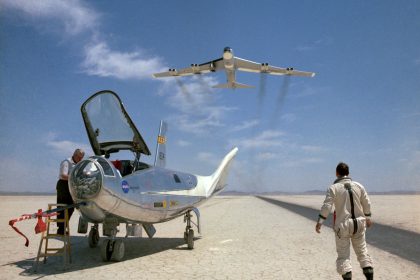
Flight Test Files: Northrop HL-10 – Solving the Aerodynamics of Reentry
How NASA’s HL-10 lifting body proved wingless reentry and runway landings were possible, shaping future…