Flight Test Files
Flight Test Files is a series that looks closely at the aircraft flown by NACA and later NASA at the High-Speed Flight Station in Edwards, California, known today as the Armstrong Flight Research Center. These were not always purpose-built research airplanes. Many were operational fighters, bombers, or transports that were brought to the desert to answer specific technical questions. Each article focuses on what problem NACA/NASA engineers were trying to solve, why a particular aircraft was chosen, what the flights revealed, and how it changed the future of aviation.



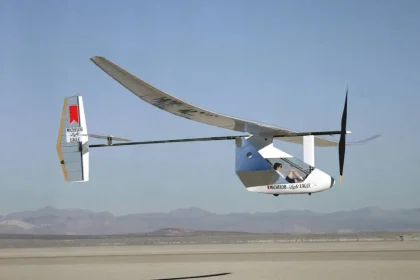
Flight Test Files: MIT Daedalus – The 72-Mile Marathon in the Sky
MIT’s Daedalus human-powered aircraft flew 115 km in 1988, setting records and advancing research in…
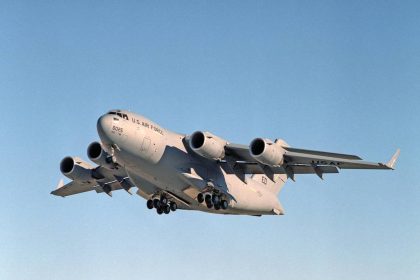
Flight Test Files: C-17 Globemaster III – The Role of NASA in Shaping a Cargo Aircraft Icon
C-17 Globemaster III development relied heavily on NASA research, combining advanced aerodynamics, STOL capability and…


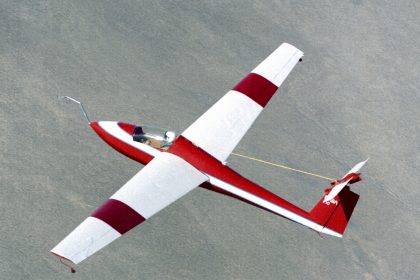
Flight Test Files: Schweizer SGS 1-36 Sailplane – Evaluating the Leap to T-Tail Aerodynamics
How NASA used a modified Schweizer SGS 1-36 sailplane in the 1980s to study deep-stall…
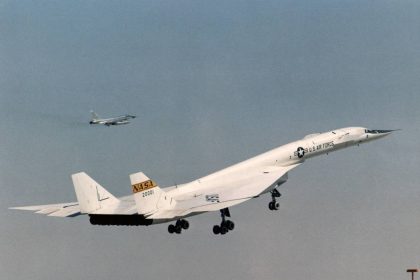
Flight Test Files: XB-70 Valkyrie – Riding the Shockwave at Mach 3
How NASA used the XB-70 Valkyrie bomber to advance supersonic transport research, study sonic booms…
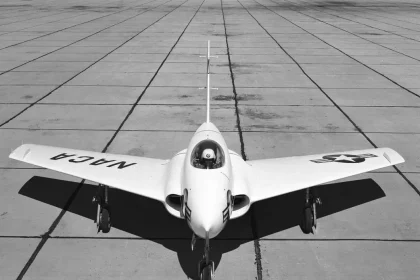
Flight Test Files: Northrop X-4 Bantam-Navigating the Limits of the Tailless Wing
How the Northrop X-4 Bantam tested semi-tailless flight near Mach 1 and revealed stability limits…
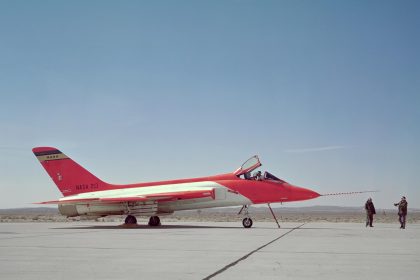
Flight Test Files: Douglas F5D-1 Skylancer – Mastering the High-Speed Sink Rate
The Douglas F5D-1 Skylancer evolved from the F4D Skyray into a Mach 1.5 interceptor before…
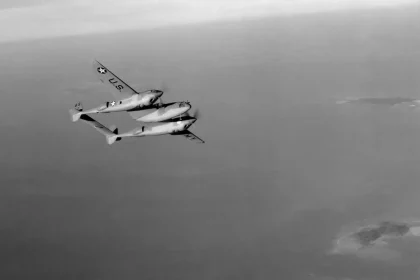
Flight Test Files: Lockheed P-38 Lightning – Solving the Deadly Mystery of Compressibility
How the P-38’s deadly dive compressibility problem led NACA to unlock transonic physics and pioneer…
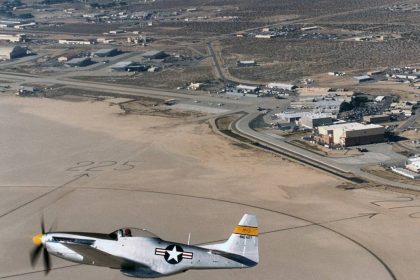
Flight Test Files: North American P-51 Mustang – Learning to Trust Laminar Flow
How NACA used the P-51 Mustang to advance laminar flow, transonic research, and drag reduction,…
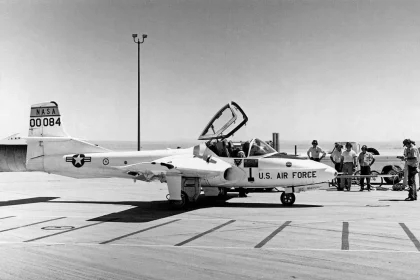
Flight Test Files: Cessna T-37 – A High-Pitch Laboratory for Lateral Dynamics
How a small NASA T-37 jet flew deliberately into wake turbulence to help engineers understand…
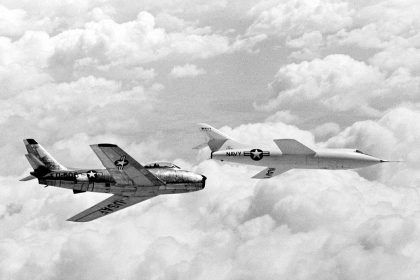
Flight Test Files: North American F-86 Sabre – The Quest for Supersonic Superiority
The North American F-86 Sabre was not only a Korean War fighter but also a…
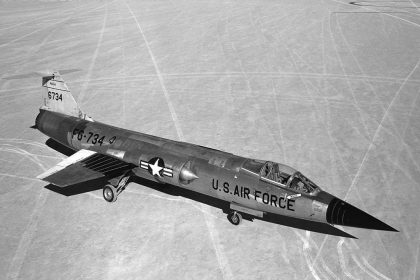
Flight Test Files: Lockheed F-104 Starfighter – Mastering the Aerodynamics of the Razor-Thin Wing
How NASA used the F-104 Starfighter’s razor-thin wing to explore supersonic handling, shuttle approaches, and…
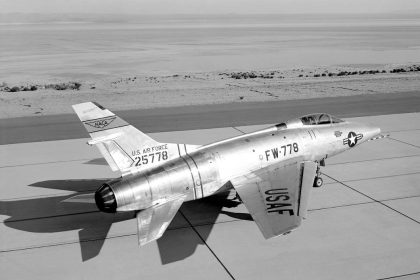
Flight Test Files: F-100 Super Sabre-Lessons from the Mach 1 Frontier
NACA used the F-100 Super Sabre to study supersonic stability, pilot workload, and sonic boom…
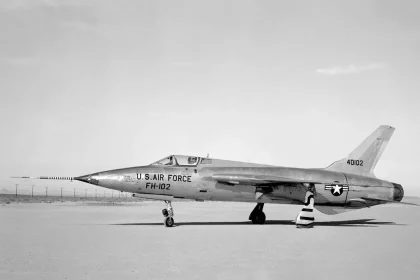
Flight Test Files: Republic F-105 Thunderchief – The Quest for Low-Level Supersonic Dominance
How brief studies at the Edwards Air Force Base helped shape the F-105 Thunderchief, a…
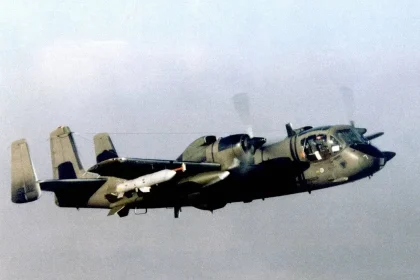
Flight Test Files: Grumman OV-1C Mohawk – Pioneering the Art of Multi-Sensor Surveillance
A detailed look at how the US Army’s OV-1C Mohawk evolved from a low-altitude battlefield…
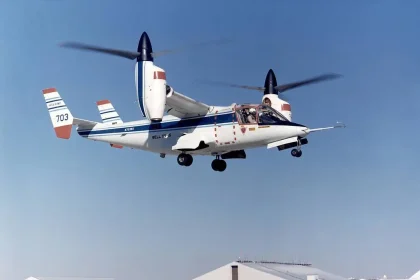
Flight Test Files: The Bell XV-15 Tiltrotor and NASA’s Quiet Revolution in Lift
A Flight Test Files deep dive into NASA’s Bell XV-15 program, explaining how careful flight…