
(Image credit: VAN)
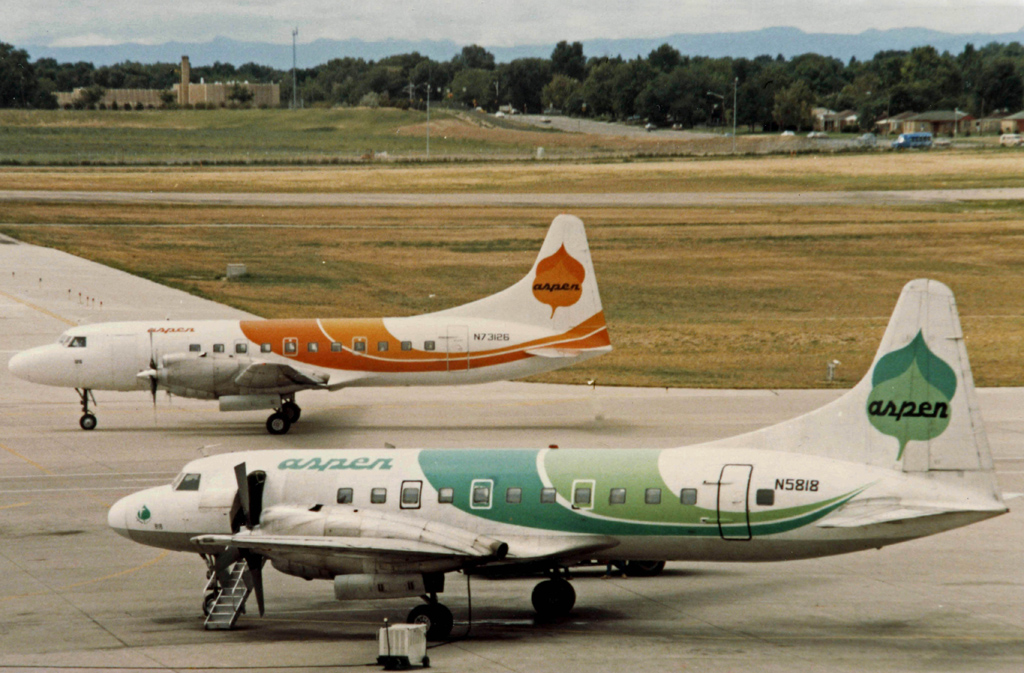
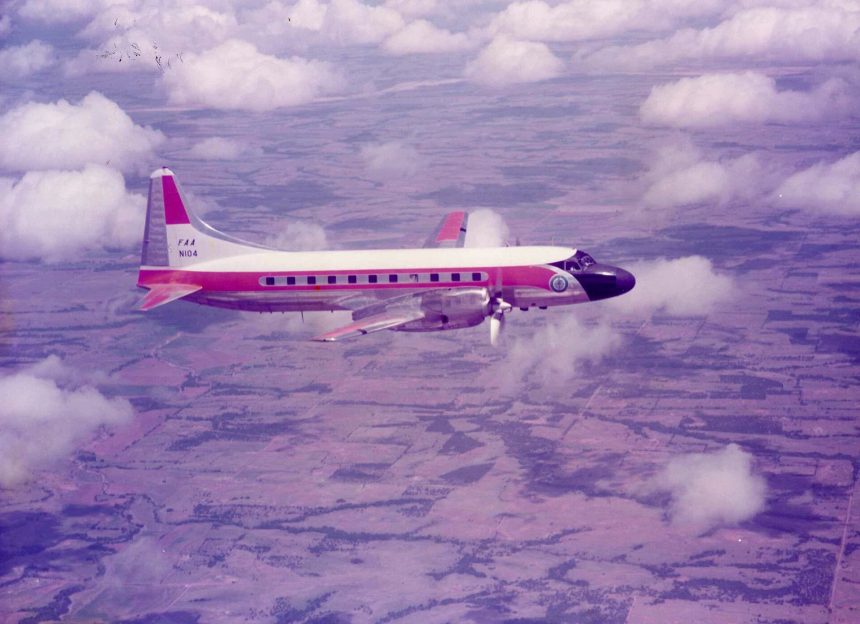
On this day in aviation history, 71 years ago (February 9, 1955), the Convair CV-540 made its first flight. The CV-540 was a member of the CV-240 family of airliners, built by American aircraft manufacturer Convair. Convair’s CV-240 began development as a possible replacement for the Douglas DC-3 in commercial passenger service. CV-240s featured a more modern design that included a pressurized cabin. This twin-engine passenger carrier found success as an airliner, giving birth to a dozen civilian variants and five military models. Convair’s CV-540 was essentially a CV-340 conversion, powered by two Napier Eland turboprop engines instead of the piston engines. Each Napier provided the CV-540 with 3,500 shaft horsepower. A total of six CV-340s were converted to turboprop power, intended to fly for Allegheny Airlines. In 1960, twelve “new build” CV-540s were manufactured by Canadair for the Royal Canadian Air Force, designated as the CC-109. Rolls-Royce purchased Napier shortly after these conversions began, leading to the Eland program’s termination. Allegheny reconverted the six CV-540s they had received back to piston power, but these aircraft would eventually be refitted with Allison 3,180-shaft-horsepower Allison 501 D13D/H turboprop engines and re-designated as CV-580s.
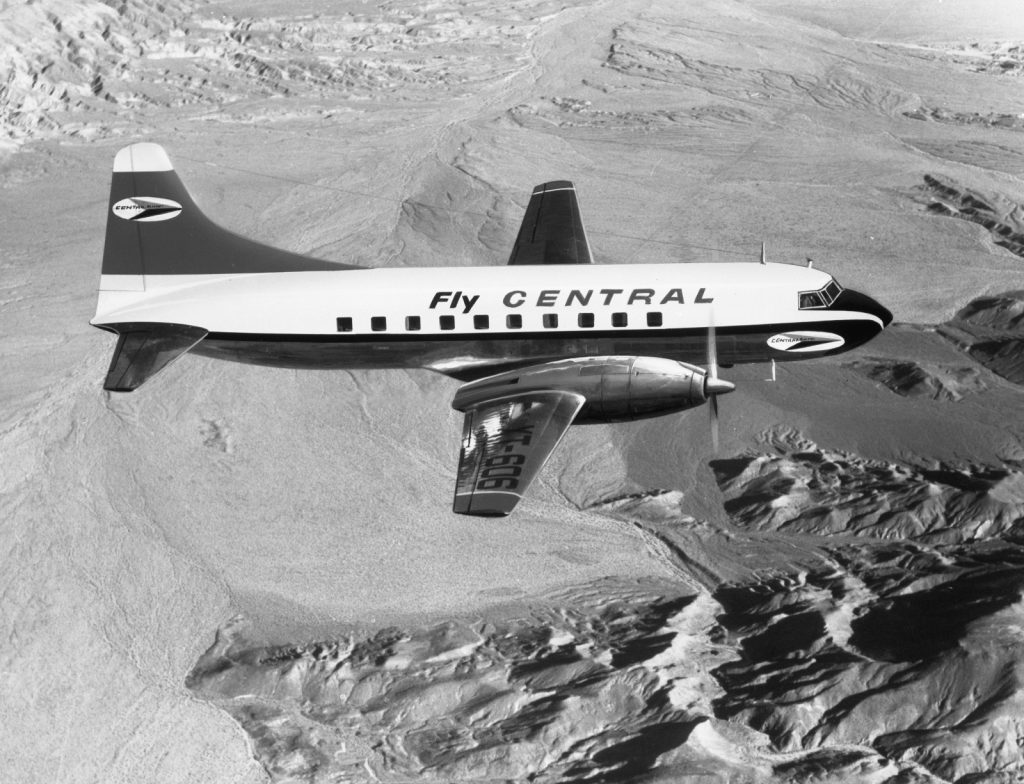
The Convair CV-240 had a crew of two or three on the flight deck and a capacity for 40 passengers. Piston variants of the aircraft were originally powered by two Pratt & Whitney R-2800-CA3 Double Wasp 18-cylinder radial engines, each with 2,400 horsepower. The CV-240 cruised at 280 mph, but could attain a maximum airspeed of 315 mph. The airliner had a range of 1,000 nautical miles and a service ceiling of 16,000 feet. CV-240s could climb at a rate of 1,520 feet per minute. Between Convair and Canadair’s manufacturing efforts, a total of 1,086 CV variants were built. Some members of the CV-240 family survive today, including a Convair CV-240-1 — on static display at the Planes of Fame Air Museum in Chino, California.